Download Assets
Download Assets
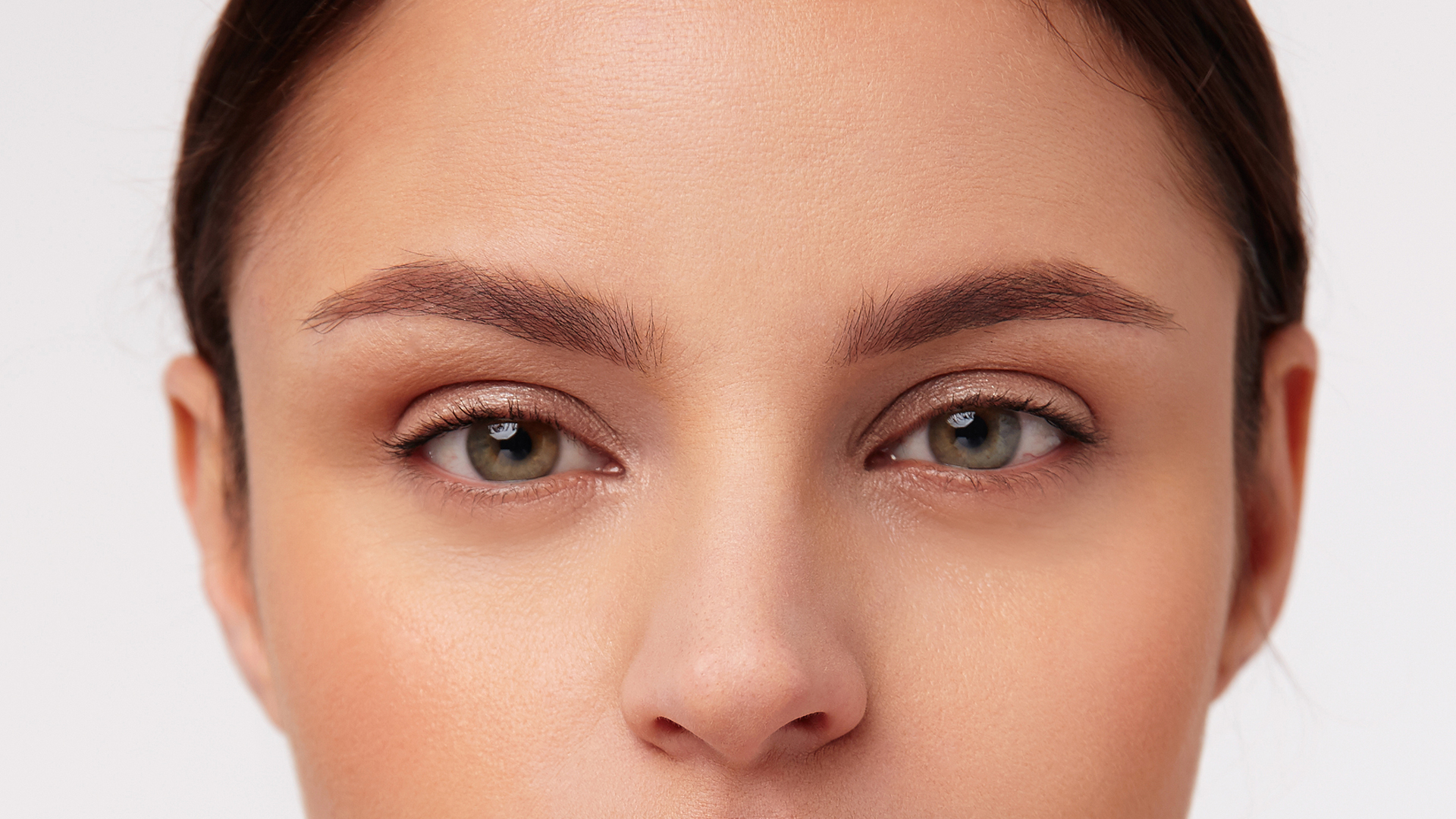
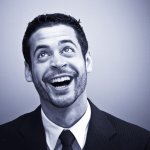
This tutorial includes 3 sample images, 3 sample PSDs and 1 PDF guide. Downloads are free with a PHLEARN account.
- Download the sample images and PSDs from every free tutorial on PHLEARN
- New free tutorials published every week
- One free account — sign up once, then download anything
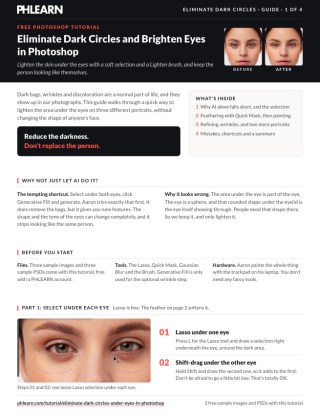
Free PDF Guide · 4 Pages
This Tutorial as a Step-by-Step PDF
Walks through three portraits: a Lasso selection under each eye, Quick Mask with Filter > Blur > Gaussian Blur (25 pixels, then about 10) to feather it, a Hardness 0 brush at 10% Flow on a Lighten layer, a lower Opacity, and an optional Generative Fill pass on small wrinkles. Keep it next to your keyboard.
description
Dark circles, under-eye bags, and uneven skin tone show up in nearly every kind of photo, but the fix should never change what someone actually looks like. This tutorial shows how to eliminate dark circles in Photoshop by lightening existing skin instead of replacing it: draw a loose Lasso selection under each eye, feather it visually with Quick Mask and Gaussian Blur, then paint a sampled lighter skin tone on a Lighten-mode layer at low flow, with AI reserved for small wrinkles.
Enjoying This Free Tutorial?
We publish a new free tutorial every week, each one with sample images and PSDs you can download and follow along with. Sign up and they land straight in your inbox, along with early word on sales, events and subscriber-only offers.
Image Source
Photos via Adobe Stock
Eliminate Dark Circles and Brighten Eyes in Photoshop
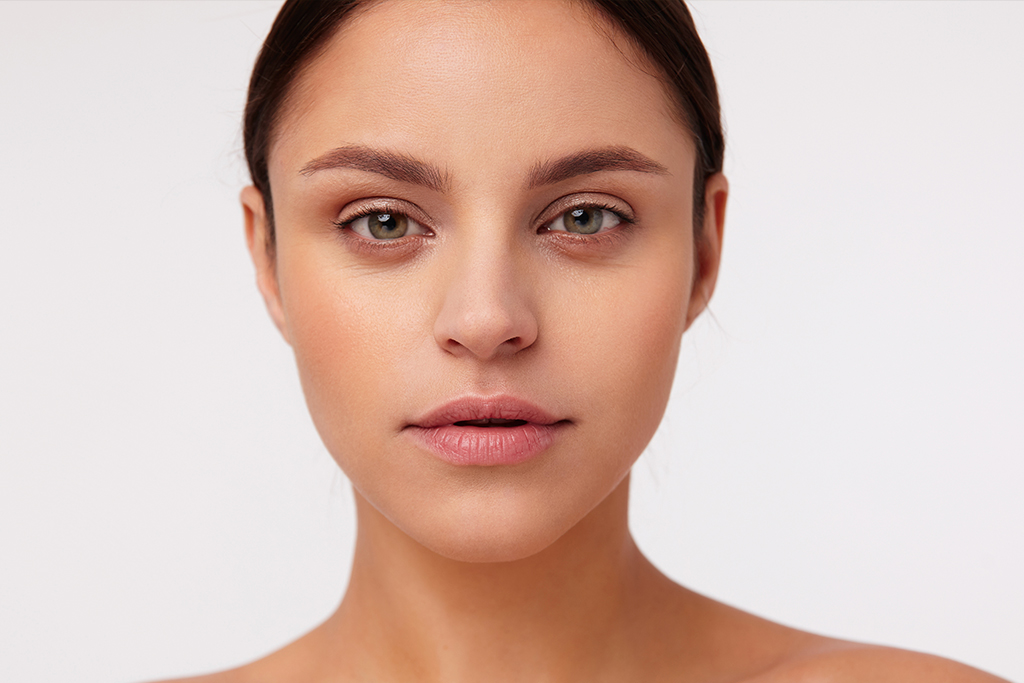
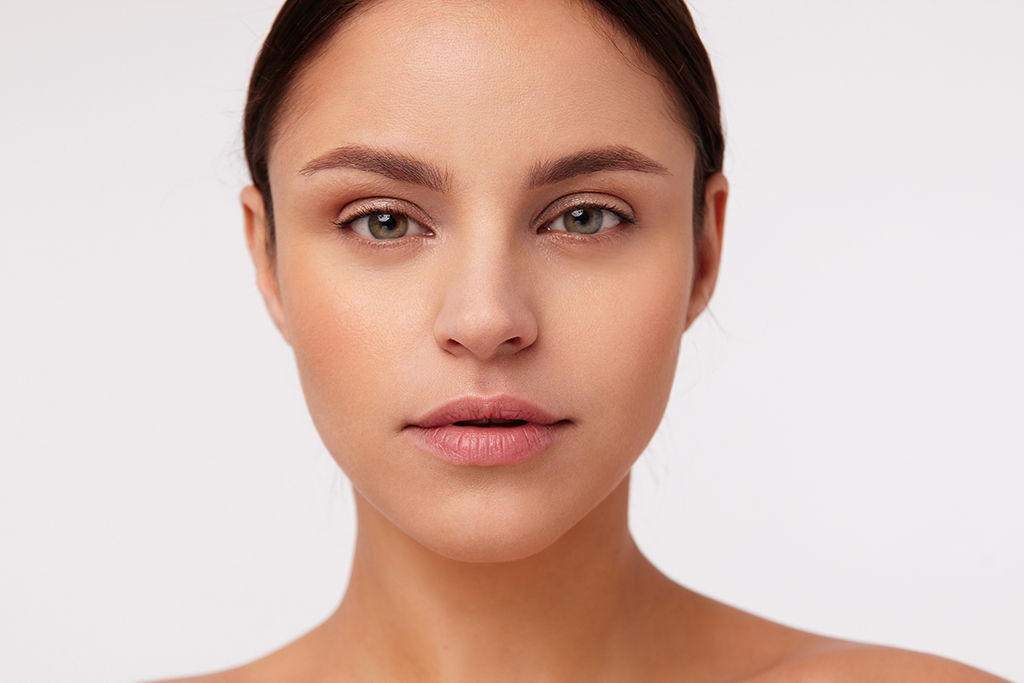
Under-eye bags, wrinkles, and skin discoloration show up in every kind of photograph, but the fix isn’t to reshape someone’s face or hand the whole job over to AI. This technique to eliminate dark circles uses a soft, feathered selection and a simple Lighten-mode brush to reduce darkness under the eyes while keeping every person looking exactly like themselves, with a quick AI-assisted touch-up reserved only for small wrinkles.
Getting Started: Why AI Alone Falls Short
It’s tempting to select the under-eye area and let Generative Fill regenerate it automatically, but that approach tends to change more than intended.
-
Test a Generative Fill Selection First
Make a selection around the under-eye area and generate new content with AI to see the result — it often reshapes the eye itself rather than simply lightening the skin beneath it.
Why AI-Only Fixes Can Look Wrong
The area under the eye is part of the eye’s own spherical shape poking out from under the eyelid, so regenerating that area with AI can subtly change the shape and tone of the eyes entirely, making someone look like a different person rather than a refreshed version of themselves. The goal here is only to lighten existing skin, never to redraw the underlying anatomy.
Making a Soft-Edged Selection
-
Select Under One Eye
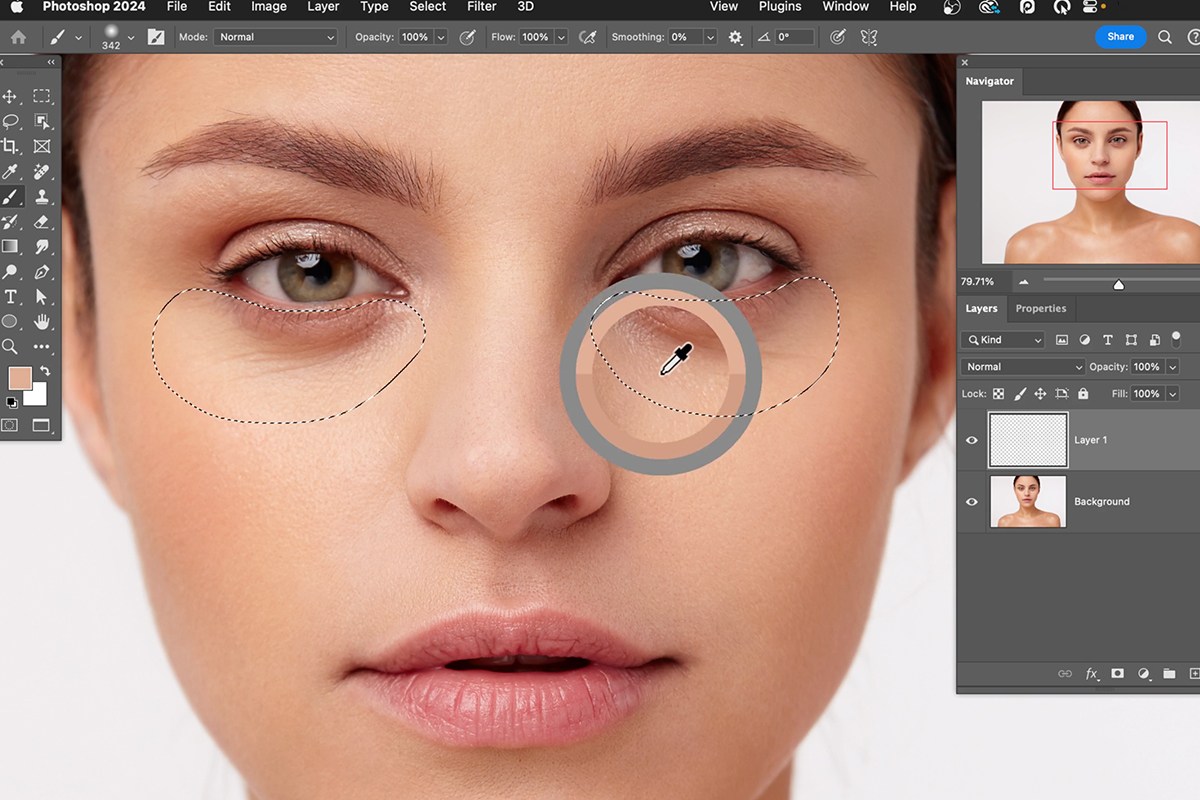
Press L for the Lasso tool and draw a loose selection around the area underneath one eye.
-
Add a Selection Under the Other Eye
Hold Shift and draw a second selection under the other eye, adding it to the first.
Feathering with Quick Mask and Gaussian Blur
A hard-edged selection paints in an obviously defined patch, so the edge needs to be softened before any color goes on.
-
Enter Quick Mask Mode
Press Q to enter Quick Mask mode, which lets you see your selection visually rather than guessing at it.
-
Apply a Gaussian Blur
Go to Filter > Blur > Gaussian Blur and drag the slider while watching the preview, choosing an amount — around 10 to 25 pixels depending on the image’s resolution — that visibly softens the mask’s edge.
-
Exit Quick Mask Mode
Press Q again to return to a normal, now feathered, selection.
Why Feather This Way Instead of Select > Modify > Feather
The standard Select > Modify > Feather command asks for a pixel amount with no visual preview of what that number actually produces. Feathering inside Quick Mask mode with a Gaussian Blur shows the exact softness of the selection edge in real time, so there’s no guessing at how many pixels is enough.

Painting in Lighter Tone
-
Set Brush Hardness to Zero
Press B for the Brush tool, right-click on the canvas, and set Hardness all the way down to 0.
-
Sample a Lighter Skin Tone
Hold Alt (Option on Mac) to activate the eyedropper and click a lighter area of skin nearby — not the darkest tone, the lighter one you want to paint toward.
-
Hide the Selection Edges
Press Ctrl + H (Cmd + H) to hide the marching-ants selection outline (choosing Hide Extras if prompted) so it doesn’t distract you while painting; the selection itself stays fully active.
-
Create a New Layer and Set It to Lighten
Add a new layer above the background, and change its blend mode from Normal to Lighten, so painting can only brighten pixels and never darken them.
-
Set Brush Flow to 10%
With the Brush tool still active, set Flow to 10% in the options bar so color builds up gradually rather than applying all at once.
-
Paint In the Lighter Tone
Click repeatedly over the selected under-eye area, letting the color build up gradually with each click until the darkness visibly reduces, without erasing all of the original shading.

Refining the Result
-
Adjust the Layer’s Opacity
Lower the new layer’s Opacity if the lightening effect looks too strong, dialing it back until the result looks natural rather than obviously retouched.
-
Deselect
Press Ctrl + D (Cmd + D) once you’re happy with the result.
Using AI Selectively for Wrinkles
Small wrinkles are one place where a quick pass with Generative Fill can help, used carefully and only on small, specific areas.
-
Select a Small Wrinkle Area
Press L for the Lasso tool and select just the small area containing the wrinkle you want removed.
-
Generate a Fill for That Area
Click Generative Fill type a single period in the prompt box, then click Generate to remove just that small detail. Review the results and pick one that looks natural.
Applying the Technique to Different Skin Tones
The same lighten-and-paint process works across different subjects and skin tones, as long as each area is sampled individually.
-
Repeat the Selection and Feather Process
Lasso the under-eye area on a new subject, hold Shift to add a second selection if needed, then repeat the Quick Mask and Gaussian Blur feathering steps, adjusting the blur amount to suit that image’s resolution.
-
Sample and Paint on Each New Area
Create a new Lighten-mode layer, hold Alt/Option to sample the correct nearby skin tone for that specific area, and paint it in with a low-flow brush just as before.
Sampling Color Separately for Each Area
When working across areas with noticeably different skin tones on the same photo, resample with Alt/Option separately for each one rather than reusing a single sampled color throughout. Painting a color sampled from one skin tone onto an area with a different tone produces an obvious, mismatched patch instead of a natural blend.
Common Mistakes to Avoid
Relying entirely on Generative Fill to remove under-eye bags is the biggest misstep, since it tends to reshape the eye rather than just lighten the skin beneath it. It’s also easy to skip feathering the selection, which leaves an obviously hard edge around the painted area, and to forget to reduce the layer’s opacity afterward — a result that looks right in the moment often reads as overdone a day later. Sampling one skin tone and painting it onto an area with a different tone is another common slip that produces a visibly mismatched patch.
Why This Approach Works
The core judgment call here is choosing reduction over replacement: lightening existing skin with a low-flow brush preserves the person’s actual features, while asking AI to regenerate the same area risks subtly reshaping the eye itself and producing someone who looks like a different person. Feathering the selection through Quick Mask and a visible Gaussian Blur, rather than guessing at a pixel value in a feather dialog, is what keeps the painted result from having an obvious, hard-edged boundary.
Setting the new layer to Lighten blend mode with a 10% flow brush means every click nudges the tone gradually rather than flooding the area with color all at once, which is exactly the kind of restraint that keeps a retouch looking natural instead of artificial. Reserving Generative Fill for genuinely small details, like an isolated wrinkle, rather than the whole under-eye area, uses AI for what it does well — filling in a tiny gap — without letting it make broader decisions about someone’s facial structure.
Final Thoughts
Dark circles, mild wrinkles, and uneven skin tone are extremely common in ordinary photos, and this technique handles all of them with nothing more exotic than a Lasso selection, a Gaussian-blurred Quick Mask, and a Lighten-mode brush at low flow. Keep the goal in mind at every step: reduce, don’t replace, and always dial the opacity back down after the fact, since a subtle result that still looks like the same person will hold up far better than a heavy-handed one.
Quick Reference: Keys, Menus and Settings
- Select under the eyesL for the Lasso; Shift-drag to add the other eye
- Feather with a previewQ, Filter > Blur > Gaussian Blur (25 px here, about 10 on smaller images), Q again
- Set up the brushB, right-click, Hardness 0; Alt/Option-click a lighter skin color
- Hide the selection edgeCmd/Ctrl + H, choose Hide Extras the first time
- Paint layerNew layer, blend mode Lighten, Flow 10% in the options bar
- FinishLower the layer’s Opacity; Cmd/Ctrl + D to deselect
- Small wrinklesSmall Lasso selections, Generative Fill, a single period in the prompt box, Generate
Free Downloads
Follow Along on the Same Photos
Get the three portraits with different skin tones, the three layered PSDs and the 4-page PDF guide to follow every step. Free with a PHLEARN account.
Dark Circles Under Eyes: Common Questions
Why not just use Generative Fill on the under-eye bags?
It removes the bags but tends to give you new features. The area under the eye is part of the eye’s rounded shape, so regenerating it can change the shape and tone of the eyes until the person no longer looks like themselves.
How do I feather the selection so the paint has no hard edge?
Press Q for Quick Mask, go to Filter > Blur > Gaussian Blur and drag the slider while you watch the edge soften, then press Q again. Unlike Select > Modify > Feather, you see exactly how soft the edge will be.
How much Gaussian Blur should I use?
It depends on the image. The first portrait uses 25 pixels; the two smaller-resolution images use about 10. Judge it by the Quick Mask preview.
What brush settings do I use?
Press B, right-click and set Hardness to 0. In the options bar, set Flow to 10% so the color builds up slowly, then click repeatedly over the area.
Why set the new layer to Lighten?
Lighten can only brighten the pixels under it, never darken them. Combined with a low Flow, each click nudges the skin lighter while the shape of the eye stays.
Which color should I paint with?
Hold Alt/Option with the Brush to get the eyedropper and click a lighter skin color nearby, not the dark one. Where one side of the face is darker, sample again from that side, or the patch looks mismatched.
How do I hide the marching ants without losing the selection?
Press Cmd/Ctrl + H. The first time, choose Hide Extras. The selection stays active, so press Cmd/Ctrl + D when you are done.
Will this cover skin texture or look overdone?
It does cover some texture, but at 10% Flow and a reduced layer Opacity it makes little difference to the overall image. Toggle the layer to compare, and lower the Opacity a bit every time.
Can I remove small wrinkles under the eyes too?
Yes. Lasso just the small wrinkles, click Generative Fill, type a single period in the prompt box and click Generate, then keep a natural result. If it is a client, ask them first.
Are the sample files free?
Yes, with a free PHLEARN account. You get 3 sample images, 3 sample PSDs and 1 PDF guide: three portraits with different skin tones, the finished documents and a 4-page walkthrough.
Master Photoshop, Lightroom and Photography
Join PHLEARN PRO for $12.99 a month, or $99.99 a year (save 36%). Cancel anytime, with a 100% money-back guarantee.