
Download Assets
This tutorial includes 2 sample images, 1 sample PSD and 1 PDF guide. Downloads are free with a PHLEARN account.
- Download the sample images and PSDs from every free tutorial on PHLEARN
- New free tutorials published every week
- One free account — sign up once, then download anything
Free PDF Guide · 4 Pages
This Tutorial as a Step-by-Step PDF
Walks through the Object Selection tool with Object Finder, three ways to Delete and Fill (Alt/Option+Delete, Shift+Delete with Content-Aware, and right-click Delete and Fill Selection), cleanup with the Clone Stamp and Spot Healing Brush, then Edit > Sky Replacement matched with a clipped Levels layer. Keep it next to your keyboard.
description
Delete and Fill in Photoshop removes an object in one keystroke: select it with the Object Selection tool, then hold Alt or Option and press Delete.
Photoshop’s Object Selection tool gained a one-click Delete and Fill feature, and paired with Sky Replacement it can strip a distracting object out of a landscape and swap in a new sky in seconds. Here’s the whole workflow — selecting objects automatically, both ways to delete and fill, cleaning up the detail the fill leaves behind with the Clone Stamp and Spot Healing Brush, and matching a replacement sky so it doesn’t look pasted on.
Enjoying This Free Tutorial?
We publish a new free tutorial every week, each one with sample images and PSDs you can download and follow along with. Sign up and they land straight in your inbox, along with early word on sales, events and subscriber-only offers.
Image Source
Photo by Sinitta Leunen via Pexels
How to Instantly Remove Anything from a Photo with Fill and Delete in Photoshop
Photoshop’s Object Selection tool got a major upgrade with a one-click Delete and Fill feature, and paired with the Sky Replacement tool, it makes it possible to remove distracting objects from a landscape photo and swap in a completely new sky — all without ever touching a manual selection tool for more than a few seconds. This walkthrough covers both the automatic object removal workflow and the cleanup and color-matching steps that make a Sky Replacement actually look believable.
Getting Started with Object Removal
Before making any destructive changes, it’s worth duplicating the background so the original pixels are always recoverable.
-
Duplicate the Background Layer
Press Ctrl + J on PC (Cmd + J on Mac) to duplicate the background layer. This way you can always get back to the untouched original if something goes wrong later in the process.
Selecting Objects with the Object Selection Tool
The Object Selection tool lives under the Marquee tool group (shortcut W, shared with the Magic Wand) and has been significantly improved in recent Photoshop updates.
-
Turn On Object Finder
With the Object Selection tool active, turn on Object Finder in the options bar and let it reload. It will scan the image and highlight every object it detects as selectable, shown as a magenta overlay.
-
Choose a Selection Style
You can click with a simple rectangle, or lasso around an object to circle it. Options in the bar also let you sample all layers, choose a hard or soft edge, and process on your device or in the cloud for better results (cloud processing requires an internet connection).
-
Hover to Preview and Click to Select
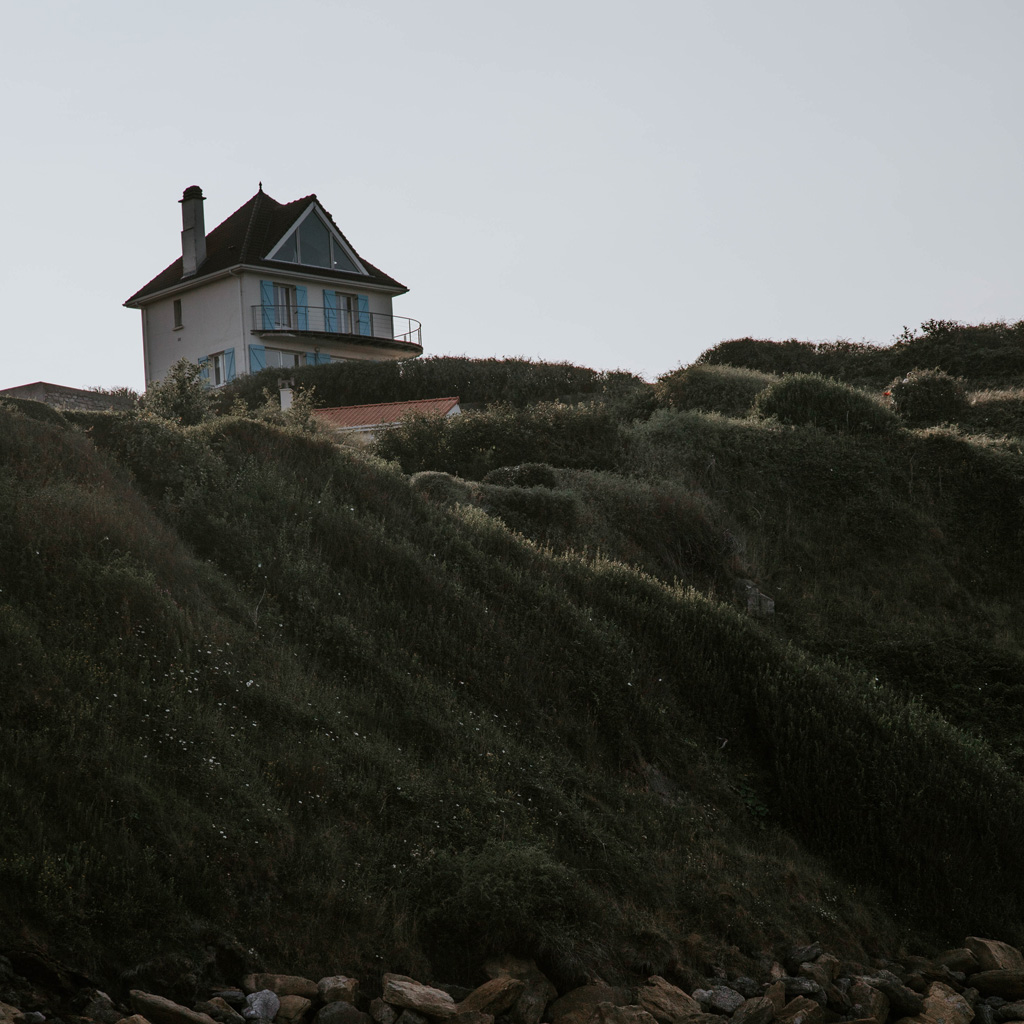
Simply hover over anything you want to remove — the tool highlights the foreground object, a house, or the background as you move over them. Click directly on an object, like a house, to make it your active selection.
Delete and Fill in Photoshop With a Keyboard Shortcut
Once an object is selected, Photoshop’s new Delete and Fill feature can remove it and fill the gap with content-aware information in a single step.
-
Delete and Fill with Alt/Option + Delete
With your selection active, hit Alt + Delete on PC (Option + Delete on Mac) and the selected object is instantly deleted and filled.
-
Delete and Fill with Shift + Delete
According to Adobe’s documentation, Shift + Delete also works, but in the video it opens the Fill dialog first. Set Contents to Content-Aware in that dialog and click OK, then press Ctrl + D (Cmd + D) to deselect.
Why Two Shortcuts Exist
Both shortcuts use content-aware technology, but they don’t always produce identical results on the same selection. If one shortcut leaves an unwanted artifact, undo a couple of times and try the other — which one works best can depend on your specific image and selection.
Deleting and Filling via the Right-Click Menu
The same Delete and Fill technology is also available through a regular selection tool, which is useful when the Object Selection tool doesn’t isolate exactly the area you want.
-
Make a Manual Selection
Grab the regular Polygonal Lasso tool, zoom in on the area you want to remove, and draw a selection around it — for example, a house or a section of brick wall.
-
Right-Click and Choose Delete and Fill Selection
Right-click inside the selection and choose Delete and Fill Selection from the menu. Photoshop deletes the selected area and fills it using content-aware technology.
-
Repeat for Each Remaining Object
Repeat the selection and right-click process for every other object you want gone from the scene.
Cleaning Up Leftover Detail
Zoomed out, an automatic Delete and Fill result can look flawless. Zoomed in, you may notice a sliver of the removed object still lingering, or areas where the content-aware fill looks a little fuzzy. For most casual use this won’t be noticeable, but for professional-level results a bit of manual cleanup on a new layer goes a long way.
Finishing Detail with the Clone Stamp Tool
Press S for the Clone Stamp tool, set Sample to Current and Below so it can pull from what’s already there, hold Alt (Option on Mac) to sample a clean area, and paint over any remaining trace of the removed object until it blends in.
Finishing Texture with the Spot Healing Brush
For soft, fuzzy edges left behind by content-aware fill, switch to the Spot Healing Brush, make sure Sample All Layers is checked, and simply paint over the area you want gone. This tool works well even with something as basic as a laptop trackpad, and continues to improve with every Photoshop release.
Replacing the Sky
With the distracting objects removed and cleaned up, the landscape is ready for a full Sky Replacement to finish the transformation.
-
Merge Your Cleanup Layers
Select your working layers and press Ctrl + E (Cmd + E) to merge them together. Sky Replacement performs better on a single layer full of content than on a mostly blank one.
-
Open the Sky Replacement Dialog
Go to Edit > Sky Replacement.
-
Choose and Position a New Sky
Click the plus icon to add a new sky image to your My Skies folder, then select it. Use the built-in move tool to reposition it, flip it left or right, scale it, and adjust the edge fade sliders until it fits your scene.
-
Output to New Layers
Set the output option to New Layers and click OK so the sky, foreground, and any adjustment layers Photoshop generates are added separately and can still be edited afterward.
Why the Original Sky Looked Fake
Toggling the new sky layer off and on reveals the problem: the original sky was flat and low in contrast, while the freshly added sky carries a lot more contrast and color. Dropped in as-is, the mismatch in contrast between the two is what makes a sky swap read as obviously fake rather than natural.
Matching the New Sky to Your Photo
A believable Sky Replacement depends on making the new sky’s contrast and color feel native to the rest of the image, not just dropping it in behind the horizon.
-
Add a Clipped Levels Adjustment Layer
Open the Sky Replacement group in the Layers panel, select the sky layer, then go to Layer > New Adjustment Layer > Levels. In the Properties panel, click the clipping icon so the adjustment only affects the sky layer beneath it.
-
Lower the Contrast to Match
Drag the black output slider at the bottom of the Levels panel from left to right, and drag the white output slider from right to left, to bring the sky’s contrast down closer to the level of the original photo. Toggle the adjustment off and on to compare before and after.
-
Adjust the Blue and Green Channels
Still in the Levels panel, switch the channel dropdown from RGB to Blue and nudge the middle slider slightly to the left to introduce a touch of blue into the sky, then switch to the Green channel and do the same to bring the color tone closer to matching the rest of the photo.
Common Mistakes to Avoid
The most common misstep is trusting the automatic Delete and Fill result from a zoomed-out view without checking it up close — small artifacts and fuzzy edges are easy to miss until you’re zoomed in. The second is skipping the Levels adjustment after a Sky Replacement: dropping in a high-contrast, saturated sky over a low-contrast original photo without matching them is what makes a swapped sky look obviously fake. Always compare your result with the adjustment toggled off and on before calling it finished.
Why This Approach Works
What makes this workflow fast without sacrificing quality is the division of labor between automation and manual touch-ups. The Object Selection tool’s Object Finder does the heavy lifting of isolating a house, a wall, or any other distraction with a single hover and click, and the Delete and Fill shortcuts hand that selection straight to content-aware fill technology without an extra trip to a menu. But automatic tools are trained on general patterns, not your specific photo, so a second pass with the Clone Stamp tool and Spot Healing Brush is what catches the leftover slivers and soft edges that content-aware fill alone can miss.
The same logic carries into the Sky Replacement: the feature does the difficult work of masking around trees, buildings, and horizon lines automatically, but it has no way of knowing how flat or contrasty your original sky was. That’s exactly what the clipped Levels adjustment is for — by lowering the new sky’s contrast and nudging its color channels, you’re matching the light quality of the replacement to the light quality already present in the rest of the photo, which is what actually sells the illusion rather than the sky swap itself.
Final Thoughts
These tools keep getting better with every Photoshop release, but the underlying principle here will stay useful even as the automation improves: let the automatic tools get you most of the way, then use simple manual tools and a Levels adjustment to handle the details that automation can’t judge for you. Once you’re comfortable with Delete and Fill for object removal and clipped adjustment layers for color matching, both techniques transfer directly to other retouching and compositing work, well beyond just cleaning up a single landscape photo.
Quick Reference: Keys, Menus and Settings
- Duplicate the backgroundCmd/Ctrl + J
- Select an objectObject Selection tool (W), check Object Finder, hover and click
- Delete and FillAlt/Option + Delete; Shift + Delete opens Fill: Content-Aware; Cmd/Ctrl + D to deselect
- Any selectionPolygonal Lasso, right-click > Delete and Fill Selection
- Clean upNew layer; S with Sample: Current & Below and Alt/Option-click; Spot Healing Brush with Sample All Layers
- New skyCmd/Ctrl + E to merge, Edit > Sky Replacement, Output To: New Layers
- Match the skyLayer > New Adjustment Layer > Levels, clipped; Output Levels sliders in; Blue and Green midtones a little left

Free Downloads
Follow Along on the Same Photos
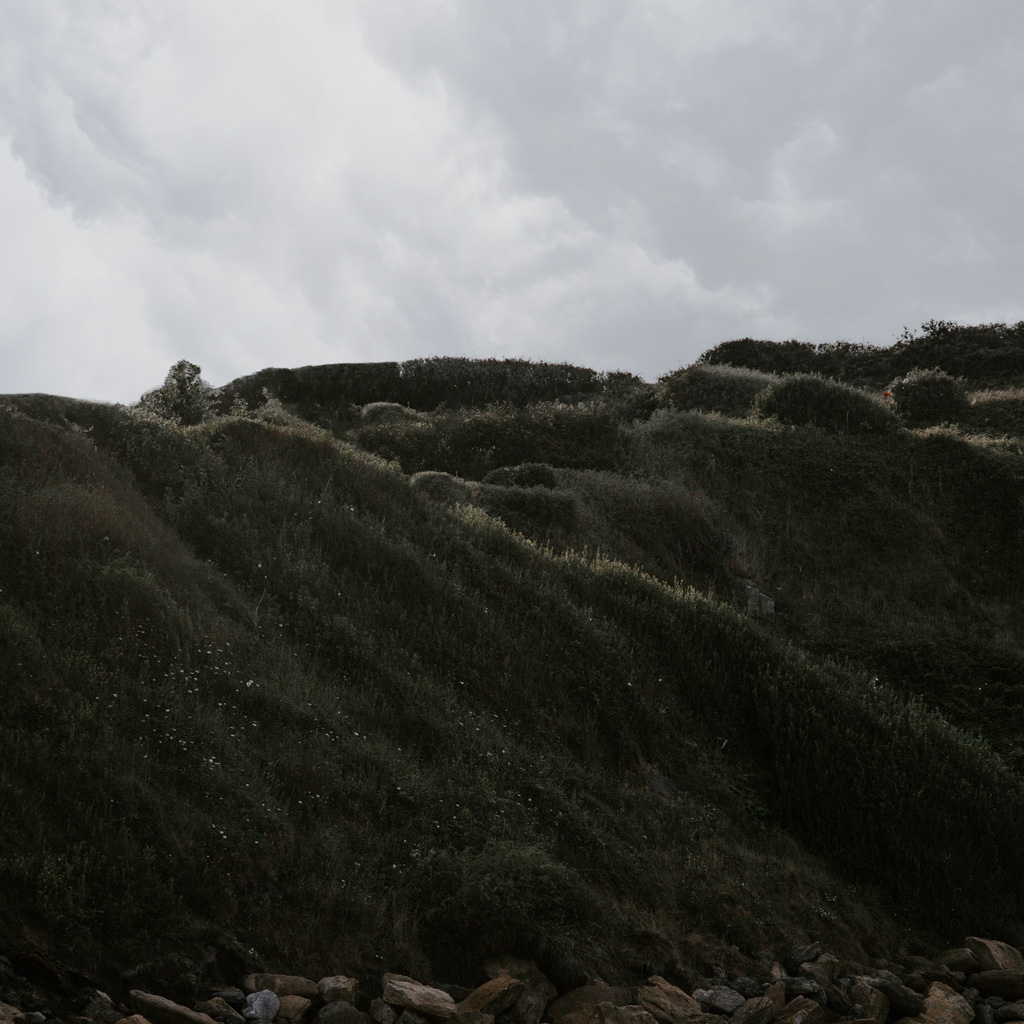
Get the hillside landscape, the replacement sky for your My Skies folder, the finished PSD and the 4-page PDF guide. Free with a PHLEARN account.
Delete and Fill in Photoshop: Common Questions
What is the shortcut for Delete and Fill?
With a selection active, press Alt/Option + Delete. The object is deleted and the gap filled with Content-Aware right away, with no dialog. Press Cmd/Ctrl + D to deselect.
Why does Shift + Delete open a dialog?
Adobe’s documentation lists Shift + Delete too, but in the video it opens the Fill dialog. Choose Content-Aware and click OK. On the house its result was not as good, so Aaron undid it and used Alt/Option + Delete instead.
How do I select an object with one click?
Take the Object Selection tool (W), in the toolbar just under the Marquee tool, and check Object Finder in the options bar. Hover over the house, the foreground or the sky to highlight it, then click to make the selection.
How do I see everything the Object Selection tool can select?
Click the icon next to Object Finder. It shows every object Photoshop found as a colored overlay, magenta in the video. The reload icon makes it scan the image again.
Can I use Delete and Fill with other selection tools?
Yes. Draw around the object with the Polygonal Lasso, right-click inside the selection and choose Delete and Fill Selection. Aaron does this for the red-roofed house and the little brick wall.
Why can I still see part of the object I removed?
Zoomed in, a little of the house or a fuzzy patch can remain. On a new layer, use the Clone Stamp (S) with Sample set to Current & Below and Alt/Option-click a clean area, or the Spot Healing Brush with Sample All Layers checked for a stray edge.
Why merge the layers before Sky Replacement?
Sky Replacement works better on a layer full of content than on a mostly blank one. Select the filled layer and the cleanup layer and press Cmd/Ctrl + E.
How do I add my own sky to Sky Replacement?
In Edit > Sky Replacement, open the sky picker, click the My Skies folder, click the plus icon, find the sky image and hit Open. It stays in Photoshop permanently. Set Output To: New Layers so everything remains editable.
Why does my new sky look fake?
It has much more contrast than the original sky. Add Layer > New Adjustment Layer > Levels, click the clip icon so it only affects the sky, and pull both Output Levels sliders in. Then nudge the middle slider a little left in the Blue and Green channels to match the color.
Are the sample files free?
Yes, with a free PHLEARN account. You get 2 sample images, 1 sample PSD and 1 PDF guide: the landscape, the replacement sky to add to My Skies and the finished PSD, plus the step-by-step guide.
Master Photoshop, Lightroom and Photography
Join PHLEARN PRO for $12.99 a month, or $99.99 a year (save 36%). Cancel anytime, with a 100% money-back guarantee.