
Download Assets
This tutorial includes 1 sample image, 1 sample PSD and 1 PDF guide. Downloads are free with a PHLEARN account.
- Download the sample images and PSDs from every free tutorial on PHLEARN
- New free tutorials published every week
- One free account — sign up once, then download anything
Free PDF Guide · 3 Pages
This Tutorial as a Step-by-Step PDF
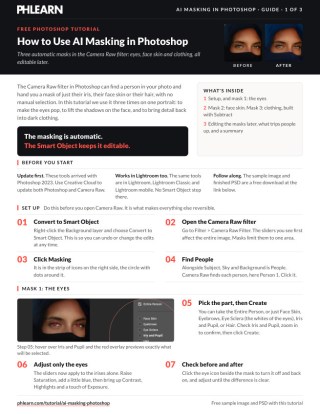
The guide walks through Convert to Smart Object, Filter > Camera Raw Filter > Masking, a People mask on Iris and Pupil, a second Face Skin mask with Shadows raised, and a clothing mask built from Select Subject with Subtract > People, then reopening the Smart Filter to change any mask. Keep it next to your keyboard.
description
AI masking in Photoshop lives in the Camera Raw filter, and it will hand you a person’s iris, their face skin or their hair as a mask on its own.
Photoshop’s Camera Raw filter includes automatic, AI-driven masking that finds a subject’s eyes, skin, hair and clothing on its own, with no manual selection. Paired with a Smart Object workflow those masks stay fully editable, so you can come back and adjust any of them later without rebuilding a selection. Covers masking eyes, face and skin, isolating clothing with additive and subtractive masks, and the mistakes that break the non-destructive workflow.
Enjoying This Free Tutorial?
We publish a new free tutorial every week, each one with sample images and PSDs you can download and follow along with. Sign up and they land straight in your inbox, along with early word on sales, events and subscriber-only offers.
Image Source
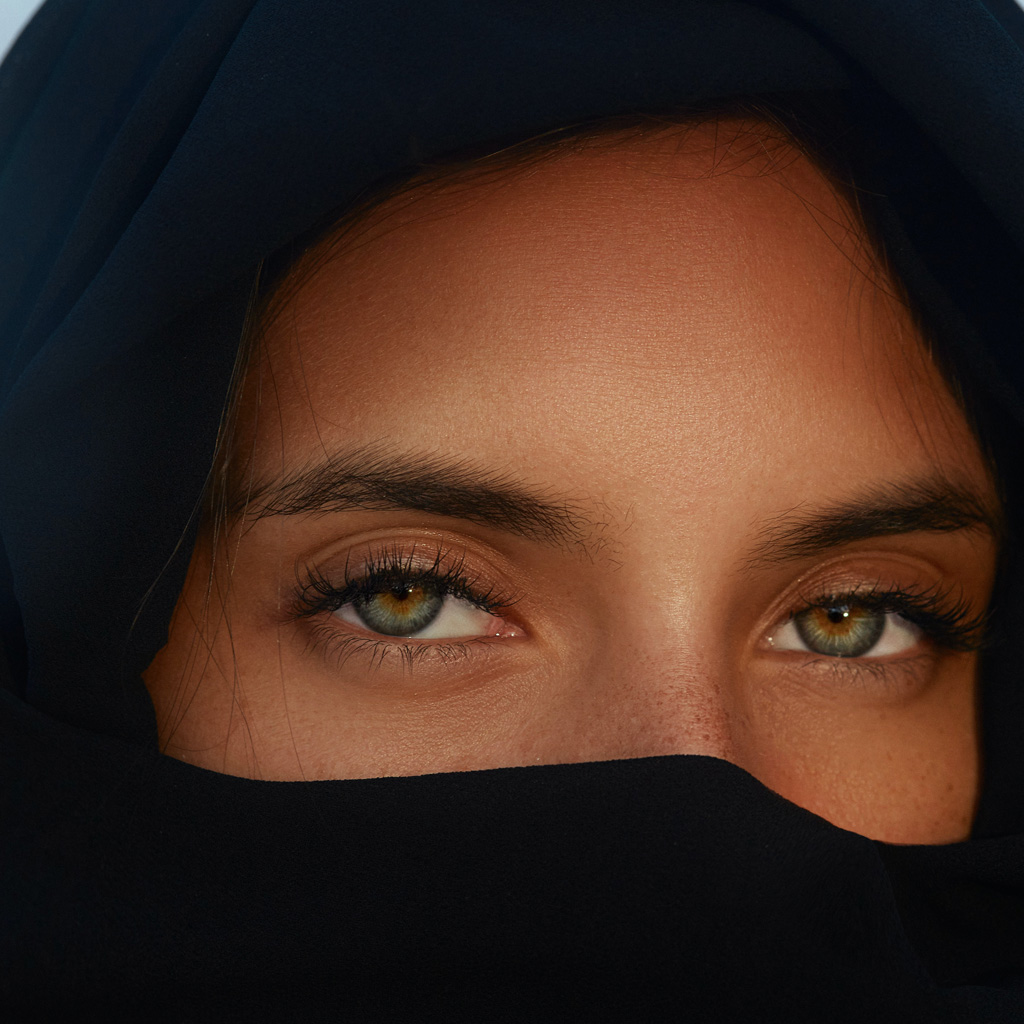
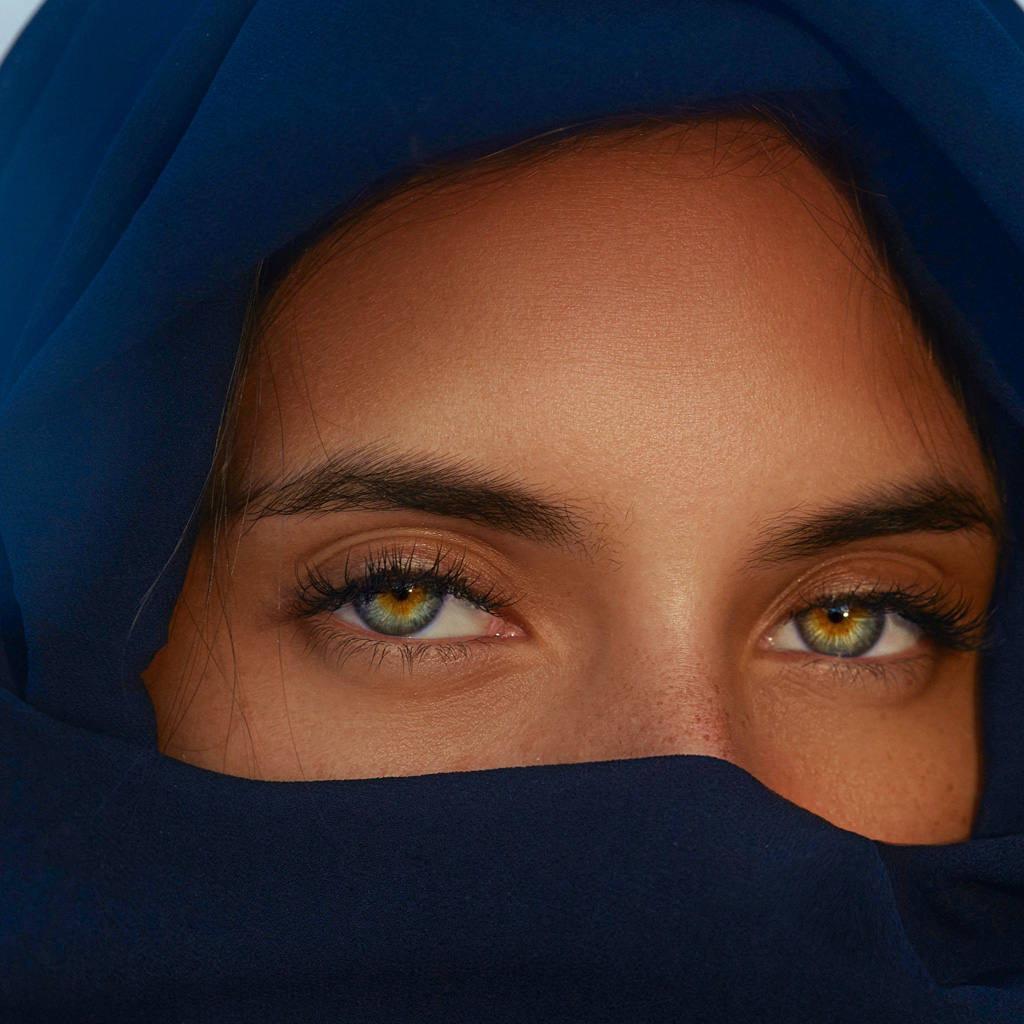
Photo by Jonaorle via Pexels
How to Use AI Masking in Photoshop
Photoshop’s Camera Raw filter now includes automatic, AI-driven masking tools that can find a subject’s eyes, skin, hair, and clothing on their own — no manual selection required. Paired with a Smart Object workflow, these masks stay fully editable, so you can come back and adjust the eyes, skin, or clothing of a portrait at any time without rebuilding a single selection from scratch.
Getting Started with the Smart Object Workflow
Before opening the masking tools, the background layer needs to be converted into a Smart Object so every adjustment made inside Camera Raw stays non-destructive and editable later.
-
Convert the Background Layer to a Smart Object
Right-click the background layer and choose Convert to Smart Object. A small Smart Object icon appears on the layer thumbnail once it’s done. This step only applies in Photoshop — Smart Objects don’t exist in Lightroom, so this isn’t necessary there.
Why Smart Objects Matter Here
Applying Camera Raw as a filter on a regular layer bakes the changes in permanently. Applying it to a Smart Object turns it into an editable Smart Filter instead, which means every mask and every slider adjustment made inside Camera Raw can be reopened and changed at any point later, without starting over.
Opening the Camera Raw Filter
-
Open the Camera Raw Filter
With the Smart Object layer selected, go to Filter > Camera Raw Filter. Make sure both Camera Raw and Photoshop are updated through Creative Cloud, since these masking tools are a newer addition.
-
Open the Masking Panel
In the panel on the right, click Masking. Alongside the existing options to mask the entire subject, sky, or background, look for the new People option, which is where the added power comes in.
Masking the Subject’s Eyes
The People option breaks a detected person down into selectable parts, from their entire body down to specific facial features.
-
Select People
Click People in the Masking panel. Once a person is identified, you can select the entire person, or drill down further into options like skin, eyebrows, the sclera (the whites of the eyes), the iris and pupil, or hair — each option previews on the image as you hover over it.
-
Choose Iris and Pupil, Then Create
Select Iris and Pupil and click Create to generate the mask inside Camera Raw.
-
Adjust the Eyes
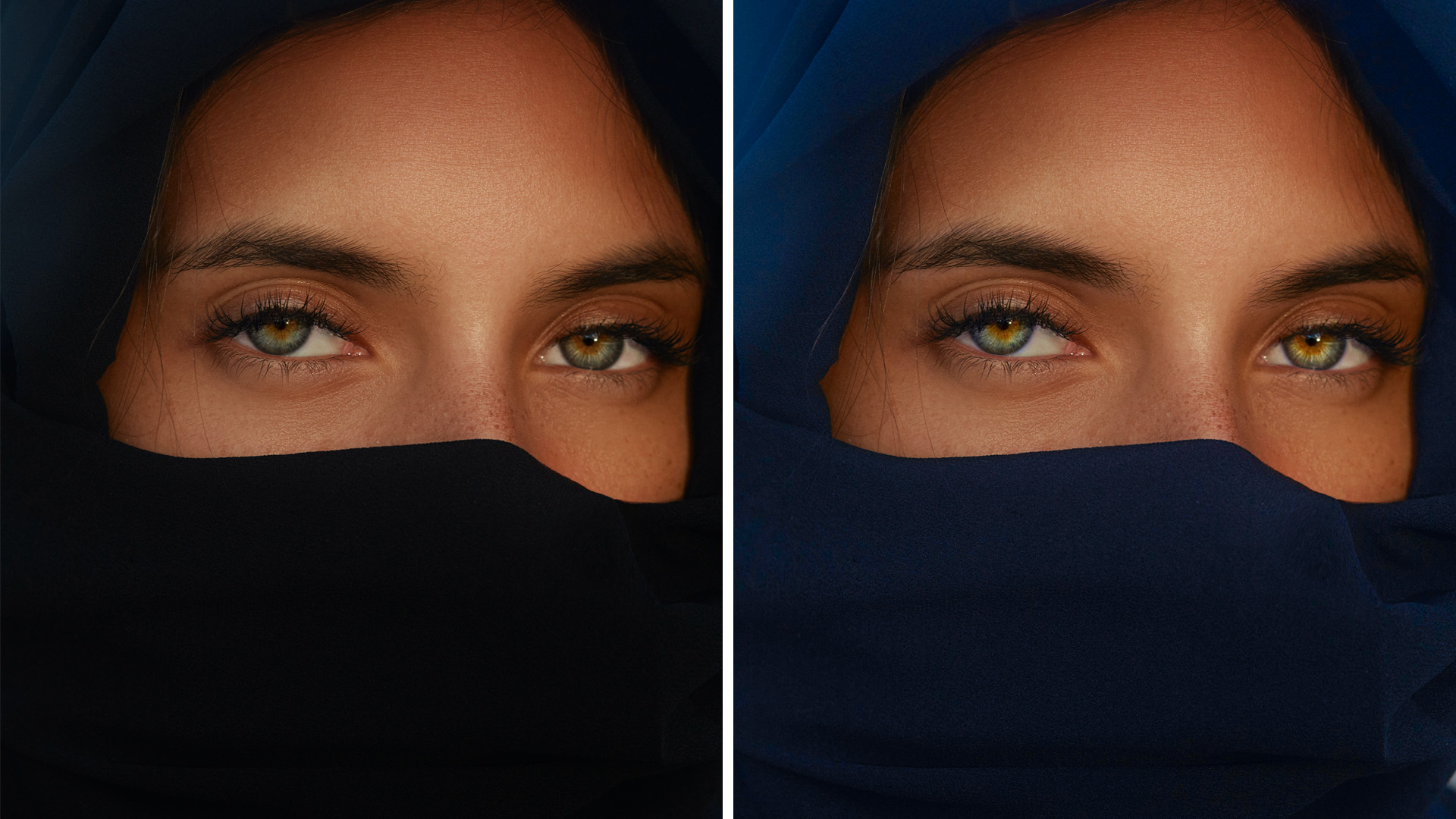
With the mask active, raise Saturation to make the eye color pop, add a touch more Blue, and increase Contrast and Highlights. Toggle the mask’s visibility icon off and on to compare the before and after.
How the People Selection Options Work
The specific options available under People change depending on what Photoshop’s AI actually detects in your image — if a visible body is present, options like body skin may appear alongside face-specific choices. The tool only offers selections it can confidently identify in that particular photo.
Masking the Subject’s Face and Skin
A second, independent mask can target just the skin for its own set of adjustments.
-
Create a New Mask
At the top of the Masks panel, click Create New Mask, then select People again.
-
Select Face Skin and Create
Choose Face Skin from the People options and click Create.
-
Brighten the Skin’s Shadows
Raise the Shadows slider to brighten just the skin of the subject’s face, since the mask isolates only that area.
Isolating Clothing with Additive and Subtractive Masks
There’s no direct “select clothing” option, but combining Select Subject with a subtractive mask reaches the same result.
-
Select Subject
Create a new mask and choose Select Subject to select the entire person.
-
Subtract the Face and Skin
Click the Subtract icon, then choose People again and check Face Skin, Eyebrows, Eye Sclera, Iris and Pupil, and Hair: every box below Entire Person. Hover over them to preview what will be removed.
-
Create the Clothing Mask
Click Create. What remains, after subtracting the face out of the full-subject selection, is effectively just the clothing.
-
Adjust the Clothing
With the clothing mask active, raise Shadows and Exposure, and pull Color Temperature toward blue to recover detail and shift the color of the fabric. Toggle the mask on and off to see the shadow detail return.
Why Subtract from Select Subject
Since there’s no built-in option to select clothing directly, starting from a full Select Subject mask and subtracting out every part of the face, hair included, is what isolates the clothing without any manual lasso work. The same additive-and-subtractive approach can be reused for other combinations the tool doesn’t offer as a single preset.
Making Non-Destructive Edits Later
-
Return to Photoshop
Click OK at the bottom right of the Camera Raw dialog to return to Photoshop. Because the layer is a Smart Object, the Camera Raw filter now appears as an editable Smart Filter, with its own visibility toggle just like any other Photoshop filter.
-
Reopen the Filter to Make Changes
Double-click Camera Raw Filter in the Layers panel at any time to go back in, select any of the masks you created — the eyes, the face skin, or the clothing — and adjust the sliders again. Every mask is saved and waiting exactly where you left it.
Common Mistakes to Avoid
Skipping the Smart Object conversion before applying the Camera Raw filter is the most common misstep — without it, the filter applies destructively and there’s no way to reopen your masks and adjustments later. It’s also easy to forget that the People options change based on what’s actually detected in a given photo, so don’t expect the exact same menu of choices on every image.
And when isolating something like clothing that has no direct preset, remember that combining Select Subject with a subtracted selection, rather than trying to manually lasso the area, is what keeps the mask accurate and reusable.
Why This Approach Works
What makes this workflow powerful isn’t just that Photoshop can find a subject’s eyes or skin automatically — it’s that every mask it creates lands inside a fully editable Camera Raw filter rather than a one-time destructive edit. Wrapping the background layer in a Smart Object first is what makes that possible: the AI masking does the difficult work of isolating small, specific areas like an iris or a strip of clothing that would otherwise take real time to select by hand, while the Smart Object preserves every one of those masks as a live, revisitable adjustment.
The additive-and-subtractive masking trick used to isolate clothing shows why this matters even more — when the AI doesn’t offer a preset for exactly what you want, you can still reach it by combining two of its existing selections, which means the tool’s usefulness isn’t limited to whatever categories it explicitly lists. That combination of automatic detection and non-destructive editing is what turns a single quick pass through using Adobe Camera Raw in Photoshop into a portrait retouch you can keep refining indefinitely.
Final Thoughts
AI masking in Camera Raw removes a huge amount of the manual selection work that used to stand between a raw portrait and a polished edit, and because it’s all happening inside a Smart Object, none of that speed comes at the cost of flexibility. Once you’re comfortable creating masks for eyes, skin, and clothing individually, and using Select Subject with subtraction to reach areas without a direct preset, the same approach scales to any portrait where you want targeted, reversible adjustments rather than one blanket edit applied to the whole image.
Quick Reference: Keys, Menus and Settings
- Keep it editableRight-click the Background layer > Convert to Smart Object
- Open the masksFilter > Camera Raw Filter, then the Masking icon > People
- Mask the eyesIris and Pupil > Create; Cmd/Ctrl + + to zoom in; raise Saturation, Contrast and Highlights
- Mask the face skinCreate New Mask > People > Face Skin > Create; raise Shadows
- Mask the clothingCreate New Mask > Select Subject, then Subtract > People with every face part and Hair checked
- CompareEye icon beside each mask, or beside Camera Raw Filter in the Layers panel
- Change it laterDouble-click Camera Raw Filter, open Masking, select a mask, move its sliders
Free Downloads
Follow Along on the Same Photo
Get the close-up portrait, the finished PSD with the Camera Raw filter and all three masks still live, and the 3-page PDF guide. Free with a PHLEARN account.
AI Masking in Camera Raw: Common Questions
Where are the AI masking tools in Photoshop?
They are in the Camera Raw filter. Go to Filter > Camera Raw Filter, click the Masking icon on the right and choose People. Use Creative Cloud to update both Photoshop and Camera Raw first.
Why convert to a Smart Object first?
On a Smart Object the Camera Raw filter becomes an editable Smart Filter, so every mask and slider can be reopened and changed later. On a regular layer the edit is baked in.
How do I select just the eyes?
In Masking, click People, then Person 1, check Iris and Pupil and click Create. The sliders now affect only the irises; the tutorial raises Saturation, adds a little blue and brings up Contrast and Highlights.
Why don’t I see the same People options on every photo?
The list depends on what Camera Raw finds in the image. If there is a visible body, for example, you may also get a body skin option.
How do I add another mask?
Click Create New Mask at the top of the Masks panel and choose People again. Check Face Skin and click Create; raising Shadows then brightens only the skin of the face.
How do I mask just the clothing?
There is no clothing option, so create a new mask with Select Subject, click Subtract, choose People and check every box below Entire Person: Face Skin, Eyebrows, Eye Sclera, Iris and Pupil, and Hair. What is left is basically the clothing.
Why do my sliders change the whole image?
Outside of Masking the sliders affect the entire image. Inside it they belong to whichever mask is selected, so click the mask you want first.
How do I change a mask after clicking OK?
Double-click Camera Raw Filter under the layer in the Layers panel, click the Masking icon and select the mask. Move its sliders, such as Temperature or Tint on the clothing, and click OK.
Can I do this in Lightroom?
Yes. The same masking tools are in Lightroom, Lightroom Classic and Lightroom mobile, and you can skip the Smart Object step there.
Are the sample files free?
Yes, with a free PHLEARN account. You get 1 sample image, 1 sample PSD and 1 PDF guide: the portrait, the finished document with every mask still live and a 3-page step-by-step guide.
From the Magazine View all
Stories, interviews and guides for photographers, new every week.
 EditingHow to Color Grade Photos in Photoshop and LightroomCorrect the photo first, then put color in the shadows, midtones and highlights. Aaron Nace on the order, the tools and skin.
 BusinessHow to Compete With AI: Give Your Clients MoreEveryone has the same tools now, and your clients know it. The way to compete is to give them more.
 EditingLightCraft vs Lightroom: I Edited the Same RAW Files in BothThe free clone on the same RAW files: what matches, what breaks and who should switch.
Master Photoshop, Lightroom and Photography
Join PHLEARN PRO for $12.99 a month, or $99.99 a year (save 36%). Cancel anytime, with a 100% money-back guarantee.