
Download Assets
This tutorial includes 2 sample textures, 1 sample PSD and 1 PDF guide. Downloads are free with a PHLEARN account.
- Download the sample images and PSDs from every free tutorial on PHLEARN
- New free tutorials published every week
- One free account — sign up once, then download anything
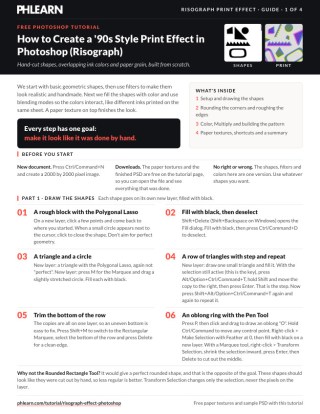
Free PDF Guide · 4 Pages
This Tutorial as a Step-by-Step PDF
Walks through the whole risograph build: rough black shapes with the Polygonal Lasso, Marquee and Pen Tool, step and repeat, Select and Mask to round the corners, a Filter Gallery stack topped by Diffuse Glow, Solid Color fill layers on Multiply, and paper textures on Screen and Soft Light. Keep it next to your keyboard.
description
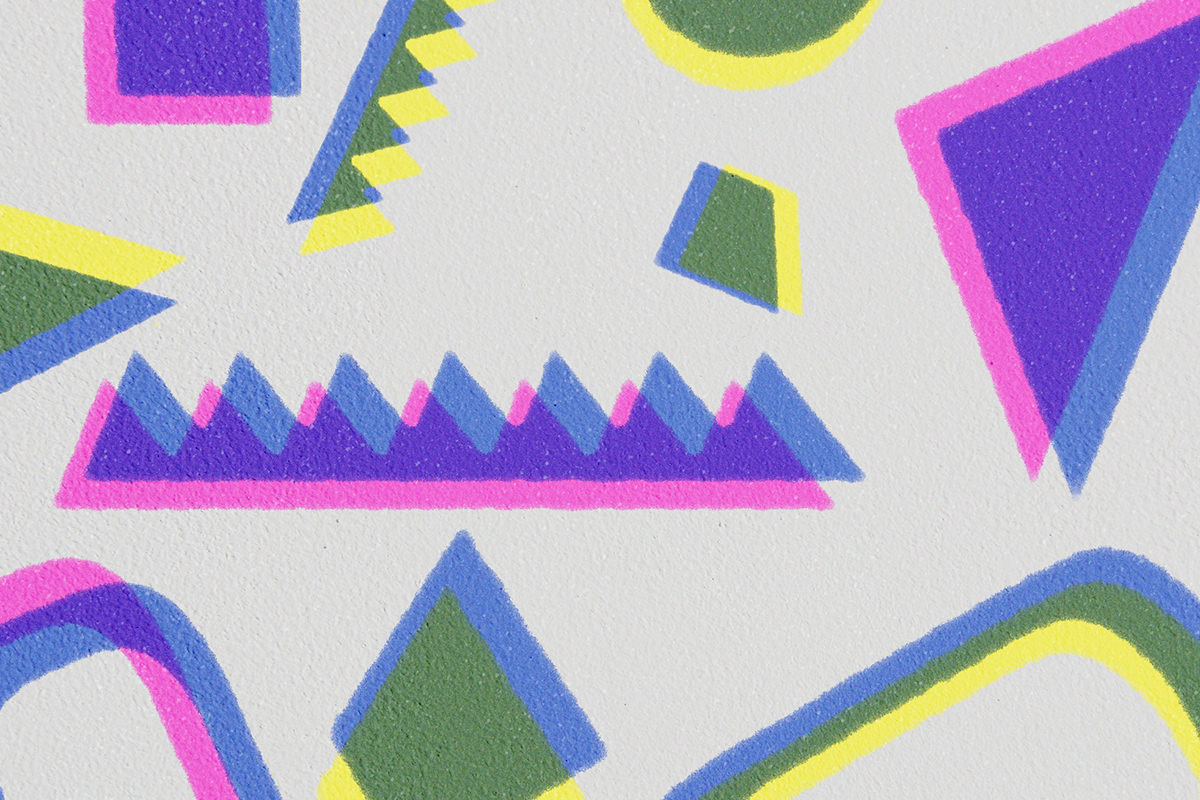
A risograph print gets its look from layers of slightly imperfect, hand-cut color shapes overlapping on textured paper — and every part of that can be rebuilt in Photoshop with basic shape tools, a few Filter Gallery effects, blending modes and a paper texture overlay. Learn how to draw deliberately irregular shapes, roughen their edges, turn them into color fills, overlap them with Multiply, and finish with grain so the result reads as printed rather than rendered.
Enjoying This Free Tutorial?
We publish a new free tutorial every week, each one with sample images and PSDs you can download and follow along with. Sign up and they land straight in your inbox, along with early word on sales, events and subscriber-only offers.
How to Create a ’90s Style Risograph Print Effect in Photoshop
A risograph print gets its distinctive look from layers of slightly imperfect, hand-cut color shapes overlapping on textured paper — and every part of that look can be rebuilt in Photoshop using nothing but basic shape tools, a few filter gallery effects, blending modes, and a paper texture overlay. The whole effect stays completely non-destructive, so every shape and color stays adjustable long after the design feels finished.
Getting Started: Drawing Imperfect Geometric Shapes
The foundation of the whole effect is a handful of deliberately imperfect shapes, drawn with basic selection tools rather than precise vector geometry.
-
Create a New Document
Press Ctrl/Cmd + N and set up a 2000 by 2000 pixel canvas.
-
Draw Rough Shapes on Separate Layers
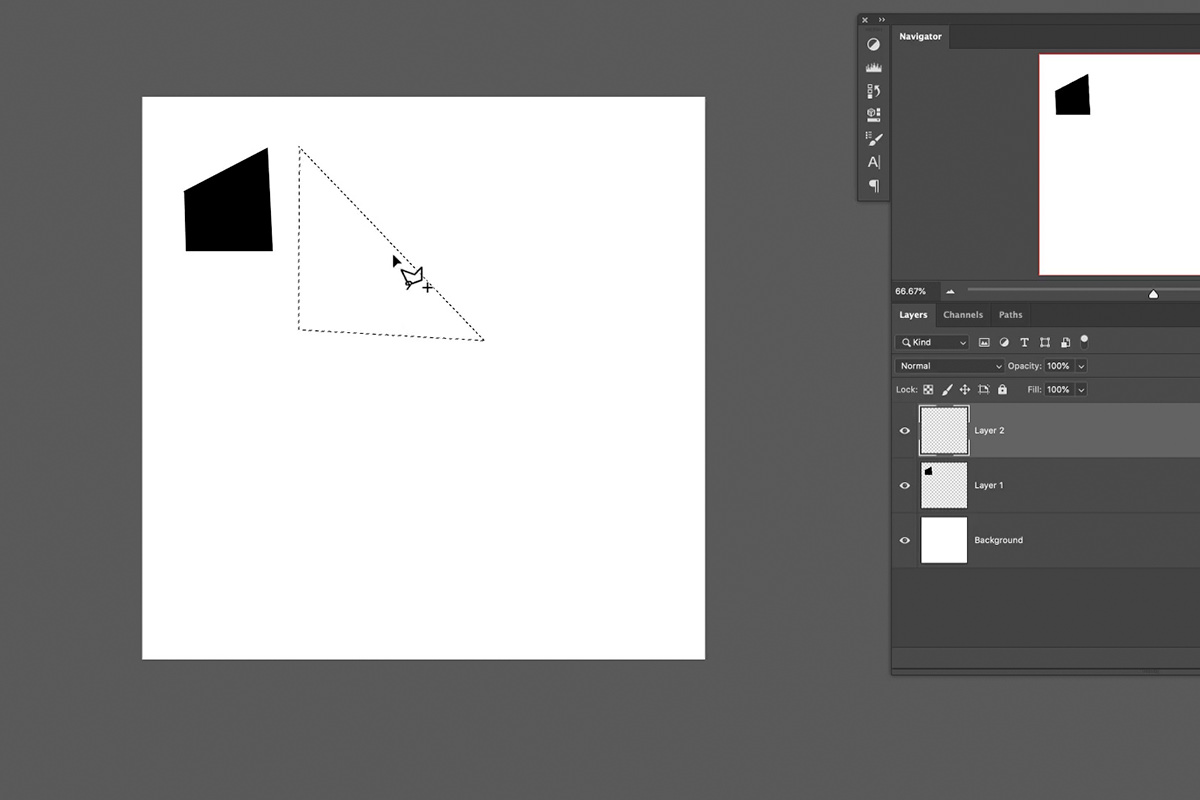
Use the Polygonal Lasso and Elliptical Marquee tools to draw a few simple geometric shapes — a rough four-sided block, a triangle, a stretched oval — each on its own layer, filling each selection with black using Shift + Delete. Keeping the shapes slightly irregular rather than perfectly geometric is the whole point; a rounded rectangle tool would produce something too clean for this effect.
Building Repeated Shapes with Step and Repeat
One shape can multiply into a whole row or pattern of shapes using a single keyboard shortcut combination.
-
Duplicate with Step and Repeat
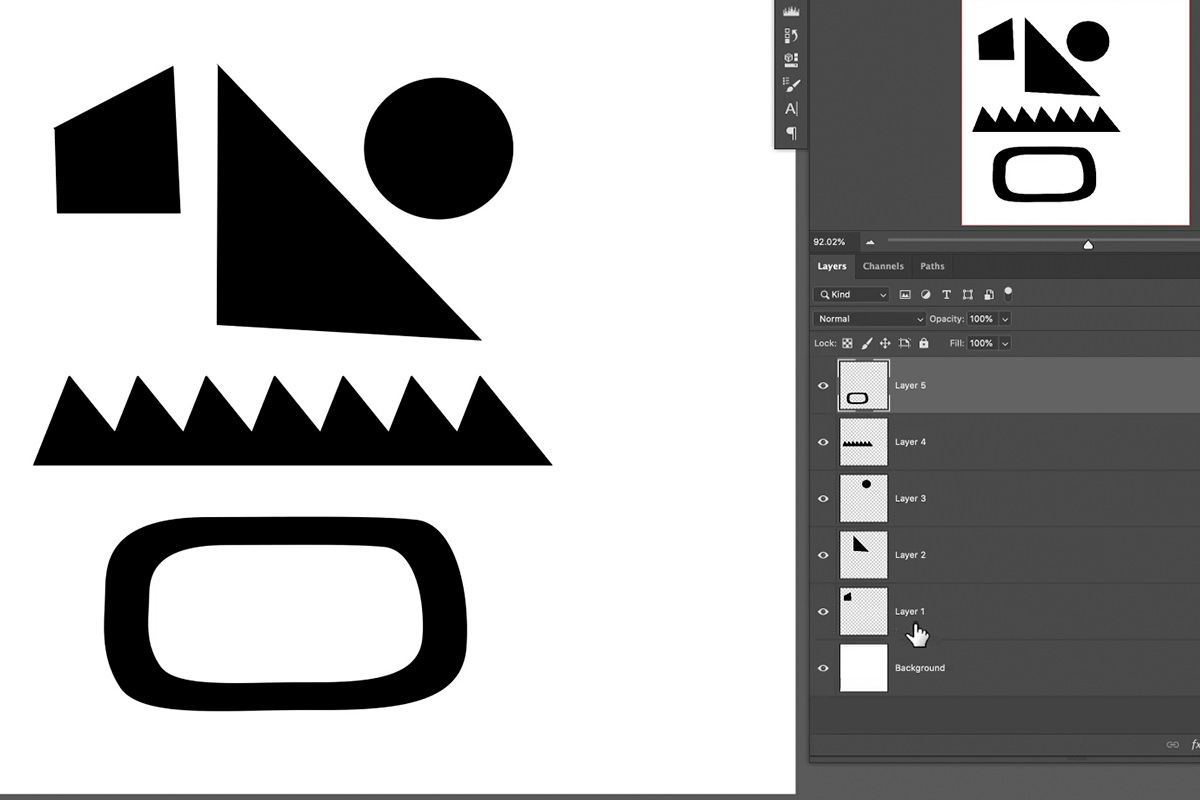
With a filled shape’s selection still active, press Alt/Option + Ctrl/Cmd + T to duplicate and transform it, then hold Shift and nudge it into a new position before pressing Enter. Pressing Shift + Alt/Option + Ctrl/Cmd + T repeatedly after that repeats the same offset each time, quickly building a row of evenly spaced duplicates on a single layer. Because the copies all sit on one layer, an uneven bottom edge is easy to fix: press Shift + M to switch to the Rectangular Marquee, select the bottom of the row and press Delete.
Adding a Hand-Drawn Shape with the Pen Tool
Not every shape needs to come from the Lasso or Marquee tools — the Pen tool adds a rounder, more organic option to the mix.
-
Draw and Adjust a Custom Curve
Use the Pen tool to draw an oblong shape, holding Ctrl/Cmd to reposition individual curve points until the shape feels close to intentional without being too clean or symmetrical.
-
Convert the Path to a Selection and Inset It
Right-click the path and choose Make Selection, with Feather set to 0, fill it with black on a new layer, then, with a Marquee tool active, right-click inside the selection and choose Transform Selection (the same command as Select > Transform Selection in the menu bar). Shrink the selection slightly, press Enter, then press Delete to cut out the inset area — turning a solid shape into a rough outline or ring.
Why Imperfection Is the Goal Here
A perfectly uniform rounded rectangle or circle would actually work against this effect — the whole point is mimicking shapes that were cut out by hand, and hand-cut shapes are never perfectly regular. Resisting the urge to clean up every shape into something geometrically precise is what keeps the final result looking authentic rather than digitally sterile.
Smoothing All the Shapes into Rounded Edges
Every shape drawn freehand so far has sharp, angular corners that need softening before they’ll read as hand-cut rather than digitally drawn.
-
Select All Shape Layers at Once
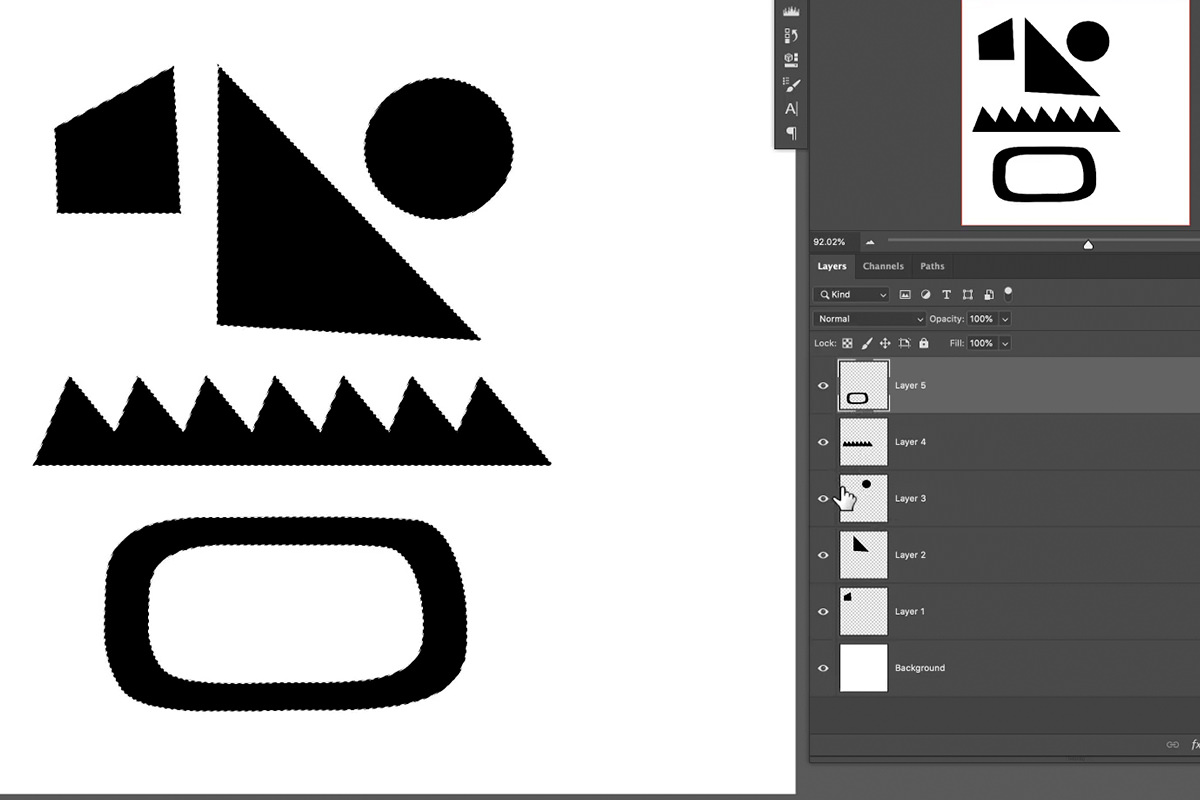
Hold Ctrl/Cmd and click each shape layer’s thumbnail while also holding Shift to add each one to a combined multi-layer selection.
-
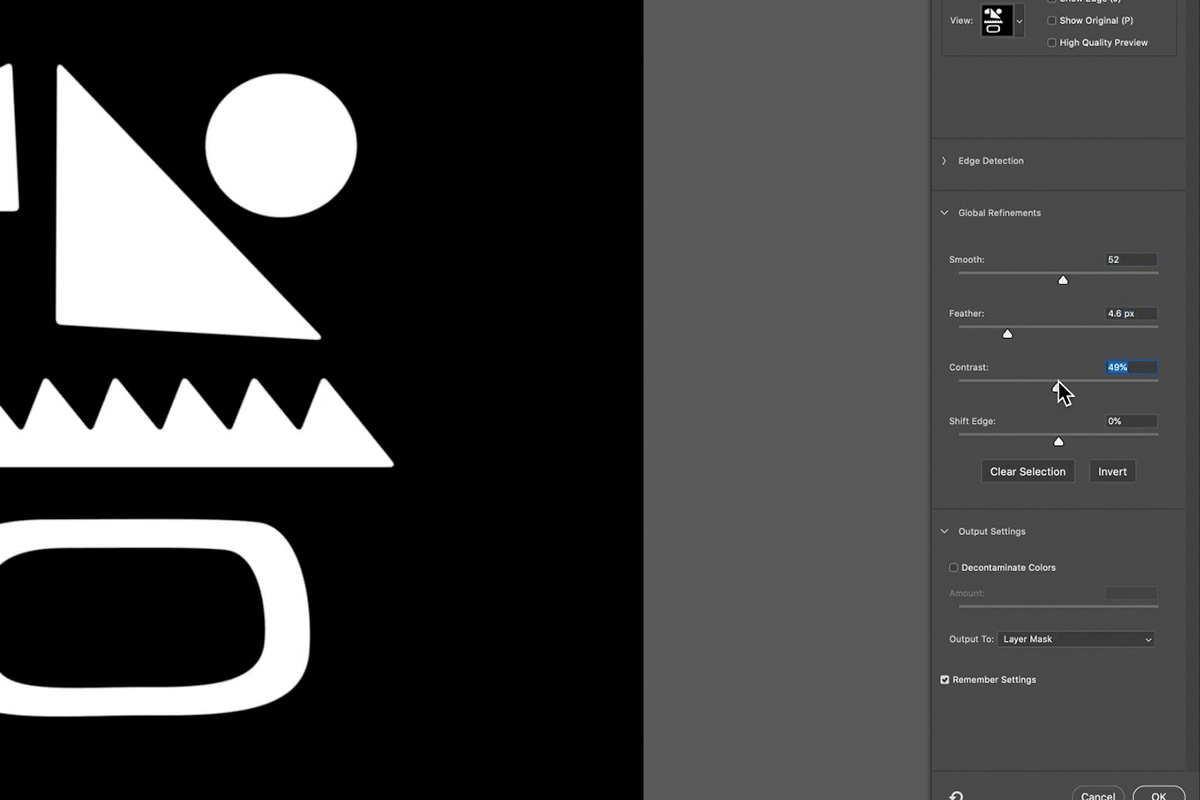
Smooth the Combined Selection
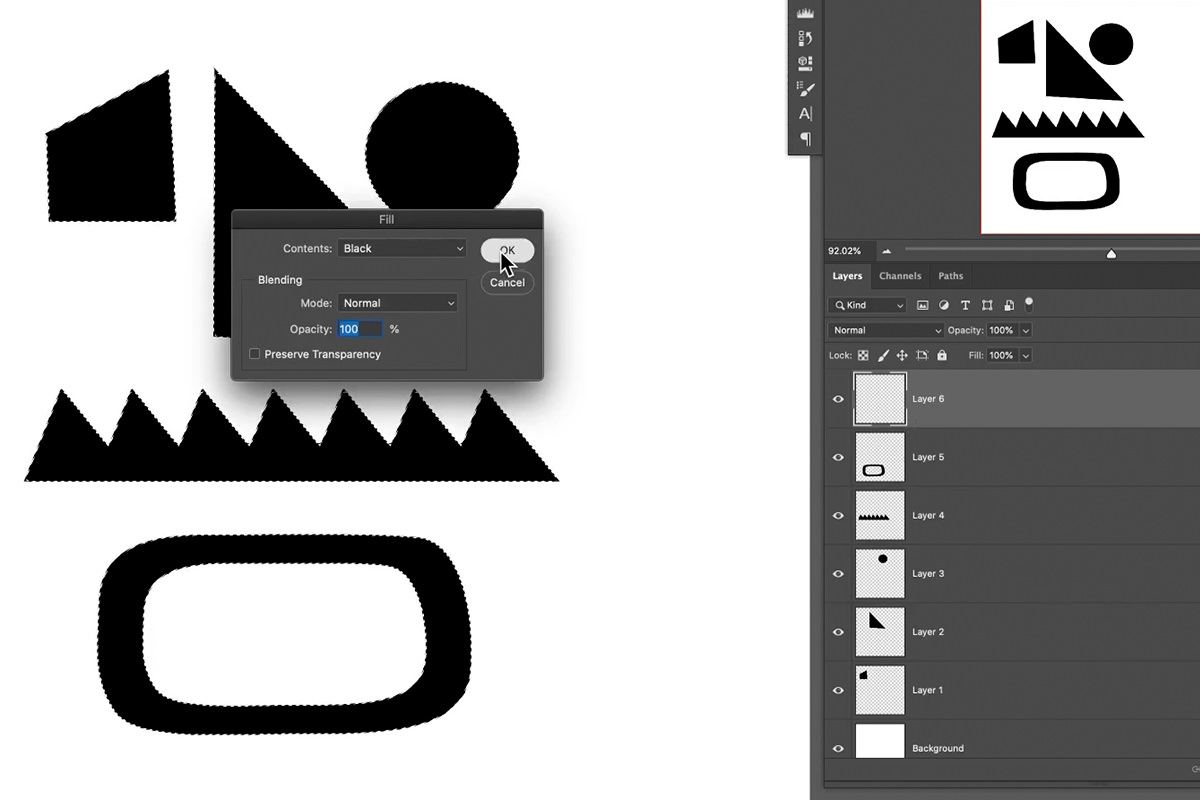
With all shapes selected, go to Select and Mask, switch the view to black and white, and add Smooth and Feather to round off every sharp corner at once, then raise Contrast slightly to bring the edge back into sharper focus after smoothing. Output the result to a new selection, fill it with black on a fresh layer, and group all the original shape layers together and hide them — they’ve served their purpose.
Adding Hand-Cut Texture with the Filter Gallery
Solid, smooth-edged shapes still look too clean for a risograph print — the Filter Gallery adds the rough, slightly bled edge that sells the hand-made look.
-
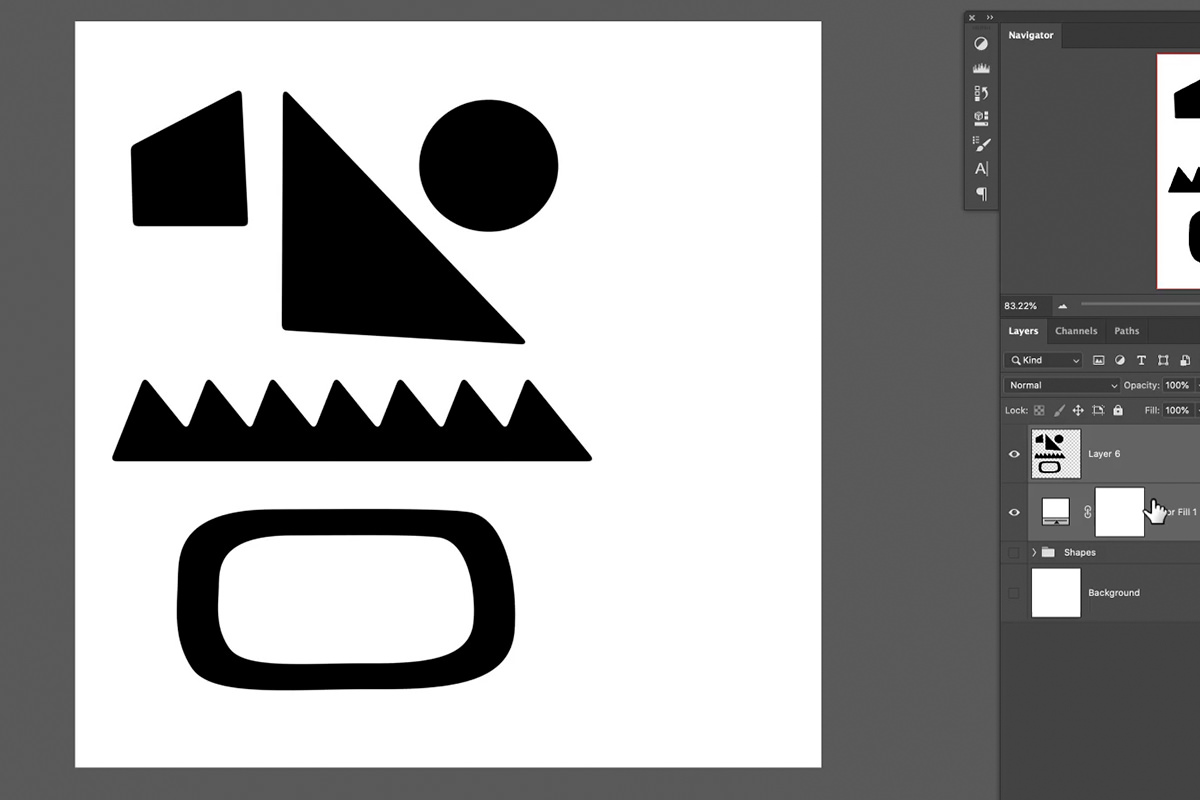
Prepare a Flattened Black-and-White Layer
Filters need a layer with actual pixel data rather than transparency, so add a white Solid Color fill layer underneath the shapes and merge the two together with Ctrl/Cmd + E.
-
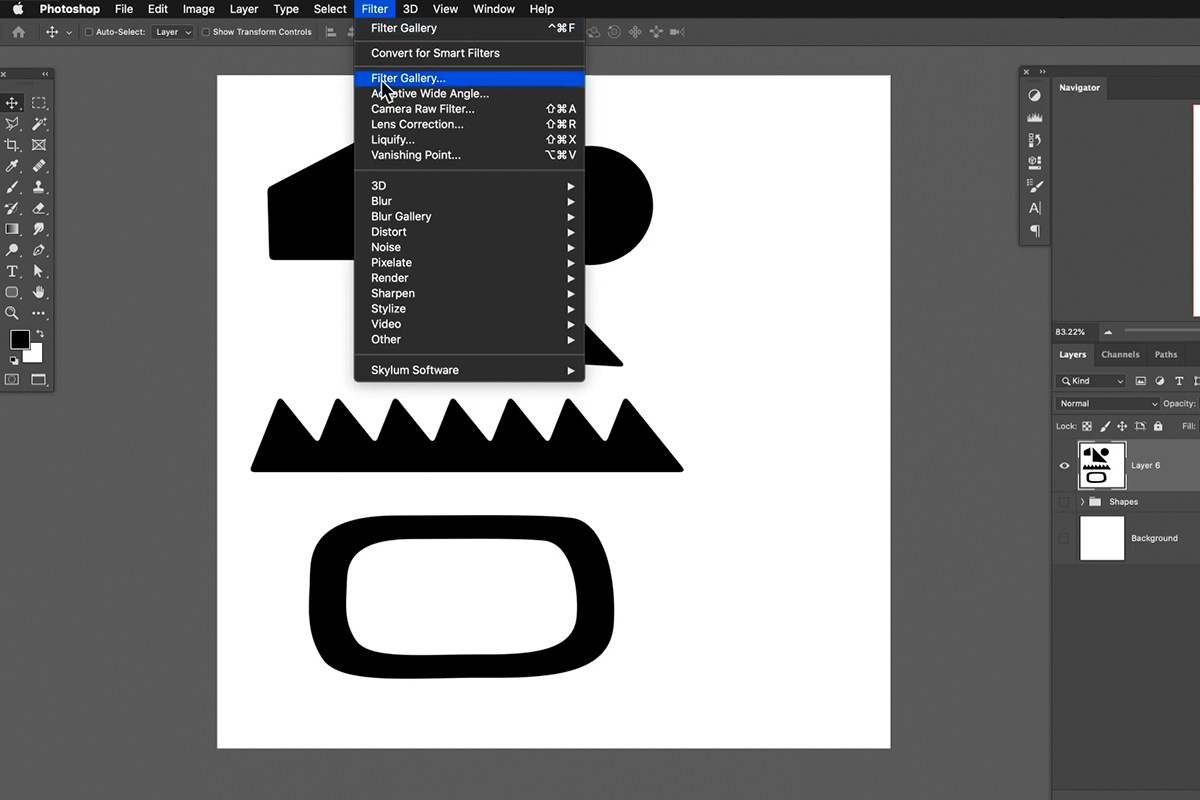
Stack Multiple Filter Gallery Effects
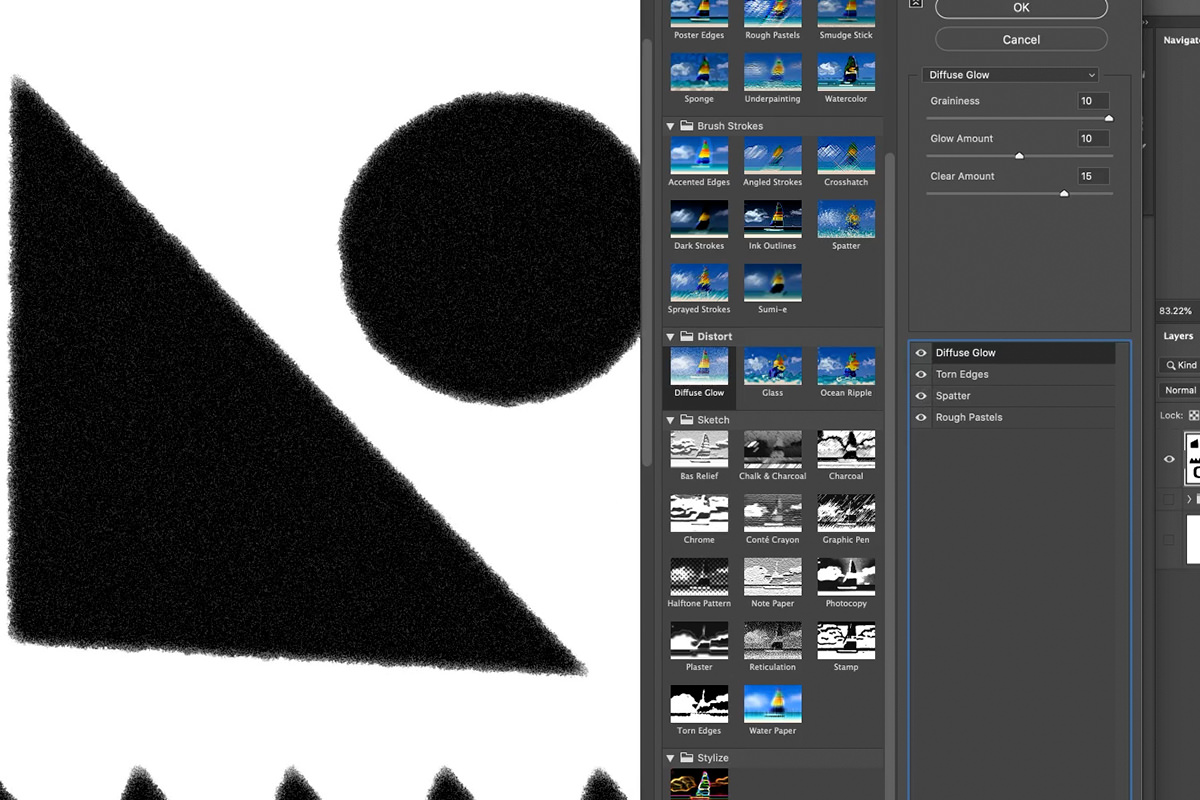
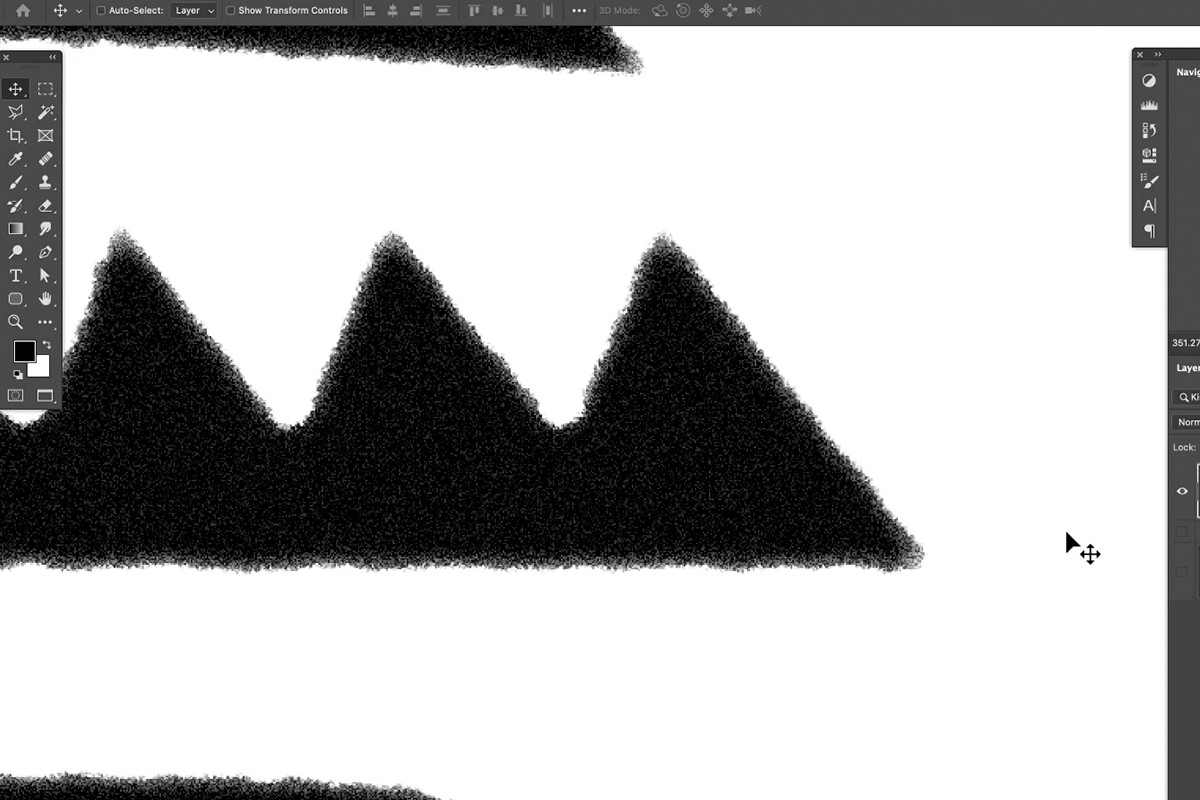
Go to Filter > Filter Gallery and add several effects on top of each other using the plus icon — Rough Pastels for a paper-like edge, Diffuse Glow for a bit of grain and edge softening, Spatter for unevenness, and Torn Edges for a rougher, smaller-scale break in the outline. Reordering the effects in the stack — putting Diffuse Glow on top, for instance — changes how they combine.
Why Layering Filters Beats Using Just One
Each individual filter in the Filter Gallery contributes a different kind of imperfection — grain, unevenness, torn edges — and no single one fully recreates the look of a hand-cut, slightly bled print edge on its own. Stacking several together, and adjusting the order they’re applied in, gets much closer to that combined effect than relying on any one filter alone.
Turning the Filtered Shapes into Color Selections
With the texture applied, the shapes need to become a usable selection again so they can be filled with actual print colors.
-
Load the Shapes via Channels
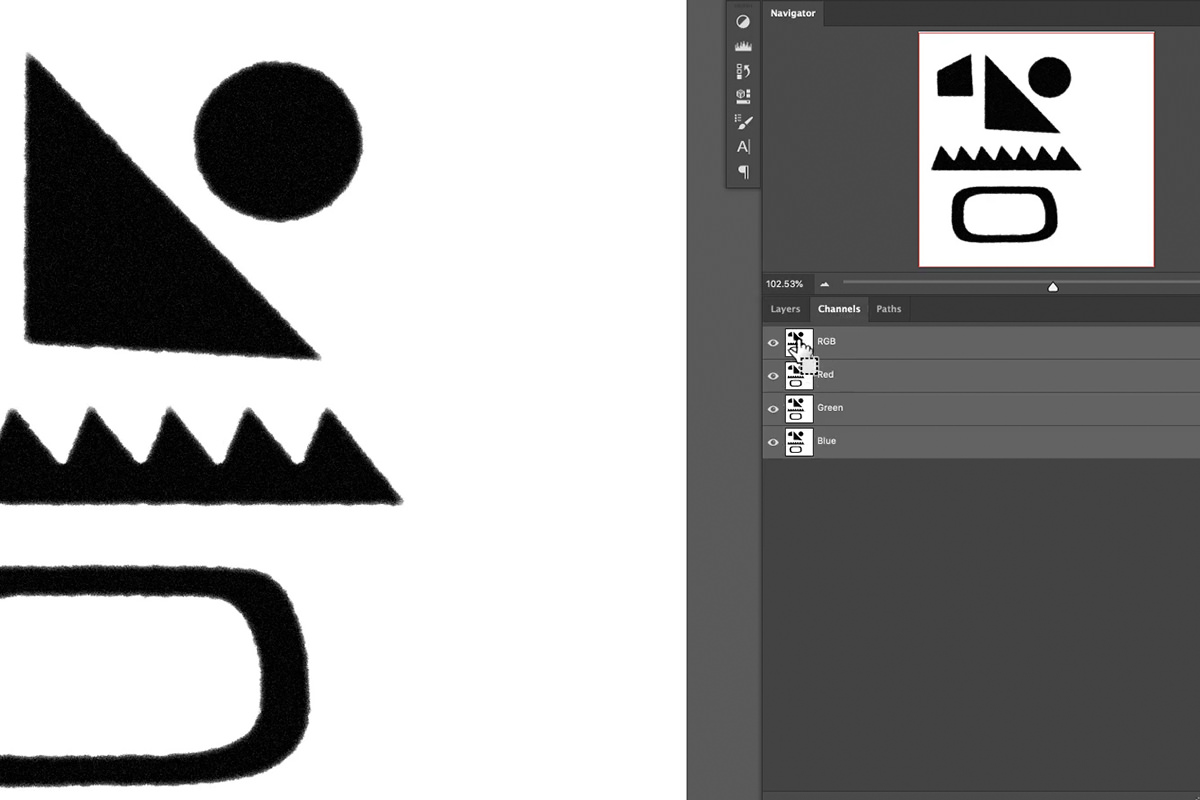
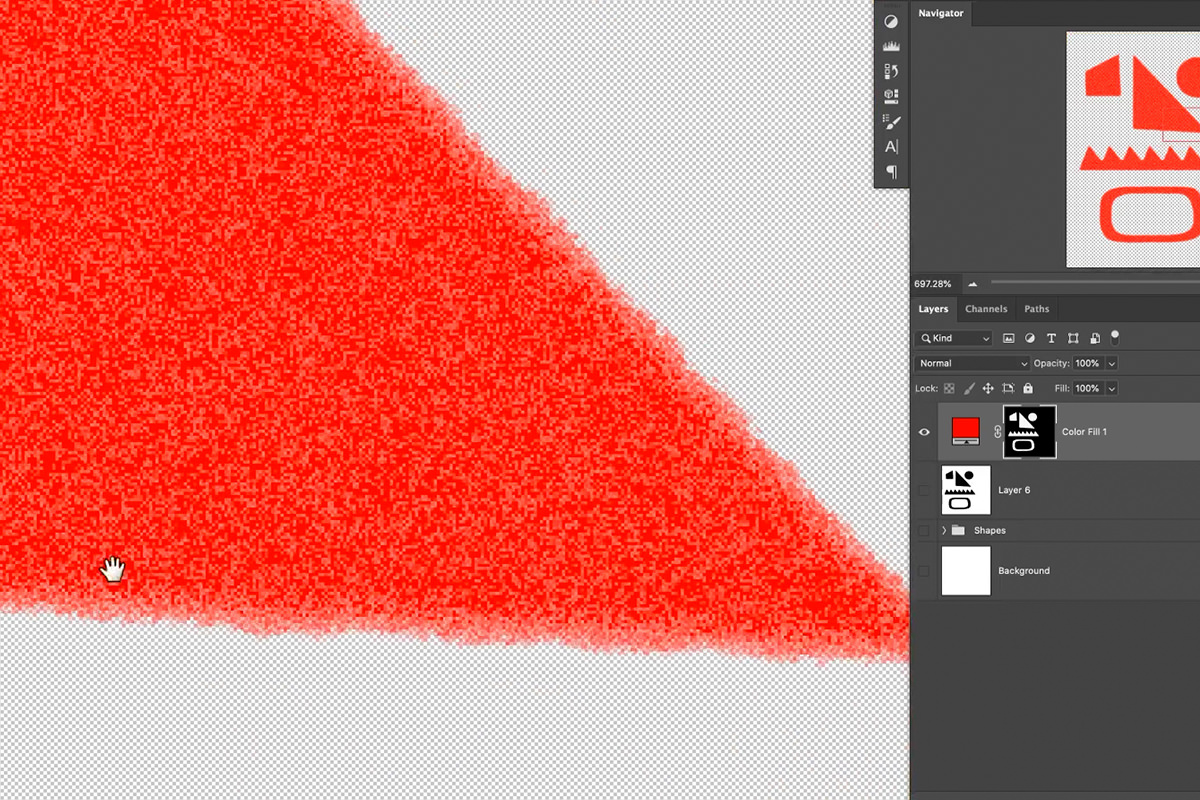
Open the Channels panel and hold Ctrl/Cmd while clicking the RGB channel’s thumbnail to accurately select the lighter areas of the filtered shapes.
-
Load the Selection into a Solid Color Layer
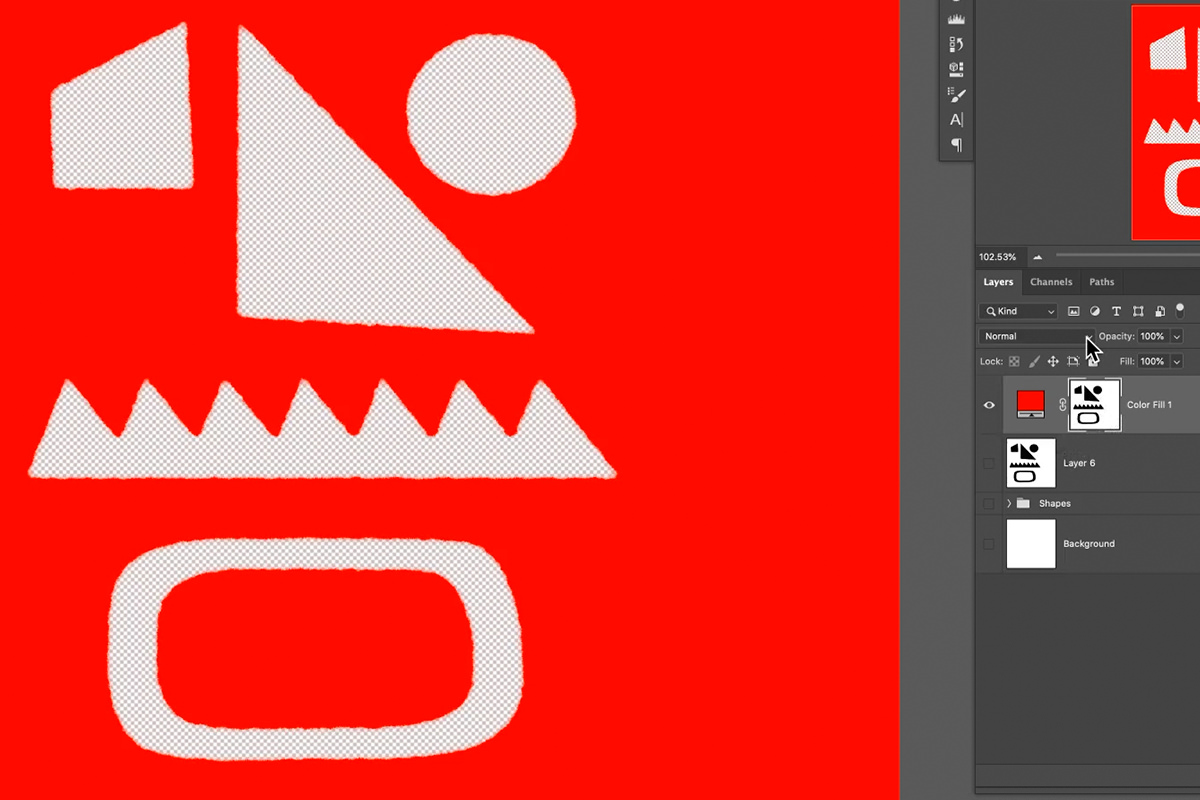
Create a new Solid Color adjustment layer while the selection is active — it loads directly into that layer’s mask. If the result shows the opposite of what’s expected, invert the mask with Ctrl/Cmd + I.
Layering Colors with the Multiply Blend Mode
A real risograph print builds its look from overlapping ink colors, and Multiply blend mode recreates that interaction digitally.
-
Duplicate and Recolor
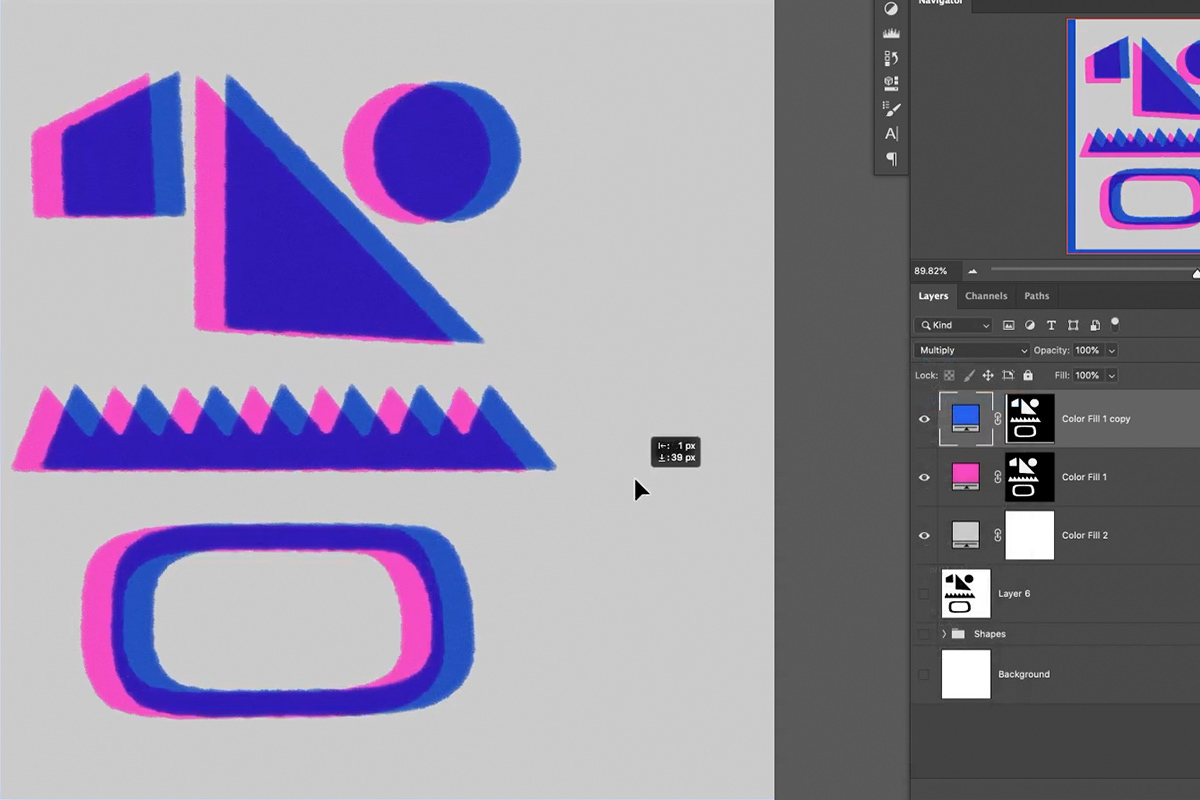
First add a background: with no selection active, add a second Solid Color fill layer under the shapes as the paper color. Then double-click the shape layer’s color swatch and choose a light, bright pink. Duplicate that pink layer with Ctrl/Cmd + J, reposition it, and change the copy’s color to blue.
-
Switch to Multiply Blend Mode
Change the layer’s blend mode from Normal to Multiply. Wherever two colored shapes overlap, Multiply blends them together the way overlapping ink layers would on real paper, rather than one color simply covering the other.
Building a Custom Composition from Grouped Shapes
With a handful of colored, textured shapes established, the rest of the design comes together by grouping, masking, and duplicating them into a full composition.
-
Group and Mask Specific Shapes
Group a shape pair together, then use a layer mask on the group to control exactly which shapes are visible, hiding the rest with a black-filled mask.
-
Duplicate Groups for Variation
Duplicate an entire group with Ctrl/Cmd + J, reposition and rescale it, and swap its colors for a different combination — yellow and blue instead of pink and blue, for instance — building out a full arrangement of overlapping shapes at different scales without repeating the same look twice.
Finishing with a Paper Texture Overlay
The last step brings all the individual shapes together as a cohesive print by adding an actual paper texture on top.
-
Add a Grain Texture in Screen Mode
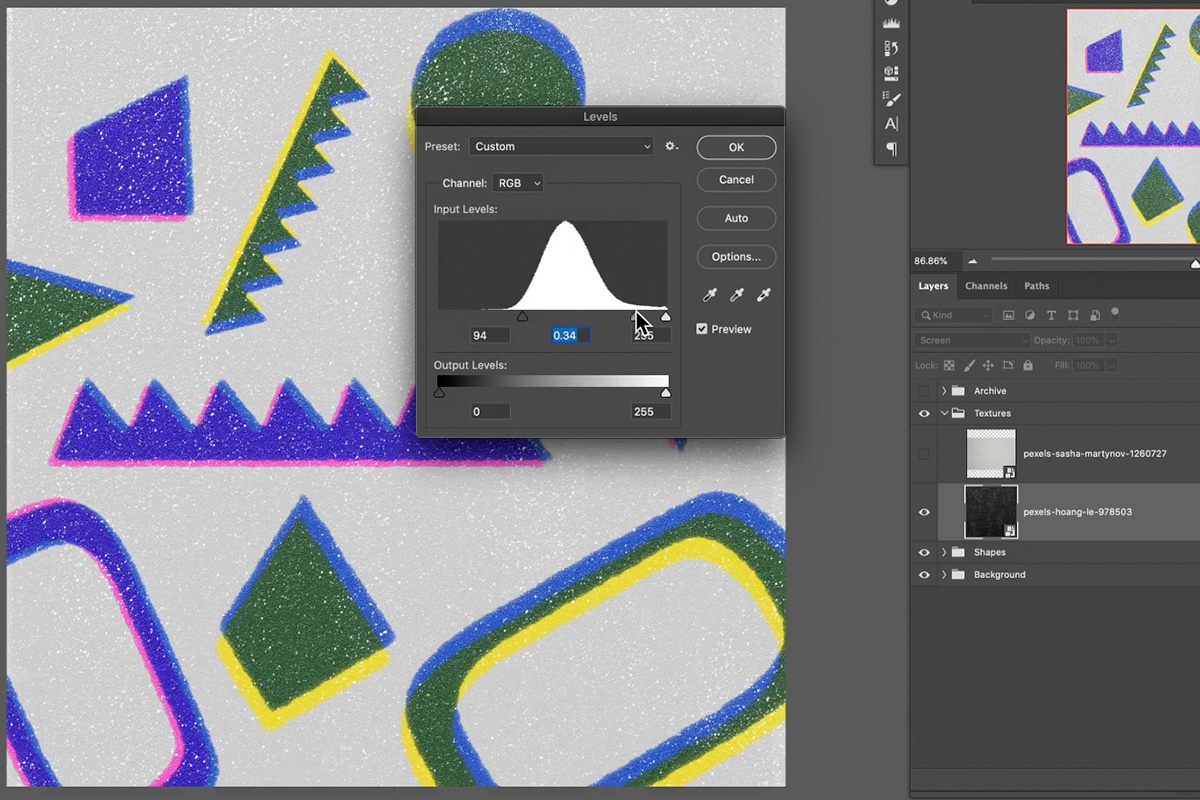
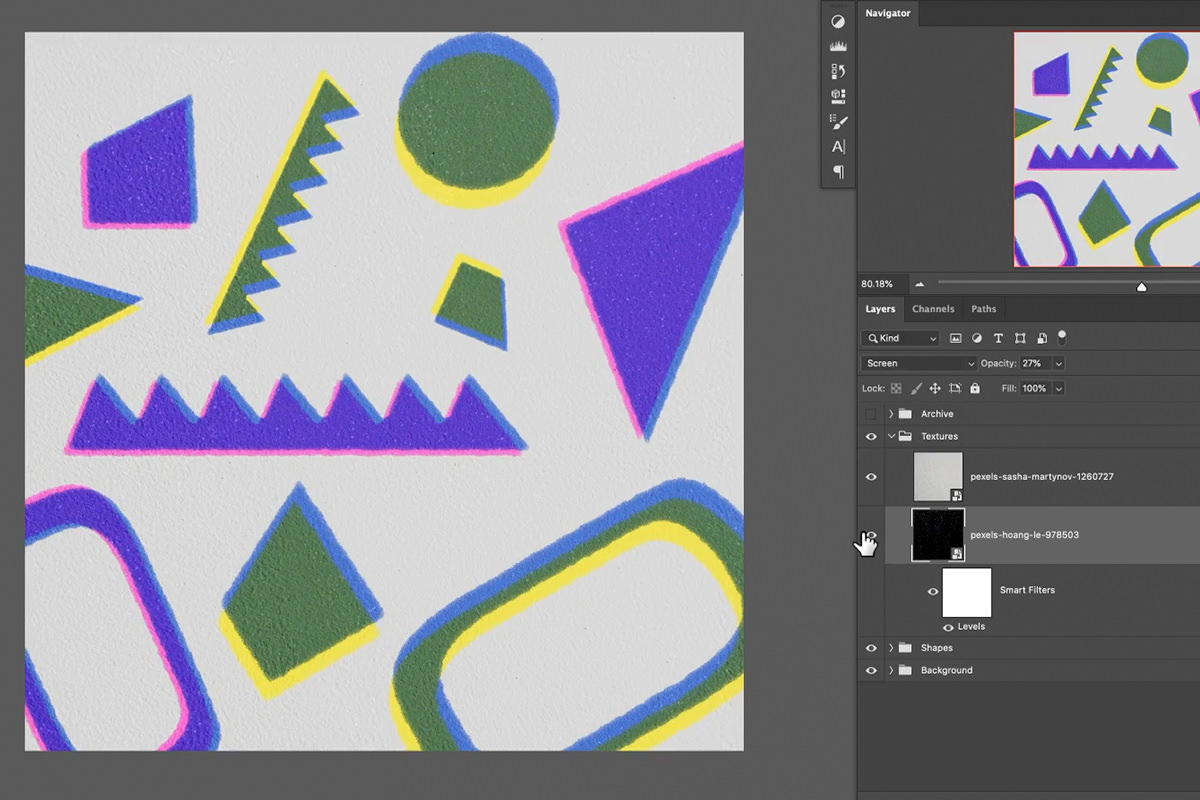
Drag both paper textures in at the very top and group them as Textures. Group the color groups as Shapes, then group the leftover working layers as Archive and hide that group. Set the speckled grain texture’s blend mode to Screen, so only its brighter highlight dots show through. Press Ctrl/Cmd + L to apply Levels to the texture layer itself (it sits on the texture as a Levels Smart Filter) and darken the shadows and midtones, controlling exactly how much of the texture remains visible, then lower the layer’s opacity if it’s still too strong.
-
Add a Second Texture in Soft Light
Select the second paper texture, press Ctrl/Cmd + T and scale it up to cover the canvas, and try different blend modes — Soft Light tends to add a convincing textured, tactile quality without overpowering the colors underneath.
Repositioning Shapes Non-Destructively at Any Point
Because every shape lives in its own group with its own mask, any individual element can still be selected, moved, or rescaled at any point after the fact — even once the whole composition looks finished. Moving a shape and repainting its group mask to match is often faster than rebuilding a section of the design from scratch.

Why This Approach Works
Every step in this technique exists to remove some form of digital perfection: irregular hand-drawn shapes instead of geometric ones, Filter Gallery texture instead of clean vector edges, and a paper grain overlay instead of a flat digital background. None of those individual imperfections would convince on its own, but layered together — rough shapes, textured edges, overlapping ink-like colors, and visible paper grain — they add up to something that reads as physically printed rather than digitally rendered. The Multiply blend mode doing the real work of making colors interact here is the same underlying principle covered in this look at Blend If, another blend-mode-driven technique for controlling how layers interact rather than simply stacking them.
Final Thoughts
What makes this technique worth the number of steps it takes is how reusable the underlying system becomes once it’s built — a library of textured, irregular shapes that can be recolored, rescaled, and rearranged into an unlimited number of different compositions. The same shapes used here for one risograph-style design could just as easily become a pattern, a poster, or a printed textile design, since the whole effect scales cleanly to very large sizes without losing any of its hand-made character.
Quick Reference: Keys, Menus and Settings
- Draw and fillCmd/Ctrl + N at 2000 by 2000 px; Shift + Delete to fill black; Cmd/Ctrl + D to deselect
- Step and repeatAlt/Option + Cmd/Ctrl + T, then Shift + Alt/Option + Cmd/Ctrl + T to repeat
- Marquee and PenShift + M switches marquees; P, right-click > Make Selection, Feather 0; right-click > Transform Selection
- Round the cornersCmd/Ctrl + Shift-click each thumbnail; Select > Select and Mask: Smooth, Feather, Contrast
- Rough edgesMerge with white, Cmd/Ctrl + E; Filter > Filter Gallery: Rough Pastels, Spatter, Torn Edges, Diffuse Glow on top
- Shapes to inkCmd/Ctrl-click RGB in Channels, Solid Color fill, Cmd/Ctrl + I on the mask; copy with Cmd/Ctrl + J, Multiply
- Paper textureScreen plus Cmd/Ctrl + L to darken the darks; second texture on Soft Light
No AI, no generative credits.
Free Downloads
Follow Along with the Same Files
Get the two paper textures used for the print finish, the finished layered risograph PSD and the 4-page PDF guide. Free with a PHLEARN account.
Risograph Print Effect: Common Questions
What makes a design look like a risograph print?
Three things: shapes that look cut out by hand, ink colors that blend where they overlap, and paper grain on top. Every step here adds one of those imperfections.
Which tools do I use to draw the shapes?
The Polygonal Lasso for the rough block and the triangles, the Elliptical Marquee for a stretched circle and the Pen Tool for an oblong ring. Each goes on its own layer, filled with black using Shift + Delete. Skip the Rounded Rectangle Tool; it is too perfect for this look.
Why does step and repeat do nothing?
The selection has to be active. Press Alt/Option + Cmd/Ctrl + T, hold Shift and move the copy, press Enter, then press Shift + Alt/Option + Cmd/Ctrl + T again and again to repeat the step.
How do I round off the sharp corners on every shape at once?
Cmd/Ctrl-click one shape thumbnail, then Cmd/Ctrl + Shift-click the others. In Select > Select and Mask, raise Smooth and a little Feather, then Contrast to sharpen the edge. Output to a selection and fill it with black on a new layer.
Why does the filter need a white background?
The Filter Gallery needs black and white on the same layer, not shapes on transparency. Add a white Solid Color fill layer under the shapes, Shift-click both and press Cmd/Ctrl + E to merge.
Which Filter Gallery effects give the hand-cut edge?
Rough Pastels, Diffuse Glow, Spatter and Torn Edges, each added with the plus icon. Dragging Diffuse Glow to the top of the stack changes the result; there is no right or wrong combination.
How do I turn the black shapes into color?
In the Channels panel, Cmd/Ctrl-click the RGB channel, then add a Solid Color fill layer; the selection loads into its mask. If the color fills everything except the shapes, click the mask and press Cmd/Ctrl + I.
How do I make two colors overlap like printed ink?
Press Cmd/Ctrl + J on the color layer, nudge the copy out of register, change its color and set its blend mode to Multiply. Where the pink and blue overlap they combine into a third color.
How do I add the paper texture?
Set the speckled texture to Screen, press Cmd/Ctrl + L and darken the darks and midtones until only the bright specks remain, then lower its opacity. Set the second texture to Soft Light.
Are the sample files free?
Yes, with a free PHLEARN account. You get 2 sample textures, 1 sample PSD and 1 PDF guide: the two paper textures, the finished risograph file and a 4-page step-by-step guide.
Master Photoshop, Lightroom and Photography
Join PHLEARN PRO for $12.99 a month or $99.99 a year. Cancel anytime, with a 100% money-back guarantee.