
Download Assets
This tutorial includes 1 sample image, 1 sample PSD and 1 PDF guide. Downloads are free with a PHLEARN account.
- Download the sample images and PSDs from every free tutorial on PHLEARN
- New free tutorials published every week
- One free account — sign up once, then download anything
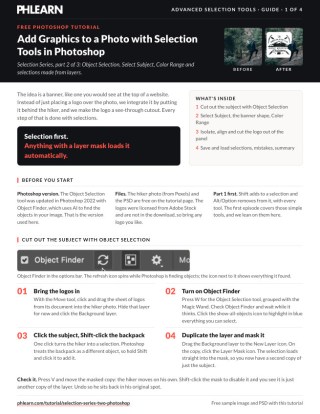
Free PDF Guide · 4 Pages
This Tutorial as a Step-by-Step PDF
The guide walks through Object Selection with Object Finder, comparing it with Select > Subject, a white rounded rectangle tucked behind the hiker, pulling one logo out with Select > Color Range, Select > Inverse and Delete, a Ctrl/Command-click mask inverted with Ctrl/Command+I, a Levels layer behind the logo, and saving the selection. Keep it next to your keyboard.
description
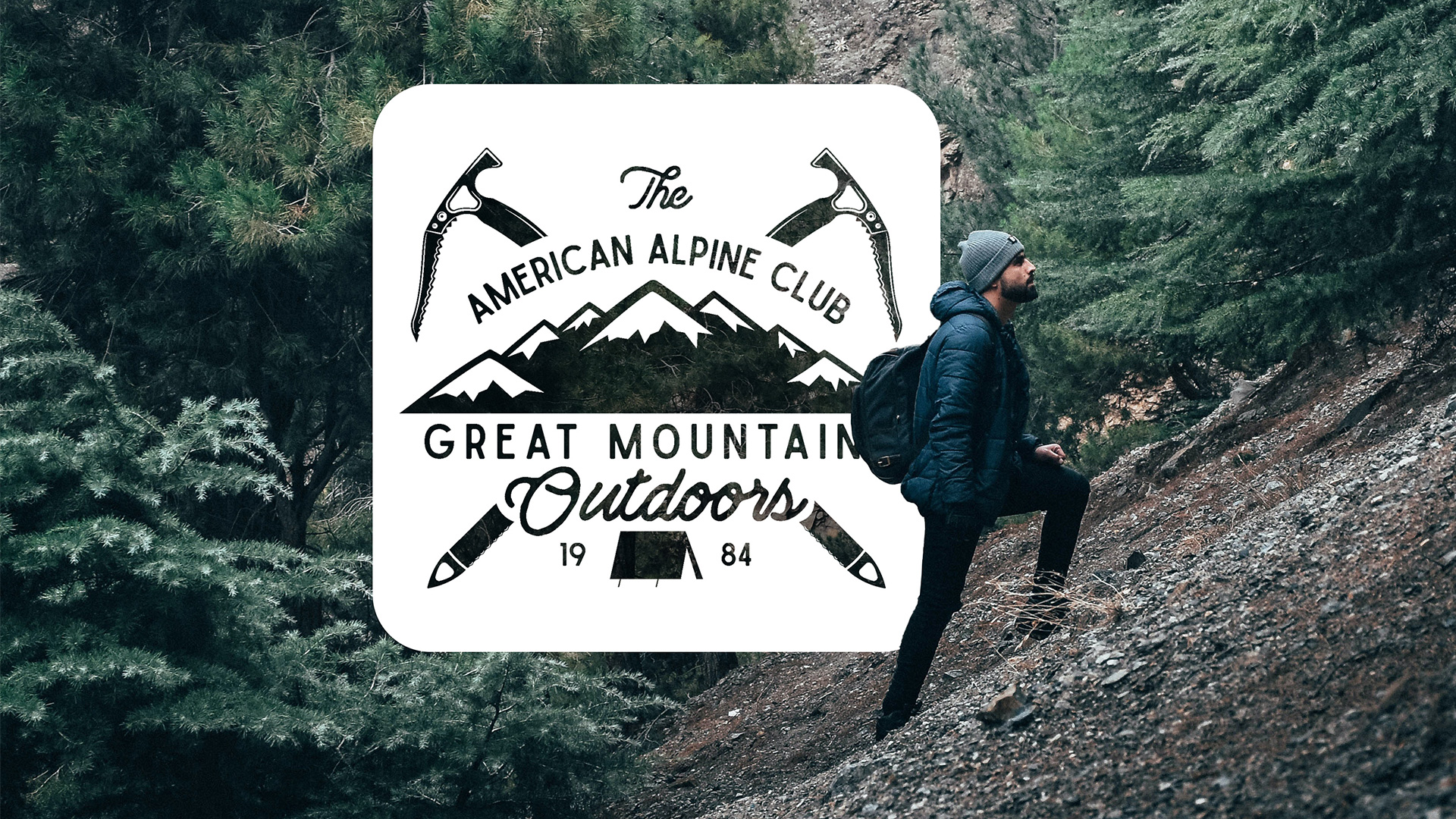
Learn how to use advanced selection tools to add graphics to a photo in Photoshop. This second episode of the selections series moves on to the Object Selection tool, Select Subject, and Select Color Range, and puts them to work on a real project: cutting out a hiker so a logo banner can sit behind them, extracting the logo with Color Range, and turning it into a see-through cutout in a rounded rectangle with masks, alignment tools, and a clipped Levels adjustment.
Free Selection Series
- Replace a Sky with Simple Selection Tools
- Add Logos & Graphics to a Photo with Advanced Selection Tools (This Episode!)
- Refine Selections with Select & Mask
Enjoying This Free Tutorial?
We publish a new free tutorial every week, each one with sample images and PSDs you can download and follow along with. Sign up and they land straight in your inbox, along with early word on sales, events and subscriber-only offers.
Image Source
Photo by Suliman Sallehi via Pexels


How to Use Advanced Selection Tools to Add Graphics to a Photo
This second entry in the selections series moves from simple selection tools to Photoshop’s more automated ones — the Object Selection tool, Select Subject, and Select Color Range — and puts them to work on a real project: cutting out a hiker so a logo banner can be tucked behind them, then extracting that logo and using it as a see-through cutout in a rounded rectangle.
Cutting Out Your Subject with the Object Selection Tool
The Object Selection tool uses AI to detect individual objects in a photo and turns them into a selection with a single click.
-
Select the Object Selection Tool
Press W for the Object Selection tool, found grouped with the Magic Wand tool.
-
Turn On Object Finder
Click the Object Finder option and let Photoshop analyze the image; a second option lets you preview every object it detected, highlighted in blue.
-
Click to Select a Detected Object
Click directly on your subject to turn it into a selection. The tool distinguishes between separate objects — a subject and their backpack, for instance — letting you select either independently.
-
Add More Objects with Shift
Hold Shift and click an additional detected object, like a backpack, to add it to the current selection using the same modifier keys covered in the first episode of this series.
Duplicating Your Subject Using the New Selection
Once your subject is selected, that selection can be loaded directly into a mask on a duplicated layer to create an independent copy.
-
Duplicate Your Background Layer
Drag your background layer onto the New Layer icon to duplicate it.
-
Load the Selection into a Layer Mask
With your subject still selected, click the layer mask icon on the duplicated layer to load that selection directly into a mask, isolating just your subject on their own layer.
Comparing Select Subject to the Object Selection Tool
Select Subject is an older automatic cutout tool that works a little differently and is worth trying alongside Object Selection to see which gives a cleaner result on a given photo.
-
Try Select Subject
Go to Select > Subject to have Photoshop automatically detect and select your subject using a separate AI model.
-
Compare Results Between the Two Tools
Since Select Subject and the Object Selection tool don’t always produce identical results, try both on a tricky image and keep whichever gives the cleaner cutout.
-
Clean Up with the Lasso Tool if Needed
If either automatic tool misses a detail, hold Shift and use the Lasso tool to manually add the missed area to the selection, exactly as covered with the simple selection tools.
Neither Tool Is Always Perfect
Both Select Subject and the Object Selection tool can miss fine detail — a leg, a face, a strand of hair — especially on a complicated pose or background. Since a selection loaded into a layer mask stays fully editable, an imperfect automatic result is simply a starting point to refine manually rather than something to redo from scratch.
Building a Banner Shape Behind Your Subject
With your subject cleanly cut out onto its own layer, a simple rectangle shape can now be tucked behind them for a banner-style graphic.
-
Draw a Rectangle Shape
Press U for the Rectangle tool, hold Shift while dragging for a perfect square, and set the fill to white with no stroke.
-
Add Rounded Corners
Adjust the corner radius option to round the rectangle’s corners for a more refined look.
-
Move the Rectangle Below Your Subject Layer
Drag the rectangle layer down in the layer stack so it sits behind your already-cut-out subject, integrating it directly into the scene instead of sitting flatly on top.
Extracting a Logo with Select Color Range
Pulling one logo out of a sheet of several requires selecting a specific color range rather than tracing every letter by hand, which is exactly what Select Color Range is built for.
-
Open Select Color Range
With the logo sheet layer selected, go to Select > Color Range.
-
Click to Sample the Color You Want
Use the eyedropper to click on the logo’s color — white areas will be selected, black areas won’t, shown as a black-and-white preview in the dialog.
-
Adjust Fuzziness for Better Coverage
Raise or lower the Fuzziness slider to select more or less of the similar color range until the logo’s detail is fully captured.
Isolating the Extracted Logo
Select Color Range selects that color everywhere it appears in the document, so the next step narrows it down to just the one logo you want.
-
Fill the Selection on a New Layer
Create a new layer, and with the color range selection still active, go to Edit > Fill to fill it with a solid color, giving you a clean, filled version of the logo shape.
-
Draw a Rectangle Around Just the Logo You Want
Use the Rectangular Marquee tool to select the area containing only the logo you want to keep.
-
Invert and Delete Everything Else
Go to Select > Inverse to flip the selection to everything outside your rectangle, then press Delete to remove every other color-range result, leaving just your target logo with a transparent background.
Aligning and Masking the Logo into the Rectangle
Turning any shape or layer’s content into a selection makes precise alignment and masking possible, which is what finally combines the logo and the rectangle into one see-through cutout.
-
Turn a Layer’s Content into a Selection
Hold Ctrl/Cmd and click a layer’s thumbnail to load its contents as a selection — this works for the rectangle shape, the logo, or any other layer.
-
Use Alignment Tools Within a Selection
With the rectangle’s shape loaded as a selection, select your move tool, select the logo layer, and use the alignment options in the toolbar to center it perfectly within that selection.
-
Turn the Logo into a Selection and Mask the Rectangle
Hold Ctrl/Cmd and click the logo layer’s thumbnail to select its shape, then click the layer mask icon on the rectangle layer while that selection is active.
-
Invert the Mask for a See-Through Cutout
Press Ctrl/Cmd + I to invert the resulting mask, turning the rectangle into a solid shape with the logo cut out of it as a transparent window rather than a solid overlay.
Selections from Layers and from Layer Masks
Ctrl/Cmd-clicking a layer’s thumbnail selects whatever content is on that layer, while Ctrl/Cmd-clicking a layer mask’s thumbnail selects the mask’s own white areas instead. If the resulting selection is the opposite of what you need, Select > Inverse flips it around.
Darkening the Cutout with an Adjustment Layer
Because adjustment layers come with a built-in mask, an active selection loads into that mask automatically the moment you create one.
-
Reselect the Rectangle Shape
Ctrl/Cmd-click the rectangle layer’s thumbnail again to reselect its shape.
-
Add a Levels Adjustment Layer
With that selection active, go to Layer > New Adjustment Layer > Levels. The active selection automatically becomes this new layer’s mask.
-
Darken Just the Rectangle Area
Drag the highlight point down to darken the area behind the logo cutout without affecting the rest of the image, making the see-through logo easier to read.
Saving and Loading Selections for Later
A complex selection doesn’t have to be rebuilt from scratch every time you need it again — Photoshop can store one directly inside the document.
-
Save Your Selection
With a selection active, go to Select > Save Selection, choose your current document, and give the new channel a name.
-
Load a Saved Selection Later
Go to Select > Load Selection and choose your saved channel to bring that exact selection back at any time, even after closing and reopening the document.
Common Mistakes to Avoid
The most common mistake is treating an automatic cutout from Select Subject or the Object Selection tool as a finished result rather than a strong starting point — both tools can miss fine detail on a complicated pose, and the fix is a quick manual touch-up with the Lasso tool, not starting the selection over. It’s also easy to forget which Ctrl/Cmd-click target you’re selecting from — a layer’s thumbnail versus its layer mask thumbnail produce different, sometimes opposite, selections.
Why This Approach Works
The Object Selection tool and Select Subject both hand you a strong starting selection almost instantly, but the real power in this technique comes from everything selections can feed into afterward — a layer mask, an alignment operation, an adjustment layer’s mask, or a saved channel. Because a selection is just data Photoshop can load into any of those destinations, the same cutout of your subject can drive a duplicated layer, and the same rectangle shape can drive both a mask and a Levels adjustment, without redrawing anything twice. That’s also why combining automatic and manual tools works so well: an AI-detected selection loaded into an editable mask, refined with the humble Lasso tool from the first episode of this series, gets you both speed and precision instead of having to choose one or the other, the same layered thinking behind a more advanced workflow like selecting subjects and refining edges.
Final Thoughts
Advanced selection tools like Object Selection, Select Subject, and Color Range save enormous amounts of time over manually tracing every edge, but they work best paired with the simple selection tools and layer mask fundamentals from earlier in this series rather than replacing them entirely. Get comfortable turning any layer or mask into a selection with a Ctrl/Cmd-click, and saving a complex selection for later use, and you’ll have most of what’s needed to build compositing effects like this logo banner on your own images. Part three of this series, Refine Selections in Photoshop: Select and Mask Made Easy, takes these selections further: cutting out hair with the Refine Edge tool, rounding corners in Select and Mask, modifying selections from the Select menu and painting them in Quick Mask.
Quick Reference: Keys, Menus and Settings
- Object SelectionW, check Object Finder, click the subject; Shift-click to add the backpack
- Rounded panelU for the Rectangle tool, Shift-drag for a square, Fill white, Stroke none, round the corners
- Color RangeSelect > Color Range, eyedropper on the logo, raise Fuzziness if needed
- Keep one logoFill on a new layer, Rectangular Marquee around it, Select > Inverse, Delete
- Layer to selectionCmd/Ctrl-click the thumbnail; V and align horizontal and vertical centers
- Scale and invertCmd/Ctrl + T with Alt/Option scales from the center; Cmd/Ctrl + I inverts the mask
- Save a selectionSelect > Save Selection, then Select > Load Selection
Free Downloads
Follow Along on the Same Photo
Get the hiker photo, the finished banner PSD and the 4-page PDF guide, then bring any logo you like for the cutout. Free with a PHLEARN account.
Advanced Selection Tools: Common Questions
How do I select a subject with one click?
Press W for the Object Selection tool and check Object Finder. Click the show-all-objects icon to highlight everything it found in blue, then click your subject. It treats a backpack as a separate object, so Shift-click it to add it.
Is Select Subject or the Object Selection tool better?
Try both. Select > Subject also uses AI and often does a great job, but on this photo it missed part of the leg and the face. The Object Selection tool did better here, so that cutout is the one kept.
How do I fix a cutout that missed an edge?
The selection is now a layer mask, which you can change at any time. Draw around the area with the Lasso, click the mask, and go to Edit > Fill > Black. Before masking, hold Shift with the Lasso to add a missed area to the selection.
How do I select a logo without clicking every letter?
Click the logo layer and go to Select > Color Range. Click the logo with the eyedropper; white in the preview gets selected and black does not. Raise Fuzziness if it is not picking up everything, then click OK.
Color Range selected the other logos too. How do I keep just one?
Fill the selection on a new layer with Edit > Fill, then drag the Rectangular Marquee around the logo you want. Go to Select > Inverse and press Delete, leaving that logo on a transparent background.
How do I turn a layer into a selection?
Hold Cmd/Ctrl and click the layer thumbnail. Cmd/Ctrl-clicking a layer mask instead selects whatever is white on the mask. If you get the opposite of what you want, go to Select > Inverse.
How do I make the logo a see-through cutout?
Cmd/Ctrl-click the logo thumbnail and hide the logo layer. Click the rectangle, click the layer mask icon, then press Cmd/Ctrl + I to invert the mask so the logo becomes a window in the panel.
How do I darken the photo behind the logo so it reads?
Cmd/Ctrl-click the rectangle thumbnail, then go to Layer > New Adjustment Layer > Levels. The selection loads into its mask automatically. Bring the light point down to darken just the rectangle area.
Can I save a selection to use later?
Yes. Go to Select > Save Selection, pick the document, keep it on a new channel and name it. Select > Load Selection brings it back at any time, and it works across documents too.
Are the sample files free?
Yes, with a free PHLEARN account. You get 1 sample image, 1 sample PSD and 1 PDF guide: the hiker photo and the finished banner. The logos in the video were licensed from Adobe Stock and are not included.
From the Magazine View all
Stories, interviews and guides for photographers, new every week.
 EditingHow to Color Grade Photos in Photoshop and LightroomCorrect the photo first, then put color in the shadows, midtones and highlights. Aaron Nace on the order, the tools and skin.
 BusinessHow to Compete With AI: Give Your Clients MoreEveryone has the same tools now, and your clients know it. The way to compete is to give them more.
 EditingLightCraft vs Lightroom: I Edited the Same RAW Files in BothThe free clone on the same RAW files: what matches, what breaks and who should switch.
Master Photoshop, Lightroom and Photography
Join PHLEARN PRO for $12.99 a month, or $99.99 a year (save 36%). Cancel anytime, with a 100% money-back guarantee.