

Download Sample Images
Download Assets
This tutorial includes 1 sample image and 1 PDF guide. Downloads are free with a PHLEARN account.
- Free sample files with every tutorial on PHLEARN
- New tutorials published every week
- Unlimited downloads with your free PHLEARN account
Free PDF Guide · 4 Pages
This Tutorial as a Step-by-Step PDF
The guide walks through Edit > Keyboard Shortcuts, building Shift+Option+Command+M (Shift+Alt+Ctrl+M) for Layer Mask > Reveal All, handling a conflict with Accept and Go to Conflict or Undo Changes, and adding Gaussian Blur, High Pass and Hide Layers shortcuts, with every key in one table. Keep it next to your keyboard.
description
Everyone works a little bit differently in Photoshop. And while we each might have our own preferences for tools and techniques, there’s one tool that can help all of us edit faster and more efficiently: keyboard shortcuts.
Learn how to create your own custom keyboard shortcuts for the tools you use the most in Photoshop.
Enjoying This Free Tutorial?
We publish a new free tutorial every week, each one with sample images and PSDs you can download and follow along with. Sign up and they land straight in your inbox, along with early word on sales, events and subscriber-only offers.


How to Create Keyboard Shortcuts in Photoshop
Photoshop ships with hundreds of keyboard shortcuts, and yet some of the things people do most often have none at all. Adding a layer mask is the obvious example — it is core functionality, used dozens or hundreds of times in a single edit, and there is no key assigned to it out of the box.
You can fix that. Photoshop lets you assign a shortcut to essentially any menu command, and it takes about thirty seconds per shortcut. This tutorial covers how to build them, the modifier combination that avoids clashing with existing shortcuts, what to do when a conflict comes up anyway, and the handful of shortcuts worth setting up first.
A Real Task to Hang It On
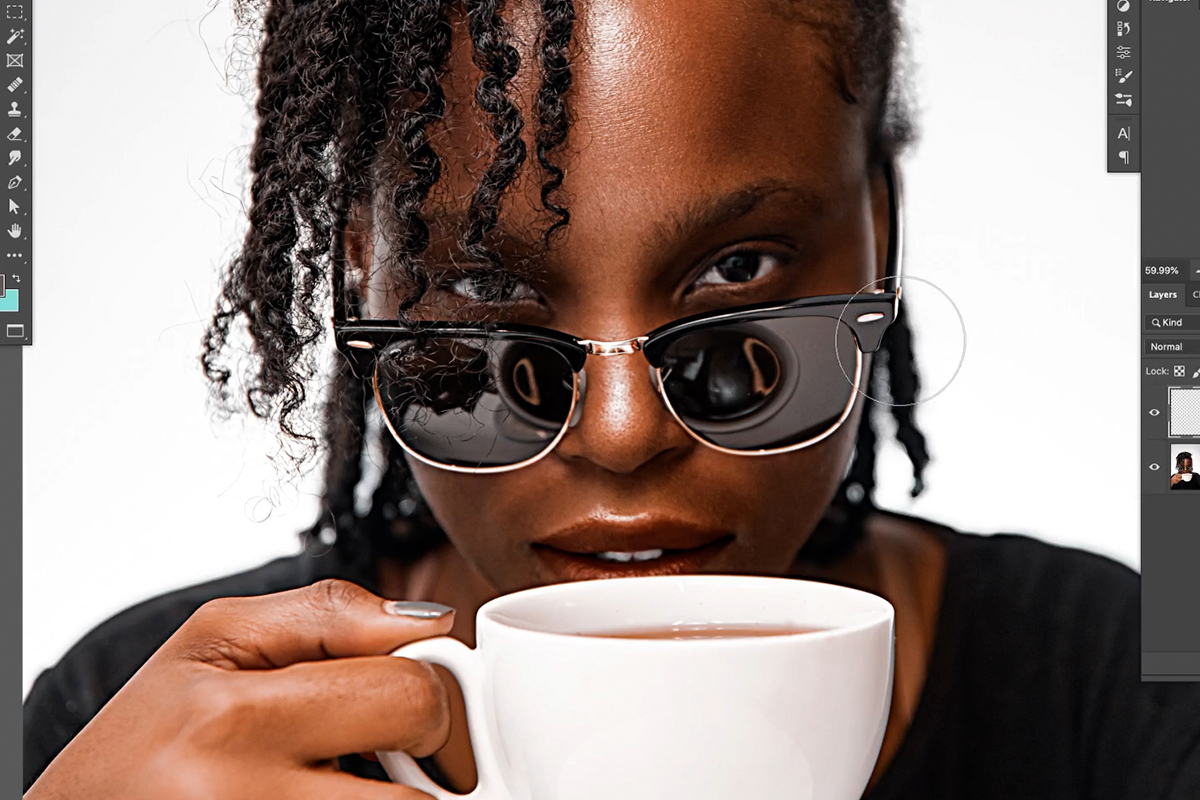
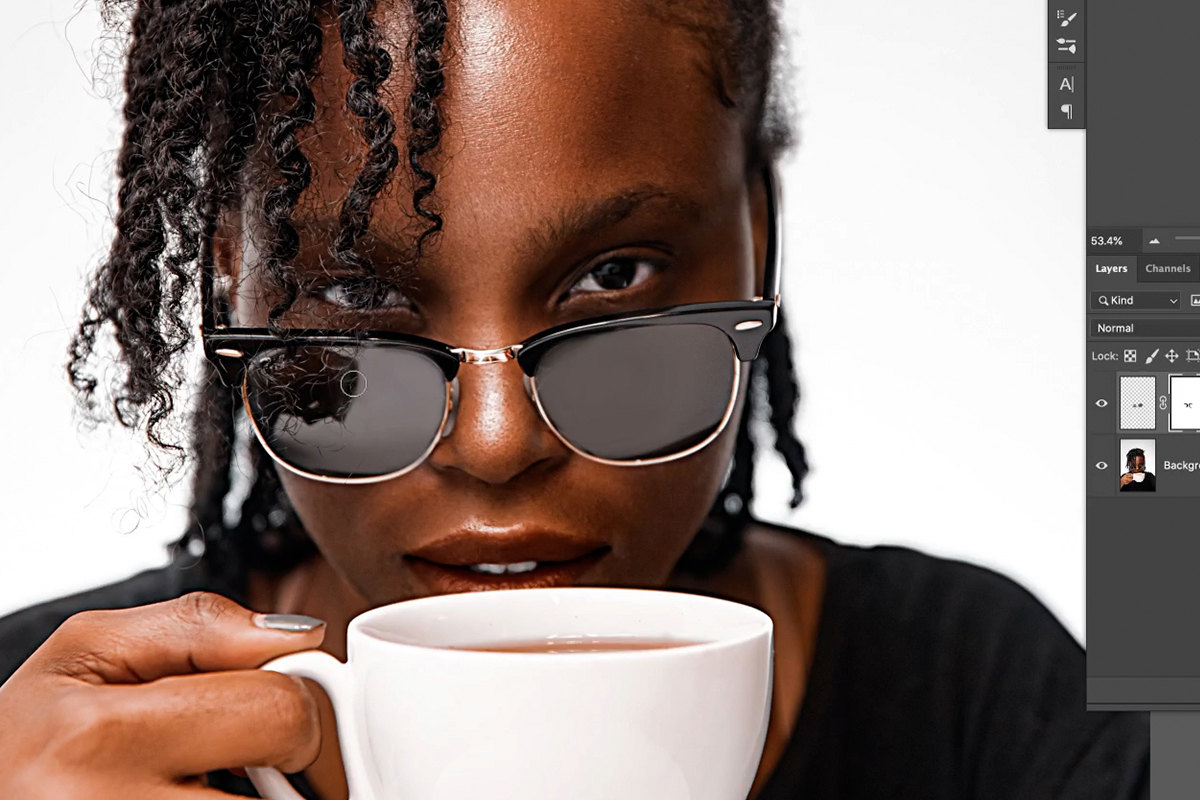
The example here is removing a reflection from a pair of sunglasses. The approach is simple: create a new layer, press B for the Brush Tool, hold Alt or Option to sample a color from nearby, and paint over the reflection with a large soft-edged brush.
A large soft brush is the right choice when removing something like this. Soft edges blend into the surrounding tones without leaving a visible boundary, which is what makes an invented highlight or shadow read as real rather than painted on.
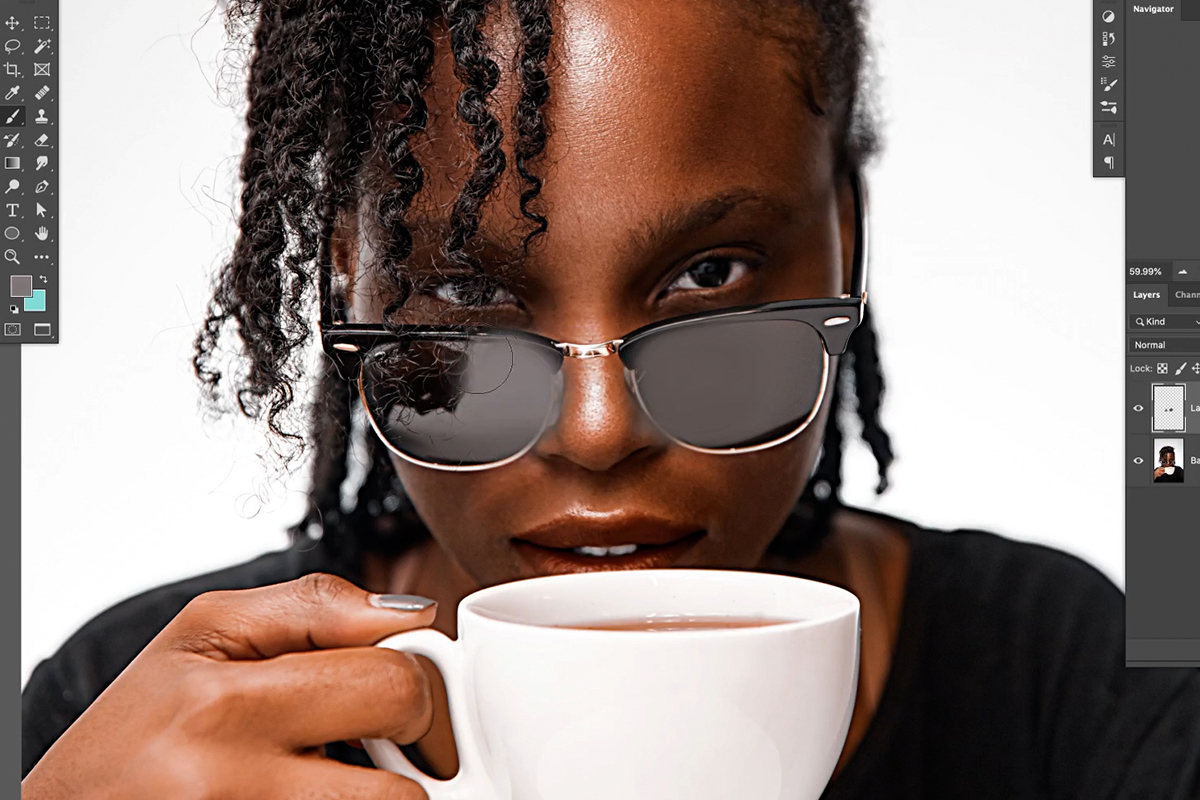
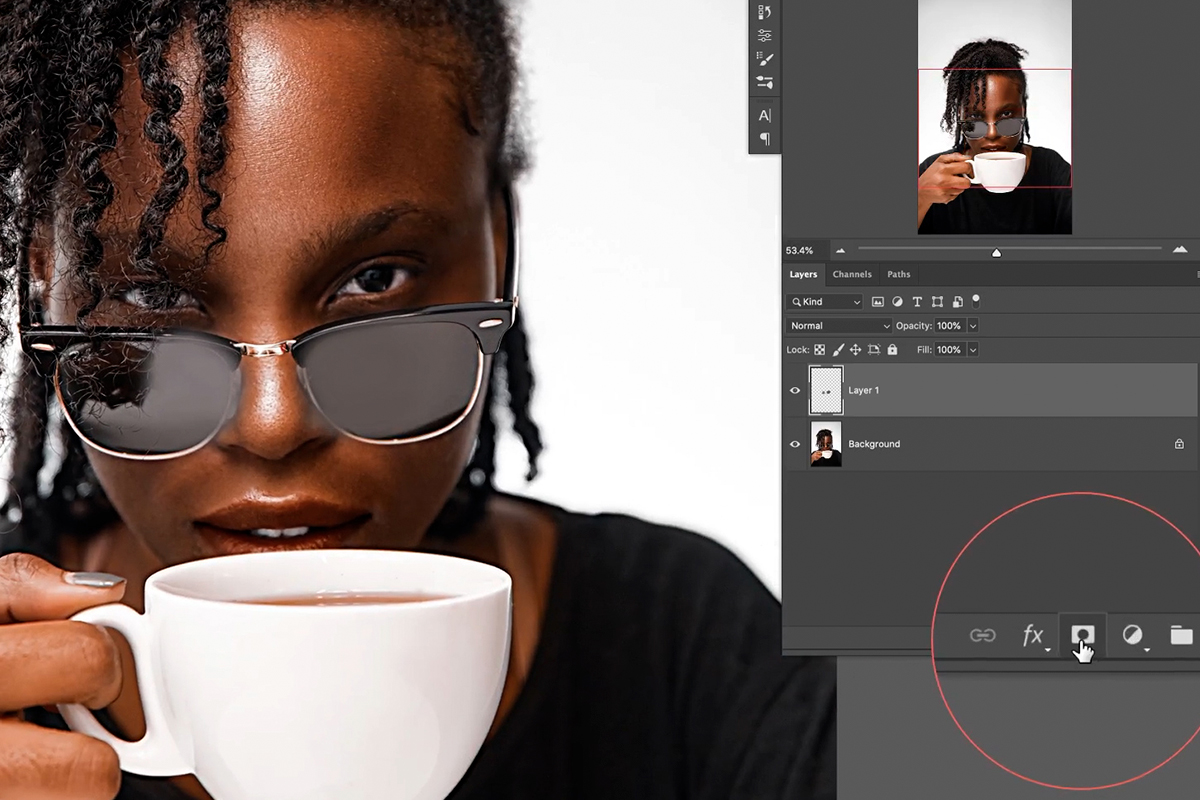
You do not need to be careful about painting past the edges of the glasses, because the next step is a layer mask to clean it up. Which is exactly where the missing shortcut becomes annoying — you now have to move the mouse down to the Layers panel and click the mask icon, and you will do that same thing again and again for the rest of the edit.
Opening the Keyboard Shortcuts Editor
-
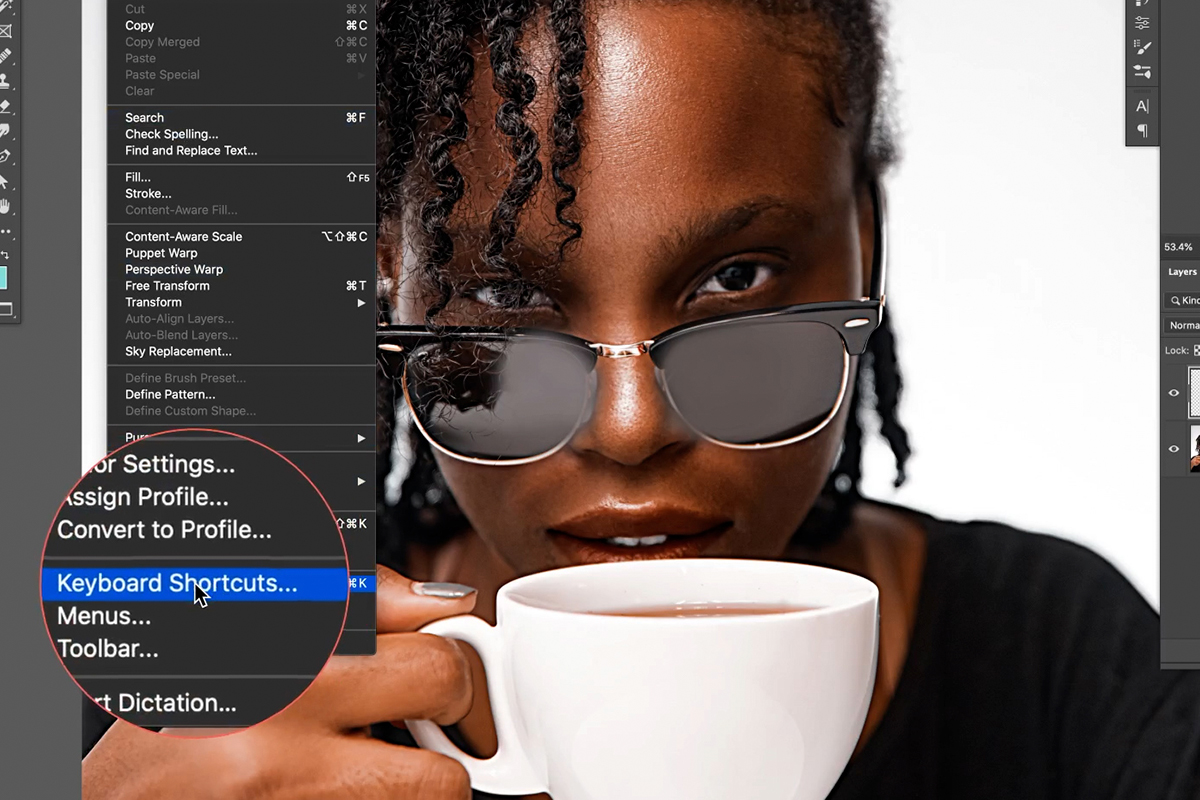
Go to Edit, then Keyboard Shortcuts
It is at the very bottom of the Edit menu.
-
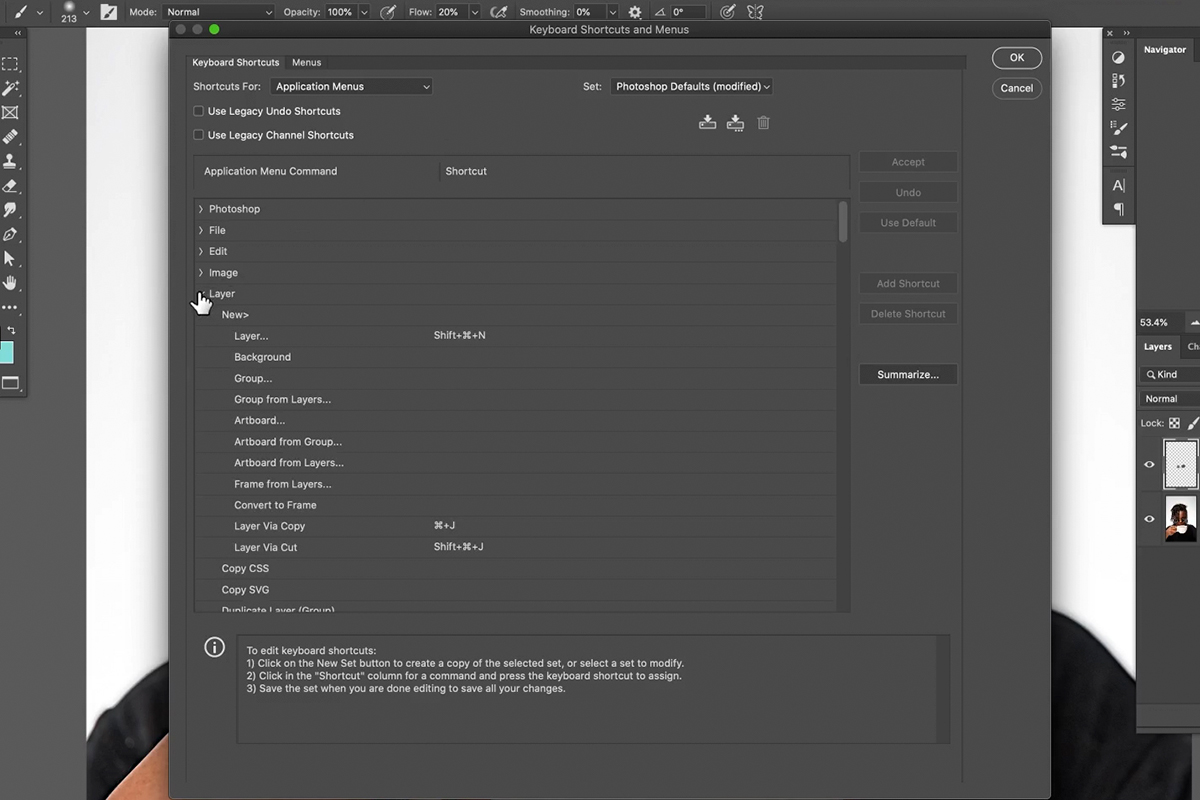
Make sure Shortcuts For is set to Application Menus
The list that appears mirrors Photoshop’s own menu bar — Layer, Filter, Select and so on — so you find a command exactly where you would find it normally.
Building the Layer Mask Shortcut
-
Expand Layer and scroll down to Layer Mask
You will find two entries worth knowing: Reveal All, which creates a white mask leaving everything visible, and Hide All, which creates a black mask hiding everything.
-
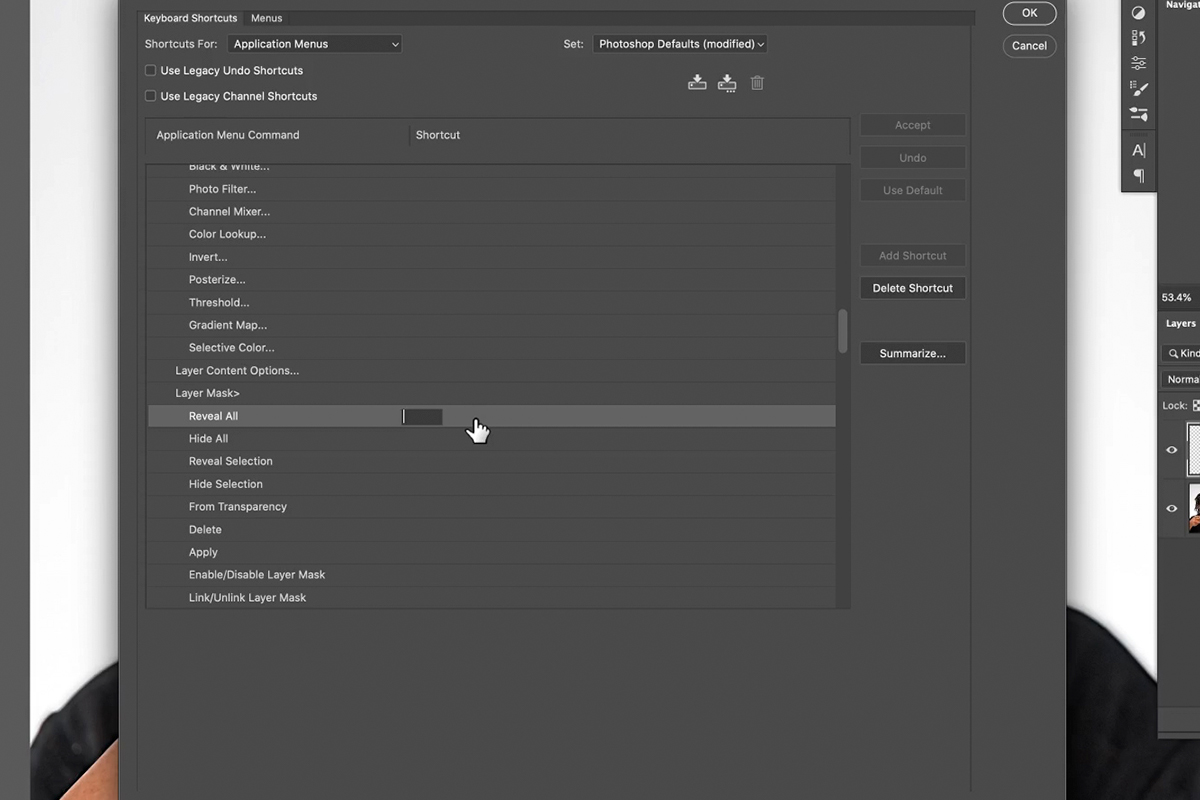
Click in the shortcut field next to Reveal All
The field becomes editable and waits for you to press keys.
-
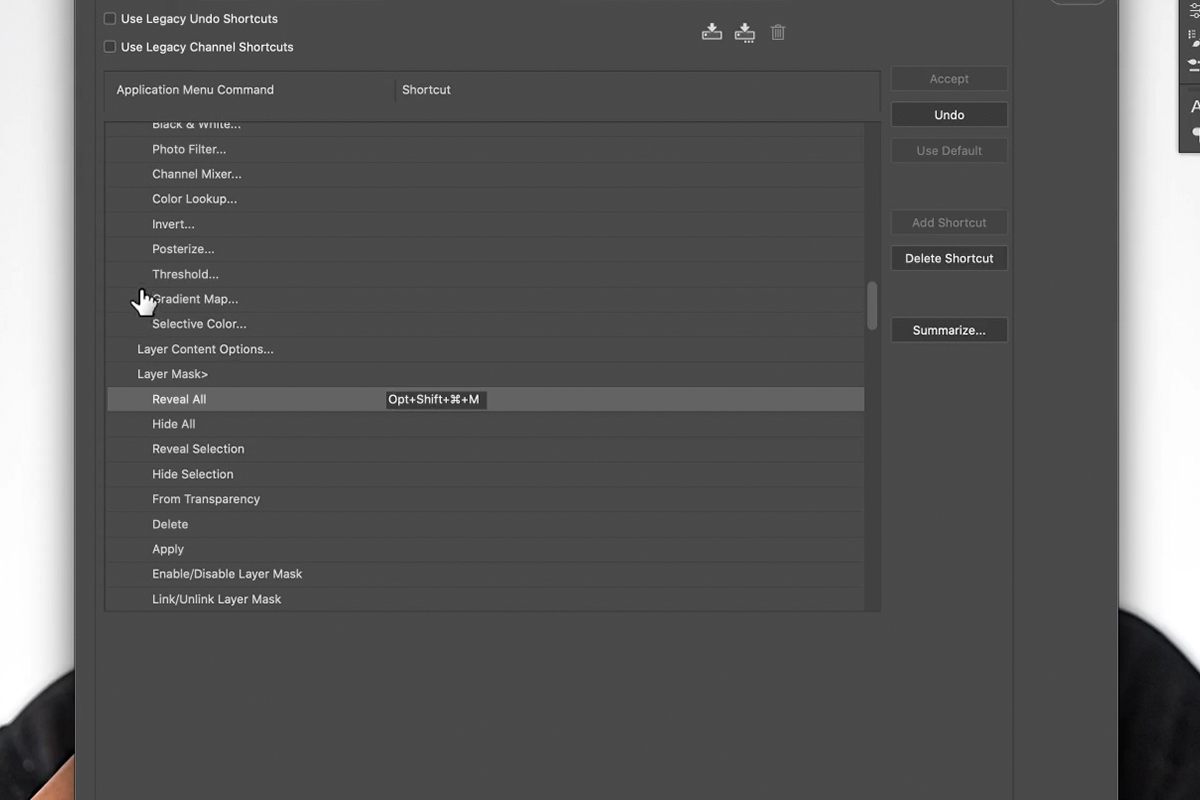
Press your key combination
Shift + Option + Cmd + M on Mac, or Shift + Alt + Ctrl + M on Windows. M for mask, which makes it easy to remember.
-
Press Enter to confirm
Enter confirms this shortcut. Make any others you want the same way, then click OK once to close the dialog.
Why Three Modifiers
The choice of Shift plus Option plus Cmd — or Shift plus Alt plus Ctrl on Windows — is deliberate, and it is the most useful piece of advice in this whole tutorial.
Simple combinations are already spoken for. Ctrl or Cmd + U is Hue/Saturation. Ctrl or Cmd + M is Curves. Almost every single-modifier combination and most two-modifier combinations are taken by something Photoshop already does. Using all three modifiers plus a letter puts you in territory that is almost always free, which means you can pick the letter that actually makes sense to you rather than whatever happens to be unclaimed.
It also has a practical benefit while you are learning: a three-modifier shortcut is deliberate. You will not trigger it by accident the way you might with a two-key combination.
What Happens When There Is a Conflict
Try assigning something already in use and Photoshop tells you. Enter Ctrl or Cmd + U and a warning appears explaining that the combination is already assigned to Hue/Saturation.
You then have two choices. Accept and Go To Conflict reassigns the shortcut to your new command and jumps you to the one you just displaced, so you can give it something else — useful if you genuinely never use the original. Or Undo Changes, which backs out and leaves everything as it was.
The warning is a good safety net, but it is easier to stay out of conflicts entirely by using the three-modifier pattern.
Three More Worth Setting Up
Gaussian Blur
Under Filter, then Blur. Gaussian Blur gets used constantly — softening a mask, building depth, smoothing a retouch — and it is buried two menus deep every single time. Shift + Option + Cmd + G, or Shift + Alt + Ctrl + G, keeps the G association intact.
High Pass
Under Filter, then Other. Anyone who sharpens with High Pass reaches for it on every image, and it is one of the most awkwardly buried commands in the program. H is the obvious letter.
Hide Layers
This one is the sleeper. Under Layer, scroll a long way down to Hide Layers. Assign it something like Shift + Option + Cmd + V for visibility.
What it gives you is instant before-and-after on whatever is selected — a layer, several layers, or a whole group. Being able to flick an effect off and on without moving your hands off the keyboard changes how you evaluate your own work, because you actually check rather than assuming. It is much harder to fool yourself about whether an edit is helping when comparing costs nothing.
Putting Them to Work
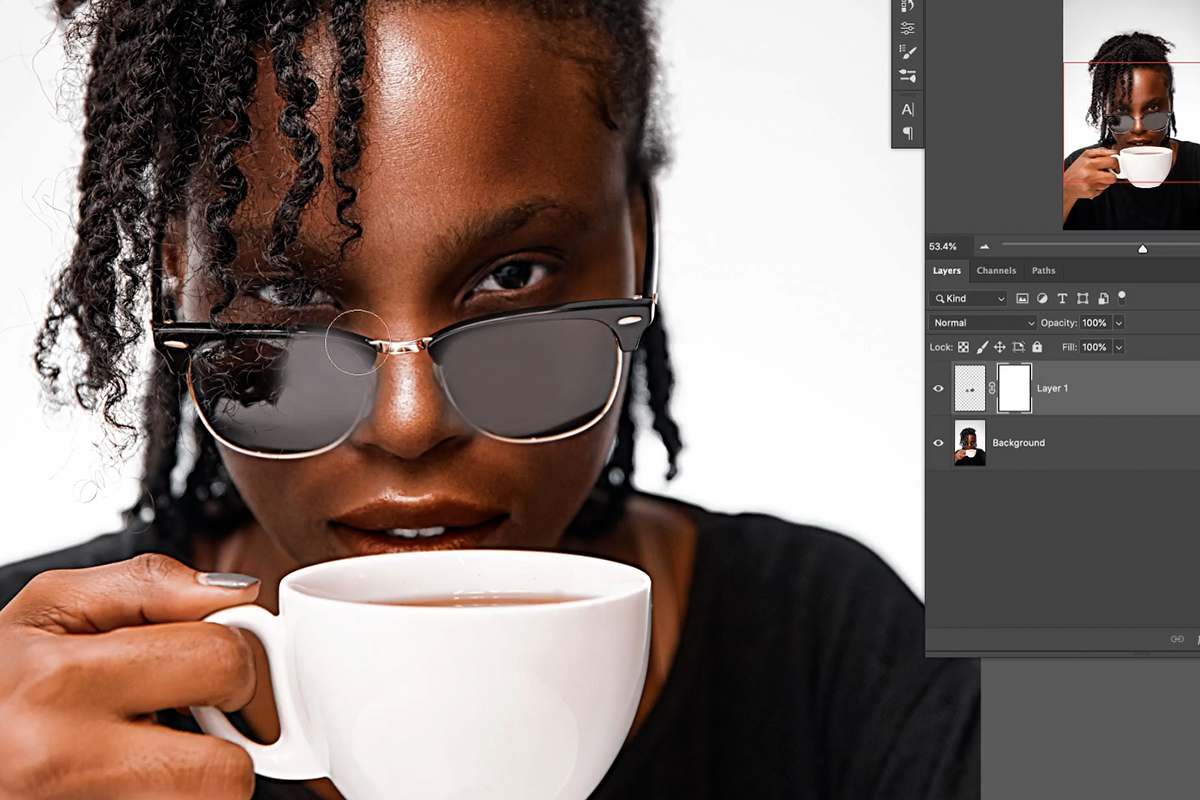
Back in the edit, the difference shows up immediately. Press the mask shortcut and the layer mask appears, with no trip to the Layers panel, ready for you to paint black wherever the brushwork went past the glasses.
The rest of the edit follows the same pattern. Create a new layer, clip it with Alt + Ctrl + G or Option + Cmd + G, pick a lighter color and add a small highlight to the glasses, then lower the layer opacity so it sits believably. Shift-click to select the layers, group them with Ctrl or Cmd + G, and use the visibility shortcut to check the before and after.
As an optional variation, press the mask shortcut again to add a mask to the group and paint on it to fade the effect, so a little of the reflection comes back. In the video Aaron shows this, then undoes it and leaves the edit as it was.
Any one of these saves perhaps two seconds. That is not the point. The point is that reaching for a menu breaks your attention on the image, and doing it two hundred times in an edit adds up to a genuinely different working experience.
The Other Three Lists in the Dialog
The Shortcuts For dropdown at the top of the dialog has more in it than Application Menus, and the other options are worth knowing about.
Panel Menus
Every panel in Photoshop has its own flyout menu — the small icon in the top corner of the Layers panel, the Channels panel, the Paths panel. Those commands live here. Flatten Image, Merge Visible, Duplicate Layer and Make Selection are all in this list, and several of them are used often enough to earn a key.
Tools
This list holds the single-letter tool shortcuts — B for Brush, P for Pen, S for Clone Stamp. You can reassign them, though there is rarely a good reason to. The letters are near-universal across Adobe applications and across every tutorial you will ever watch, so changing them creates friction everywhere else. The one genuinely useful setting here is the option controlling whether Shift plus a letter cycles through nested tools.
Taskspaces
Commands specific to particular workspaces. Most people never need to touch this, but it is there if a workspace command is part of your daily routine.
Saving and Moving Your Shortcut Set
Custom shortcuts are stored in a set, and by default you are editing Photoshop Defaults with your changes layered on top. That is fine until you reinstall, move to a new machine, or work on someone else’s computer — at which point every shortcut you built muscle memory around is gone.
-
Click the Save As icon in the Keyboard Shortcuts dialog
It is the small floppy-disk icon next to the Set dropdown at the top.
-
Give the set a name you will recognize
Something like your name plus the year is enough.
-
Keep a copy of the file somewhere safe
Photoshop saves it as a .kys file in your Presets folder. Copy it to a cloud drive alongside your brushes and actions.
There is also a Summarize button in the same dialog. It exports your entire shortcut list — defaults and custom additions — as an HTML file you can open in a browser and search. It is a genuinely good way to discover shortcuts you did not know existed, and a useful reference while a new custom shortcut is still bedding in.
A note on what cannot be assigned
Not everything is available. Actions, scripts and some panel controls do not appear in these lists. Anything that lives in a menu can get a shortcut, but if a command has no menu entry at all, the workaround is to record it as an Action and assign that Action a Function key from the Actions panel instead.
How to Actually Learn Them
The mistake is trying to memorize a long list at once. A better approach is to learn one or two new shortcuts a week. Pick them by noticing what you keep doing — if you find yourself opening the same menu repeatedly in a single session, that command deserves a shortcut.
They stack up faster than you would expect. After a few months of adding one or two a week, the tools you use most are all under your fingers, and you stop thinking about where commands live at all.
One habit worth building
Keep a note of the custom shortcuts you create. Photoshop stores them in a set you can save from the Keyboard Shortcuts dialog, which is worth doing — it means a reinstall or a new machine does not cost you the muscle memory you have built up.
Quick Reference: Keys, Menus and Settings
- Open the editorEdit > Keyboard Shortcuts, Shortcuts For: Application Menus
- Assign keysClick the Shortcut column, hold the keys, Enter for each; OK once at the end
- Layer maskLayer > Layer Mask > Reveal All: Shift + Option/Alt + Cmd/Ctrl + M
- Gaussian BlurFilter > Blur > Gaussian Blur: Shift + Option/Alt + Cmd/Ctrl + G
- High PassFilter > Other > High Pass: Shift + Option/Alt + Cmd/Ctrl + H
- Before and afterLayer > Hide Layers: Shift + Option/Alt + Cmd/Ctrl + V
- Clip and groupOption/Alt + Cmd/Ctrl + G clips a layer; Cmd/Ctrl + G groups
The four custom keys are Aaron’s picks; use any letters that are easy for you to remember.

Free Downloads
Follow Along on the Same Photo
Get the sunglasses portrait from the video and the 4-page PDF guide with every shortcut in one table. Free with a PHLEARN account.
Custom Keyboard Shortcuts: Common Questions
How do I make my own keyboard shortcut in Photoshop?
Go to Edit > Keyboard Shortcuts and open the menu the command lives in. Click in the Shortcut column beside the command, hold down the keys you want and press Enter.
Is there a keyboard shortcut for adding a layer mask?
Not out of the box. Under Layer > Layer Mask, give Reveal All a shortcut. Aaron uses Shift + Option + Cmd + M (Shift + Alt + Ctrl + M on Windows), M for mask.
What is the difference between Reveal All and Hide All?
Reveal All makes a white layer mask, so everything on the layer stays visible. Hide All makes a black layer mask that hides everything.
Which key combinations are usually free?
Shift + Option + Cmd (Shift + Alt + Ctrl) plus a letter. Simpler combinations are usually taken; Cmd/Ctrl + U, for example, is Hue/Saturation.
What happens if the keys are already in use?
Photoshop warns you. Accept and Go to Conflict gives the keys to your new command and takes you to the one that lost them; Undo Changes leaves everything as it was.
Do I click OK after every shortcut?
No. Press Enter to confirm each shortcut, then click OK once to close the dialog when you have made them all.
Is there a quick way to see a before and after?
Give Layer > Hide Layers a shortcut. Aaron uses Shift + Option + Cmd + V, V for visible. It hides and shows the selected layer or group without reaching for the eye icon.
Can I change Photoshop’s existing shortcuts?
Yes. Any shortcut can be changed the same way: click in its Shortcut field and press the new keys.
How do I keep my shortcuts after a reinstall?
Custom shortcuts are stored in a set. Click the save icon next to the Set menu at the top of the Keyboard Shortcuts dialog and give the set a name, then keep a copy of the file somewhere safe.
Are the sample files free?
Yes, with a free PHLEARN account. You get 1 sample image and 1 PDF guide: the sunglasses portrait from the video and the 4-page guide with every shortcut in one table.
New Free Tutorials View All »




Enjoying This Free Tutorial? Go Further with PRO.
200+ PRO courses. 1,000+ practice files. One membership.

Unlimited access to every PRO course
New PRO courses every month
Layered PSDs and RAW files to follow along
100+ Lightroom Presets, LUTs, Actions and Brushes
Stream in up to 4K, with captions and chapters
Watch on any device: desktop, tablet or phone
4.93 average from 3,900+ reviews · 2M+ students