
Download Assets
This tutorial includes 3 sample images, 1 PSD template and 1 PDF guide. Downloads are free with a PHLEARN account.
- Download the sample images and PSDs from every free tutorial on PHLEARN
- New free tutorials published every week
- One free account — sign up once, then download anything
Free PDF Guide · 3 Pages
This Tutorial as a Step-by-Step PDF
The guide walks through hiding the Instructions group, placing your photo with File > Place Linked, making a Normal and a Lighten copy, Alt/Option-dragging the Film Effect BASE filters to the bottom copy and BLUR to the top, adjusting Motion Blur distance and angle and setting the top copy to about 50% Opacity. Keep it next to your keyboard.
description
Learn how to create a vintage, Polaroid-style film effect in Photoshop using the included PSD template. Place your photo as a linked Smart Object, duplicate it, and set the top copy to the Lighten blending mode, then copy the template’s Smart Filter stack of Levels, Noise, and Motion Blur onto both layers. Adjust the levels, grain, blur distance, and angle for your photo, and dial in the Lighten layer’s opacity for a soft, faded film glow.
Enjoying This Free Tutorial?
We publish a new free tutorial every week, each one with sample images and PSDs you can download and follow along with. Sign up and they land straight in your inbox, along with early word on sales, events and subscriber-only offers.
How to Create a Polaroid-Style Film Effect in Photoshop
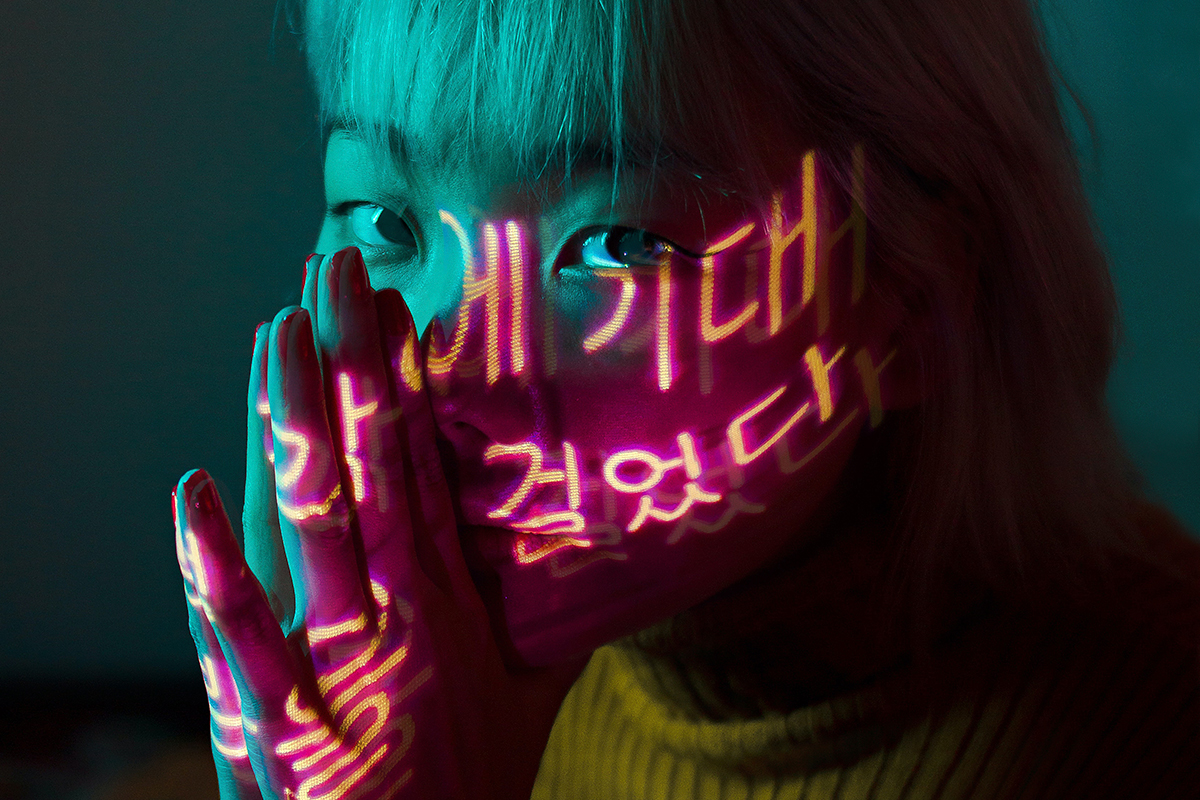
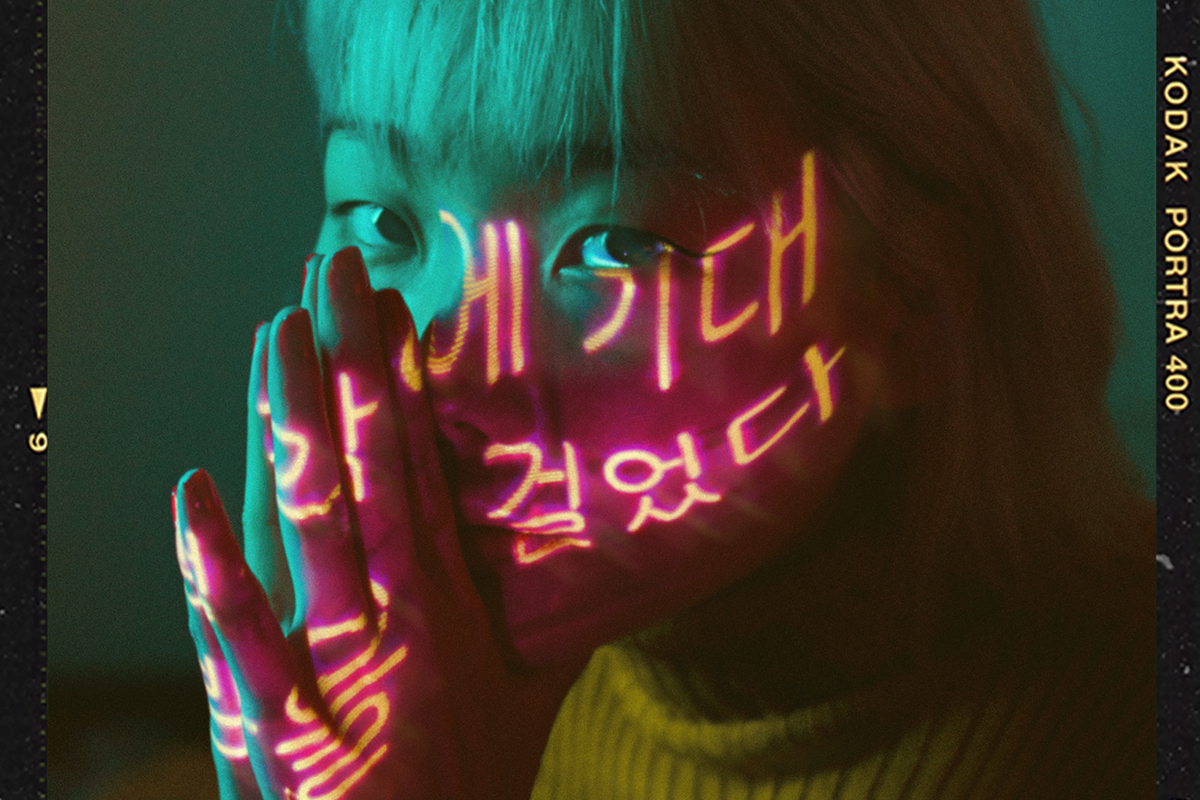
If you want that soft, slightly blurred, faded-color look of an old film photo without hand-building every layer yourself, this vintage film effect gets you there with a template built around Smart Objects and Smart Filters. Once the file is set up, applying the effect to a new photo is mostly a matter of dropping the image in and nudging a few sliders — but understanding what each layer is doing means you can push the look further than the defaults, or dial it back for a more subtle result.
Getting Started with the Film Effect Template
The template is built in layers, with instructions written directly onto the canvas so you can find your way around even without a video open. The first thing to do is turn those instruction layers off so they don’t show up in your final image.
-
Turn Off the Instruction Layers
Open the template and, in the Layers panel, hide the layer group or layers containing the on-canvas instructions. These exist purely to guide you through the file and should never appear in the exported image.

Placing Your Photo into the Template
With the guide layers hidden, the next step is getting your own photo into the file — and it needs to go in as a Smart Object, not a regular pixel layer, because every effect in this template is built as a Smart Filter stack that lives on top of a Smart Object.
-
Place Your Image as a Smart Object
Go to File > Place Linked and choose the photo you want to apply the effect to. Placing an image this way (rather than dragging and dropping it) brings it in as a linked Smart Object, which is what lets you copy Smart Filters onto it later.
-
Scale the Image to Fit the Template
If the placed image doesn’t reach the edges of the template’s frame, use the width and height fields at the top of the screen to scale it up, then press Enter to commit the transform.
Why the Image Has to Be a Smart Object
Placing the file as a Smart Object rather than flattening it into a regular layer is what makes the rest of the process work. Smart Filters — the levels, noise, and blur adjustments used throughout this effect — can only be copied from one layer to another when both layers are Smart Objects. Skip this step and there’s nothing to drag the filters onto.

Duplicating the Layer for the Lighten Blend
The soft, glowing quality of this effect comes from stacking two copies of the same photo on top of each other with different blending modes, rather than trying to fake that softness with a single blur filter.
-
Duplicate the Layer Once
Press Ctrl + J on PC (Cmd + J on Mac) to duplicate your placed Smart Object. Leave the bottom copy set to Normal blending mode, and set the Lighten blending mode on the top copy. It’s the interaction between these two blend modes that produces the soft motion-blurred glow around lighter areas of the photo.
What the Lighten Blend Mode Is Actually Doing
Lighten mode compares the two layers pixel by pixel and only shows the brighter result at each point. Once the top copy has motion blur and noise added to it, that blurred, brighter version bleeds through wherever it’s lighter than the sharp layer underneath — which is what creates the soft glow around highlights rather than a uniform blur over the entire image.
Copying the Smart Filters to Both Layers
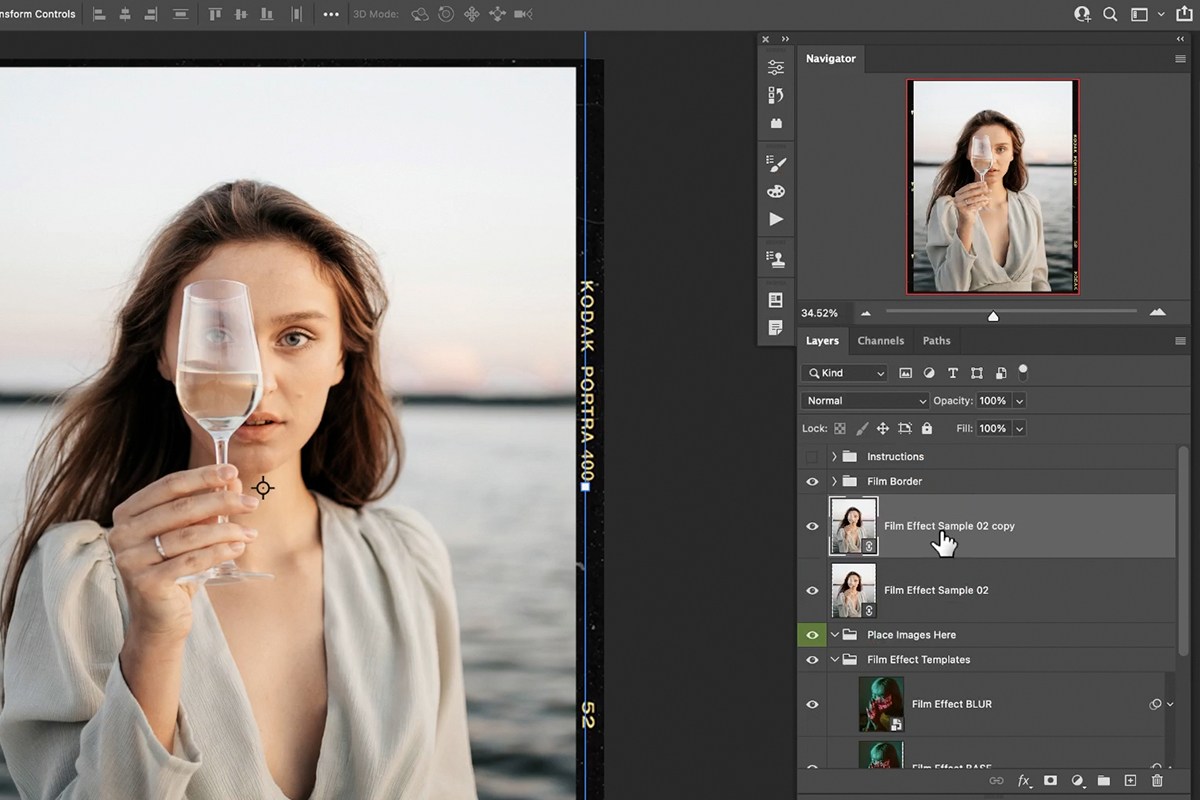
Rather than building the Levels, Noise, and Motion Blur adjustments from scratch on each copy, the template already has them built as two Smart Filter stacks, one on Film Effect BASE and one on Film Effect BLUR. You copy the BASE stack onto your bottom copy and the BLUR stack onto your top copy.
-
Copy the Smart Filters to the Bottom Layer
On the Film Effect BASE Smart Object, hold Alt on PC (Option on Mac) and click-drag the Smart Filters icon (the small overlapping-circles icon beneath the layer thumbnail) onto your bottom copy, the one set to Normal. This duplicates BASE’s entire filter stack onto that layer.
-
Copy the Smart Filters to the Lighten Layer
Repeat the same Alt/Option-drag from the Film Effect BLUR Smart Object, this time dragging its Smart Filters up onto the top copy that’s set to the Lighten blending mode.
Adjusting the Levels and Noise Filters
With the filters copied onto both layers, each one lists out under its Smart Object thumbnail and can be toggled on and off or double-clicked to reopen its settings.
-
Open the Filter List
Click the small arrow next to the Smart Filters icon on either layer to expand the list. You’ll see entries for Levels, Noise, Motion Blur, and Gaussian Blur, each of which can be switched on or off independently to see how much it’s contributing to the final look.
-
Adjust Levels and Noise to Taste
Double-click any filter in the list to reopen its dialog and adjust it for your specific photo. The Levels adjustment is what shifts the color and contrast toward that faded film tone, and the Noise filter adds the fine grain that keeps the effect from looking too digitally smooth.
Why the Filters Need Adjusting per Photo
Smart Filter settings that look right on one image can look overdone or barely noticeable on another, depending on how bright or contrasty the original photo already is. Treat the template’s defaults as a starting point, not a fixed recipe — check the effect at 100% before deciding it needs more or less of any single filter.

Fine-Tuning the Motion Blur Distance and Angle
Motion Blur is doing a lot of the work in this effect, so it’s worth spending extra time on its two main controls: distance and angle.
-
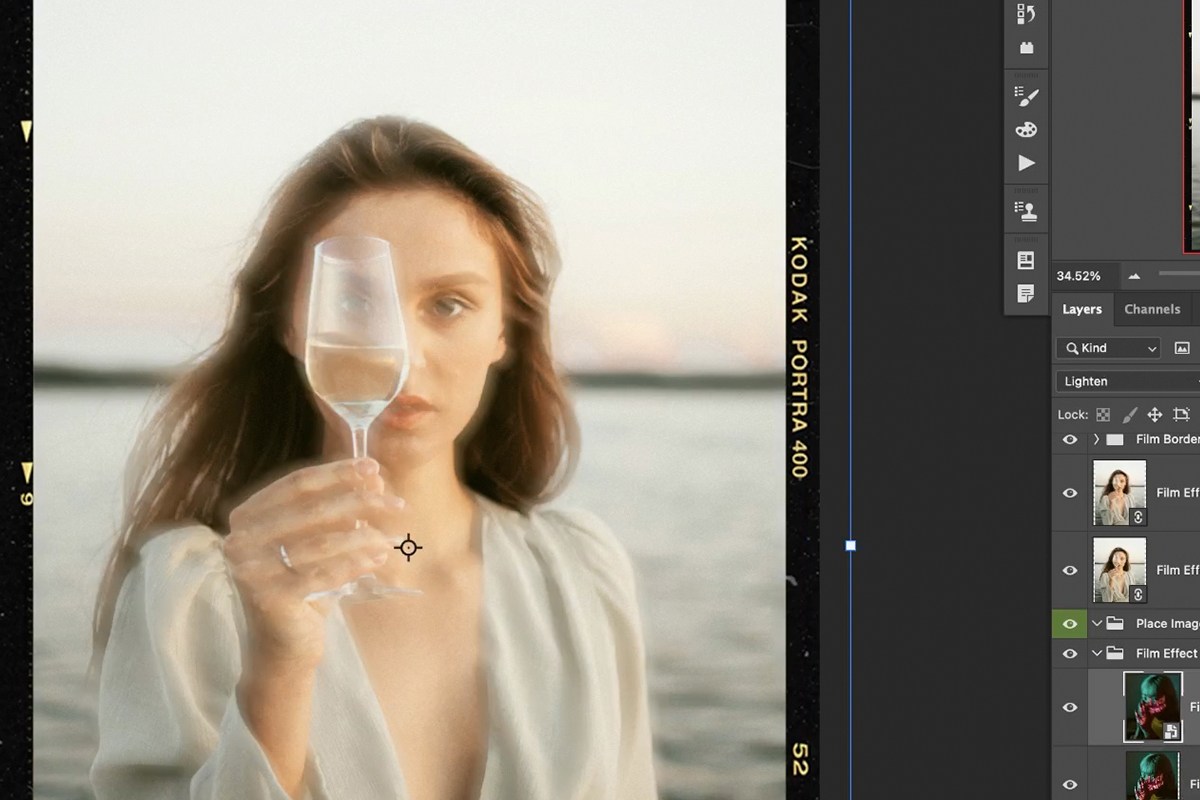
Adjust the Motion Blur Distance and Angle
Double-click Motion Blur in the Smart Filters list. Lowering the distance produces a tighter, more subtle blur; raising it exaggerates the soft glow. The angle should generally follow the direction of light or motion already present in your photo rather than being left at a default setting that doesn’t match the image.
Dialing In Opacity and Saving Your Image
The last adjustment is the simplest, but it has an outsized effect on how strong the overall look reads.
-
Lower the Opacity of the Lighten Layer
Select the top, Lighten-mode layer and reduce its Opacity — a starting point around 50% is reasonable, but toggle it on and off at your chosen value to confirm the glow still reads without overpowering the photo.
-
Save Your Finished Image
Once you’re happy with the balance of blur, noise, and glow, flatten or save the file as needed for how you plan to share it.
How Much Opacity Is Too Much
Pushed too high, the Lighten layer’s opacity can wash out shadows and make the whole image look hazy rather than filmic. If the photo starts losing its blacks, that’s the signal to bring the opacity back down rather than reaching for more Levels adjustment to compensate.

Common Mistakes to Avoid With This Effect
The most frequent misstep is placing the photo as a regular pixel layer instead of a linked Smart Object — without that, there’s no way to copy the Smart Filter stack across, and the whole workflow stalls at step one. The second is skipping the per-photo adjustment of Levels and Motion Blur: settings tuned for a bright, high-contrast photo will often look wrong applied blindly to a darker or flatter image. When the effect looks off, check the individual filters one at a time rather than adjusting everything at once.

Why This Effect Works
What sells the film look isn’t any single filter — it’s the combination of two identical layers set to different blending modes. The Normal layer keeps the photo sharp and readable, while the Lighten layer, carrying its own blur and grain, only contributes its brighter, softer pixels back into the image. That’s a fundamentally different result than applying one blur filter directly to a single layer, which softens everything uniformly and loses the contrast between sharp and glowing areas that makes a film effect feel real. Layering it this way, on Smart Objects with copyable Smart Filters, also means every setting stays fully editable after the fact — you can go back and change the Motion Blur angle or the Noise amount without redoing the effect from the beginning, which is exactly what makes it practical to reuse on completely different photos. For anyone who wants a deeper look at how blend modes interact, or wants to take this into full compositing work built around blending modes, that same core idea — two layers, two roles — scales up well beyond a single film effect.
Final Thoughts
This vintage film effect is a good technique to keep on hand specifically because it’s rebuildable: once you understand that it’s two Smart Object copies, one Normal and one Lighten, each carrying its own copyable Smart Filter stack of Levels, Noise, and blur, you’re not locked into any one template file to get the look. You can build the same structure from scratch on any photo, adjusting the filter values until the glow, grain, and softness match the mood you’re going for. It’s also a useful entry point into framing a finished image with a film border or exploring more advanced cinematic and film effects once the basic layer structure feels familiar. If you want to push the technique further with a full Smart Object workflow, this deeper guide to Smart Objects is a solid next stop.
Quick Reference: Keys, Menus and Settings
- StartHide the Instructions group in the Layers panel
- Place your photoFile > Place Linked into Place Images Here; width and height at the top, Enter/Return
- Two copiesCmd/Ctrl + J; bottom on Normal, top on Lighten
- Copy the filtersAlt/Option-drag the two circles: Film Effect BASE to the bottom copy, Film Effect BLUR to the top copy
- AdjustArrow next to the two circles opens the list; double-click Motion Blur for Distance and Angle
- Strength and saveTop copy Opacity about 50%, then save your image
No AI, no generative credits.

Free Downloads
Follow Along on the Same Photos
Get the three sample photos, the film effect PSD template with its film border and Smart Filters, and the 3-page PDF guide. Free with a PHLEARN account.
Vintage Film Effect: Common Questions
Why is there text all over my image?
The template has its instructions written right on the canvas. Hide the Instructions group in the Layers panel before you work so it never ends up in your saved image.
Why use Place Linked instead of dragging the photo in?
File > Place Linked brings the photo in as a Smart Object, and Smart Filters can only be copied onto a Smart Object.
My photo doesn’t reach the edges of the frame. What do I do?
Raise the width and height at the top of the screen until it reaches the edges, then press Enter/Return.
Why do I need two copies of the photo?
Press Cmd/Ctrl + J and set the top copy to Lighten, leaving the bottom on Normal. Lighten only shows the brighter pixels, so the blurred top copy glows around the highlights instead of blurring everything.
Which Smart Filters go on which layer?
Hold Alt/Option and drag the two-circle Smart Filters icon from Film Effect BASE onto your bottom (Normal) copy, then from Film Effect BLUR onto your top (Lighten) copy. The template’s own instructions say the same.
How do I see and change the filters?
Click the small arrow next to the two circles to open the list: Levels, Add Noise, Motion Blur and Gaussian Blur. Turn any of them off and on, or double-click one to change it.
How do I change the motion blur?
Double-click Motion Blur in the top copy’s list. Raise the Distance for a bigger smear or lower it for less, and change the Angle in the same dialog.
How do I make the whole effect more subtle?
Lower the Opacity of the top copy. Aaron sets it to about 50%, then turns the layer off and on to compare before saving.
Does the template add the film border?
Yes. The Film Border layer sits over everything in the template, so leave it on and your photo gets the border too.
Are the sample files free?
Yes, with a free PHLEARN account. You get 3 sample images, 1 PSD template and 1 PDF guide: the film effect template with its border and Smart Filters, plus photos to practice on.
From the Magazine View all
Stories, interviews and guides for photographers, new every week.
 EditingHow to Color Grade Photos in Photoshop and LightroomCorrect the photo first, then put color in the shadows, midtones and highlights. Aaron Nace on the order, the tools and skin.
 BusinessHow to Compete With AI: Give Your Clients MoreEveryone has the same tools now, and your clients know it. The way to compete is to give them more.
 EditingLightCraft vs Lightroom: I Edited the Same RAW Files in BothThe free clone on the same RAW files: what matches, what breaks and who should switch.
Master Photoshop, Lightroom and Photography
Join PHLEARN PRO for $12.99 a month, or $99.99 a year (save 36%). Cancel anytime, with a 100% money-back guarantee.