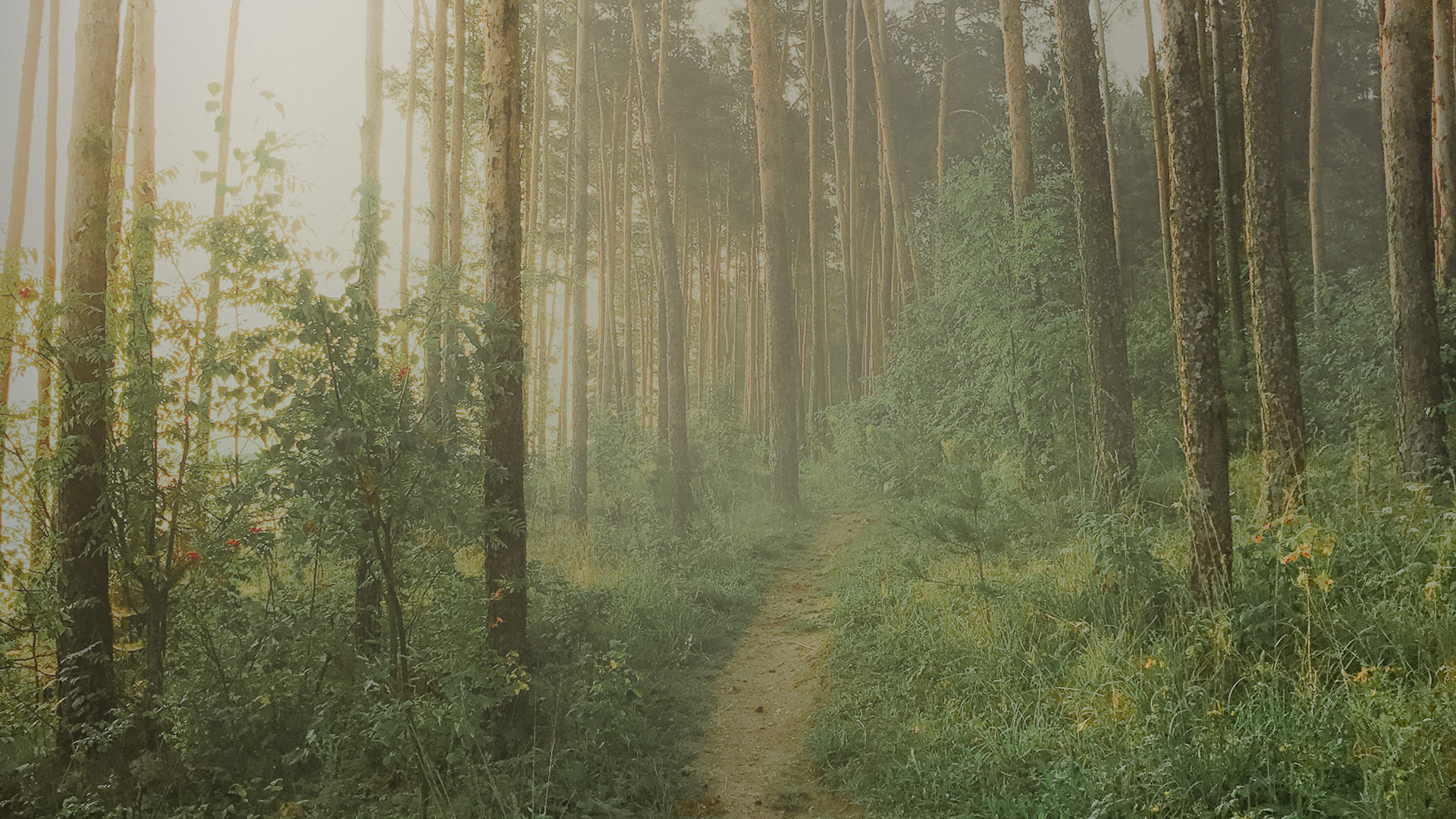

Download Sample Images
Download Assets
This tutorial includes 3 sample images and 1 PDF guide. Downloads are free with a PHLEARN account.
- Free sample files with every tutorial on PHLEARN
- New tutorials published every week
- Unlimited downloads with your free PHLEARN account
Free PDF Guide · 3 Pages
This Tutorial as a Step-by-Step PDF
The guide walks through Filter > Neural Filters > Beta filters > Depth-Aware Haze, what the Haze, Warmth and Brightness sliders do, why Output > Smart Filter is the one to pick, the three test images, and the Duplicate Layer Masked workaround with Select > Subject and Ctrl/Command+H. Keep it next to your keyboard.
description
Instantly add depth and atmosphere to any photo using the Depth-Aware Haze Neural Filter in Photoshop!
Enjoying This Free Tutorial?
We publish a new free tutorial every week, each one with sample images and PSDs you can download and follow along with. Sign up and they land straight in your inbox, along with early word on sales, events and subscriber-only offers.
How to Use Depth-Aware Haze in Photoshop Neural Filters
Atmospheric haze is one of the strongest depth cues we have. Things that are far away lose contrast, lose saturation, and pick up a pale wash of the sky between us and them. Faking that convincingly in Photoshop has always meant building a depth mask by hand — selecting the subject, feathering the edge, gradient-masking the background, and painting in the transitions. Depth-Aware Haze does that work automatically, using AI to estimate how far away each part of the scene is and applying the haze accordingly.
The interesting question is not whether it works, but where it breaks. This tutorial runs the filter against three deliberately awkward images — a portrait with a clean subject, a forest with no subject at all, and a shot designed to confuse it — and shows the workaround for when the automatic mask gets something wrong.
A note on versions: this was recorded when Depth-Aware Haze arrived as a beta Neural Filter. Adobe has continued developing Neural Filters since then, so the panel may look different in your copy of Photoshop and some filters have moved out of beta or been renamed. The workflow below, and especially the layer-mask workaround at the end, still applies.
What Depth-Aware Haze Actually Does
Two pieces of technology are working together. The first is depth sensing: Photoshop analyzes the image and estimates a distance for every area of it. The second is subject recognition, the same Select Subject technology used elsewhere in Photoshop. Combined, they let the filter decide what should stay clear and what should recede into the atmosphere.
That combination is why the filter can produce a believable result on a portrait without you drawing a single selection. It is also why it fails in specific, predictable ways, which is covered further down.
Neural Filters run in the cloud
Worth knowing before you start: Neural Filters do not process on your machine. The image is sent to Adobe’s servers, processed there, and sent back. That means you need an internet connection — turn the wi-fi off and nothing happens — and it means there is a short loading pause every time you open the panel.
Finding and Turning On the Filter
-
Update Photoshop
Neural Filters require a reasonably current version. If you do not see the menu item, an update is the first thing to check.
-
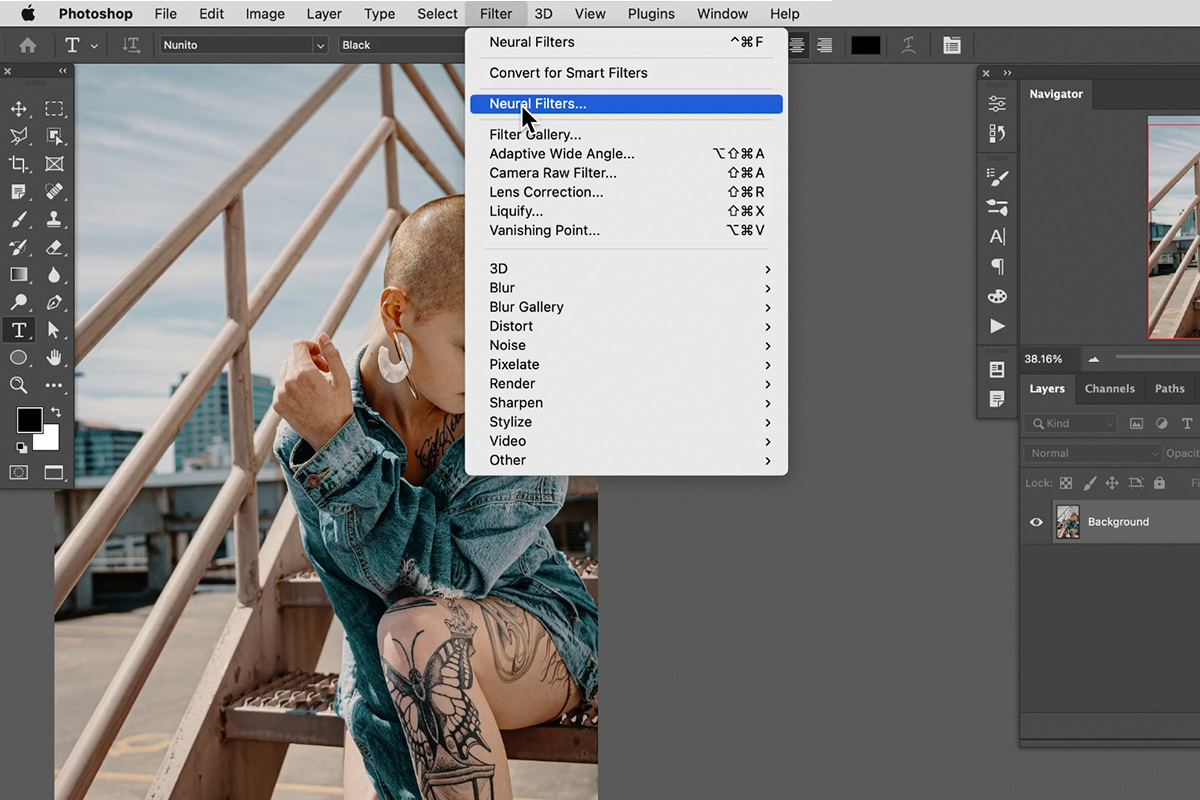
Go to Filter, then Neural Filters
The panel opens and begins loading as it connects to the cloud.
-
Open the Beta Filters section
Marked with a beaker icon. Beta filters are features still in development that Adobe makes available early — you do not have to wait for the next full release to try them.
-
Toggle on Depth-Aware Haze
Expand the dialog if you want a larger preview, then collapse it again once you can see the controls.
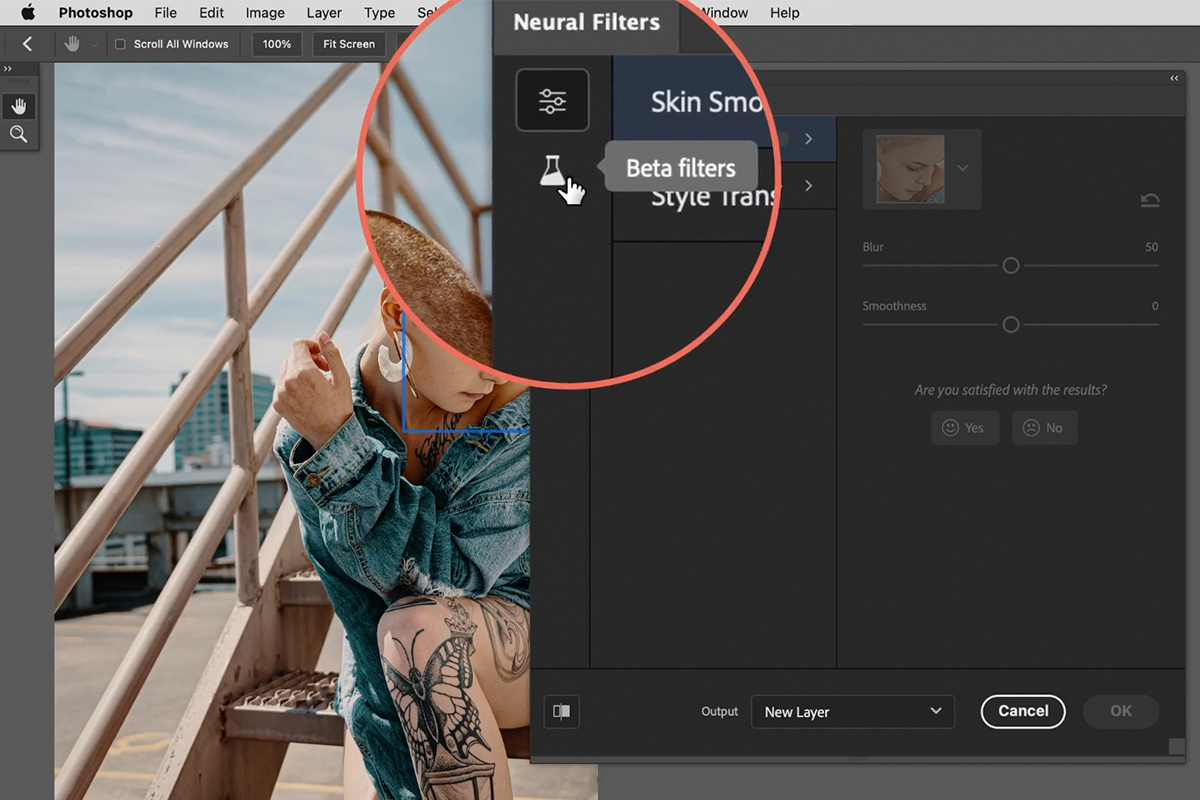
There is a preview toggle at the bottom of the panel. Use it constantly. Clicking it off and on is the fastest way to judge whether the effect is helping the photo or just graying it out, and it is far more informative than staring at the result on its own.
The Three Controls and What They Are Worth
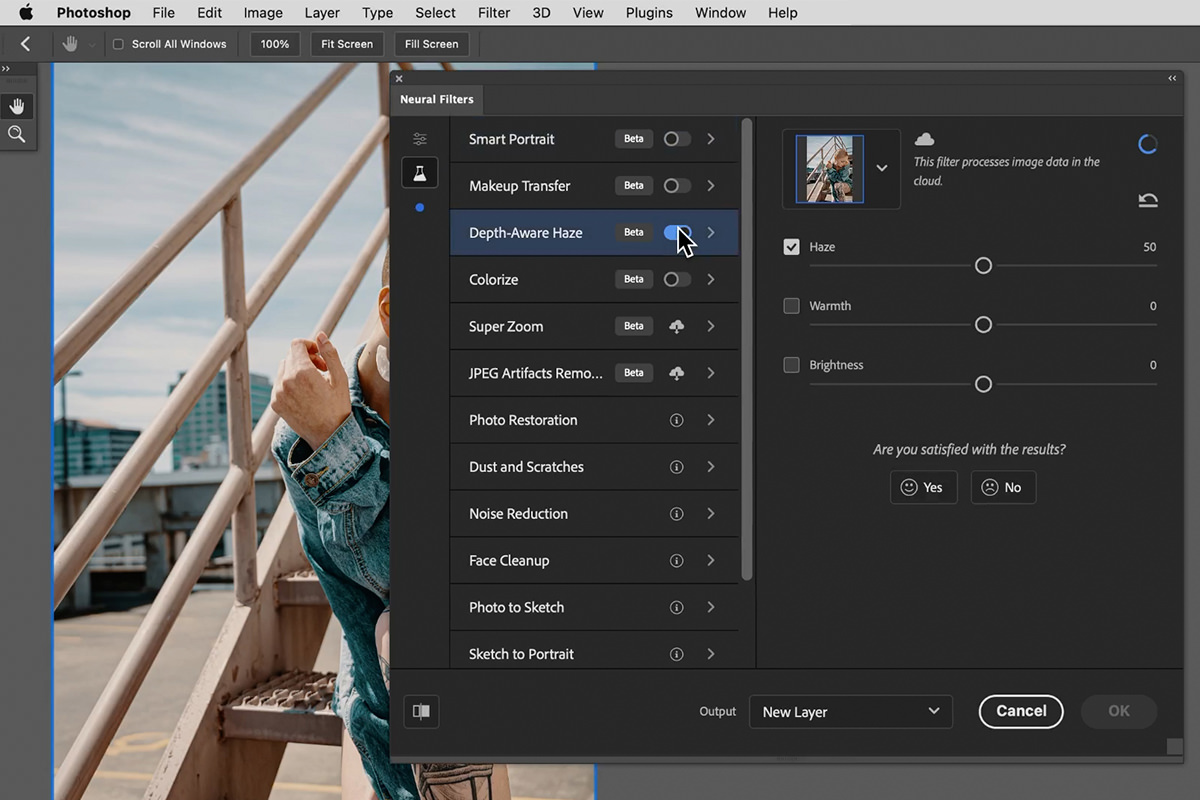
Haze amount
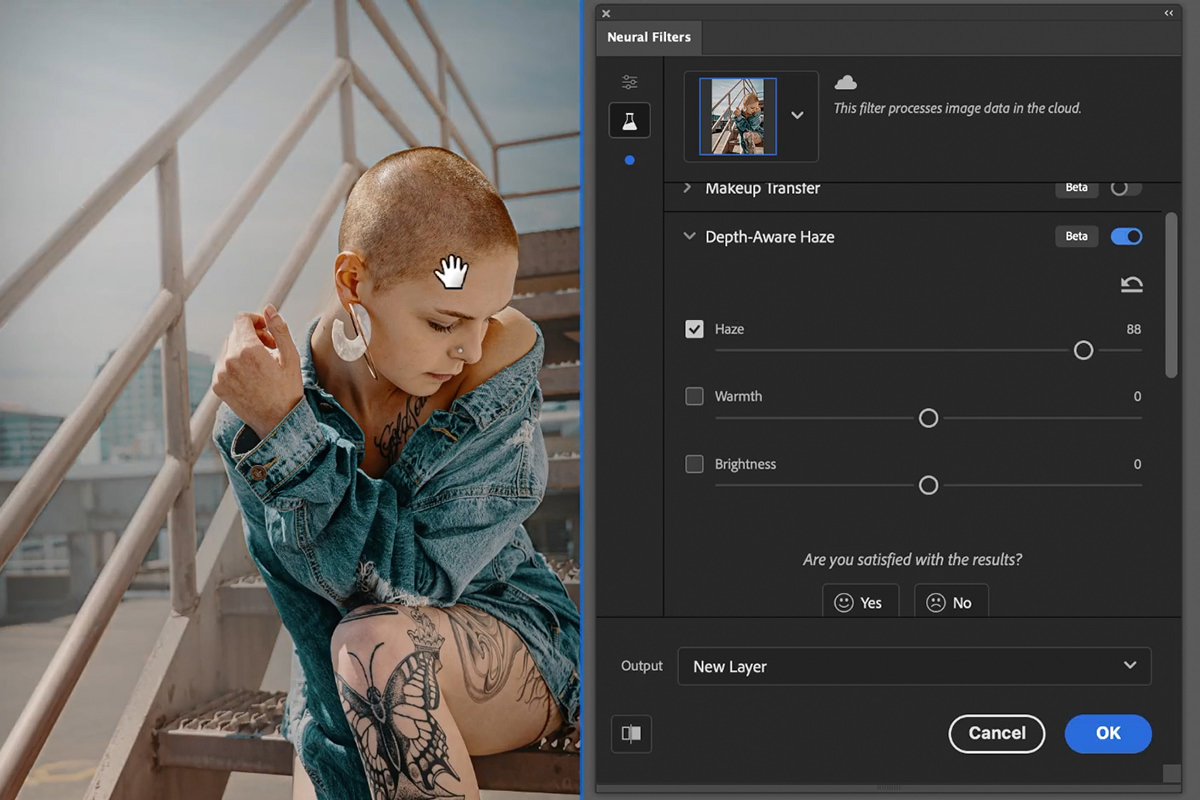
The main control, and the one doing the real work. Push it up and the background gets progressively hazier while the subject stays clear. On a well-read scene this alone produces a convincing result and needs no help from the other two sliders.
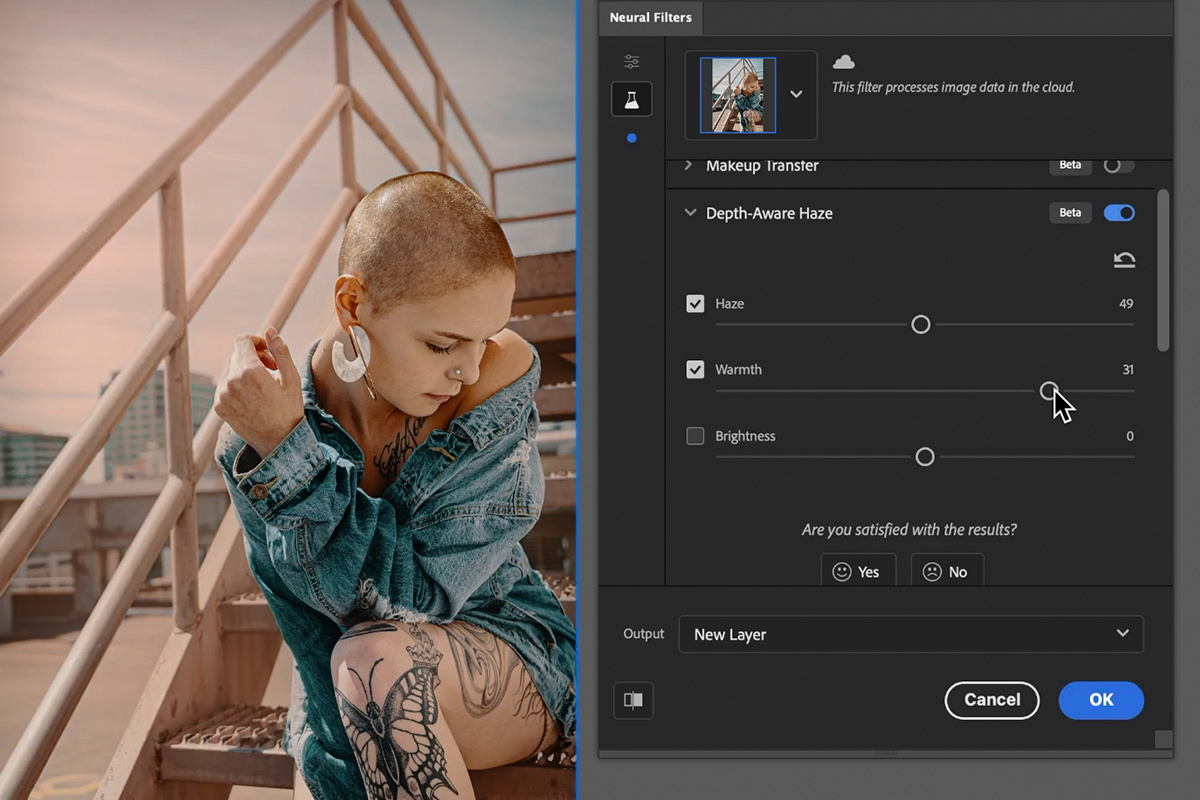
Warmth
Tints the haze and the image as a whole. This is the weakest of the three. Push it warm and it goes orange rather than yellow, which reads as artificial quickly; push it cool and it goes cyan, which has the same problem. A small nudge is usable. Anything more and the photo stops looking like atmosphere and starts looking like a filter.
Brightness
Makes the hazy result brighter or quite a bit darker, and it balances the image well either way. Raised a little, the scene reads as a bright sunny day with some haze; pulled down, it becomes a darker, moodier atmosphere. Combined with a saturation reduction afterward, brightness alone can take a photo somewhere interesting.
For most images, leaving warmth and brightness at zero and letting the haze do the work is the right starting point. Add the other two only if the image asks for them.
Output Options: Always Choose Smart Filter
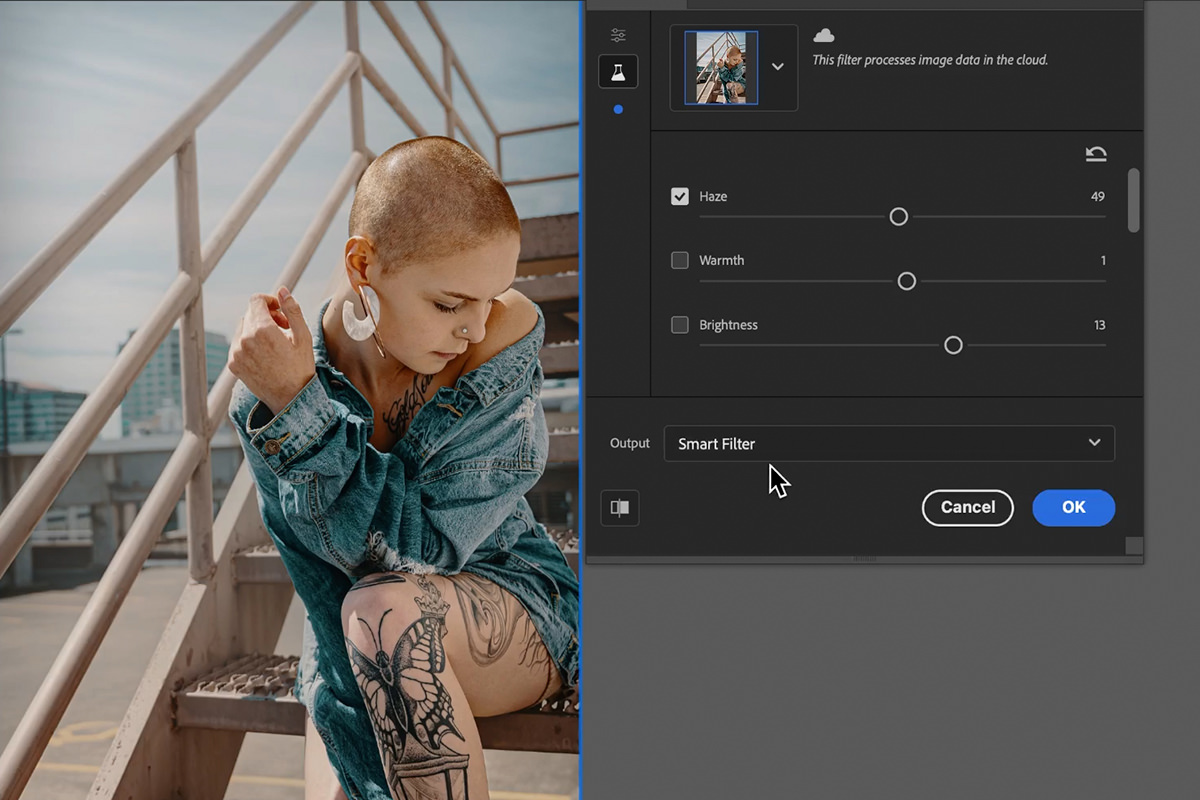
At the bottom of the panel is an output dropdown, and it matters more than any of the sliders. The choices are current layer, duplicate layer, duplicate layer with a mask, new layer, and smart filter.
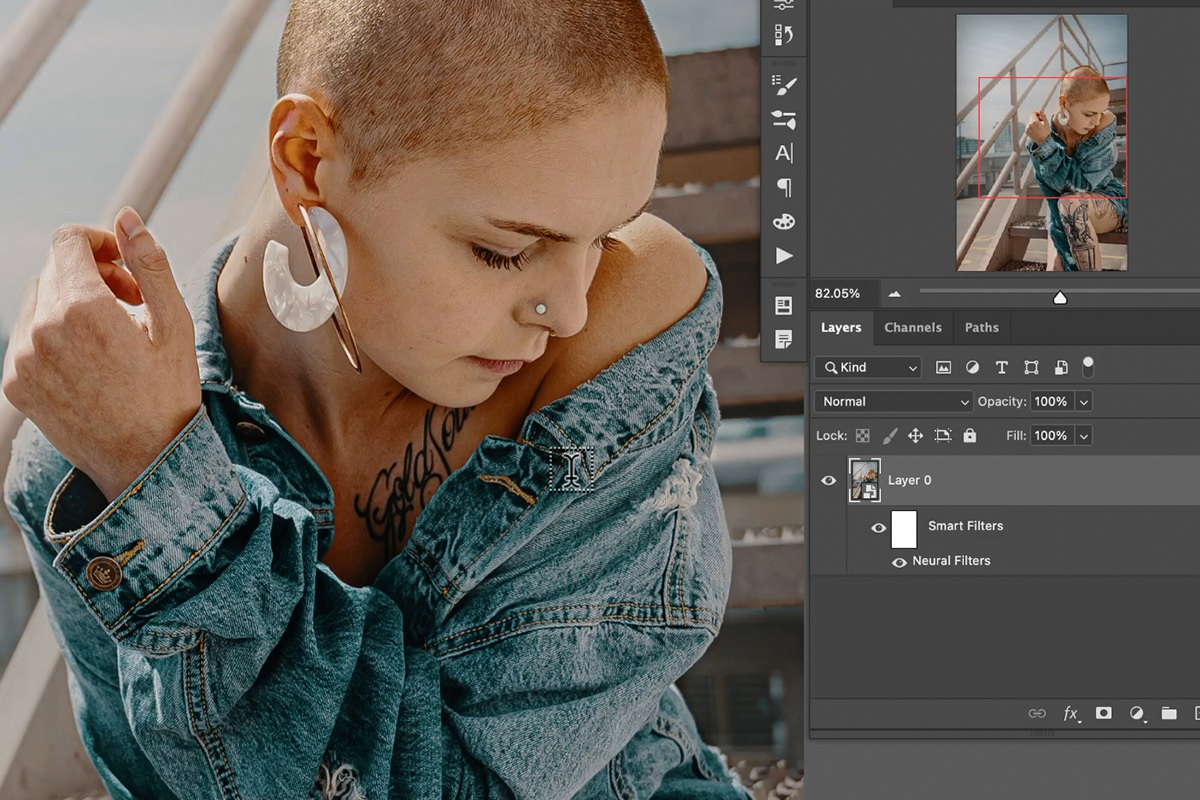
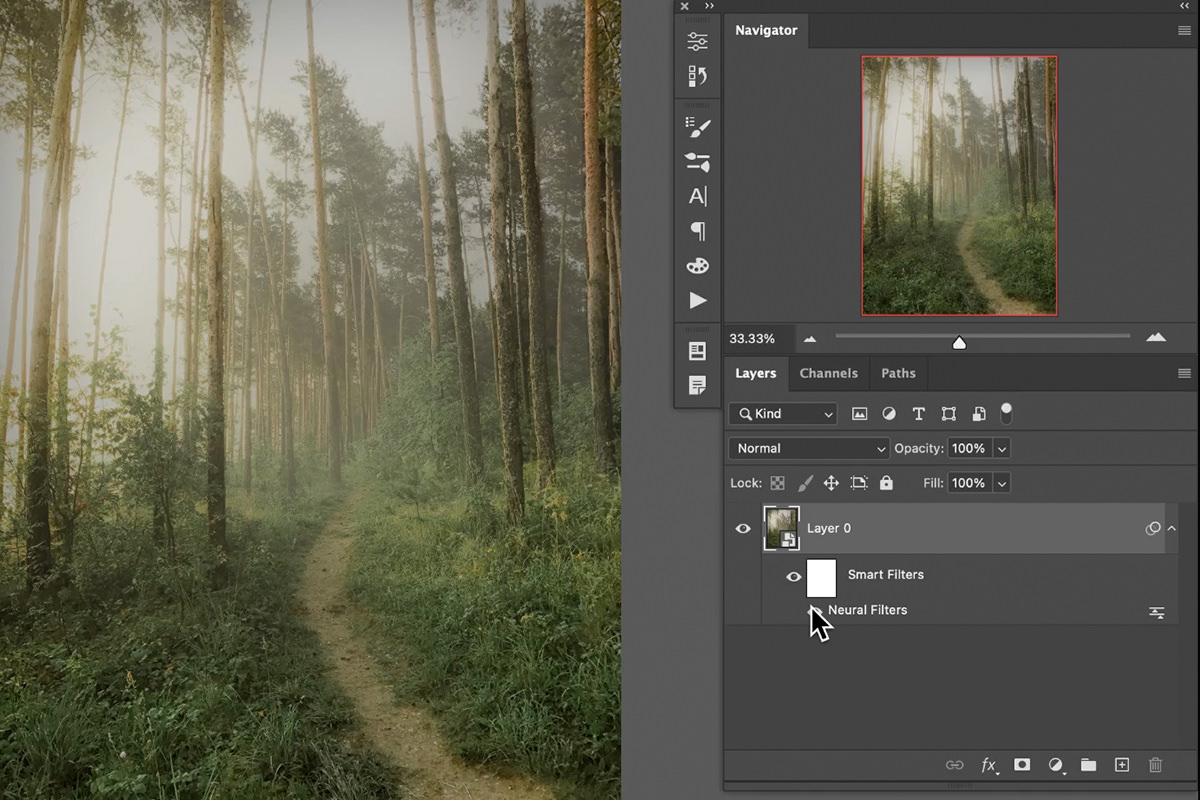
Smart Filter is the right answer almost every time. It applies the effect non-destructively, which means you can toggle it off and on at any point, and — the part that makes it genuinely useful — you can double-click the Neural Filters entry in the Layers panel to reopen the whole dialog with your settings intact. Change the haze amount, hit OK, and the smart filter updates.
What makes this better than it sounds is that Photoshop converts the layer to a smart object for you. Normally you would have to remember to do that before running a filter, and forgetting is how destructive edits happen. Here it is handled automatically.
Test One: A Portrait With a Clear Subject
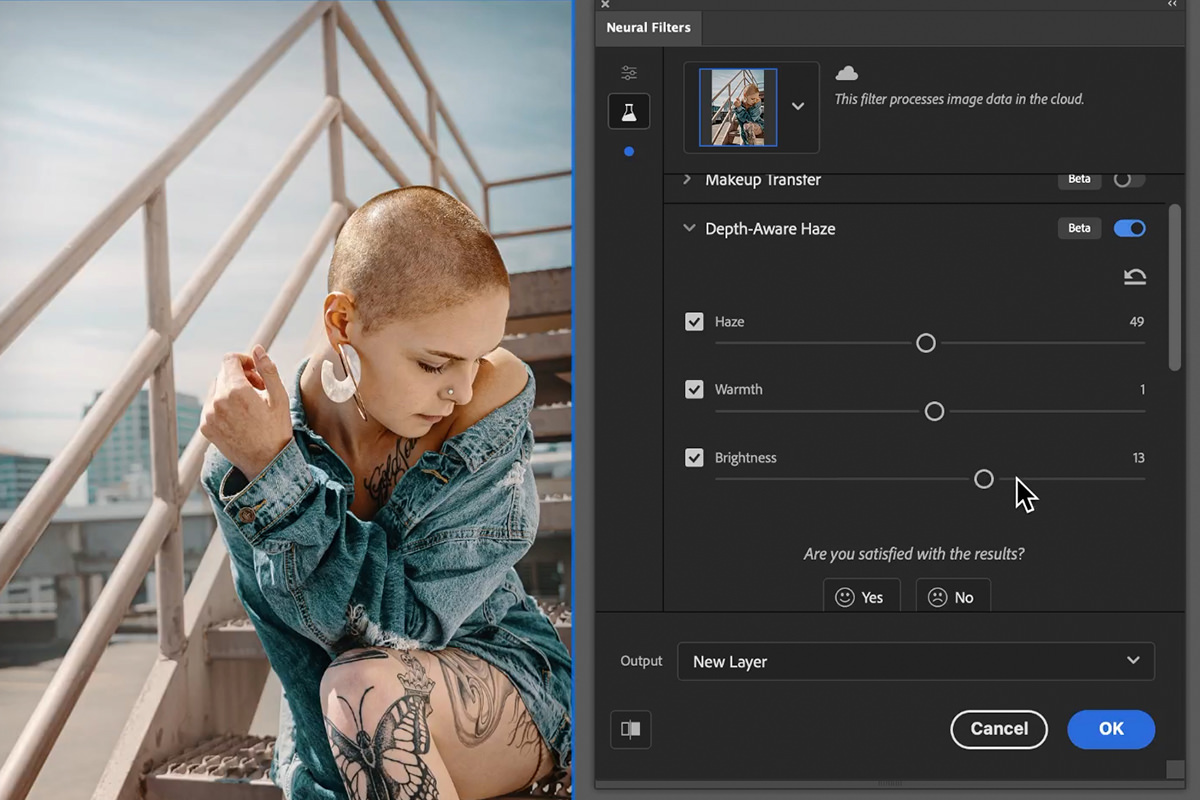
The first test image has a subject in the foreground, a focused background, and a staircase that transitions from sharp to soft — a lot of ambiguous middle ground for an automatic tool to interpret.
It handles it well. Zooming in on the subject and toggling the preview shows a clean separation: the person stays clear, the background takes the haze, and the cutout along the edges holds up without any manual masking. For a one-click result on a genuinely tricky image, this is a strong showing.
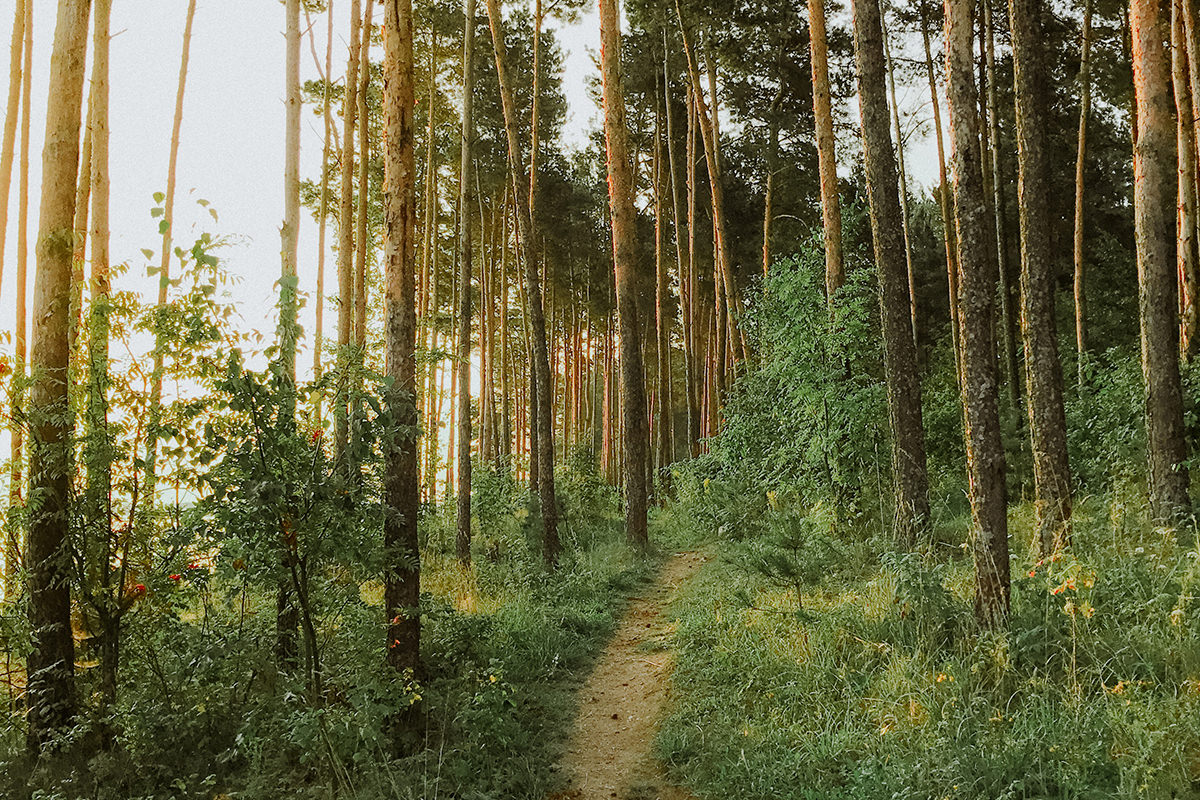
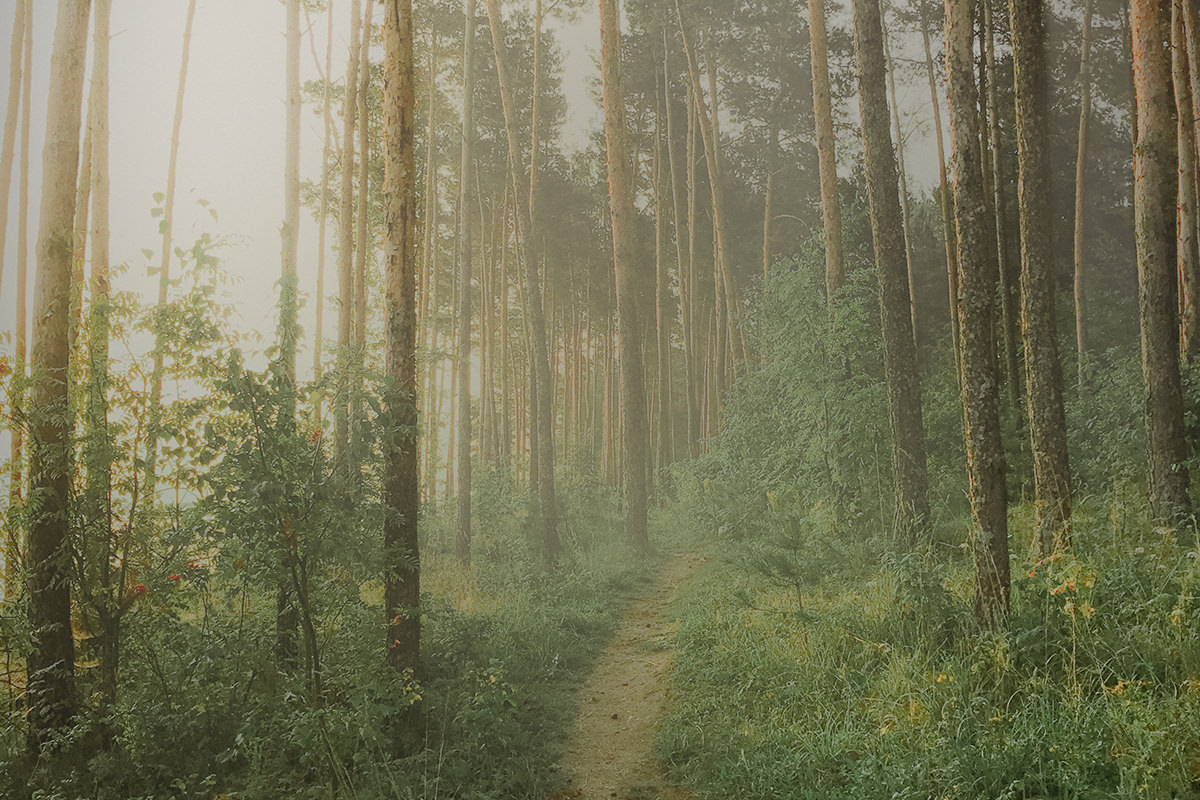
Test Two: A Forest With No Subject at All
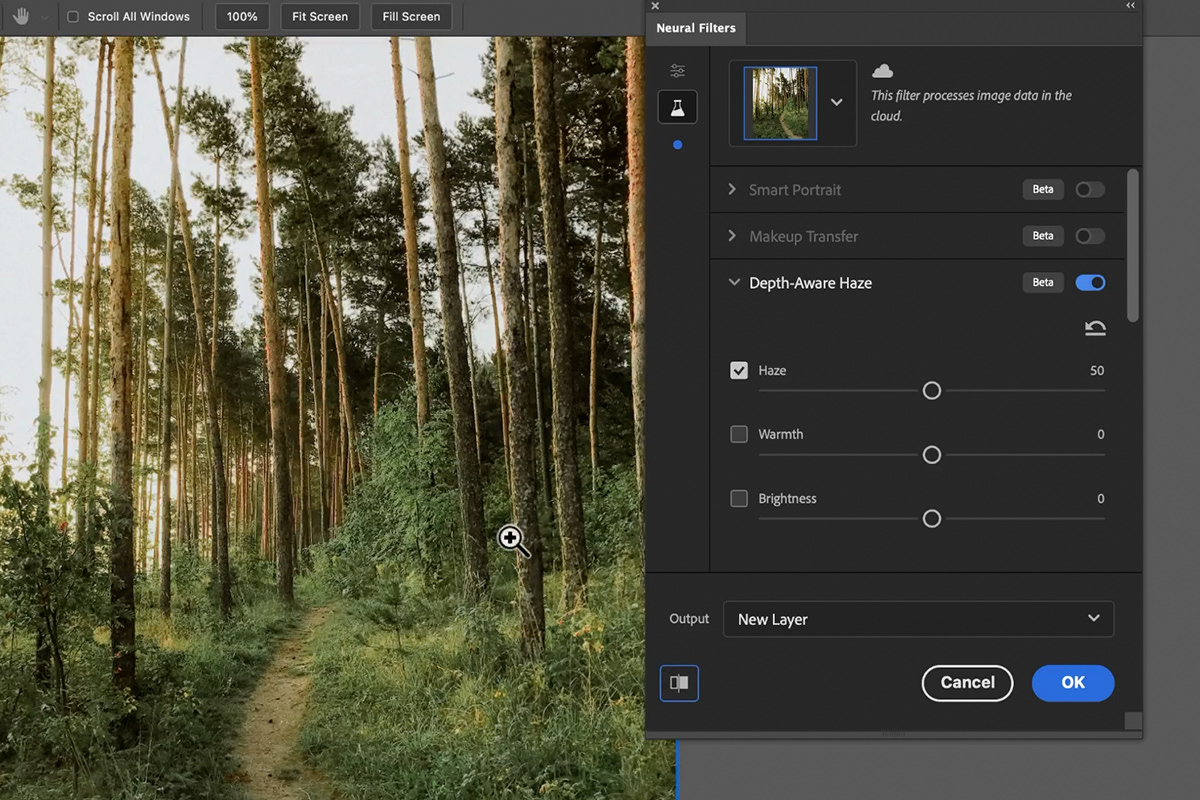
The second test removes the easy path. There is no person, so Select Subject has nothing to grab, and most of the frame is in focus. The filter has to rely entirely on its depth estimate.
The result is arguably better than the portrait. Zooming in shows individual trees in the foreground holding their clarity while the background trees take progressively more haze — exactly the falloff you would see in a real misty forest. The image genuinely reads as hazier the further into it you look, which is a lot to get right from a depth estimate alone.
This is also the image where the brightness slider earns its place. Raised, the scene becomes a bright sunny morning with light filtering through. Lowered, it becomes moody and closed-in. Two very different photographs from one filter and one slider.
Test Three: Where It Breaks
The third image is deliberately unfair: a man standing on a horse with a giant bird on his hand. Select Subject is trained on the things people usually photograph, and this is not one of them.
The results split. The man is handled correctly: the filter senses his face and keeps the haze away from him. The horse is fine too, most likely because it is in focus and reads as near. The bird is the failure. It is treated as a background element and takes a heavy dose of haze, which is exactly wrong, and there is no control in the filter to tell it otherwise.
This is the honest limitation. Depth-Aware Haze has no brush, no include-or-exclude tool, nothing like the Quick Selection Tool that would let you paint over an object and say keep this one sharp. When it misreads the scene, the filter itself offers no way to argue with it.
The Workaround: Fix the Mask Yourself
The output options are what rescue this. Instead of applying the effect as a smart filter, output it as a duplicate layer with a layer mask — then edit the mask by hand.
-
Set the output to Duplicate Layer Masked and click OK
You get a new layer carrying the haze, with an editable layer mask attached.
-
Hide the new layer temporarily and select the background layer
You want Photoshop to analyze the original, unhazed image.
-
Go to Select, then Subject
Run Photoshop’s own Select Subject on the clean image. On this photo it does a noticeably better job of understanding what the subject actually is.
-
Click the layer mask on the haze layer and paint with black
With the selection still active, painting is constrained to the selected area — so you can paint freely without worrying about the edges.
-
Press Ctrl or Cmd + H to hide the selection edges
The selection stays active, the marching ants disappear, and you can actually see what you are doing.
Painting black over the bird removes the haze from it entirely, and because Select Subject is holding the boundary, the edges stay clean. It doesn’t take long. The filter did most of the work; you corrected the one thing it got wrong.
Why this pattern matters beyond this filter
This is the right way to think about every automatic tool in Photoshop. An AI filter that gets you ninety percent of the way there in one click and then hands you an editable mask is far more useful than one that produces a perfect result on easy images and nothing you can fix on hard ones. Whenever an automatic tool offers a masked output, take it — that mask is your escape hatch.
Is It Worth Using?
Yes. Aaron calls it an awesome addition to Photoshop, with reservations. The haze itself is convincing and the depth estimate is impressive, particularly on scenes with no obvious subject where you would expect it to struggle most. The Smart Filter output makes it safe to experiment with. And the speed is the real argument: building this by hand is a genuine piece of work, and here it is a slider.
The reservations are the warmth control, which pushes too far toward orange and cyan to be useful at anything but small values, and the absence of any way to correct the mask inside the filter. Brightness is pretty good, but he doesn’t see himself using it much. The layer-mask workaround covers the second problem well enough that it is not a dealbreaker, but a simple include-and-exclude brush would make this a much stronger tool.
Try it on your own images — especially ones with awkward subjects. The failures are as informative as the successes, and knowing in advance where an automatic tool will struggle is what lets you use it confidently.
Quick Reference: Keys, Menus and Settings
- Open the filterFilter > Neural Filters > Beta filters (beaker icon) > Depth-Aware Haze; you must be online
- Check the resultPreview icon at the bottom of the panel, off and on; zoom in on the subject
- SlidersHaze does the work; Warmth only a little, if at all; Brightness brighter or darker
- Edit it laterOutput: Smart Filter; double-click Neural Filters in the Layers panel
- Fix a wrong maskOutput: Duplicate Layer Masked; Select > Subject on the Background; paint black on the haze layer’s mask
- Hide selection edgesCmd/Ctrl + H

Free Downloads
Follow Along on the Same Photos
Get the three test images from the video, the portrait, the forest and the man on the horse, plus the 3-page PDF guide. Free with a PHLEARN account.
Depth-Aware Haze: Common Questions
What does Depth-Aware Haze do?
It is a Neural Filter that adds haze to the background and keeps your subject clear. It uses Select Subject technology to find a subject, especially a face, and depth sensing based on what is in and out of focus.
Where do I find Depth-Aware Haze?
Go to Filter > Neural Filters, click the beaker icon for the Beta filters and switch on Depth-Aware Haze. It was a beta filter when this was recorded, so the panel may look different in your version.
Why doesn’t the filter do anything?
Neural Filters process your image in the cloud, so you have to be connected to the internet. If Neural Filters is missing from the Filter menu, update Photoshop.
Which slider settings should I start with?
Start with Haze only; it does the real work. Aaron keeps Warmth and Brightness off for general use, because Warmth turns orange when warm and cyan when cool.
How do I see what the filter is actually doing?
Click the preview icon at the bottom of the panel off and on, and zoom in on the subject. You can see where it found your subject and where the haze went.
Which output option should I choose?
Smart Filter. You don’t need to make a Smart Object first, and you can double-click Neural Filters in the Layers panel later to change the haze and click OK.
Does it work on a photo with no person in it?
Yes. On the forest test, the nearer trees stay clearer and the background gets more haze, so the image looks hazier as it gets farther away.
The haze landed on part of my subject. How do I fix it?
Set Output to Duplicate Layer Masked. Hide the new layer, click the Background and go to Select > Subject, then click the haze layer’s mask and paint black over the area. Cmd/Ctrl + H hides the selection edges.
What does the Brightness slider do?
It makes the hazy result brighter or quite a bit darker. Up a little reads as a bright sunny day with some haze; down gives a moody photo, and lowering saturation afterward can take it further.
Are the sample files free?
Yes, with a free PHLEARN account. You get 3 sample images and 1 PDF guide: the portrait, the forest and the man on the horse, plus the step-by-step guide.
Master Photoshop, Lightroom and Photography
Join PHLEARN PRO for $12.99 a month, or $99.99 a year (save 36%). Cancel anytime, with a 100% money-back guarantee.