
Download Assets
This tutorial includes 1 sample image and 1 PDF guide. Downloads are free with a PHLEARN account.
- Download the sample images and PSDs from every free tutorial on PHLEARN
- New free tutorials published every week
- One free account — sign up once, then download anything
Free PDF Guide · 2 Pages
This Tutorial as a Step-by-Step PDF
The guide walks through setting Patch to Normal, making a merged working layer with Image > Apply Image, circling and dragging in Source mode, copying a log, a rock or clean sand in Destination mode, fixing a bad blend, clearing the whole beach and handing any selection to the Patch Tool. Keep it next to your keyboard.
description
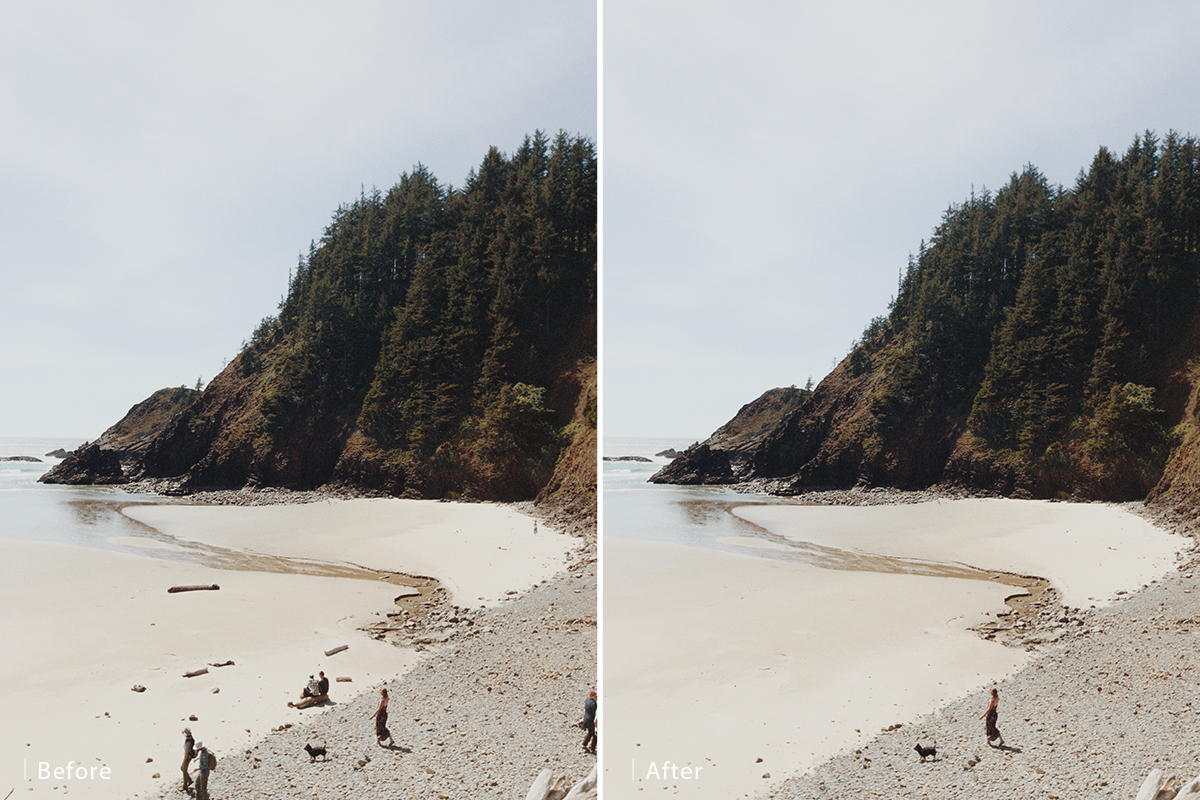
The Spot Healing Brush is fine for blemishes, but the Patch tool sitting in the same tool group is built for removing large objects — here it clears an entire beach of distracting people until only the subject and her dog are left on an empty coastline. Covers setting the tool up on a non-destructive layer, the difference between Source and Destination mode, working through a whole scene, and feeding it any selection you like.
Enjoying This Free Tutorial?
We publish a new free tutorial every week, each one with sample images and PSDs you can download and follow along with. Sign up and they land straight in your inbox, along with early word on sales, events and subscriber-only offers.
Remove Objects with the Patch Tool in Photoshop
This tutorial shows how to use the Patch tool to clear an entire beach photo of distracting people and objects, leaving just the intended subject and her dog on an otherwise empty coastline. The sample image is available as a free download on PHLEARN.com.
Why the Patch Tool Beats Spot Healing on Large Objects
The Spot Healing Brush and Healing Brush tools work well for small blemishes, but the Patch tool, found in the same tool group, is built specifically for removing much larger objects since it lets a whole selection be dragged to a new area at once rather than painted over piece by piece.
Setting Up the Patch Tool on a Non-Destructive Layer
The Patch tool’s options bar offers Normal and Content-Aware modes. Content-Aware can run on a separate new layer, but Normal mode tends to produce noticeably better results and requires working directly on the layer with actual image content, typically the background layer. To avoid editing the background layer directly after other edits have already been made, create a new layer, go to Image, then Apply Image, and make sure the settings say Merged and Normal, which stamps a flattened copy of everything visible onto that new top layer, giving a safe, non-destructive surface to run the Patch tool in Normal mode.
Removing an Object with Source Mode
With Source selected in the options bar, circle the object that needs to disappear the same way as drawing with the Lasso tool, then click and drag that selection to a different area of the image with a texture that would work as a believable replacement, watching the live preview that appears while dragging to judge the fit before releasing. Letting go blends the sampled texture into the selected area automatically, doing a genuinely good job even when it comes to replicating textures. Press Command/Ctrl+D to deselect once satisfied with the result.
Fixing a Bad Blend
Occasionally the tool struggles to blend a dark object against a lighter edge, or vice versa, producing a visible smudge. When that happens, undo and drop the patch somewhere else, or work in smaller sections if you need to. In the video, simply dropping it in a different spot fixed it.
Removing an Object with Destination Mode
Switching the options bar to Destination changes the workflow slightly: select the area you want to copy, such as a log, a rock or a clean stretch of sand, then drag it over the spot you want to cover, even right over a distracting group of people, and release to complete it. Destination mode blends both light levels and color as part of the process, so a rock or log dropped somewhere else still looks like it naturally belongs in its new position.
When Destination Mode Works Better
Source mode is the more commonly used option overall, but Destination mode is worth reaching for whenever it’s easier to think in terms of “take this existing element and put a copy of it over there” rather than “circle the thing to remove and find a replacement texture for it,” since both approaches ultimately accomplish the same removal.
Cleaning Up an Entire Scene
Clearing an entire busy scene, as with this beach photo full of scattered people, works best as a series of smaller patch operations rather than one attempt to fix everything at once: circle one distraction, patch it, move to the next, and repeat down the length of the coastline. A few areas may need a second pass or a slightly different sample area if the first attempt looks a little off, which is a normal part of the process rather than a sign anything went wrong.
Switching Modes as You Go
There’s no need to commit to only Source or only Destination for an entire image; switching back and forth between the two modes as needed, sometimes multiple times within the same editing session, is a normal and effective way to work through a scene with many different objects to remove.
Using Any Selection with the Patch Tool
The Patch tool doesn’t require using its own built-in freehand selection method. Any existing selection, made with the Elliptical Marquee, the Lasso, or any other selection tool, whether simple or highly detailed, can be handed off directly to the Patch tool afterward, which then drags and blends that exact selection the same way it would one drawn with the Patch tool itself.
Going Further with Object Removal
The Patch tool is one of several object-removal options in Photoshop, and it’s worth knowing when a different tool might handle a specific situation better, particularly when a distraction is much larger relative to the frame or sits against especially complex surroundings. For a broader look at removing large elements from a photo, see remove large objects from a photo, and for the full picture across every removal technique, see How to Remove Anything in Photoshop.
Final Thoughts
The Patch tool turns object removal into a simple drag-and-drop operation: circle what needs to go and drag it to a believable replacement (or, in Destination mode, circle clean ground and drag it over the distraction), and let Photoshop blend the texture, light, and color automatically. Working on a safe, non-destructive layer, switching between Source and Destination as the situation calls for it, and handling a busy scene one object at a time are what make it possible to clear an entire coastline down to just the subject that actually belongs there.
Quick Reference: Keys, Menus and Settings
- Find the toolPatch Tool, in the Spot Healing Brush group
- Set it upOptions bar: Patch on Normal
- Working layerNew layer on top, then Image > Apply Image: Merged and Normal
- Remove an objectSource: circle it, drag to a good texture, let go
- Copy over a spotDestination: circle what to copy, drag it over the spot to cover
- DeselectCmd/Ctrl + D
- Any selectionElliptical Marquee, Lasso or any tool, then switch to the Patch Tool and drag
No AI, no generative credits.

Free Downloads
Follow Along on the Same Photo
Get the beach photo to clear of people and objects and the 2-page PDF guide to the Patch Tool. Free with a PHLEARN account.
The Patch Tool: Common Questions
Where is the Patch Tool in Photoshop?
It sits in the same group as the Spot Healing Brush and the Healing Brush. Click and hold that tool icon in the toolbar and choose Patch Tool.
When should I use the Patch Tool instead of the Spot Healing Brush?
The healing brushes are great for small areas. For something larger, the Patch Tool works better because it uses a selection, so you replace the whole object in one move.
Why doesn’t the Patch Tool work on my new layer?
With Patch set to Normal, the tool needs a layer that holds the image, so it does nothing on a blank layer. Content-Aware can work on a new layer, but Aaron finds Normal works much better.
How do I use the Patch Tool without editing the Background layer?
Create a new layer at the top of the stack and go to Image > Apply Image. Make sure it says Merged and Normal. That puts a copy of everything you see onto the new layer, ready to patch.
How does Source mode work?
Circle the thing you don’t want, as you would with the Lasso, then click inside the selection and drag it to an area with a texture that fits. A live preview shows the result before you let go.
What is the difference between Source and Destination?
In Source, you circle what you want to get rid of and drag it to the area that should replace it. In Destination, you circle what you want to copy, like a log, a rock or clean sand, and drag it over the spot to cover. Aaron uses Source most of the time.
Why did my patch leave a dark smudge?
The tool tried to blend a dark object with the edge of the selection. Undo and drop the patch somewhere else, or work in smaller sections. If a result still looks a little weird, just do it again.
How do I get rid of the selection after patching?
Press Cmd/Ctrl + D to deselect, then circle the next distraction.
Can I use a Marquee selection with the Patch Tool?
Yes. Make any selection with any tool, simple or complicated, then switch to the Patch Tool and drag it. Aaron shows it with the Elliptical Marquee.
Are the sample files free?
Yes, with a free PHLEARN account. You get 1 sample image and 1 PDF guide: the beach photo from the video and the step-by-step guide to clearing it.
Master Photoshop, Lightroom and Photography
Join PHLEARN PRO for $12.99 a month or $99.99 a year. Cancel anytime, with a 100% money-back guarantee.