
Download Assets
This tutorial includes 1 sample image, 1 sample PSD and 1 PDF guide. Downloads are free with a PHLEARN account.
- Download the sample images and PSDs from every free tutorial on PHLEARN
- New free tutorials published every week
- One free account — sign up once, then download anything
Free PDF Guide · 4 Pages
This Tutorial as a Step-by-Step PDF
Walks through a first pass with the Clone Stamp on new layers, using Ctrl/Command+T > Warp to line up edges, the Spot Healing Brush on simple lines, clone-then-heal on the wall, the arch rebuilt with rotate and a layer mask, and a second pass of fake detail and soft shadows on Darken. Keep it next to your keyboard.
description
Learn how to remove objects from complex textures in Photoshop, where crumbling concrete, repeating shapes, wires, and shadows all compete in one frame. This tutorial breaks the job into two passes: clear the large objects and protect important edges with the Clone Stamp tool first, then go back with the Healing Brush and Spot Healing Brush to rebuild convincing detail, remove leftover shadows, and break up any repeating patterns or blurred areas.
Free Object Removal Series
- A Tour of the Best Object Removal Tools in Photoshop
- Clean Up Simple Backgrounds in Photoshop
- Remove Objects Around Lines & Edges in Photoshop
- Remove Objects From Complex Textures in Photoshop (This Episode!)
If you’re ready to take these skills to the next level, be sure to check out our PHLEARN PRO series on object removal in Photoshop.
Enjoying This Free Tutorial?
We publish a new free tutorial every week, each one with sample images and PSDs you can download and follow along with. Sign up and they land straight in your inbox, along with early word on sales, events and subscriber-only offers.
Image Source
Photo by Ali Müftüogullari via Pexels
How to Remove Objects From Complex Textures in Photoshop
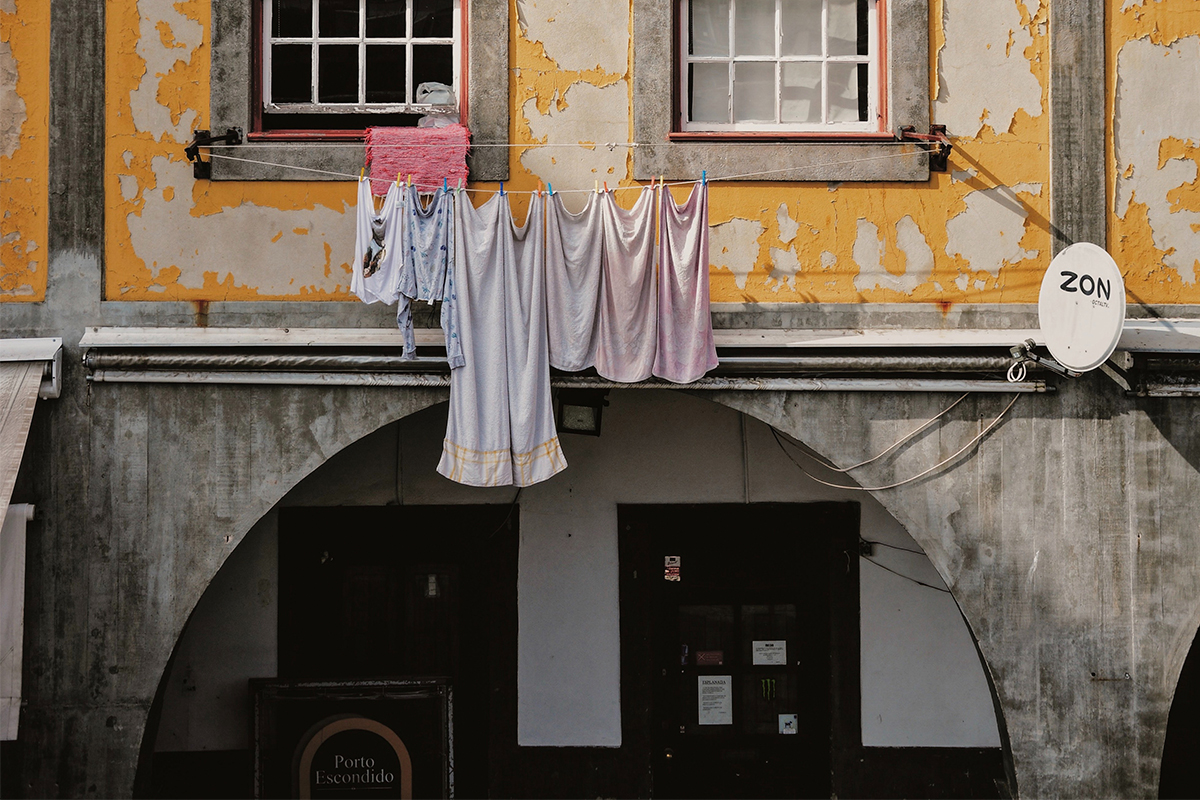
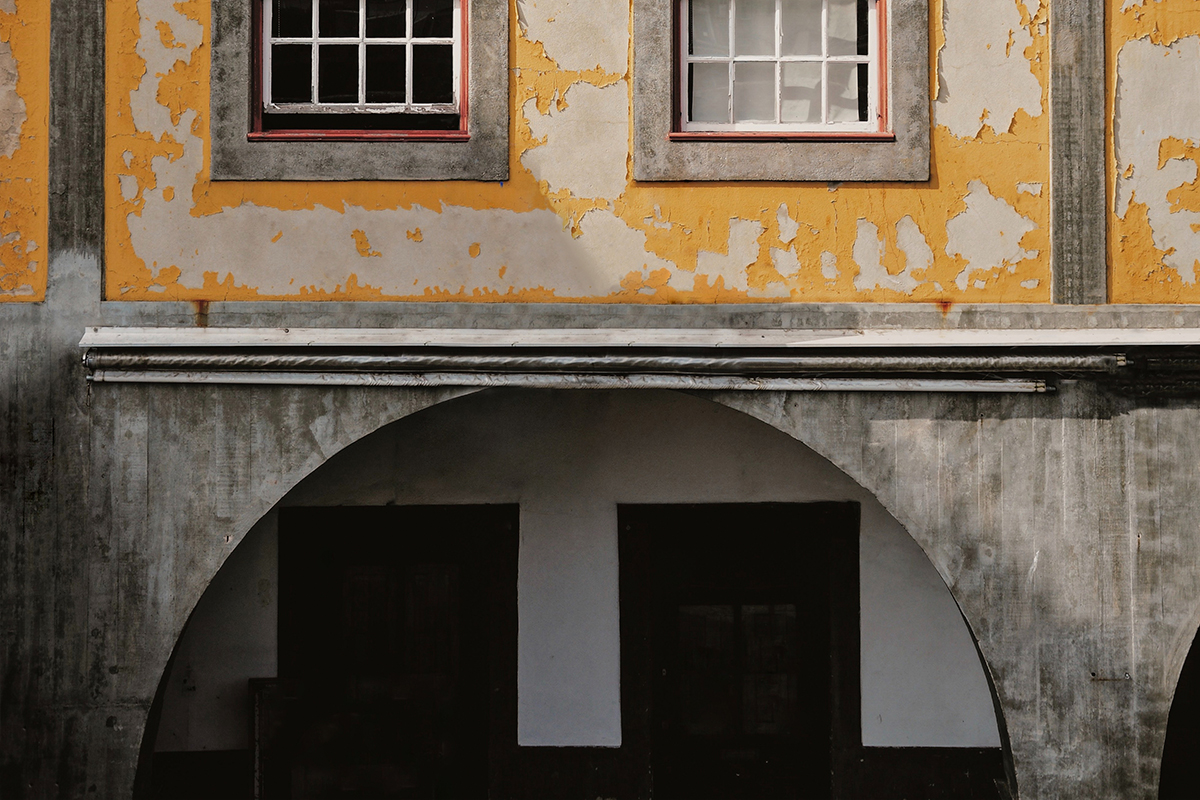
Removing distractions from a busy, heavily textured background — crumbling concrete, repeating window shapes, tangled wires and shadows all in one frame — is a different job from cleaning up a simple one. There’s no single tool that solves it; instead, this is a two-pass workflow: get the big objects gone first with the Clone Stamp tool, then come back through and use the healing tools to fake convincing detail wherever the first pass left things looking flat or repetitive.
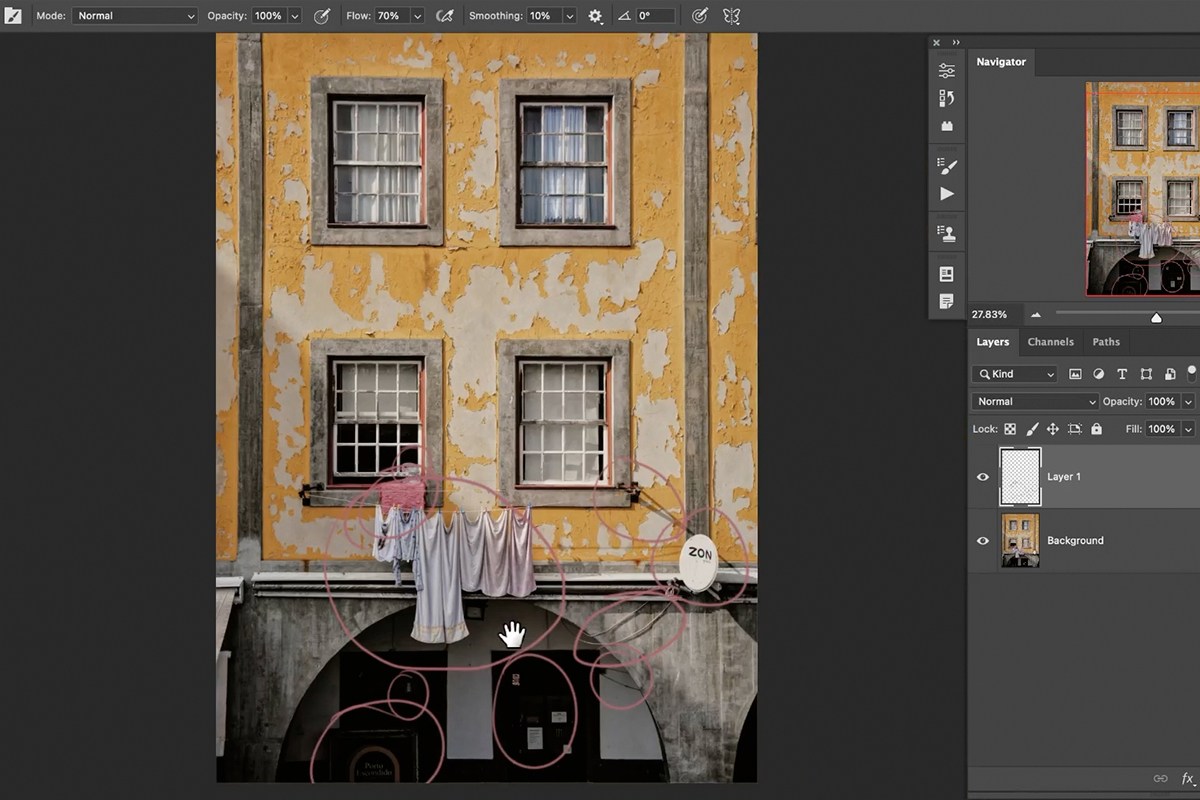
First Pass: Clearing Big Objects with the Clone Stamp Tool
The first pass isn’t about getting things perfect — it’s about clearing the large, obvious objects and keeping any important edges intact while you do it.
-
Select the Clone Stamp Tool on a New Layer
Press S for the Clone Stamp tool and create a new layer to work on. Whenever a distraction sits in front of an edge you need to keep continuous, this is the tool for the job.
-
Sample and Paint Along the Edge
Hold Alt/Option to sample a matching point along the same edge, then paint over the object, keeping the edge’s line intact as you go.
-
Warp a Sampled Layer to Fit an Imperfect Edge
If a cloned edge doesn’t line up perfectly, press Ctrl/Cmd + T, right-click, and choose Warp to bend the sampled content until it matches the surrounding line, then confirm.
-
Don’t Worry About Repetition Yet
It’s fine if this first pass creates some obviously repeating texture or patterns — the goal right now is just getting large objects gone. Repeating detail gets addressed in the second pass.

Working on New Layers as You Go
Creating a new layer for each Clone Stamp pass keeps every piece of cloned content independently movable and warpable — if a sampled section doesn’t align, you can grab the Move tool and reposition it, or undo just that one layer, without disturbing anything else you’ve already fixed.

Using the Spot Healing Brush Tool on Simple Lines
Not every distraction on a complex background needs manual sampling — a simple line or object against a relatively plain section of that background is still a good candidate for a faster, automatic tool.
-
Paint Over Simple Lines with the Spot Healing Brush
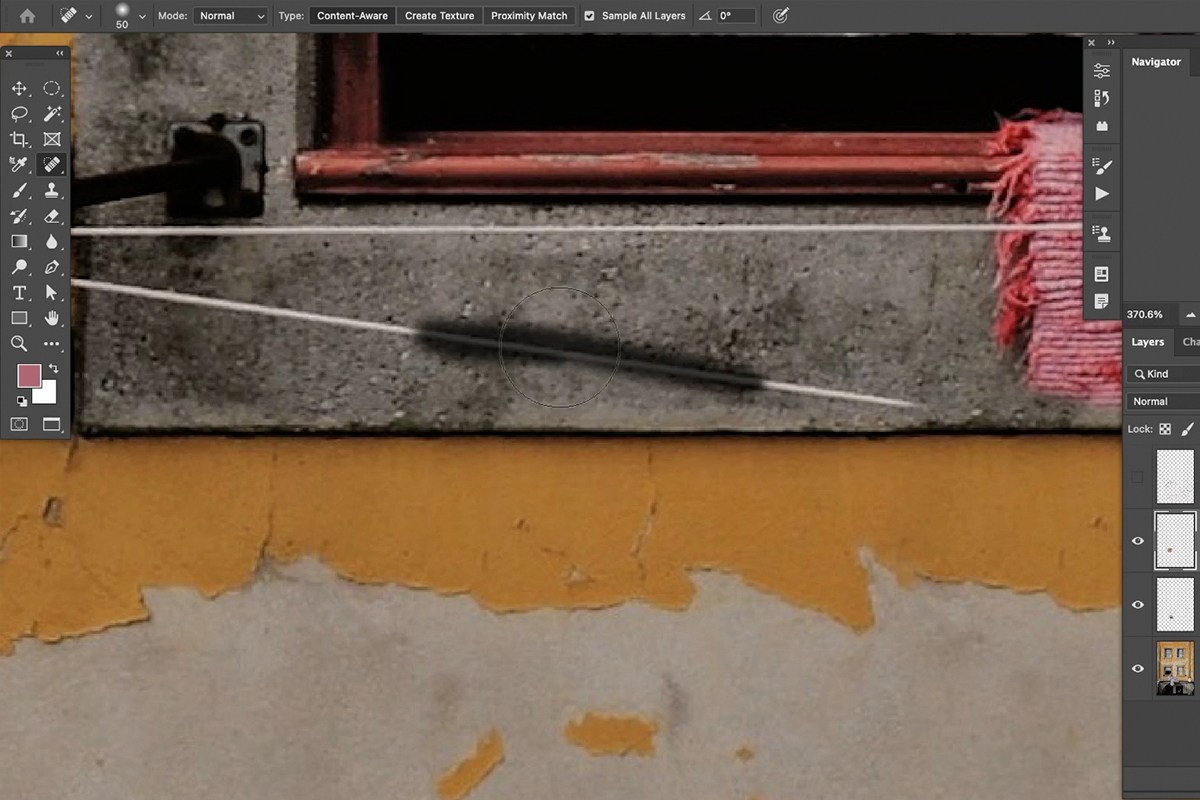
Select the Spot Healing Brush tool and paint directly over a simple line or small object sitting on a relatively uniform section of the background.
-
Switch to the Clone Stamp Tool Near Fine Edges
Where the Spot Healing Brush tries to blur a fine, complicated edge instead of resolving it cleanly, switch back to the Clone Stamp tool for that specific spot.
Second Pass: Filling In Detail with the Healing Brush Tool
Once the large objects are cleared and the edges are holding together, the second pass focuses on making the interior texture look convincing rather than flat or obviously duplicated.
-
Clear Edges First with the Clone Stamp Tool
Before healing an area, remove any edges within it using the Clone Stamp tool — the Healing Brush and Spot Healing Brush both tend to blur fine, complicated edges together.
-
Sample Texture with the Healing Brush Tool
Once the edges are handled, select the regular Healing Brush tool, sample nearby matching texture, and paint over the remaining open area — it blends the sampled texture with the color already present for a natural result.
-
Let the Spot Healing Brush Generate Random Detail
For an area with a lot of texture variation, the Spot Healing Brush often does a better job than the regular Healing Brush, since it pulls in randomized detail from multiple nearby areas rather than one single sample point.
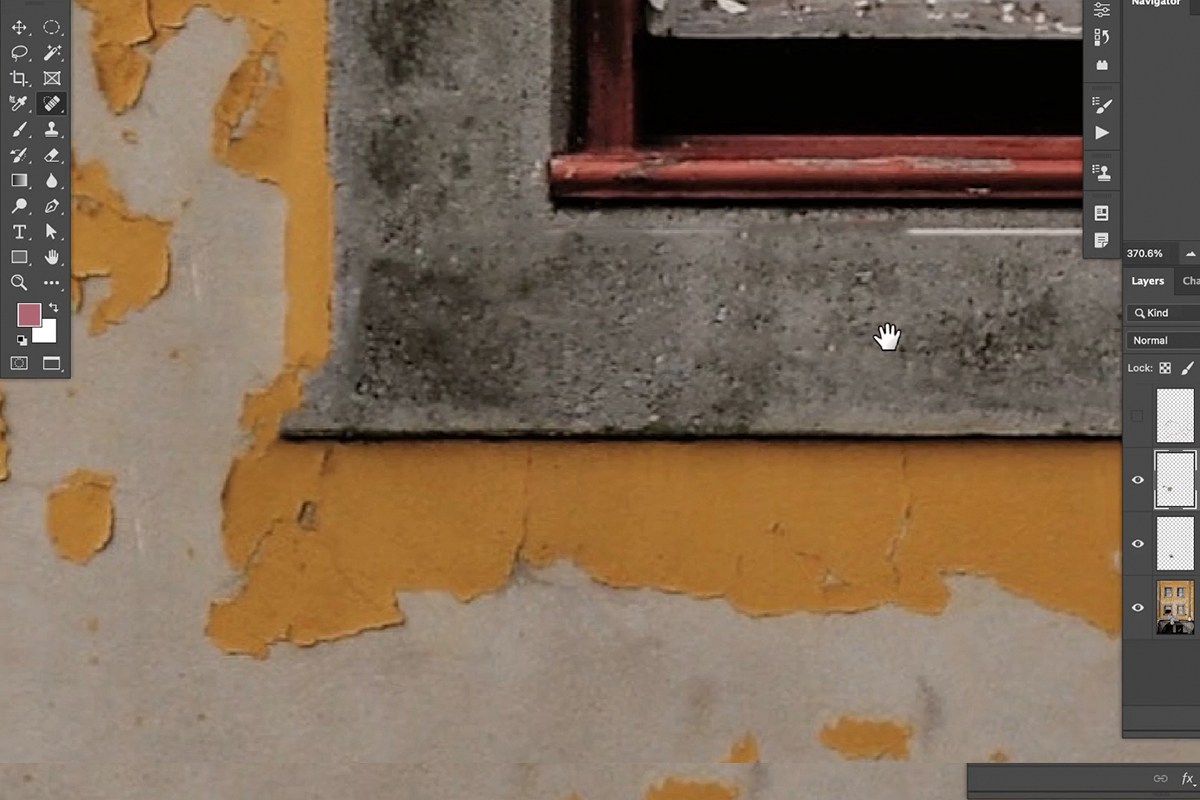
Why Order Matters: Edges Before Texture
Both healing tools rely on blending nearby pixels together, which is exactly what makes them poor choices for sharp edges but excellent choices for open texture. Clearing hard edges with the Clone Stamp tool first, then handing the surrounding texture to a healing tool, plays to each tool’s actual strength instead of asking one tool to do a job it’s bad at.

Faking Shadows and Fine Detail That No Longer Belong
Removing an object often leaves behind a shadow or detail that made sense with the object present but looks wrong without it — those need their own cleanup pass.
-
Remove Leftover Shadows
Once an object is gone, use the Clone Stamp or Healing Brush tool to remove any shadow it was casting, since that shadow no longer has a source in the image.
-
Soften a Faked Edge with the Brush Tool
For a soft shadow edge that needs recreating, paint it in on a new layer with the Brush tool using a sampled color, set that layer’s blending mode to Darken, and apply a small amount of Gaussian Blur to soften it.
-
Move Small Details to New Locations
With the regular Healing Brush tool, sample a small piece of detail from one part of the image and paint it into a different location where similar detail is missing — a precise, deliberate way to reuse existing texture elsewhere.
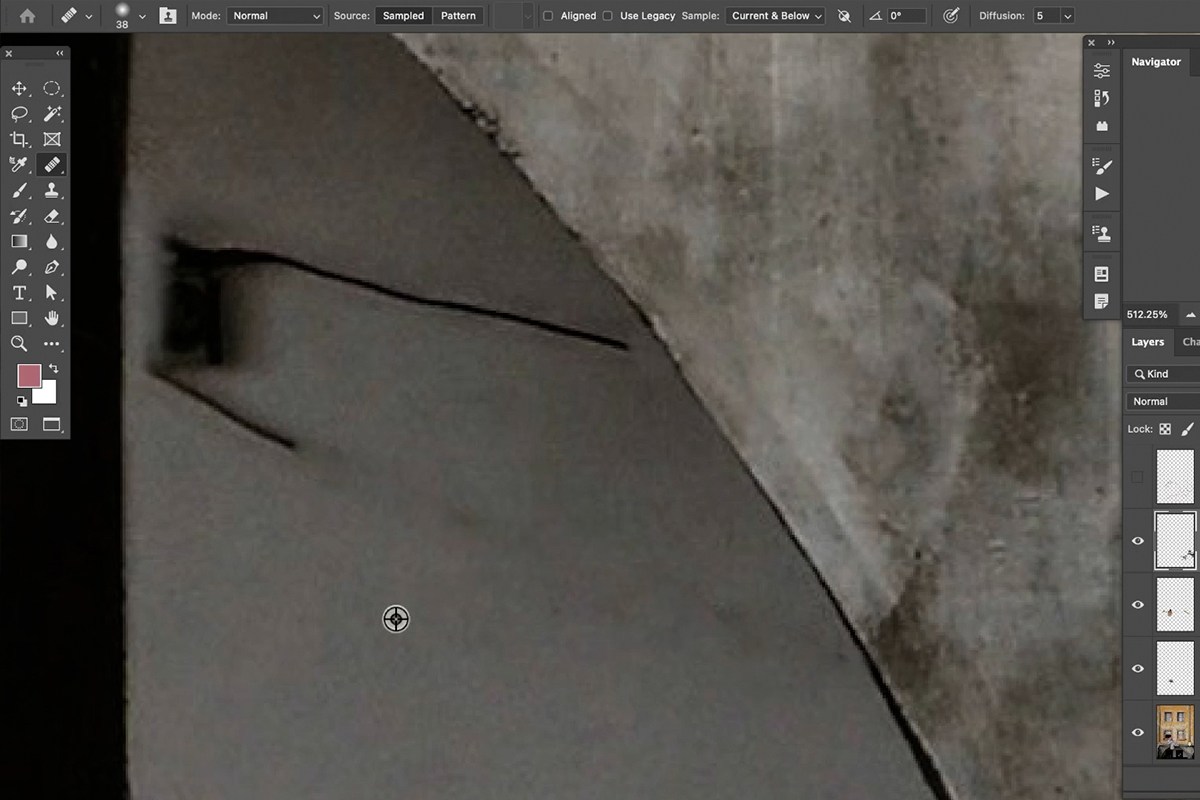
Final Check for Repetition and Blur
The two biggest giveaways that an object was removed are an obviously repeating pattern and an area that’s noticeably blurrier than everything around it — both are worth a dedicated final check.
-
Clone Stamp Away Repeating Patterns
Scan for any texture that reads as an obvious, identical repeat of something nearby and use the Clone Stamp tool to break up that repetition with slightly different sampled content.
-
Spot-Heal Any Blurred Detail
Go back over any area that looks blurred rather than sharply detailed and run the Spot Healing Brush tool over it, which tends to generate convincing, well-defined detail in place of the blur.

Common Mistakes to Avoid
The most common mistake is trying to get every area perfect in a single pass instead of working in two clear stages — clearing objects first, then addressing detail and repetition afterward, is far more manageable than trying to solve both problems at once. It’s also easy to reach for the Healing Brush or Spot Healing Brush right at a fine edge, where both tools tend to blur detail together rather than preserve a clean line; clear the edge with the Clone Stamp tool first, then heal the surrounding texture.
Why This Approach Works
Splitting the work into two passes — blanket removal first, detail and repetition second — mirrors how each tool’s strengths and weaknesses actually line up. The Clone Stamp tool is precise but literal, which makes it ideal for edges but tedious for large open texture; the healing tools are the opposite, blending beautifully across open areas but blurring exactly where you don’t want it, along a sharp edge. Trying to force one tool through the entire image ignores that tradeoff, while working edges first and texture second lets each tool spend its time doing what it’s actually good at. That same tool-matching logic scales down to simpler images too — the same decision between precise, literal repair and softer, blended healing shows up in Generative Fill vs Clone Stamp vs Spot Healing Brush, just with fewer competing textures to juggle at once.
Final Thoughts
A heavily textured, detail-dense background is the hardest version of object removal, but it isn’t a different skill so much as more repetitions of the same one — clear objects and edges first with the Clone Stamp tool, then go back through with the healing tools to replace flat or repetitive-looking areas with convincing fake detail. Expect to end up with a large number of layers on an image like this, and don’t treat that as a sign anything’s gone wrong; it’s simply what a multi-pass cleanup on a genuinely complex image looks like.
Quick Reference: Keys, Menus and Settings
- Clone an edgeNew layer, S for the Clone Stamp, Alt/Option-click the edge, line it up and paint
- Warp to fitCmd/Ctrl + T, right-click > Warp, Enter
- HealJ: Spot Healing Brush on simple lines, Healing Brush on open wall
- Rebuild the archLower opacity, Cmd/Ctrl + T to rotate, black layer mask, paint white
- Soft shadow edgeB, Alt/Option-click the shadow color, blend mode Darken, a bit of blur
- Final checkClone away repeats, Spot Healing Brush over blurred areas, toggle the layers
No AI, no generative credits.

Free Downloads
Follow Along on the Same Photo
Get the weathered building with the laundry, satellite dish and wires to remove, the layered PSD and the 4-page PDF guide. Free with a PHLEARN account.
Removing Objects From Complex Textures: Common Questions
Where do I start on a busy, heavily textured background?
Circle everything you want gone, then do a first pass with the Clone Stamp on new layers to clear the big objects and keep the edges continuous. Don’t worry about repeating texture yet; that gets fixed on the second pass.
What if a cloned edge doesn’t line up?
Press Cmd/Ctrl + T, right-click and choose Warp, push the cloned piece until it meets the real edge, then press Enter.
Why make a new layer for every clone?
Each piece can then be warped or moved with the Move Tool, and if a pass isn’t great you can turn that layer off and try again. There’s no limit to how many layers you can make.
How do I remove wires on plain concrete?
A simple line on a simple background is a job for the Spot Healing Brush. Paint over it, then press S and clone stamp any edge it disturbed.
Healing Brush or Spot Healing Brush: which one?
The Healing Brush takes texture from where you sample and color from where you paint, so you choose the texture. The Spot Healing Brush fills with random detail and is better where texture varies a lot. If it gets confused, switch to the Healing Brush.
Why do the healing tools blur fine edges?
Both try to blend nearby pixels together. Clone stamp the beginning and end of the object where it crosses an edge first, then heal the open wall in the middle.
How do I rebuild a curved edge, like an arch?
On a new layer, clone a piece of the visible curve anywhere, lower the layer’s opacity, move it and rotate it with Cmd/Ctrl + T until it fits. Bring the opacity back to 100%, add a black layer mask and paint white where it’s needed.
What about the shadows the objects left behind?
Remove them too; once the dish is gone, its shadow shouldn’t be there. For a soft shadow edge, paint it on a new layer with the Brush Tool, set the blend mode to Darken and add a bit of blur.
What gives away that something was removed?
Repeating items and blurred detail. Clone stamp away anything that shows up over and over, then go over blurred areas with the Spot Healing Brush to fake realistic detail.
Are the sample files free?
Yes, with a free PHLEARN account. You get 1 sample image, 1 sample PSD and 1 PDF guide: the building photo, the layered cleanup file and the step-by-step guide.
Master Photoshop, Lightroom and Photography
Join PHLEARN PRO for $12.99 a month or $99.99 a year. Cancel anytime, with a 100% money-back guarantee.