
Download Assets
This tutorial includes 2 sample images and 1 PDF guide. Downloads are free with a PHLEARN account.
- Download the sample images and PSDs from every free tutorial on PHLEARN
- New free tutorials published every week
- One free account — sign up once, then download anything
Free PDF Guide · 3 Pages
This Tutorial as a Step-by-Step PDF
The guide walks through both stages: a Pen Tool path made into a selection with a 1 pixel feather, a Multiply layer painted at Flow 20% and softened with the Blur Tool, then a Size 3 hair brush set to Shape Dynamics > Control: Fade, or Pen Pressure on a tablet. Keep it next to your keyboard.
description
Filling in eyebrows convincingly is two jobs. First the base: a Pen tool path around the arch, converted to a 1px-feathered selection and built up with a low-flow Multiply brush sampled from the brow itself. Then the hairs — a 3px brush with Shape Dynamics set to Fade, so every stroke starts at full width and tapers to a point the way a real hair does. Works with a mouse or a tablet.
Enjoying This Free Tutorial?
We publish a new free tutorial every week, each one with sample images and PSDs you can download and follow along with. Sign up and they land straight in your inbox, along with early word on sales, events and subscriber-only offers.
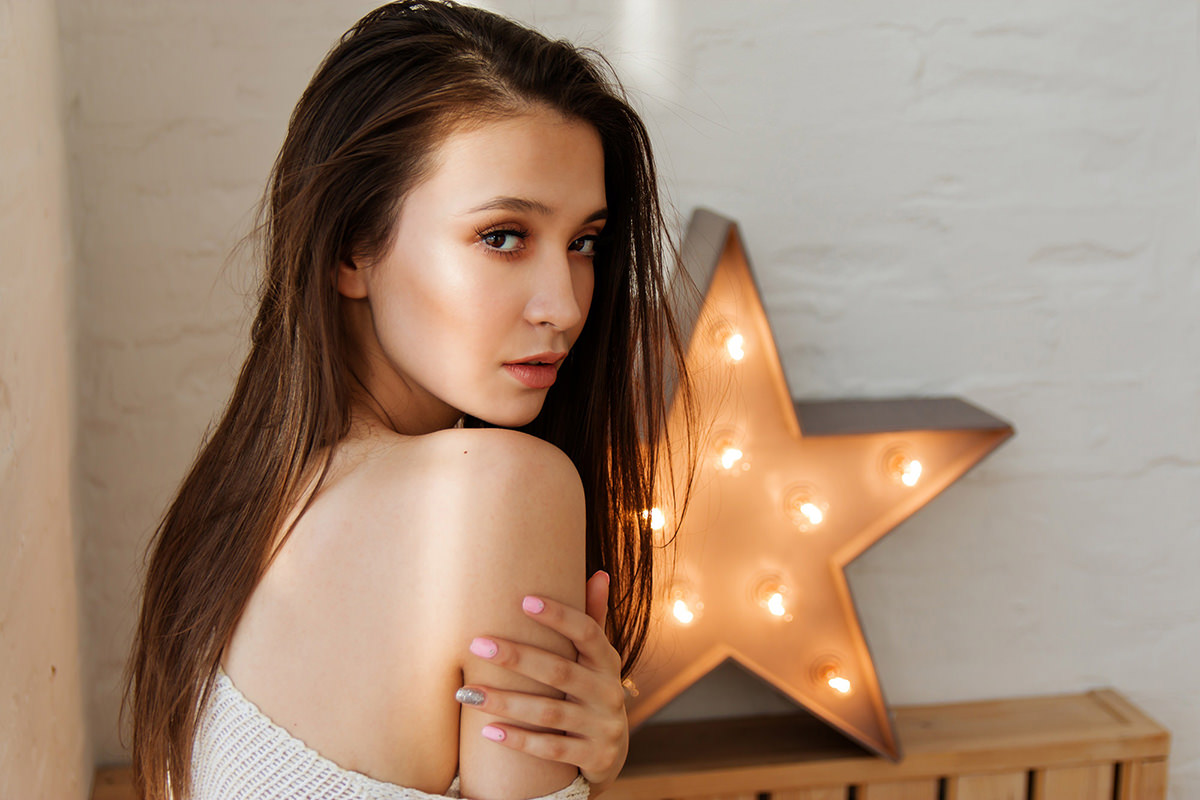

How to Fill-in Eyebrows in Photoshop
Bold, filled-in eyebrows are a recurring beauty trend, and getting that look in Photoshop comes down to two separate stages: building a solid base shape with color, then painting in individual hairs on top so the result reads as real brow hair rather than a flat colored block. This tutorial covers both stages using the Pen tool for the shape and a custom faded brush for the hairs, so it works whether you’re painting with a mouse, a trackpad, or a pressure-sensitive tablet. In the sample image, the model’s brows were thinned out in Photoshop first, so there is something to fill back in.
Outlining the Eyebrow Shape with the Pen Tool
Select the Pen tool (P) and click a path around the eyebrow’s arch, starting at one end and clicking a series of points to trace a shape a little larger than the existing brow — going slightly oversized is fine since the extra area can always be masked away later. Holding Ctrl or Cmd lets any point be clicked and dragged afterward to adjust the shape without starting over.
Turning the Path into a Feathered Selection
Right-click inside the finished path and choose Make Selection, feathering it by about 1 pixel so the resulting selection edge isn’t perfectly hard. This feathered selection becomes the boundary the base color will be painted inside.
Painting the Base Color with a Low-Flow Brush
Create a new layer, switch to the Brush tool with a large, soft-edged brush (Size 107, Hardness 0 on the sample image), and hold Alt/Option to sample a brown color already present in the eyebrow — or from the hair on the head if the brow itself doesn’t have much color to sample. Set the layer’s blend mode to Multiply so the paint darkens rather than covers, and lower the brush’s flow to around 20 percent so the color builds up gradually instead of landing all at once.
Hiding the Selection Marching Ants While You Paint
Press Ctrl/Cmd+H to hide the selection’s marching-ants outline (choosing “Hide Extras” the first time it’s used) while keeping the selection itself active, which makes it much easier to see what’s actually being painted. Paint in small circular motions focused more toward the center and arch of the brow, fading out toward the edges for a natural gradient from one end to the other.
Softening the Edges with the Blur Tool
After deselecting (Ctrl/Cmd+D), switch to the Blur tool with Sample All Layers unchecked, set its strength to 100, and use a slightly larger brush to blur any spots along the painted base where the edge looks too sharp or uneven, especially near the tail end of the brow. This step smooths out the transition without undoing the overall shape.
Drawing Individual Hairs with a Fading Brush
With the base shape finished, the next stage is painting individual hair strokes on top. Create a new layer, sample a dark color from the brow, and set that layer’s blend mode to Multiply as well. Set the brush size small — around 3 pixels — with hardness around 70 percent, sized to roughly match a single hair.
Setting Up the Fade in Brush Settings
A normal round brush just paints a uniform line, which doesn’t read as a hair. Open the Brush Settings panel (Window > Brush) and, under Shape Dynamics, keep Size Jitter at zero but set its Control option to Fade. This makes each stroke start at full brush diameter and taper down to a point, exactly like a real hair. The fade length value controls how long each hair stroke is before it tapers off, and should be dialed in to roughly match the length of the eyebrow hairs in the photo. About 60 works on the sample image, with the brush Flow lowered a little so the strokes don’t land too strong.
Painting Hairs with a Mouse or Trackpad
With the fading brush set up, paint in individual hair strokes across the base shape, varying the direction of each stroke since real brow hairs don’t all point the same way. This works the same whether using a mouse, trackpad, or a pressure-sensitive tablet — the fade setting in Shape Dynamics does the work of making each stroke look like a hair regardless of input device. Any strokes that land messily at the edges can be cleaned up with a large, soft-edged Eraser tool, fading them away for a more natural finish.
Using Pen Pressure for More Control
With a pressure-sensitive tablet, changing the brush’s Control setting to Pen Pressure lets harder or softer pressure directly control how large each hair stroke is, giving more natural variation with less manual adjustment than painting the same effect with a mouse.
Adjusting Thickness and Opacity to Taste
Because the base color and the individual hairs each live on their own layers, the overall effect is easy to fine-tune afterward. Adding another hair layer with its own Multiply blend mode thickens the brow further for a bolder look, while lowering a layer’s opacity pulls the effect back if it starts to look overdone. This layer separation makes it simple to dial the eyebrows anywhere from subtly filled-in to dramatically thick.
Why This Technique Works
Filling in an eyebrow convincingly requires solving two separate problems: getting an even base tone in the right shape, and making that base look like it’s made of individual hairs rather than a flat wash of color. The Pen tool provides a precise, fully editable shape for the base, while a low-flow Multiply brush builds color gradually so it reads as makeup rather than a hard paint layer. Setting the brush’s Shape Dynamics to fade from full diameter to a point is what actually sells each stroke as a hair, since real hairs taper to nothing at their tips — a plain round brush stroke never will, no matter how thin it’s made.
Final Thoughts
This two-stage approach — a soft, feathered base shape followed by individually painted, tapering hair strokes — works with any input device, and keeping the base and the hairs on separate layers means the final density and opacity can be adjusted endlessly without repainting anything. Once the fade-enabled hair brush is set up, it becomes a reusable tool for adding realistic detail hair strokes anywhere they’re needed, not just eyebrows.
Quick Reference: Keys, Menus and Settings
- Outline the browP for the Pen Tool; Cmd/Ctrl-drag a point to reshape; right-click > Make Selection, Feather 1 px
- Base brushNew layer on Multiply, soft brush (Size 107, Hardness 0), Alt/Option-click to sample the brow, Flow about 20%
- Hide the outlineCmd/Ctrl + H, choose Hide Extras the first time
- Soften the edgesCmd/Ctrl + D to deselect; Blur Tool, Sample All Layers off, Strength 100
- Hair brushNew Multiply layer, B, Size 3, Hardness 70%; Window > Brush > Shape Dynamics, Size Jitter 0%, Control: Fade about 60
- With a tabletShape Dynamics > Control: Pen Pressure
- Clean the endsE for a large, soft-edged Eraser along the messy edge
No AI, no generative credits.

Free Downloads
Follow Along on the Same Photos
Get the 2 sample images, with the model’s brows thinned out so there is something to fill back in, and the 3-page PDF guide. Free with a PHLEARN account.
Filling In Eyebrows: Common Questions
Why use the Pen Tool to shape the eyebrow?
Every point can be moved later: hold Cmd/Ctrl and drag a point to reshape the brow. Go a little bigger than you need, since the extra can be masked away.
Where do I get the right eyebrow color?
Hold Alt/Option with the Brush Tool and click the brown already in the brow. If there isn’t much to sample, take the color from the hair on the head.
Why set the eyebrow layers to Multiply?
Multiply makes the brown darken what is underneath it, so the color reads like makeup instead of a flat layer of paint.
What Flow should the base brush use?
About 20%. A low flow builds the color up gradually, which keeps the effect natural. Paint small circles, heavier at the center and arch.
Pressing Cmd/Ctrl + H opened a dialog. Is that a bug?
No. The first time, Photoshop asks what to hide; choose Hide Extras. The selection outline disappears but the selection stays active.
Why doesn’t the Blur Tool do anything?
Uncheck Sample All Layers, set Strength to 100 and make sure you are on the base layer with the selection deselected (Cmd/Ctrl + D).
How do I make a brush stroke look like a hair?
Use a Size 3 brush at 70% Hardness. In Window > Brush, open Shape Dynamics, keep Size Jitter at 0% and set Control to Fade, so each stroke tapers to a point. The Fade number sets the hair length; about 60 works here.
Do I need a tablet to paint the hairs?
No. The Fade setting works with a mouse or trackpad. With a pressure-sensitive tablet, set Control to Pen Pressure instead and your pressure sets the size of each hair.
How do I make the brows thicker or more subtle?
Add another new layer set to Multiply and paint more hairs for a bolder brow. Lower a layer’s opacity to pull it back.
Are the sample files free?
Yes, with a free PHLEARN account. You get 2 sample images and 1 PDF guide: the photos from the video, where the brows were thinned out to fill back in, and a 3-page step-by-step guide.
Master Photoshop, Lightroom and Photography
Join PHLEARN PRO for $12.99 a month or $99.99 a year. Cancel anytime, with a 100% money-back guarantee.