
Download Assets
This tutorial includes 1 PDF guide. Downloads are free with a PHLEARN account.
- Download the sample files from every free tutorial on PHLEARN
- New free tutorials published every week
- One free account: sign up once, then download anything
Free PDF Guide · 3 Pages
This Tutorial as a Step-by-Step PDF
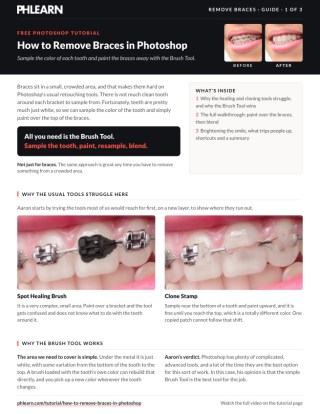
The 3-page guide walks through both passes: on a new layer, Alt/Option-click the tooth and paint over the braces at about 20 to 30% Flow, then blend with a larger brush at Hardness 0 and 10% Flow (Shift+1), paint the gums back, and whiten with white on a Soft Light layer. Keep it next to your keyboard.
description
The Spot Healing Brush and Clone Stamp both struggle here: the area around braces is small and busy, and a tooth shifts color from the gum line to the tip, so copying one sampled patch everywhere gives it away. The plain Brush tool, resampling the tooth’s own color as it changes and blending at 10 percent flow, does the job better — then a Soft Light layer brightens the smile without flattening the shading.
Enjoying This Free Tutorial?
We publish a new free tutorial every week, each one with sample images and PSDs you can download and follow along with. Sign up and they land straight in your inbox, along with early word on sales, events and subscriber-only offers.

How to Remove Braces in Photoshop
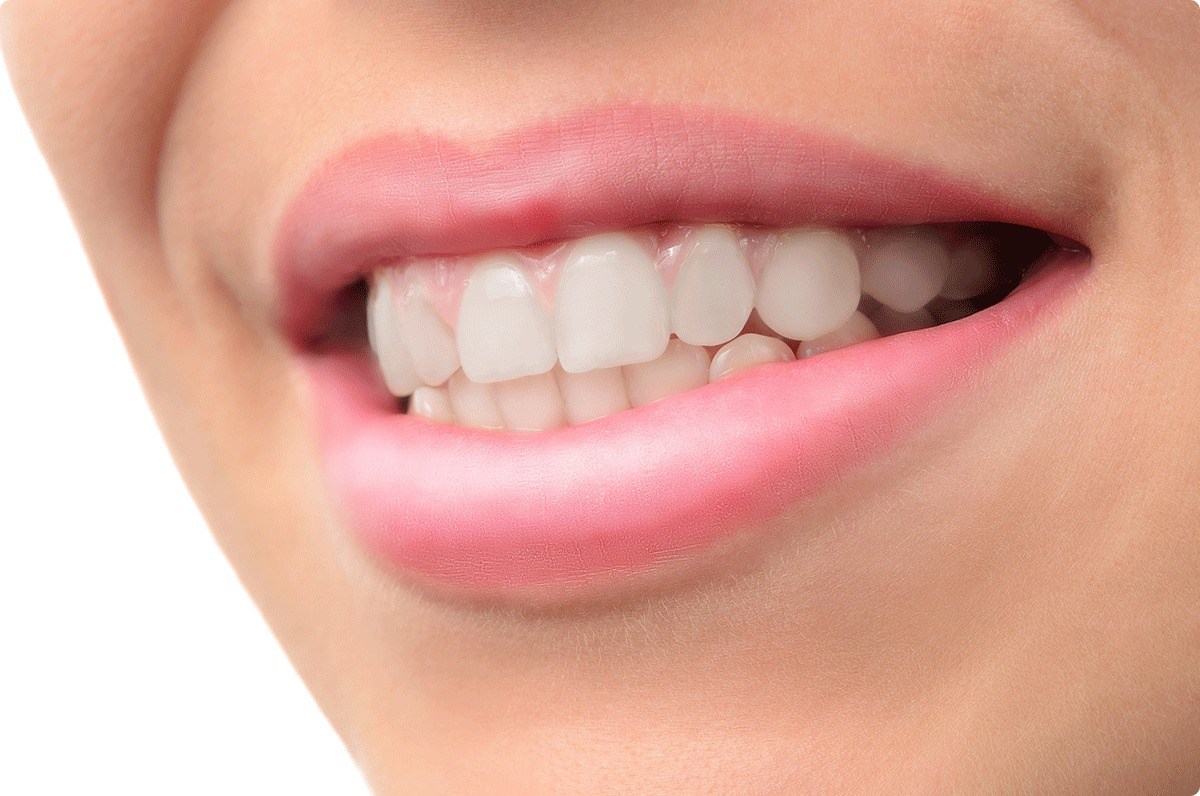
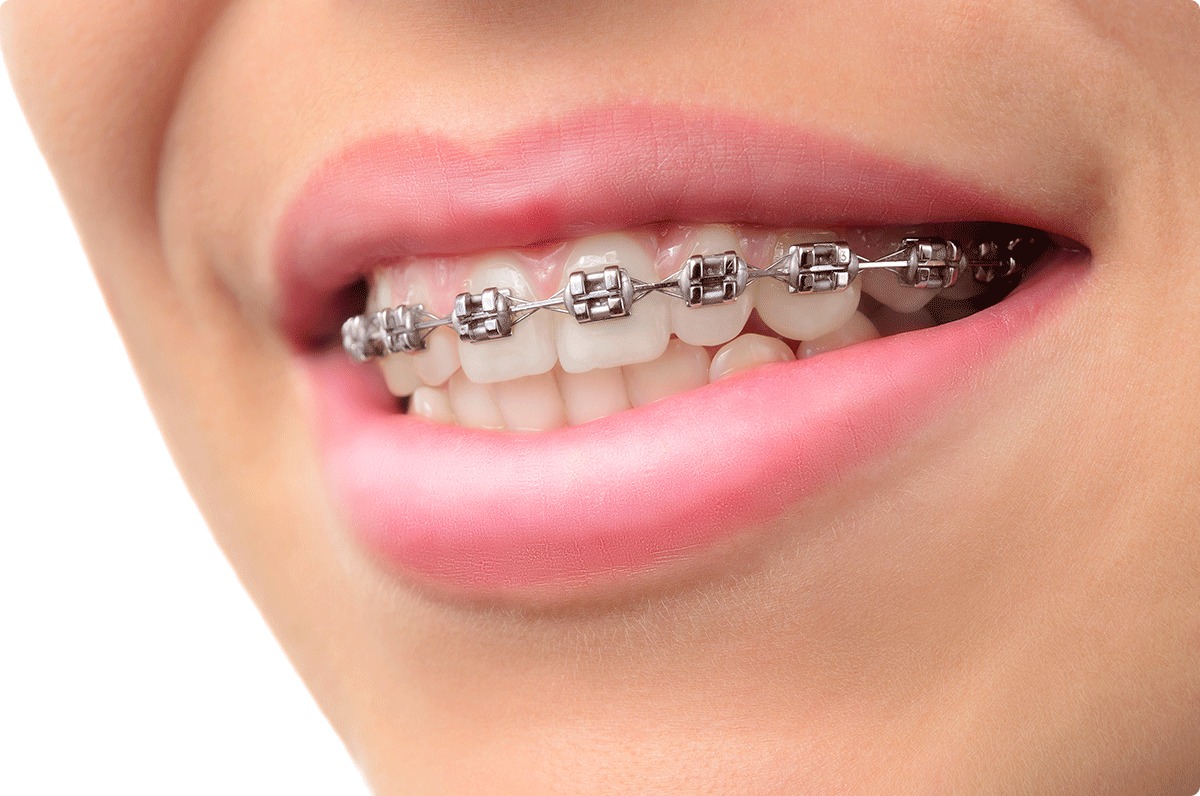
Braces sit in a small, crowded area that makes them surprisingly tricky for Photoshop’s usual retouching tools. Fortunately, the fix doesn’t require anything advanced — teeth are essentially just white, so sampling that color directly and painting over the braces with the ordinary Brush tool does the job better than the more complex tools most retouchers reach for first.
Why the Spot Healing Brush and Clone Stamp Fall Short
The Spot Healing Brush struggles in this situation because the area around braces is small and visually complex, giving the tool very little clean surrounding information to reference — it tends to get confused rather than produce a clean fill. The Clone Stamp tool runs into a different problem: sampling one area of a tooth and painting upward works fine until you reach a section of the tooth with a different shade, since teeth naturally shift in color from the gum line to the tip. Because the actual color variation across a tooth’s surface is the real obstacle, a tool that simply copies one sampled area everywhere isn’t well suited to the job.
Sampling Tooth Color with the Brush Tool
The Brush tool, sampling color directly from the tooth itself, turns out to be the most effective option. Hold Alt or Option to sample a color from a clean part of the tooth near the braces, then paint directly over the wire and brackets. Since teeth shift in color across their surface, resampling a new spot every time the color changes — rather than sticking with one sampled color for the whole tooth — keeps the painted area accurate to what’s actually there.
Working on a New Layer for a Non-Destructive Edit
Doing this work on a new layer, rather than directly on the original image, means the painted correction stays fully separate and reversible. If an area needs adjusting later, only that new layer needs attention rather than risking the original photo.
Blending Color Transitions with a Low Flow Brush
After the braces are initially painted over, the tooth’s surface usually looks like a patchwork of slightly different sampled colors rather than one smooth surface. Switching to a larger, zero-hardness brush and lowering the Flow setting to around 10 percent (Shift+1 sets flow to 10%) allows repeated light passes to blend those patches together gradually rather than applying full opacity color all at once. Sampling nearby colors and painting with this low-flow brush smooths the transition between areas, building up a more natural, gradient-like result across the tooth’s surface.
Adjusting Brush Size and Hardness on the Fly
The bracket keys make the brush larger or smaller as needed for different areas. On a Mac, holding Ctrl and Option while clicking and dragging left or right resizes the brush, while dragging up or down adjusts hardness — a fast way to fine-tune the brush without opening a menu each time (on Windows, hold Alt, right-click and drag).
Working Zoomed In, Then Checking at Normal View
It’s easiest to do the actual painting zoomed in close, but blending only really becomes visible once you zoom back out to a normal viewing distance. Since most portraits won’t be viewed as extremely zoomed in as the working view during editing, a result that looks convincing at this close range will hold up even better at normal viewing distance — but it’s still worth periodically zooming out to check how the blending actually reads.
Adding Natural Contouring and Gum Detail
Real teeth aren’t uniformly bright — they naturally darken slightly toward the edges and where they meet the gums, which is a normal effect of how light falls across a curved surface. Preserving or recreating that subtle darkening, rather than painting one flat, uniform white across the whole tooth, is part of what keeps the final result looking realistic instead of artificially smooth.
Repeating the Process Across Every Tooth
Once the technique is clear on one or two teeth, the rest of the process is largely repetition: sample, paint over the braces, then blend with a low-flow brush, moving tooth by tooth across the smile. Alternating between a slightly higher flow (around 20 to 30 percent) for the initial paint-over and a lower flow (around 10 percent) for blending helps build the effect up in a controlled way rather than applying too much color at once.
Filling In Gum Line Details
Along the gum line, sampling the gum’s own color and painting it in with a smaller brush helps define a clean, natural-looking edge between the teeth and gums, especially in areas where the braces’ brackets sat directly against that boundary.
Brightening Teeth with a Soft Light Layer
As a finishing touch, create a new layer above everything else, paint with white using a large, soft-edged brush directly over the teeth, and change that layer’s blend mode to Soft Light. This gently brightens the teeth without flattening out the natural shading already built into the retouching work, giving the smile a final, polished boost. The same overall approach — sampling nearby color and painting with a controlled, low-flow brush — also works for adjusting the apparent alignment of teeth that are slightly crooked, not just for removing braces.
Why This Technique Works
This technique works precisely because it sidesteps the assumption that a more advanced tool is automatically the better choice. The Spot Healing Brush and Clone Stamp both rely on finding or copying existing image data, which breaks down in a small, detailed area where the surrounding color itself changes constantly. Sampling directly from the tooth and painting with a controlled, low-flow brush instead treats the correction as a careful, manual color match rather than an automated fill, which is exactly what a surface as subtly gradient-toned as a tooth actually needs. Working on a separate layer keeps the whole process reversible, and the final Soft Light brightening pass ties everything together without erasing the natural contouring built up along the way.
Final Thoughts
Removing braces in Photoshop doesn’t call for anything beyond the Brush tool, patience, and a willingness to sample color repeatedly as it shifts across each tooth. Working through the smile one tooth at a time, blending carefully with a low-flow brush, and finishing with a soft brightening pass produces a natural, convincing result — proof that sometimes the simplest tool really is the right one for the job.
Quick Reference: Keys, Menus and Settings
- Brush ToolB, on a new layer above the photo
- Sample the toothAlt/Option-click, then paint over the braces at about 20 to 30% Flow
- Brush size[ and ]
- Size and hardness by draggingMac: Control + Option, click and drag; Windows: Alt, right-click and drag
- BlendRight-click, Hardness 0; Shift + 1 for 10% Flow
- WhitenNew layer on top, large soft brush, paint white, blend mode Soft Light
No AI, no generative credits.
Free Downloads
Take the Guide With You
Get the 3-page PDF guide to painting braces away with the Brush Tool, with the flow settings, Mac and Windows shortcuts and the Soft Light finish. Free with a PHLEARN account.
Removing Braces in Photoshop: Common Questions
What is the best tool to remove braces in Photoshop?
The Brush Tool. Sample the color of the tooth and paint over the braces. Teeth are pretty much just white, so you can rebuild them directly.
Why doesn’t the Spot Healing Brush work on braces?
Braces sit in a very small, crowded area, so there is little clean tooth around them to sample. The Spot Healing Brush gets confused and doesn’t know what to do with the teeth.
Why not use the Clone Stamp Tool?
A tooth changes color from bottom to top. Clone from near the bottom and paint upward, and it looks fine until you reach the top, which is a totally different color.
How do I sample a color with the Brush Tool?
With the Brush Tool (B) active, hold Alt/Option and click the tooth next to the bracket. Sample again every time the tooth’s color changes.
Why do my painted teeth look patchy?
That is normal after the first pass. Make the brush larger, set Hardness to 0 and Flow to about 10% with Shift + 1, then sample and paint lightly to blend the patches.
What Flow should I use?
About 20 to 30% when painting over the braces, and about 10% when blending. Low flow lets you build up the effect.
How do I change brush size and hardness quickly?
Use the bracket keys for size. On a Mac, hold Control + Option and drag left or right for size, up or down for hardness; on Windows, hold Alt, right-click and drag.
How do I keep the teeth from looking fake?
Keep the contouring: a tooth gets a little darker toward its edges, so don’t paint one flat white. Zoom out often, because you can’t see how things blend when you are zoomed in.
How do I whiten the teeth at the end?
Create a new layer on top, paint white over the teeth with a large, soft-edged brush, and change the blend mode to Soft Light.
Is there a free download?
Yes, with a free PHLEARN account. You get 1 PDF guide: 3 pages on the paint-and-blend method, the flow settings and the Mac and Windows shortcuts.
Master Photoshop, Lightroom and Photography
Join PHLEARN PRO for $12.99 a month or $99.99 a year. Cancel anytime, with a 100% money-back guarantee.