
Download Assets
This tutorial includes 1 sample image and 1 PDF guide. Downloads are free with a PHLEARN account.
- Download the sample images and PSDs from every free tutorial on PHLEARN
- New free tutorials published every week
- One free account — sign up once, then download anything
Free PDF Guide · 2 Pages
This Tutorial as a Step-by-Step PDF
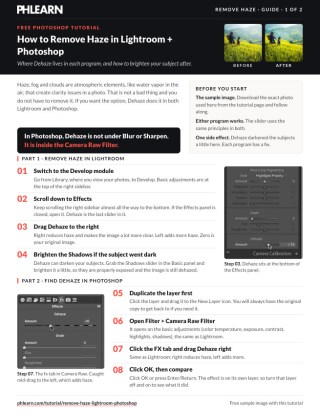
Shows where Dehaze lives in each program: Develop, then the Effects panel in Lightroom, and Filter > Camera Raw Filter > FX tab in Photoshop. The bonus brightens the subjects with a Curves layer, a filled and inverted mask and a 200 to 300 px Gaussian Blur. Keep it next to your keyboard.
description
Dehaze cuts through atmospheric haze by attacking exactly the low local contrast that haze creates. In Lightroom it sits at the bottom of the Effects panel; in Photoshop it is hidden inside the Camera Raw Filter, under the FX tab. Both darken your subject as a side effect — Lightroom fixes that with the Shadows slider, Photoshop with a Curves layer on a heavily blurred mask.
Enjoying This Free Tutorial?
We publish a new free tutorial every week, each one with sample images and PSDs you can download and follow along with. Sign up and they land straight in your inbox, along with early word on sales, events and subscriber-only offers.

How to Remove Haze in Lightroom + Photoshop
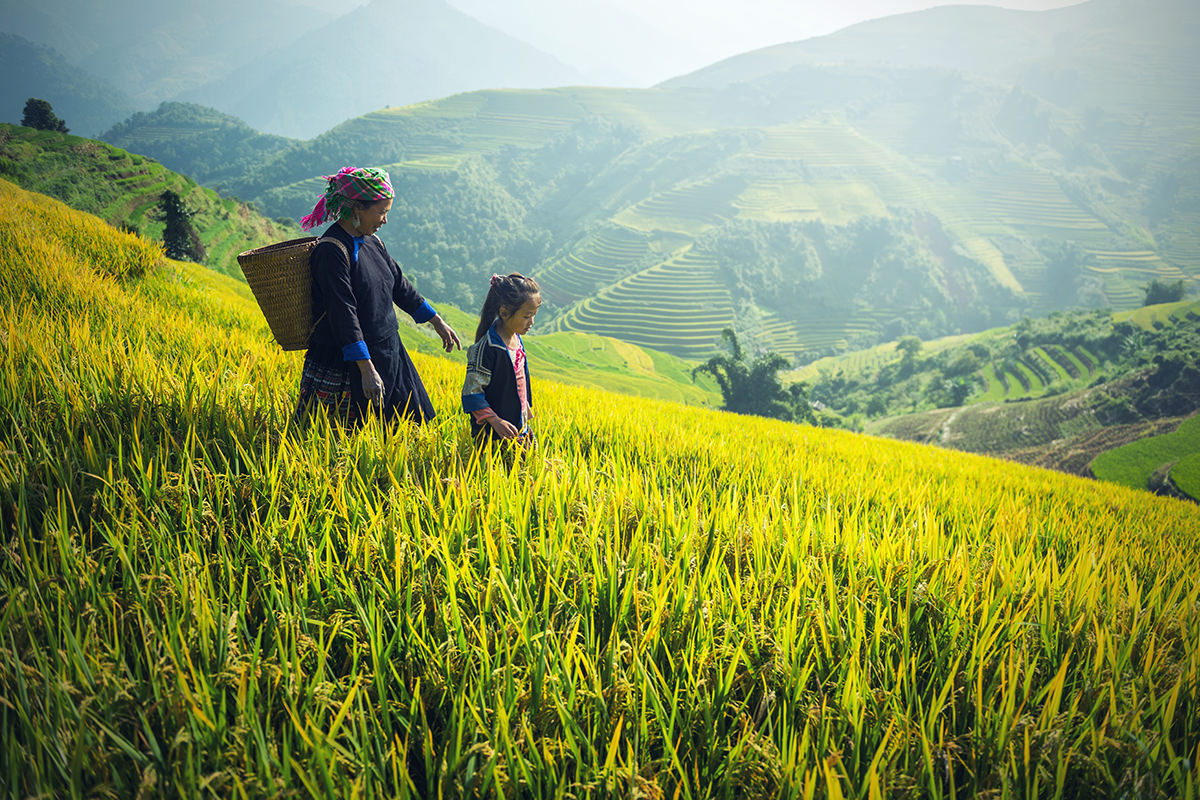
Haze, fog, and atmospheric water vapor can soften an otherwise strong photo, cutting down on clarity and contrast in the background. It’s not always a flaw — sometimes that atmosphere is part of the mood — but when you want to cut through it, both Lightroom and Photoshop include a Dehaze tool built specifically for the job. In Lightroom it’s easy to find; in Photoshop it’s tucked away somewhere most people never think to look.
Removing Haze in Lightroom
In the Develop module, scroll down the right-hand panel almost all the way to the bottom until you reach the Effects section. Inside it, you’ll find the Dehaze slider. Dragging it to the right reduces haze and adds clarity and contrast back into the image; dragging it to the left does the opposite and adds more haze. For an image with noticeable atmospheric haze in the background, pulling this slider to the right makes an immediate, dramatic difference in how clear the scene looks.
Using the Shadow Slider to Recover Exposure
One side effect of pushing Dehaze up is that it can darken your subjects along with the background. If that happens, go to the Shadows slider in the Basic panel and brighten it back up. This restores proper exposure on your subject while keeping the dehazed clarity in the rest of the image, so you get both benefits without the trade-off.
Finding the Dehaze Filter in Photoshop
In Photoshop, the Dehaze filter isn’t sitting under Blur or Sharpen the way you might expect — it actually lives inside the Camera Raw Filter. Before applying it, duplicate your background layer by dragging it onto the New Layer icon, so you always have the untouched original to return to if needed. Then go to Filter and down to Camera Raw Filter.
Applying Dehaze Through the Camera Raw Filter
The Camera Raw Filter gives you essentially the same editing capabilities as Lightroom’s Develop module, right inside Photoshop, including the same color temperature, exposure, contrast, highlight, and shadow controls. To find Dehaze specifically, look under the FX tab. Just as in Lightroom, dragging the slider to the left adds haze and dragging it to the right reduces it, using the exact same underlying principle. Applying the filter on a duplicated layer means you can toggle that layer on and off afterward to compare the dehazed result directly against the original.
Comparing Before and After on Its Own Layer
Because the Camera Raw Filter was applied to a duplicated layer, the dehazed result sits entirely on its own layer above the original. Simply toggling that layer’s visibility off and on lets you compare the hazy original directly against the dehazed version at any time, which makes it easy to judge exactly how much of a difference the effect is making and whether the amount you applied looks right.
Brightening Subjects with a Curves Adjustment in Photoshop
Since dehazing can darken subjects in Photoshop the same way it does in Lightroom, you could use the Shadows slider in the Camera Raw Filter just as in Lightroom, but Photoshop gives you a little more to work with, so here the fix is a Curves adjustment layer limited to the area around them. Add a Curves adjustment layer and bring the curve up so the image is just a little bit brighter — for now it brightens everything, and you fine-tune the amount once the mask is blurred.
Masking and Inverting the Selection
Using the Marquee tool, make a selection around your subjects, a bit larger than the subjects themselves so the resulting highlight doesn’t read as an obvious spotlight glued exactly to their outline. With that selection active, go to the Curves adjustment layer’s mask, then to Edit and down to Fill, and fill the selected area with black. Deselect by going to Select and down to Deselect, then click the layer mask and press Ctrl or Cmd+I to invert it. This flips the mask so the brightening effect shows up only where your subjects are, rather than everywhere except them.
Blurring the Mask for a Natural Highlight
A hard-edged mask around the subject looks obviously artificial, so the final step is softening it. Go to Filter, down to Blur, and over to Gaussian Blur, applied directly to the layer mask, and push the radius up significantly — around 200 to 300 pixels is a good starting point. This spreads the brightening effect out so gradually that it no longer reads as a highlight at all; it just looks like your subject is naturally better lit. From there, you can always click back onto the Curves adjustment itself and raise or lower the brightness to find the right balance between a subject that pops and one that looks overexposed. Go just to the point where it helps the subject without brightening the overall image too much; dragged up to ridiculous levels, it looks bad. To finish, group the layers, press F for full screen and turn the group off and on to compare the before and after.
Why This Technique Works
Dehaze is built for exactly this problem: drag one slider to the right and the haze, fog or water vapor in the background is reduced, and the image gets a lot more clear. Because the same tool exists in both Lightroom’s Develop module and Photoshop’s Camera Raw Filter, it uses the exact same principles no matter which program you’re editing in. Fixing the side effect of darkened subjects with a large, heavily blurred mask rather than a global brightness boost keeps the correction targeted and invisible — the viewer just sees a well-exposed subject standing out from a clearer, haze-free background.
Final Thoughts
Dehaze is one of those tools that’s genuinely simple to use once you know where to find it, and it can make a real difference on any image with atmospheric haze, fog, or water vapor softening the background. Whether you’re working in Lightroom or Photoshop, the slider works the same way, and pairing it with a quick brightness fix for your subject rounds out the effect into a clean, natural-looking result.
For landscape and travel editing taught in order, our PRO Landscape & Travel Editing Learning Path is where to go next.
Quick Reference: Keys, Menus and Settings
- Dehaze in LightroomDevelop > Effects panel > drag Dehaze to the right
- Subject too darkBasic panel > raise Shadows a little
- Dehaze in PhotoshopDuplicate the layer, Filter > Camera Raw Filter > FX tab, Dehaze right, Enter/Return
- Brighten the subjectsCurves layer a little brighter, Marquee around them, Edit > Fill with Black, Select > Deselect
- Invert the maskCmd/Ctrl + I
- Soften itFilter > Blur > Gaussian Blur, about 200 to 300 pixels
- CompareGroup the layers, F for full screen
No AI, no generative credits.
Free Downloads
Follow Along on the Same Photo
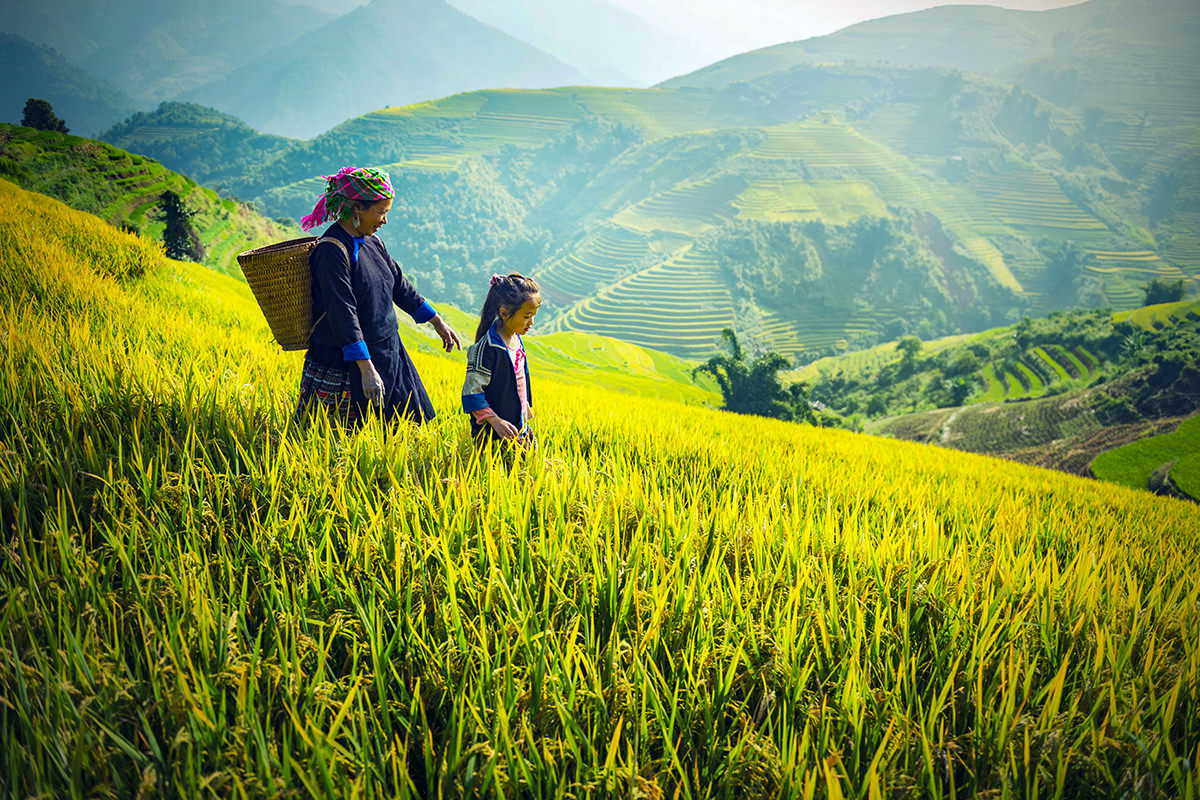
Get the hazy photo used in the video and the 2-page PDF guide to Dehaze in both programs and the Curves fix. Free with a PHLEARN account.
Removing Haze: Common Questions
Where is Dehaze in Lightroom?
In the Develop module, scroll the right sidebar almost to the bottom and open the Effects panel. Dehaze is the last slider in it.
Where is Dehaze in Photoshop?
It is not under Filter > Blur or Sharpen. Go to Filter > Camera Raw Filter and click the FX tab; the Dehaze slider is there.
Which way do I drag the Dehaze slider?
To the right to reduce haze and make the image a lot more clear. To the left adds more haze. Zero is your original image.
Do I have to remove haze from my photos?
No. Haze, fog and clouds are atmospheric elements and are not a bad thing. Dehaze just gives you the option.
Why did my subject get darker after Dehaze?
Dehaze can darken your subjects. In Lightroom, raise the Shadows slider in the Basic panel a little. In Photoshop, the video brightens them with a Curves adjustment layer instead.
Why duplicate the layer before the Camera Raw Filter?
Drag the layer to the New Layer icon first and the dehaze sits on its own layer. You keep the original, and you can turn the layer off and on to see what it did.
How do I brighten just the subjects without a visible spotlight?
Bring a Curves layer up a little, Marquee a selection a bit larger than the subjects, fill it with black on the mask, deselect and press Cmd/Ctrl + I to invert. Then blur the mask.
How much should I blur the mask?
A lot. Go to Filter > Blur > Gaussian Blur on the layer mask and go up to about 200 or 300 pixels, so you cannot really tell there is a highlight.
Is the Camera Raw Filter the same as Lightroom?
It gives you Lightroom’s editing controls inside Photoshop: color temperature, exposure, contrast, highlights, shadows and Dehaze, basically a clone of the Develop controls.
Are the sample files free?
Yes, with a free PHLEARN account. You get 1 sample image and 1 PDF guide: the hazy photo used in the video and a 2-page guide to both programs.
From the Magazine View all
Stories, interviews and guides for photographers, new every week.
 EditingLightCraft vs Lightroom: I Edited the Same RAW Files in BothThe free clone on the same RAW files: what matches, what breaks and who should switch.
 InspirationRare Historical Photos: 13 of the Rarest Pictures Ever TakenFrom the earliest surviving picture of a person to the last passenger pigeon: who took each one and why it survives.
 EditingArtCraft: Photoshop Cloned by AI in Two Weeks. Is It Legal?ArtCraft cloned Photoshop and Lightroom with AI and gave them away. Any good? Legal? Safe?
Master Photoshop, Lightroom and Photography
Join PHLEARN PRO for $12.99 a month, or $99.99 a year (save 36%). Cancel anytime, with a 100% money-back guarantee.