
Download Assets
This tutorial includes 1 sample image and 1 PDF guide. Downloads are free with a PHLEARN account.
- Download the sample images and PSDs from every free tutorial on PHLEARN
- New free tutorials published every week
- One free account — sign up once, then download anything
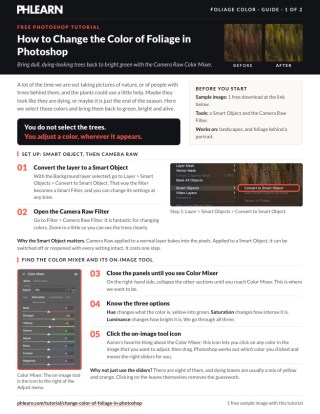
Free PDF Guide · 2 Pages
This Tutorial as a Step-by-Step PDF
Every step from the video in order: Layer > Smart Objects > Convert to Smart Object, Filter > Camera Raw Filter, the Color Mixer and its on-image tool, dragging Hue from yellow toward green, then Saturation and Luminance, and double-clicking the smart filter to adjust. Keep it next to your keyboard.
description
Change the color of foliage with the Camera Raw filter and dull trees come back to life without touching anything else in the frame. This tutorial will show you how to easily select and adjust hues, saturation, and luminance to transform lifeless foliage into vibrant, natural-looking greenery.
Enjoying This Free Tutorial?
We publish a new free tutorial every week, each one with sample images and PSDs you can download and follow along with. Sign up and they land straight in your inbox, along with early word on sales, events and subscriber-only offers.
Image Source
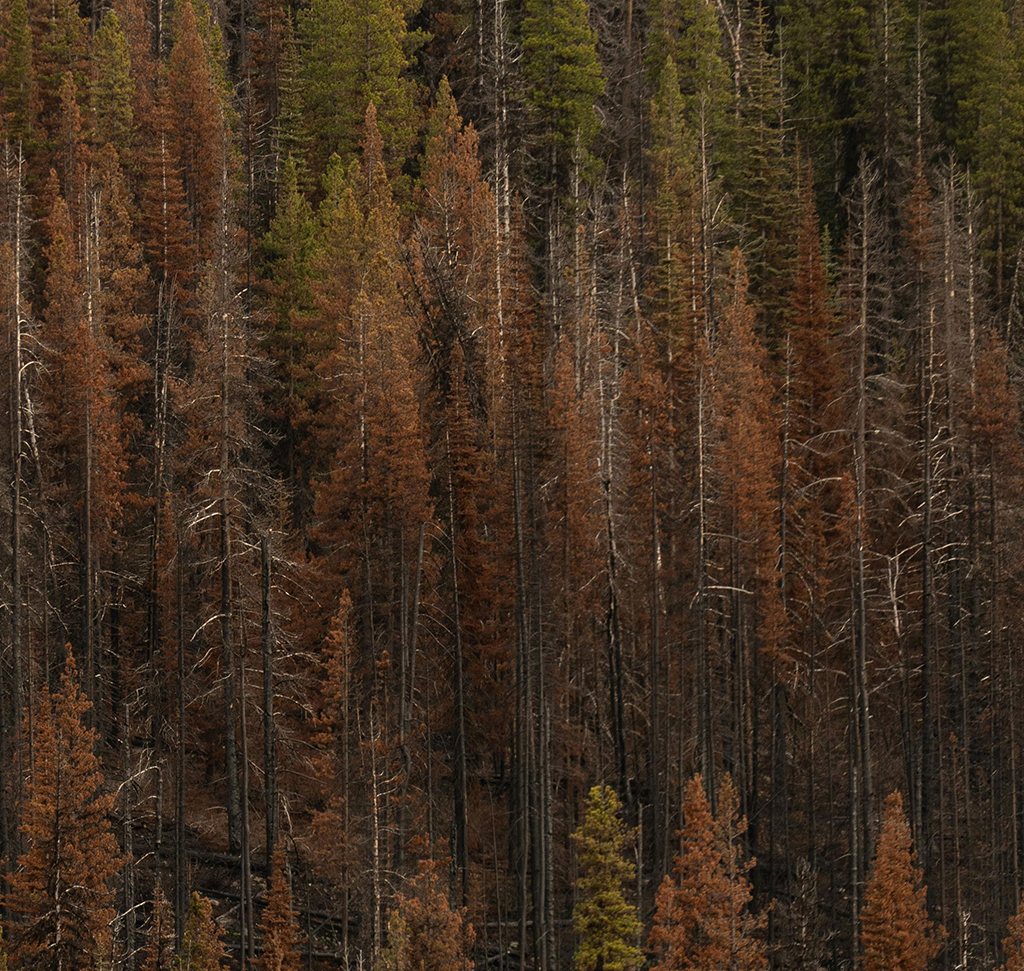
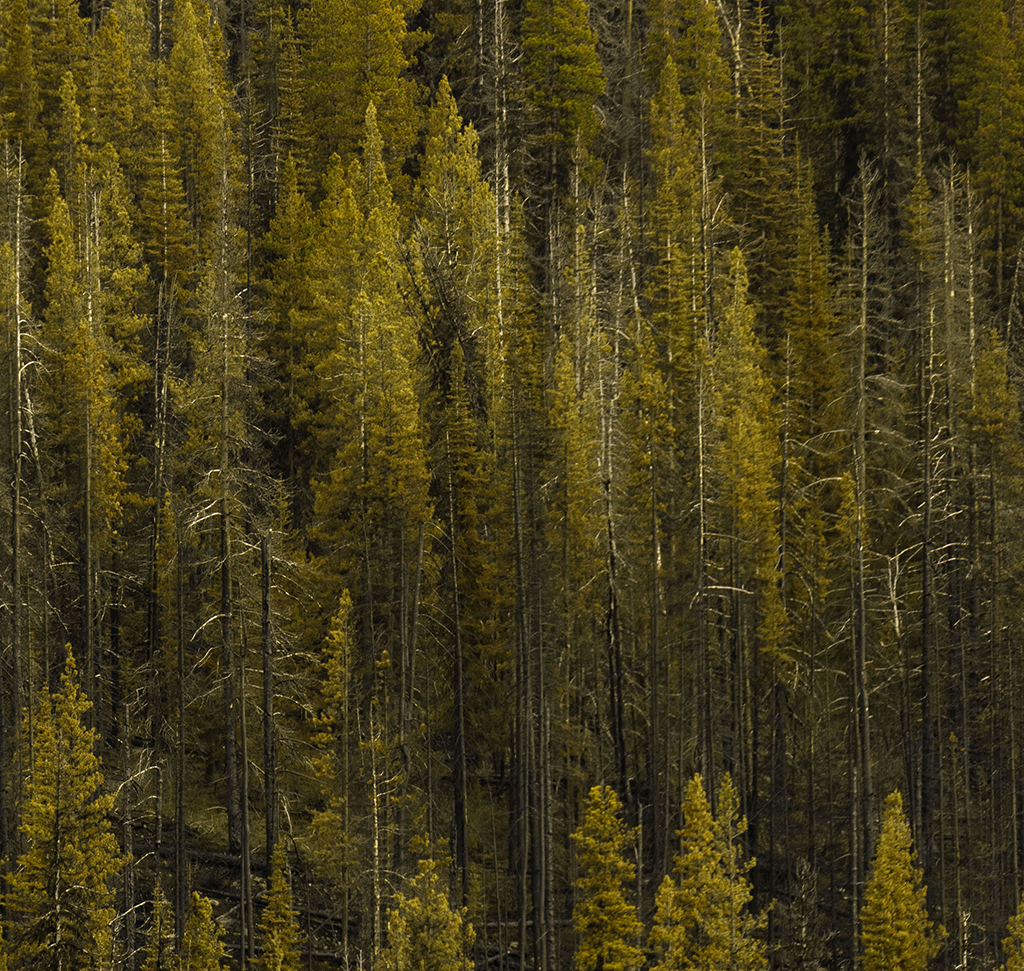
How to Change the Color of Foliage in Photoshop
Trees and plants photograph badly more often than anything else in a landscape. Shoot at the wrong point in the season, or on a flat day, and healthy foliage comes back yellowed, dull and lifeless — even though it looked fine at the time.
Camera Raw‘s Color Mixer fixes it in about a minute, and the reason it works so well is that it targets colors rather than areas. You do not select the trees. You tell Photoshop to adjust the yellows, and only the yellows change — anywhere they appear.
The same technique works on foliage behind a portrait, where selecting around branches would be painful.
Convert to a Smart Object First
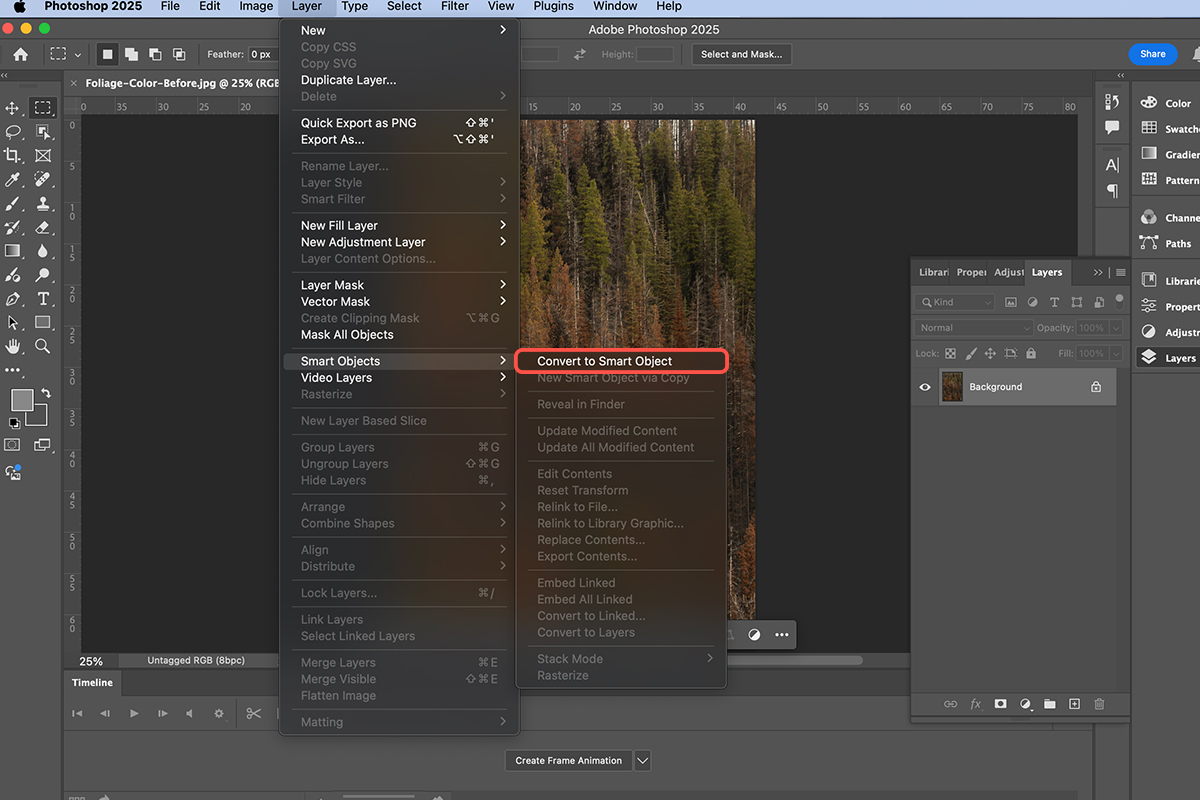
Before opening any filter, go to Layer > Smart Objects > Convert to Smart Object and check for the badge on the layer thumbnail.
Camera Raw applied to a normal layer bakes into the pixels. Applied to a Smart Object it becomes a Smart Filter you can switch off or reopen with every setting intact. It costs one step and it is the difference between a decision you can revisit and one you cannot.
Then go to Filter > Camera Raw Filter.
Find the Color Mixer
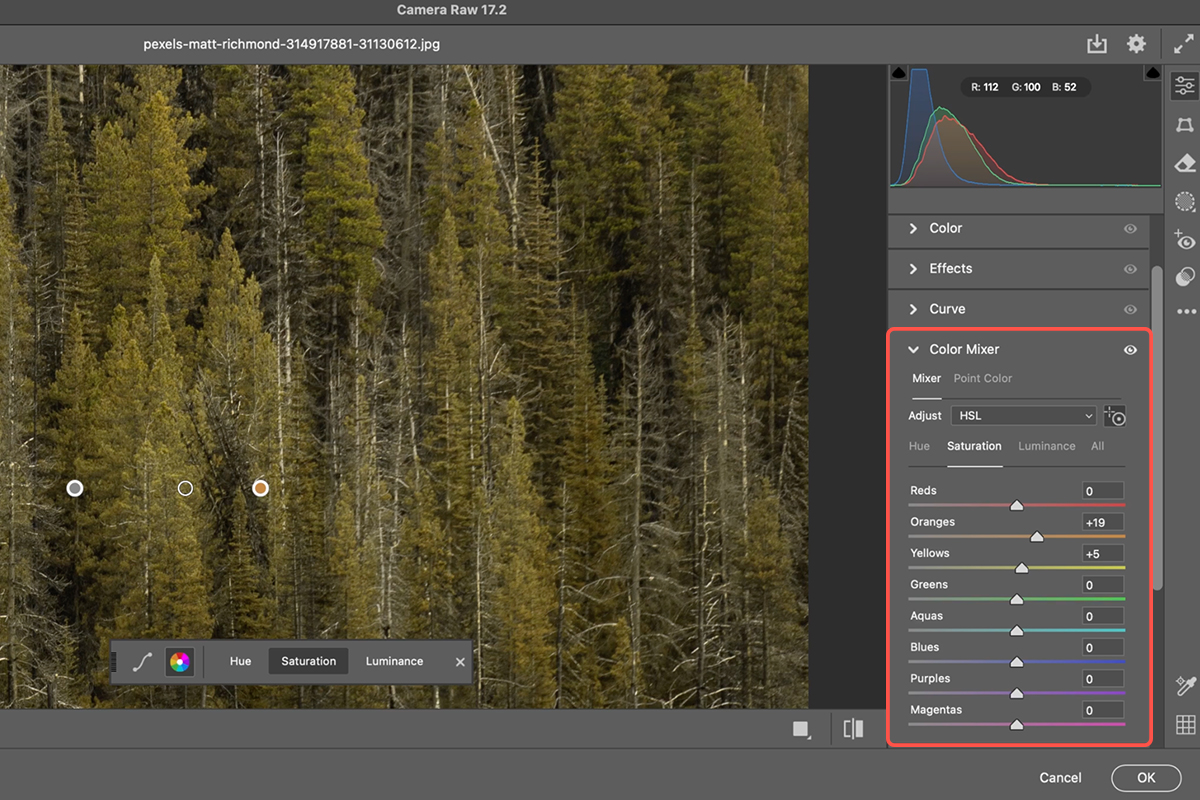
In the right-hand panel, collapse the sections until you reach Color Mixer.
It offers three tabs, and you will use all of them in order:
Hue changes what the color is — yellow into green. Saturation changes how intense it is. Luminance changes how bright it is.
Use the Targeted Adjustment Tool
Each tab has a small icon that activates on-image adjustment. This is the control worth learning.
Click it, then click and drag directly on the foliage in your photograph. Photoshop identifies which color you clicked and moves the correct sliders for you.
This removes the guesswork. Without it you are looking at eight color sliders trying to work out whether dying leaves are yellow, orange, or somewhere between — and they are usually a mix, which means moving several sliders by the right relative amounts. Clicking on the leaves themselves solves that.
The Three Adjustments in Order
-
Hue — shift yellow toward green
On the Hue tab, click the yellowed foliage and drag right. The leaves move from yellow toward green. Drag far enough the other way and they go red, which is worth seeing once because it shows you the range available — the same control turns summer foliage autumnal.
-
Saturation — bring the color back
Switch to the Saturation tab, click the same area, and drag right. Tired foliage is usually desaturated as well as wrongly hued, and this is where it starts looking alive rather than merely green.
-
Luminance — lift the brightness
On the Luminance tab, click and drag right. Healthy leaves catch light; dull ones sit dark. This last step is what separates a result that looks corrected from one that looks like good weather.
All three matter. Hue alone gives you green leaves that are still flat and dark.
Check Against the Original
Camera Raw has a before/after toggle at the bottom of the window. Use it often — your eye adjusts to a color shift within seconds, and what looked bold when you set it will look normal a minute later.
If the result has gone past believable, pull the Saturation back. That is nearly always the slider responsible.
Why This Beats Selecting
The obvious approach is to select the trees and adjust them. It is slow and it rarely holds up — foliage edges are thousands of small gaps, and any selection either clips leaves or catches sky.
Targeting by color sidesteps all of it. Every yellow pixel is adjusted regardless of where it sits, including the ones between branches that no selection would have caught. Sky, skin and clothing are untouched because they are different colors.
The one thing to watch: if something else in the frame shares that color range, it moves too. Check the whole image, not just the trees. A yellow jacket or a sandy path will shift along with the leaves, and if that happens you can mask the Smart Filter to exclude it.
Come Back and Adjust
Click OK and the adjustment appears as a Smart Filter beneath the layer. Toggle its visibility to compare against the original at full size.
Double-click Camera Raw Filter to reopen the dialog with everything as you left it. Useful, because foliage color is easy to overdo in the moment and easier to judge with fresh eyes.
The Short Version
Convert to a Smart Object. Filter > Camera Raw Filter. Open Color Mixer. On each of Hue, Saturation and Luminance in turn, activate the targeted adjustment tool, click the foliage, and drag. Check the before/after as you go, and reopen the Smart Filter later if it needs easing back.
Quick Reference: Keys, Menus and Settings
- Keep it editableLayer > Smart Objects > Convert to Smart Object
- Open Camera RawFilter > Camera Raw Filter; collapse the panels down to Color Mixer
- HueClick the on-image tool in the Mixer, click the dying foliage, drag right toward green
- SaturationSame tool on the Saturation tab, drag right
- LuminanceSame tool on the Luminance tab, drag right to brighten
- CompareThe before/after icon at the bottom
- Change it laterDouble-click Camera Raw Filter under Smart Filters
No selection, no AI, no generative credits.
Free Downloads
Follow Along on the Same Photo
Get the hillside photo from the video and the PDF guide, and bring the same trees back to green. Free with a PHLEARN account.
Foliage Color: Common Questions
How do I make dying trees look green again?
Camera Raw’s Color Mixer. Click the on-image tool, click the yellow foliage and drag toward green for Hue, then do the same for Saturation and Luminance. A few seconds, no selection.
Why convert to a Smart Object first?
So the Camera Raw Filter stays editable. Double-click it later and the Mixer opens with your settings ready to tweak.
Don’t I need to select the trees?
No. The Mixer targets a color, not an area. Clicking the dying foliage picks up its yellows and oranges, and only those shift; the healthy green trees stay put.
What order do the three adjustments go in?
Hue first, so the color is right. Then Saturation to make it alive, then Luminance to add light. Each uses the same click-and-drag tool.
It looks too green. Can I back it off?
Yes. Drag the Saturation slider for that color down a little, or reopen the filter later and adjust. The before/after icon helps you judge.
Does it work when there are people in the photo?
Yes. The foliage colors shift and the people don’t, as long as their clothes aren’t the same yellow. If they are, add a Camera Raw mask or a layer mask.
Is the sample file free?
Yes, with a free PHLEARN account. You get the hillside photo and the PDF guide.
Master Photoshop, Lightroom and Photography
Join PHLEARN PRO for $12.99 a month or $99.99 a year. Cancel anytime, with a 100% money-back guarantee.