10 Photos That Changed the Course of History
The historical photos that changed the world are not always the most beautiful ones. They are the images that caught a turning point at the exact moment it happened: a sailor’s kiss in Times Square on V-J Day, a mother’s worried face during the Great Depression, Earth rising over the Moon’s horizon, and the very first photograph ever made. Below are 10 iconic photos and the story behind each one.
Some of these pictures were made with a place in history in mind, while others climbed there slowly as the decades passed and attitudes changed. What they share is the power of the moment. At the height of their fame they awed, inspired and moved people of every background, and they still shape how we remember the events they recorded.
The Kiss
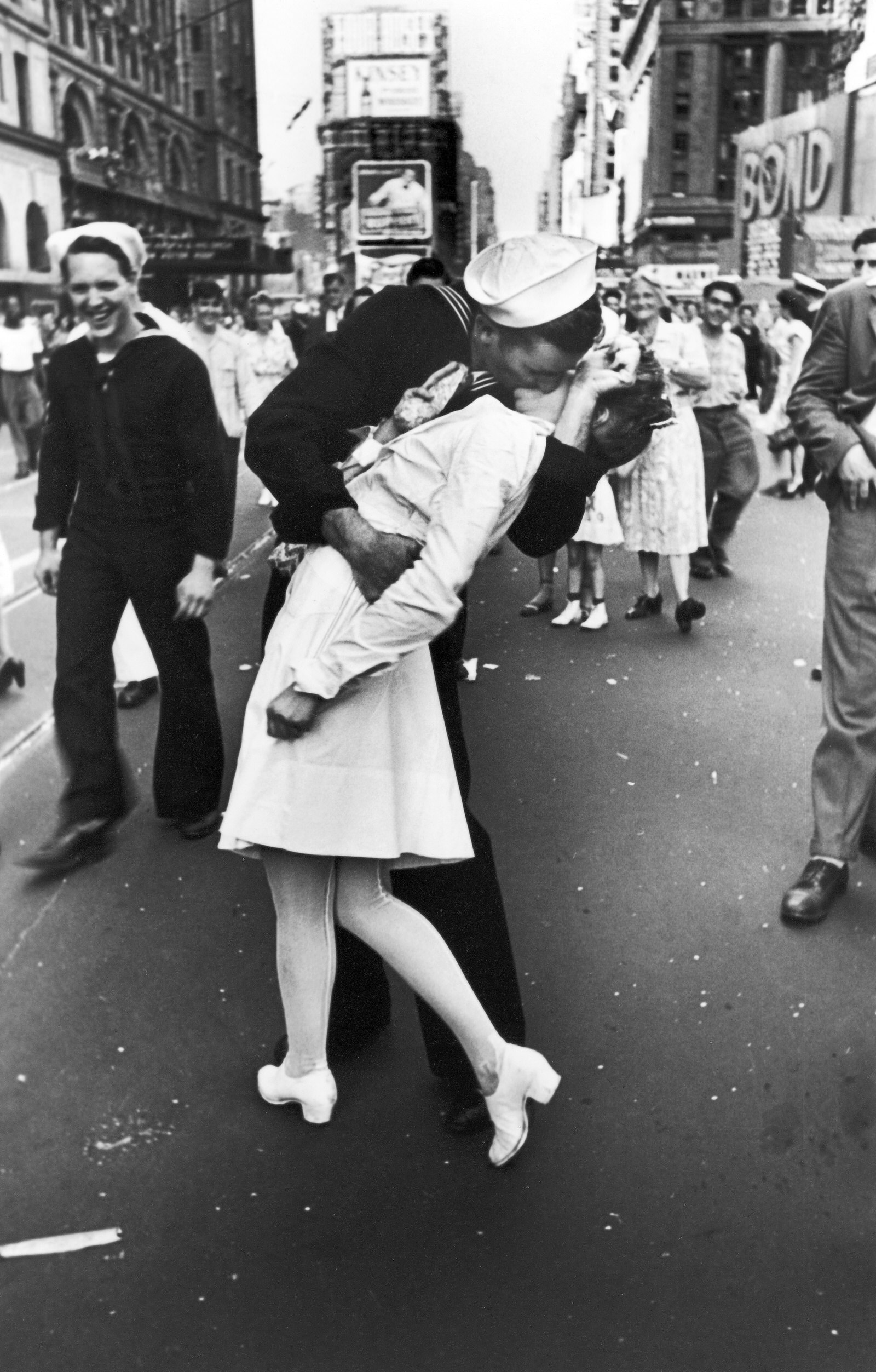
Taken by Alfred Eisenstaedt in New York on August 14, 1945, The Kiss (otherwise knowns as V-J Day in Times Square) captures the iconic moment a U.S. Navy sailor kissed a stranger on the streets of Times Square. Popularized by its publication in Life magazine, the photograph is a great example of the power of street photography in action.
Eisenstaedt had been present at Time Square for what is colloquially known as “Victory over Japan Day,” the day on which World War II ended with Imperial Japan’s surrender. The closing of the war incited nationwide celebrations, including a frenzy of festivities in Times Square where Eisenstaedt spotted the sailor kissing a stranger – a nurse, identified by her stark white uniform.
There’s a lot going in the photo that contributes to its iconic reputation. It feels both candid and posed – the shape and contours of the kissing couple feels proactive, alive, and passionate. The surrounding onlookers, giggling and ogling at the couple, frame them perfectly, and add a candid element to the photo. The photo feels like a symbol of celebration and has had a lasting cultural impact on American history.
Migrant Mother
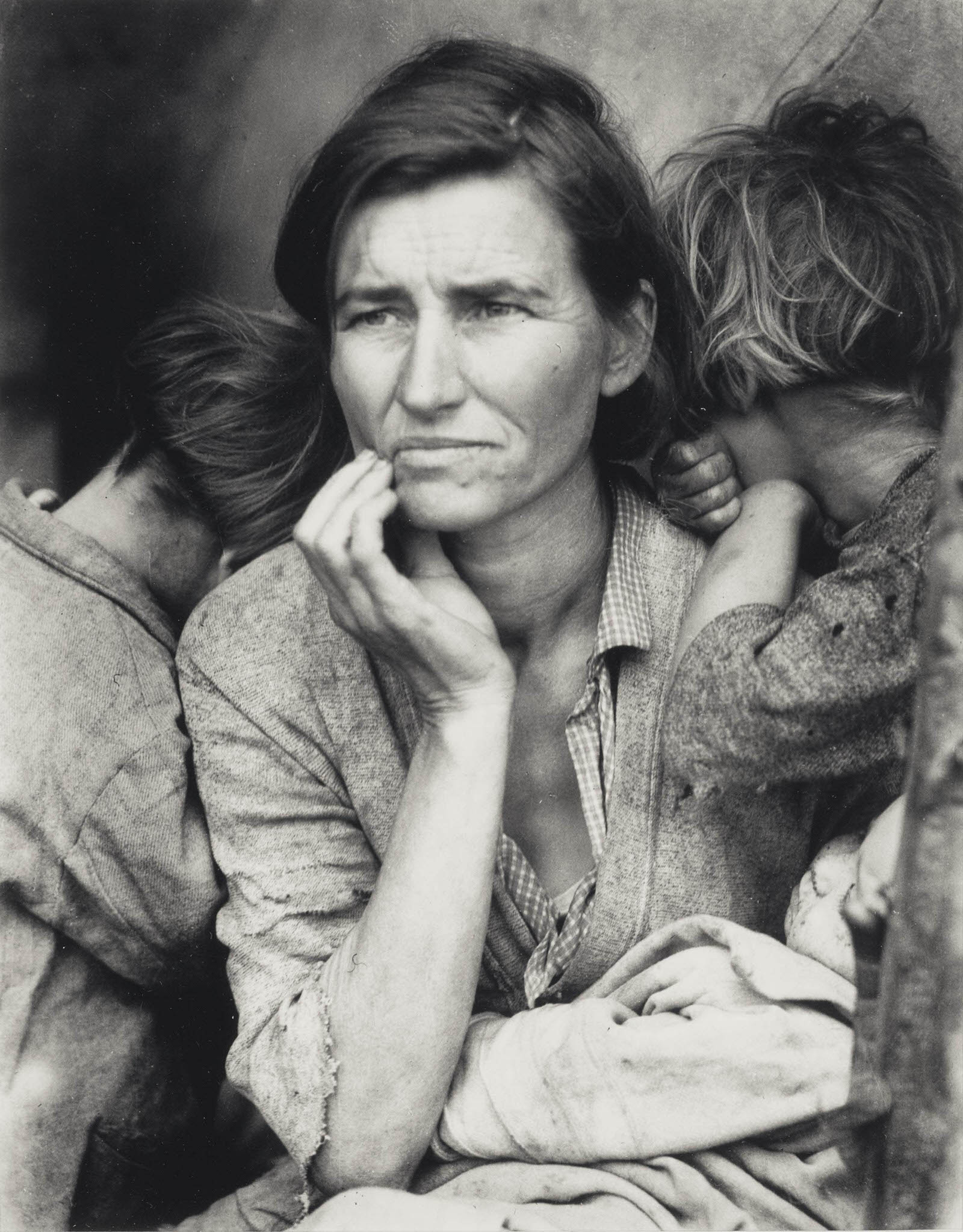
An iconic representation of the Great Depression, Dorothea Lange’s Migrant Mother features an impoverished woman alongside her away-facing children. The photograph was taken sometime during 1936 while the Great Depression was still in full swing and is an extremely famous example of documentary photography.
The picture moved masses and just days after its publication, the pea-picker camp the woman and her family had been located on received 20,000 pounds of food from the federal government.
Its influence comes from the feelings Lange happened to capture. The woman in question, Florence Owens Thompson, and her unkempt children all look dramatically destitute. The backstory Lange provided, an affirmation of the family’s poverty, further drove the point in: people were suffering.
Migrant Mother is still impactful today, representing in part both the history and art of the Great Depression.
A Man on the Moon
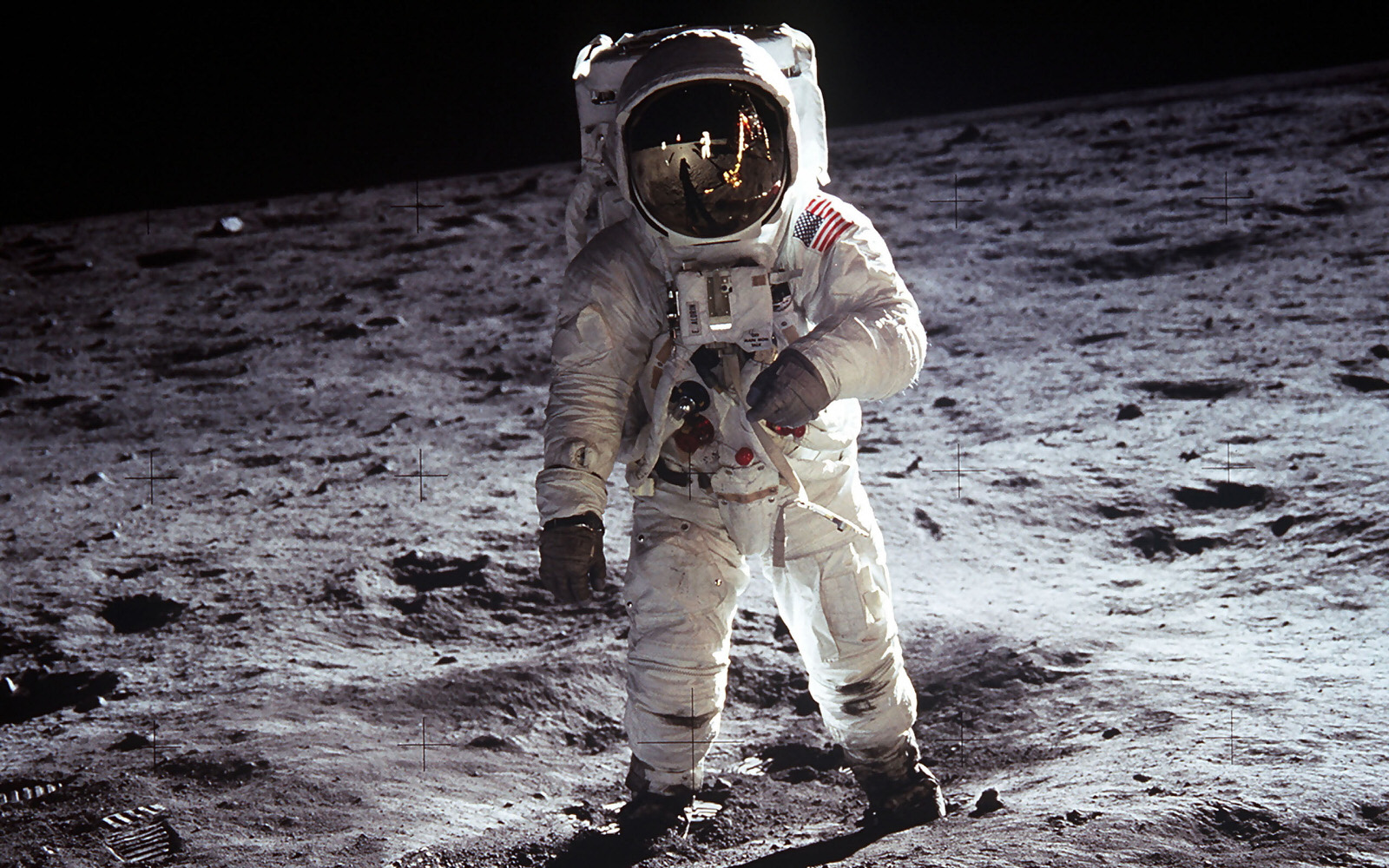
Taken by Neil Armstrong on July 20th, 1969, A Man on the Moon showcases astronaut Buzz Aldrin as he takes some of his first steps across the moon’s surface.
Equipped with a 70mm lunar surface camera, Armstrong set out to document Apollo 11’s expedition through a series of photos detailing the crew-of-two’s first steps, and the placement of the American flag.
Immortalized from all of those photos is A Man on the Moon. In it, Aldrin stands alone with nothing but the vast expanse of the moon as his backdrop. With not a modicum of humanity surrounding him, Aldrin is swallowed by the great unknown of space, capitalizing on the feelings of loneliness and curiosity that, even today, drive us to find life beyond the fringes of earth. His singular presence in the photo also punctuates the whole point of the expedition: a man landed on the moon.
Blind

Famously created through the use of a camera with a false lens, the photo Blind captures a woman gazing off to the side, seemingly unaware of the fact that she is being photographed.
For this series of photos, photographer Paul Strand utilized a lens that was able to capture the opposite of what he aimed his camera at, conscious of the fact that people tend to act differently when aware of the camera lens. He endeavored to capture people as they acted naturally, and effectively helped to usher in the art of street photography.
Today street photography is a thriving, albeit, debatable art. Methods and approaches to the genre have been accused of being invasive. However, the art of street photography has undeniable beauty, and the potential to make powerful social and political statements.
Raising the Flag on Iwo Jima
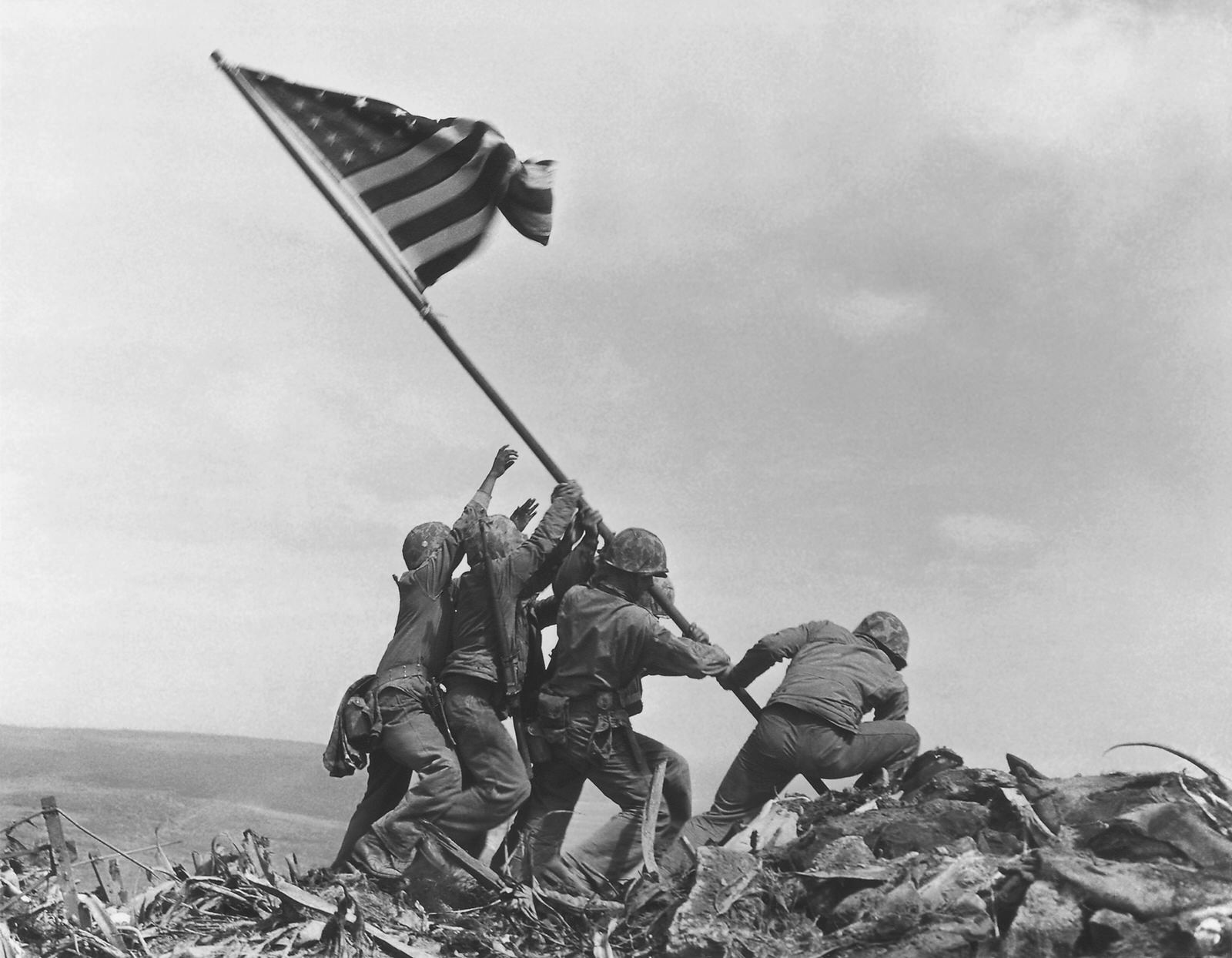
One of the most iconic photos of World War II, Raising the Flag on Iwo Jima by photographer Joe Rosenthal has been engrained nationwide into the minds of Americans as a symbol of victory and patriotism.
In the photo, Rosenthal snaps six American marines raising the U.S. flag on top of Mount Suribachi to mark its capture. The flag in question served as the commander-ordered replacement to a much smaller flag, and was hoisted up in order to inspire the troops present for the capture.
Rosenthal’s photo was published a mere two days after its capture, and immediately skyrocketed to fame. It became so famous, and so positively regarded, that Rosenthal eventually won a Pulitzer Prize in Photography for it.
Today the photograph continues to represent America’s role in World War II, and perseveres in inspiring feelings of victory and unity.
Earthrise

This eponymous photograph depicts Earth as it emerges from the darkness of space, with just a cheeky sliver of the moon decorating the photo’s foreground. Captured by astronaut William Anders during the Apollo 8 voyage, Earthrise was, and still is, a shocking reminder of our lonely existence in the vast expanse of space. And yet, shocking as it is, great beauty lies in the marble-like swirl of blue and white cropping out from the monotonous blackness of our galaxy.
The photo capitalized on the beauty of our planet during a time when we were looking for beauty beyond it, and rippled through the world in such a way that people have used the photo repetitively to exemplify why the preservation of the nature of Earth is worth it.
Afghan Girl
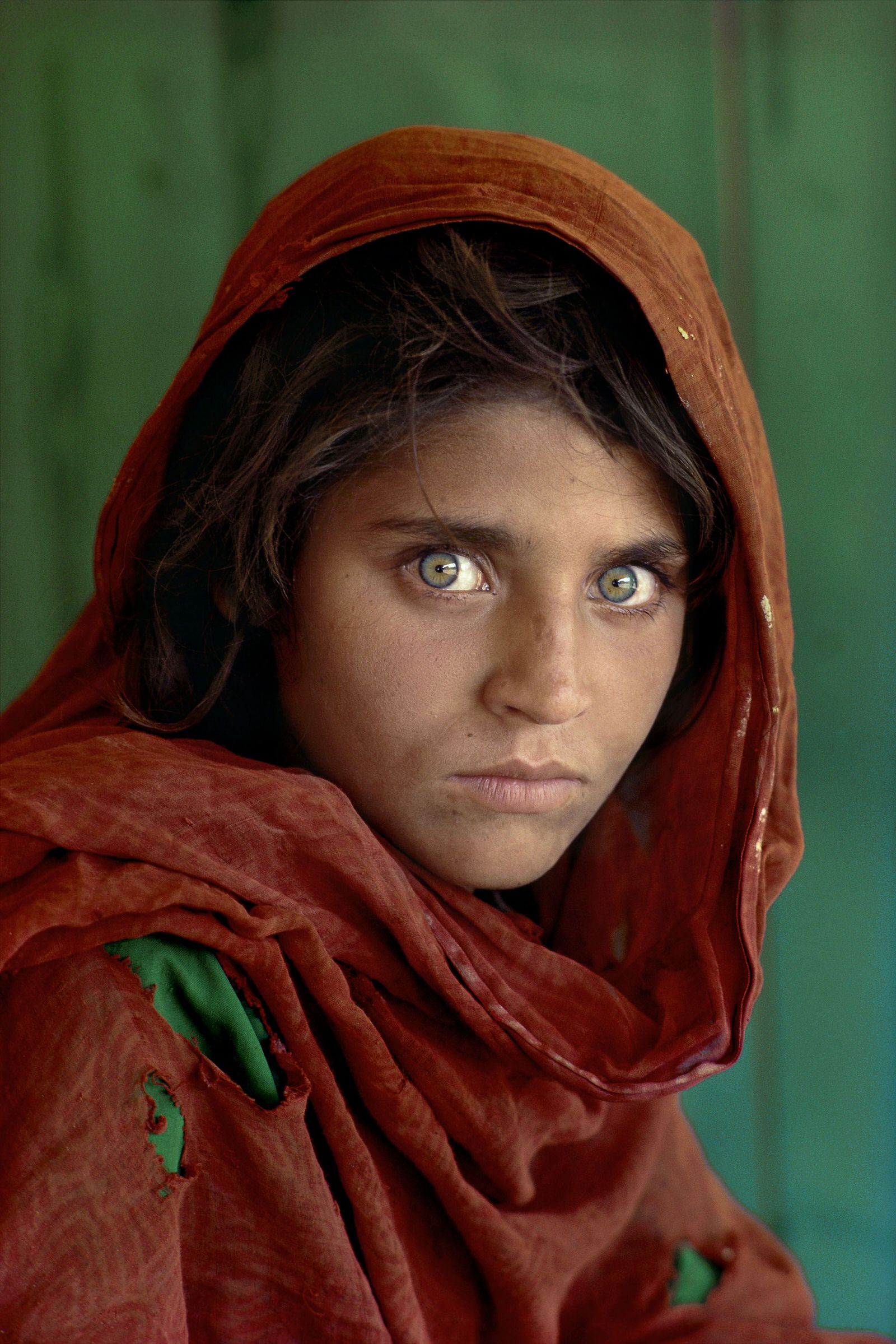
Known for her intense stare and bold green eyes, Afghan Girl came to symbolize the struggles of refugee women to the Western world. Taken by National Geographic Society photographer Steve McCurry during the Soviet occupation of Afghanistan, Afghan Girl (whose real name is Sharbat Gula) managed to conceptualize everything about the struggles of refugee women all in the photo of one, tattered, gritty girl.
It is an undeniably well-framed portrait that conveys a world of emotion through one appearance; Gula’s stare is intense, determined, and unafraid, and her clothing, bright red and ragged from wear, speak volumes about her struggles as a refugee. Today, Afghan Girl is still one of Nat Geo’s most famous issue covers.
Milk Drop Coronet
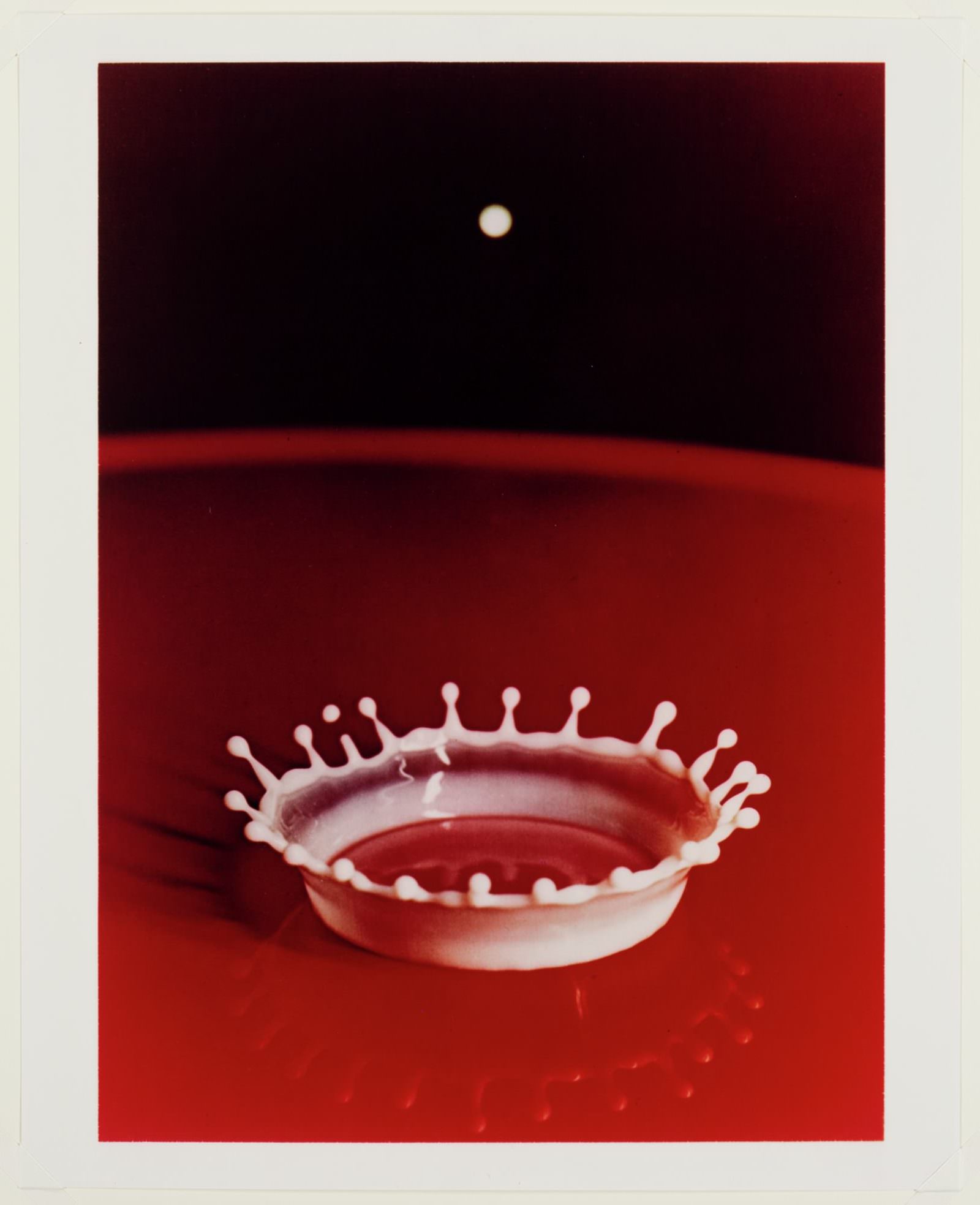
Taken in 1957 by Harold Edgerton, Milk Drop Coronet was a photo that helped change the mechanics of photography forever. The image, which captures the resulting splash of a milk drop striking the surface of milk, was the first of its kind to stop time.
Prior to its capture, photographers had struggled to photograph dark scenes and fast-passing moments. Harold Edgerton had set about to change that. His inventions and experiments helped to pave the way for cameras that were able to shoot in low lighting and capture scenes moving too fast for the human eye to perceive. A technical genius, Edgerton is accredited with offering great contributions to the field of stop-motion photography.
Power House Mechanic
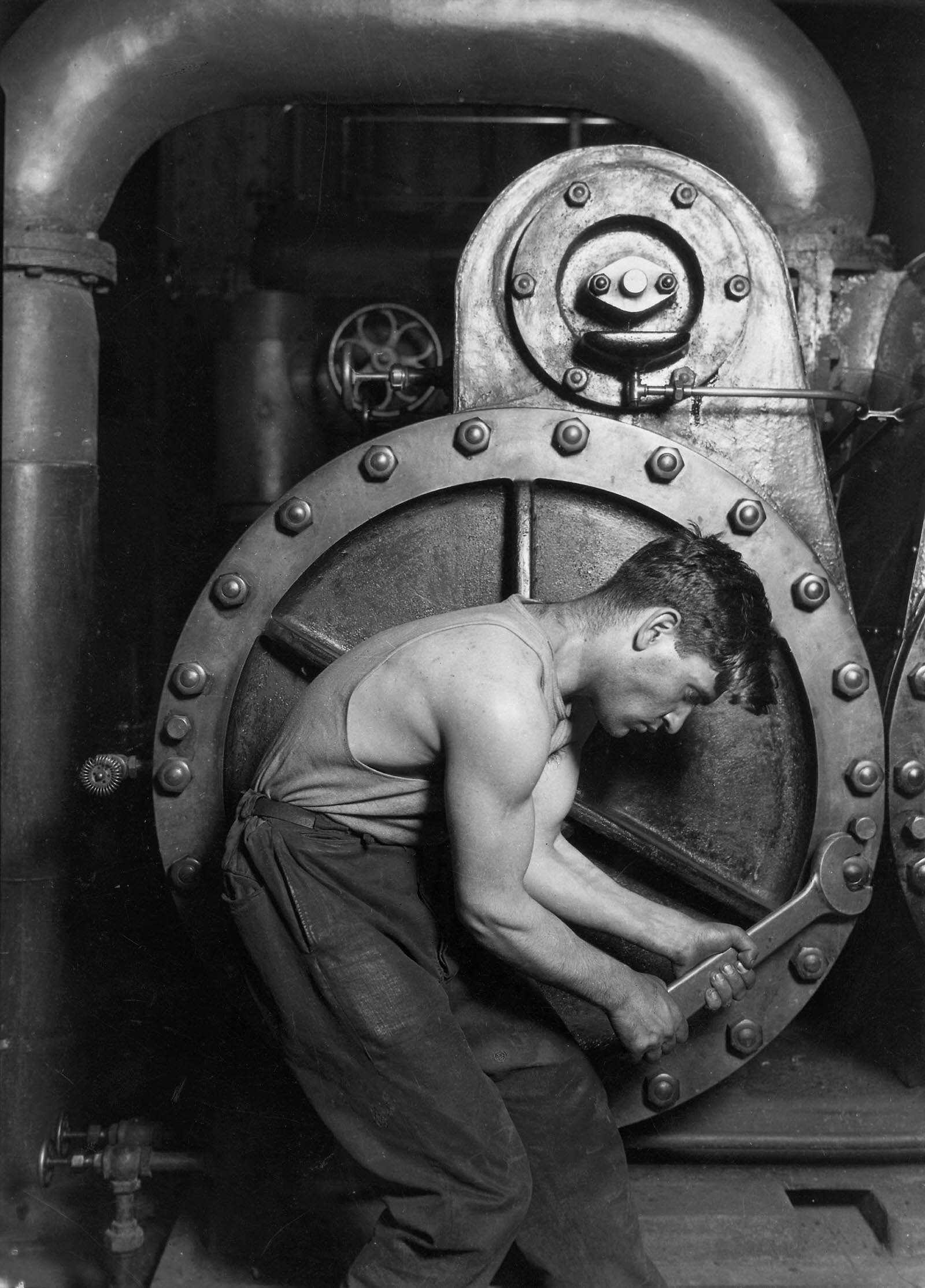
In an effort to document industrialization, photographer Lewis Hine spent time photographing industrial workers and the environments they worked in. At the time, Hine’s work brought awareness to the conditions these workers tolerated, which were quickly diminishing in quality. While Hine’s photography is considered a form of documentary photography, the photos he chose to showcase were carefully posed and selected to leave the greatest audience impact possible. Hine’s work is a series which showcases the fact that a photo doesn’t necessarily have to be a candid or unexpected shot for it to work as a political or social statement.
View from the Window at Le Gras

And finally, perhaps one of the most historical photos of all time, View from the Window at Le Gras, by Nicéphore Niépce. Niépce, a French inventor, is often credited as the inventor of photography. View from the Window at Le Gras was the first permanent photo ever recorded as being taken. Niépce had used a technique he had created, heliography, to permanently capture the photo, using asphalt to engrain the image in metal.
The camera he used to capture the photo also bared very little resemblance to the ones we use today. Niépce used a camera obscura (otherwise known as a pinhole camera) to capture the image in question. There’s not much that needs to be said about this photo. The impact of the image doesn’t come from its art, which is severely lacking, but instead the milestone it represented in the history of photography. The first of any kind, it serves as a reminder of how far photography has come both technically and artistically.
What each of these pieces teach us is that photography intertwines deeply with history. These photos show that any sort of photo can become ingrained in history, whether they be candid, posed, technical, or some combination of methods.
Regardless of what path to fame was taken, these photos have made lasting historical impacts. They became famous for detailing and propagating the culture, politics, or marvels of their eras, and have continued to be influential to the modern world. They also show the power and worth of photography – the ability to freeze a moment in time and immortalize it for the pleasure and learning experience of future generations.
Updated for 2026: Why These Photos Matter in the Age of AI Images
Every photo on this list earned its place because people trusted that it showed something real. That trust matters even more now that anyone can generate a convincing “historical” image in seconds, and fake archival photos circulate on social media every day. When a famous image catches your eye online, check it against a museum, library or news archive before you share it.
These photos are also a great study guide for your own work. A few lessons that still hold up:
- Be there. Eisenstaedt, Rosenthal and Lange all made their pictures by being present when history happened.
- Keep it simple. Earthrise and Migrant Mother each center on one clear subject.
- Edit honestly. Tools like Generative Fill and the Remove Tool are great for creative work, but documentary images should only get honest adjustments such as exposure, contrast and cropping.
If you want to practice the classic documentary look, try converting your photos to black and white in Lightroom Classic.
Frequently Asked Questions
What is the most famous photograph in history?
There is no single answer, but V-J Day in Times Square, Migrant Mother, Raising the Flag on Iwo Jima and Earthrise are among the images cited most often.
What was the first photograph ever taken?
View from the Window at Le Gras by Nicéphore Niépce, made around 1826 or 1827, is the oldest surviving photograph taken with a camera.
Who took the Earthrise photo?
Astronaut William Anders took Earthrise in December 1968 during the Apollo 8 mission, the first crewed flight to orbit the Moon.
Related Tutorials