Leland Foster’s High-Contrast Night Shots May Leave the Viewer Feeling Left Out
A quick photoshoot to obtain reference material for a commissioned painting resulted in a fondly nostalgic series of images for artist/illustrator Leland Foster – including one particularly eye-catching shot of a well-loved diner in Phoenix.
Originally published February 13, 2019, by Jessi Gowan. Updated October 16, 2026, by PHLEARN Staff: new sections, a settings box and photo pairs; the story’s words unchanged.
This 2019 story follows artist Leland Foster through one night in Phoenix, where reference photos for a commissioned painting turned into a high-contrast series of night shots, including a lit diner window.
Leland Foster’s Night in Phoenix
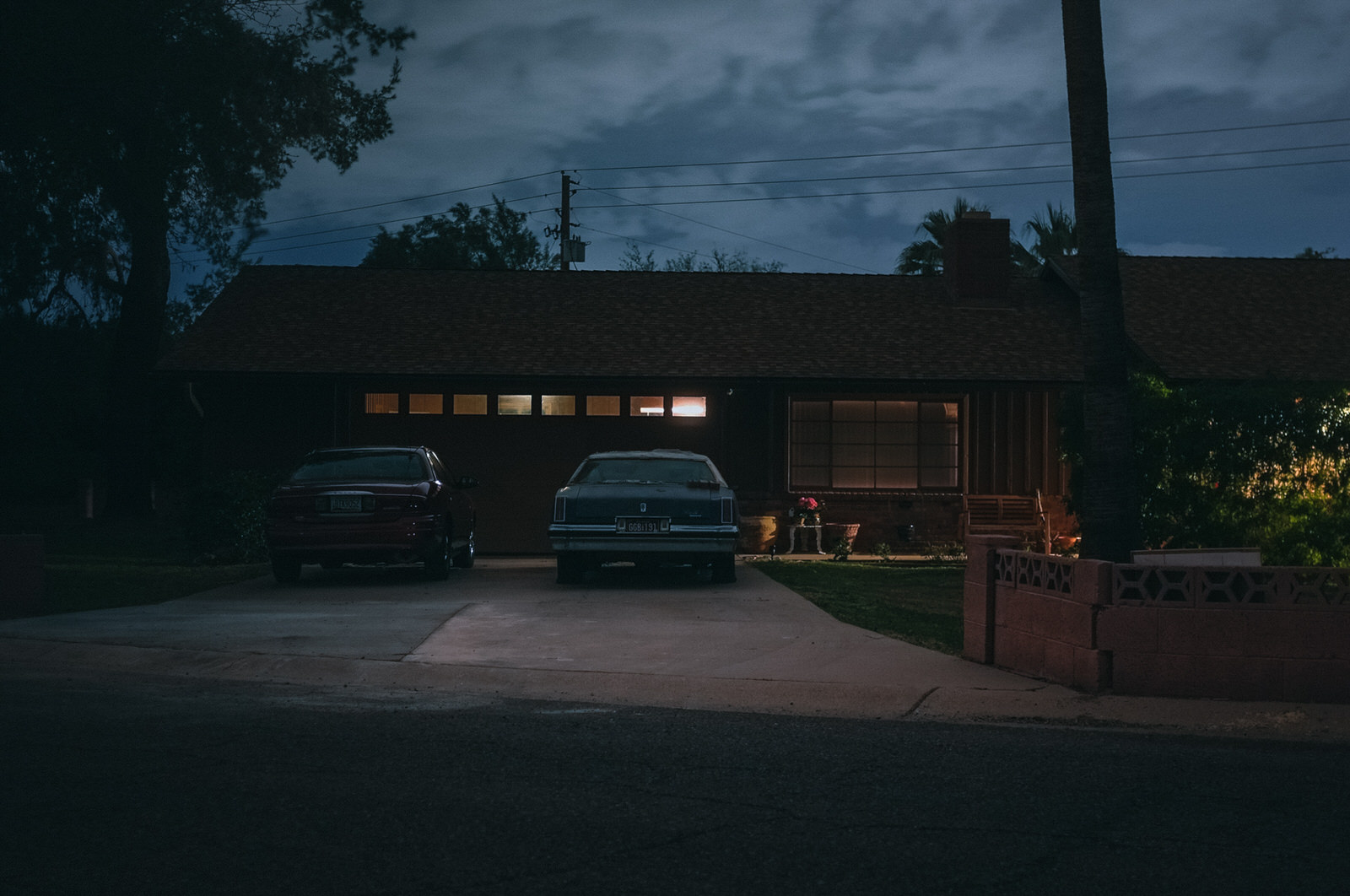
“I was only staying in Phoenix for the night, before driving up to northern Arizona to do some backpacking,” says Leland, who is based in Philadelphia.
Despite being on vacation, Leland took advantage of the opportunity to wander the neighborhood with his camera and tripod, snapping quick captures of anything he thought might be useful for the painting. Without much time to prepare for an actual shoot, Leland says he was shooting fairly spontaneously as he passed by potentially interesting scenes.
“Photography has always been a means of getting reference images for my drawings and paintings,” Leland explains. “But, also, it’s an art form I find relaxing and, in many ways, complementary to my other art.”
Photography has always been a means of getting reference images for my drawings and paintings.
Leland Foster
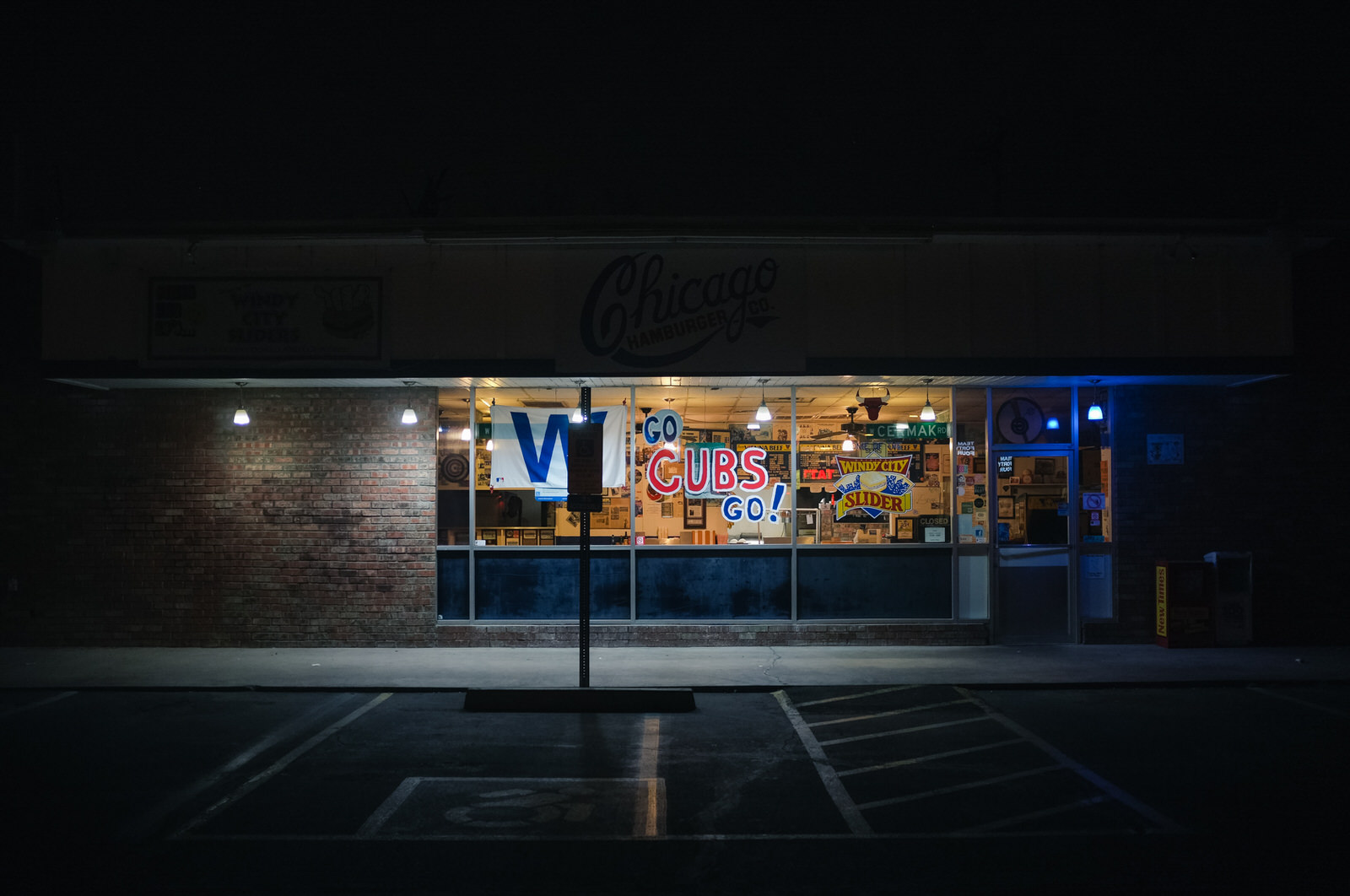
After taking some photos of a moodily-lit strip mall and a Mexican restaurant, Leland’s eye fell on the vibrant window of a nearby diner.
Camera and Settings
- CameraFujifilm X100
- LensFixed 23mm
- Settingsf/2, 1/60, ISO 500
Store links in this article are affiliate links, so PHLEARN may earn a commission. As an Amazon Associate, PHLEARN earns from qualifying purchases.
Camera
12.3-megapixel APS-C CMOS sensor, Fixed 23mm Lens, HD Movie Mode; capture 720p video
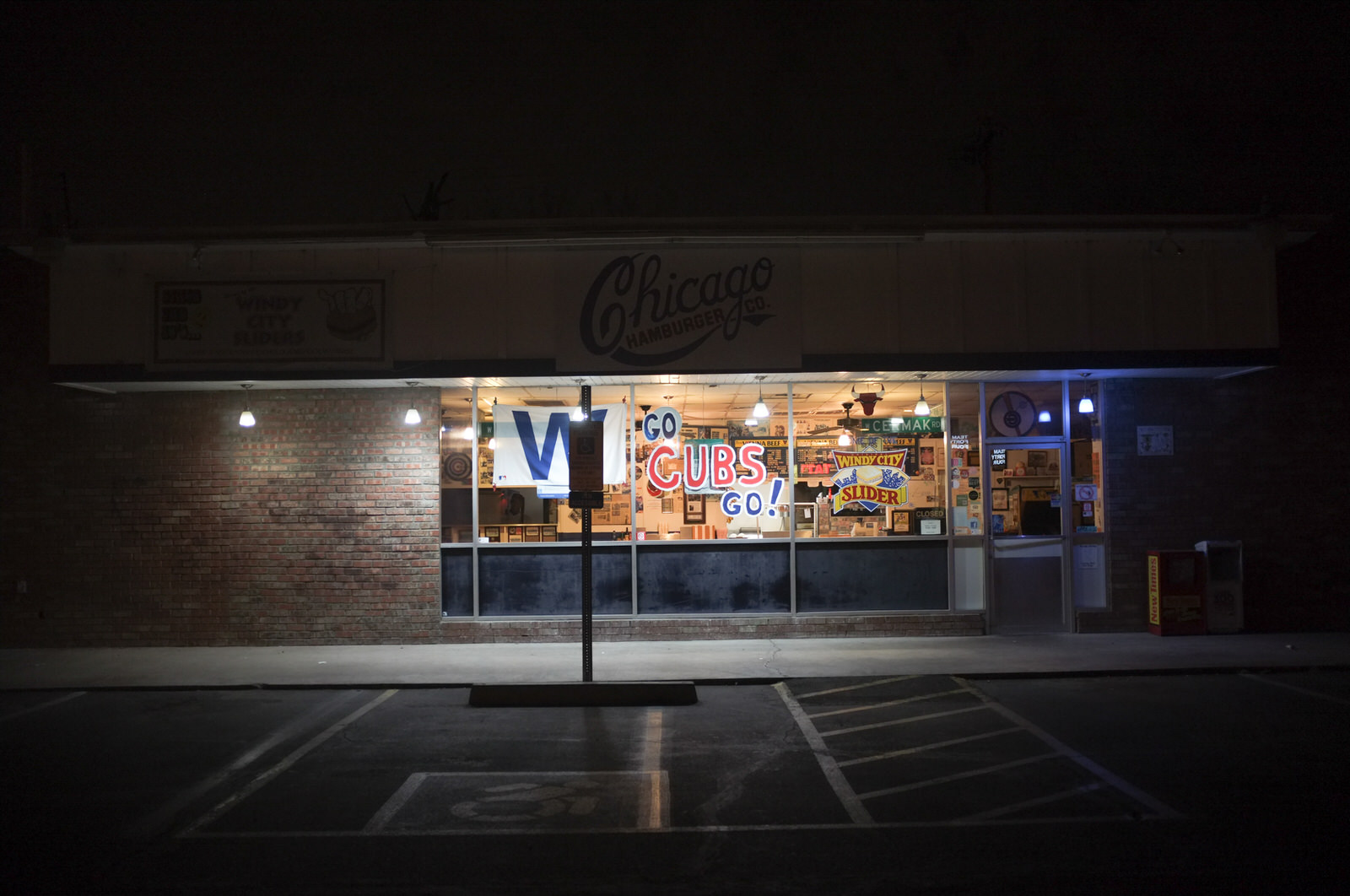
Using his old Fujifilm X100 – a camera he admits is “not ideal” for night photography – with a fixed 23mm lens, Leland shot the diner with a wide-open aperture of f/2, resulting in a fairly blurred foreground. With a shutter speed of 1/60 and an ISO set at 500, Leland says he didn’t really need to use the shutter release button on his tripod.
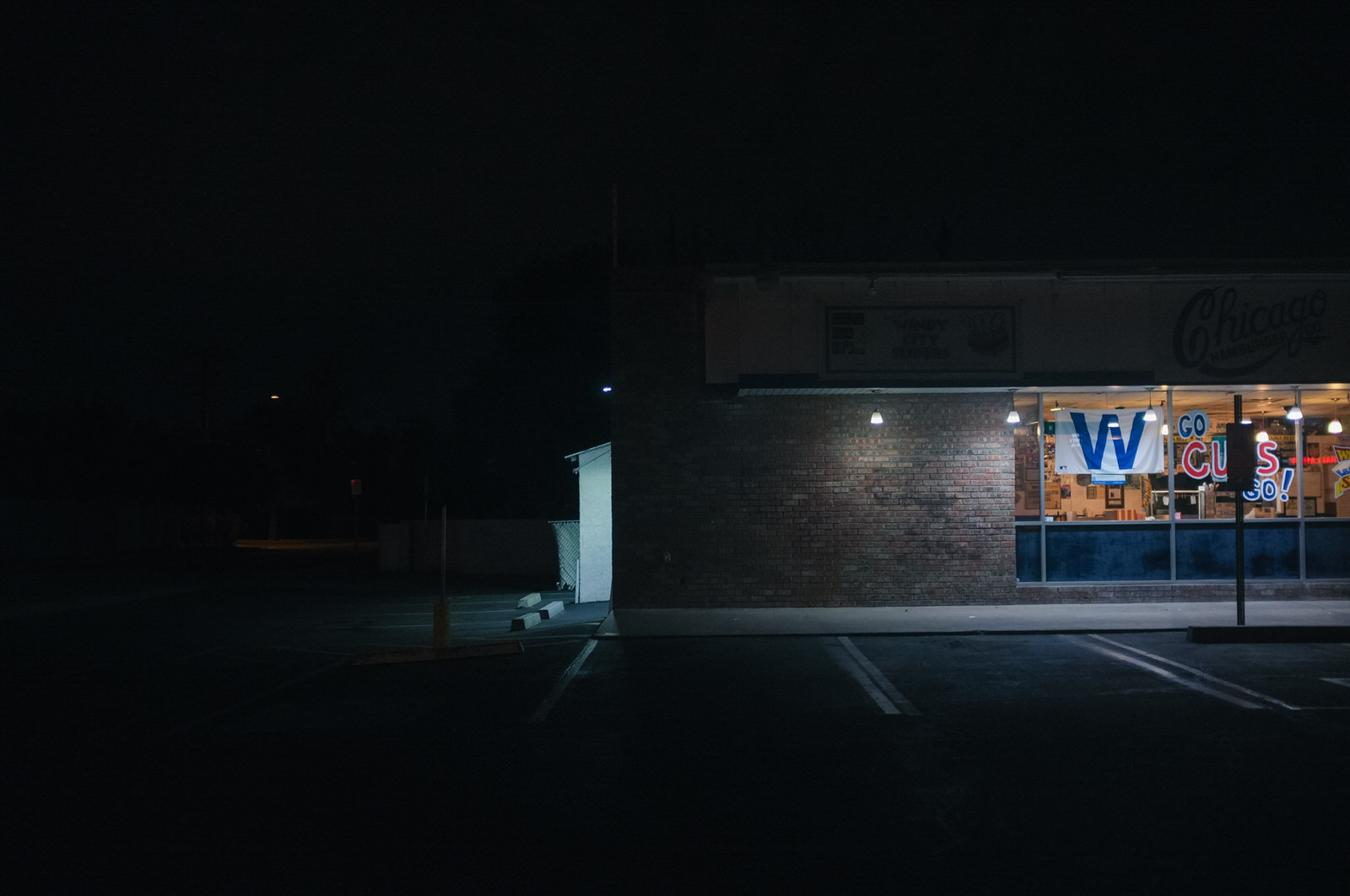
“I framed the shot this way for a few reasons. Mainly, I wanted to emphasize the darkness around the edges of the image, and to have a clear shot of the inside of the restaurant, since there’s a lot going on in there, visually,” he says. “I also like to keep some distance from buildings and windows when they’re the subject of a night shot because it gives a sense of being on the outside looking in, which is a theme I like to emphasize.” (For another lit window at night, see how Alfredo Oliva channeled Edward Hopper.)
A Light Edit
The amount of post-processing Leland applies to a given photo varies, depending on the atmosphere he’s looking to achieve, but he says he typically aims to avoid altering any image too much. Often, he will decrease the warmth and emphasize the blue tones of the photo.
“For this photo, I didn’t really do too much – I increased the contrast, lowered the highlights (important for night photography, in my opinion), strengthened the blacks slightly, and cooled the shadows a bit,” he says.
Part of Leland’s processing was influenced by the limitations of the camera he was using – due to the X100’s outdated sensor size and resolution, he says he ended up deepening the black areas to cover the fact that those portions of the image contained very little data to begin with.
“With my newer cameras, I typically like brightening the shadows to show what’s happening in dark,” he explains.
 Before
 After
AfterFrom Photo to Painting
His final product is an emotive image that recalls the cozy fast food dinners of youth, but with the added drama of Leland’s signature theme – evoking more uncomfortable feelings of exclusion or rejection. There’s still one thing Leland wishes he would have done differently, though.
“Midway through the shoot, it began raining,” he admits. “It’s a shame I didn’t go back and get this shot with the wet pavement, but I think it turned out well, regardless.”
It’s a shame I didn’t go back and get this shot with the wet pavement, but I think it turned out well, regardless.
Leland Foster
And his commissioned piece turned out well, too – an oil painting with added animated effects.
Common Questions About Leland Foster
Who is Leland Foster? An artist and illustrator from Maine who worked as a graphic designer in New York before moving to Philadelphia to pursue a career in art. When this article ran in 2019, he worked full-time as a freelance illustrator, commission-based painter and amateur photographer. He says photography has always been a way to get reference images for his drawings and paintings.
Why do Leland Foster’s night shots feel like you’re on the outside? It’s on purpose. He keeps some distance from buildings and windows when they’re the subject of a night shot, because it gives a sense of being on the outside looking in, a theme he likes to emphasize. In the diner photo, he also framed it to keep the edges dark and the inside of the restaurant clear.
What camera settings did Leland Foster use for the diner? His old Fujifilm X100, with its fixed 23mm lens, on a tripod. He shot wide open at f/2, which blurred the foreground, at 1/60 of a second and ISO 500. He admits the camera is “not ideal” for night photography.
How did he edit the night shot? Only a little: he increased the contrast, lowered the highlights, strengthened the blacks slightly and cooled the shadows. He deepened the blacks partly because the X100’s older sensor held very little data in those dark areas. With his newer cameras, he says he usually brightens the shadows instead.
Originally from Maine, Leland Foster worked as a graphic designer in New York before moving to Philadelphia to pursue a career in art. Currently, he works full-time as a freelance illustrator, commission-based painter, and amateur photographer. His work can be seen on his website and Instagram.