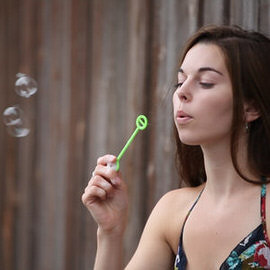

Part two is where the loop actually gets built. Learn how to trim a clip down to just the action worth repeating, paint roughly over the path your moving subject travels, turn that painted shape into a mask on a still stamped layer so everything outside it freezes, apply color toning that carries across every frame, and export the result as a GIF that loops forever.
We publish a new free tutorial every week, each one with sample images and PSDs you can download and follow along with. Sign up and they land straight in your inbox, along with early word on sales, events and subscriber-only offers.
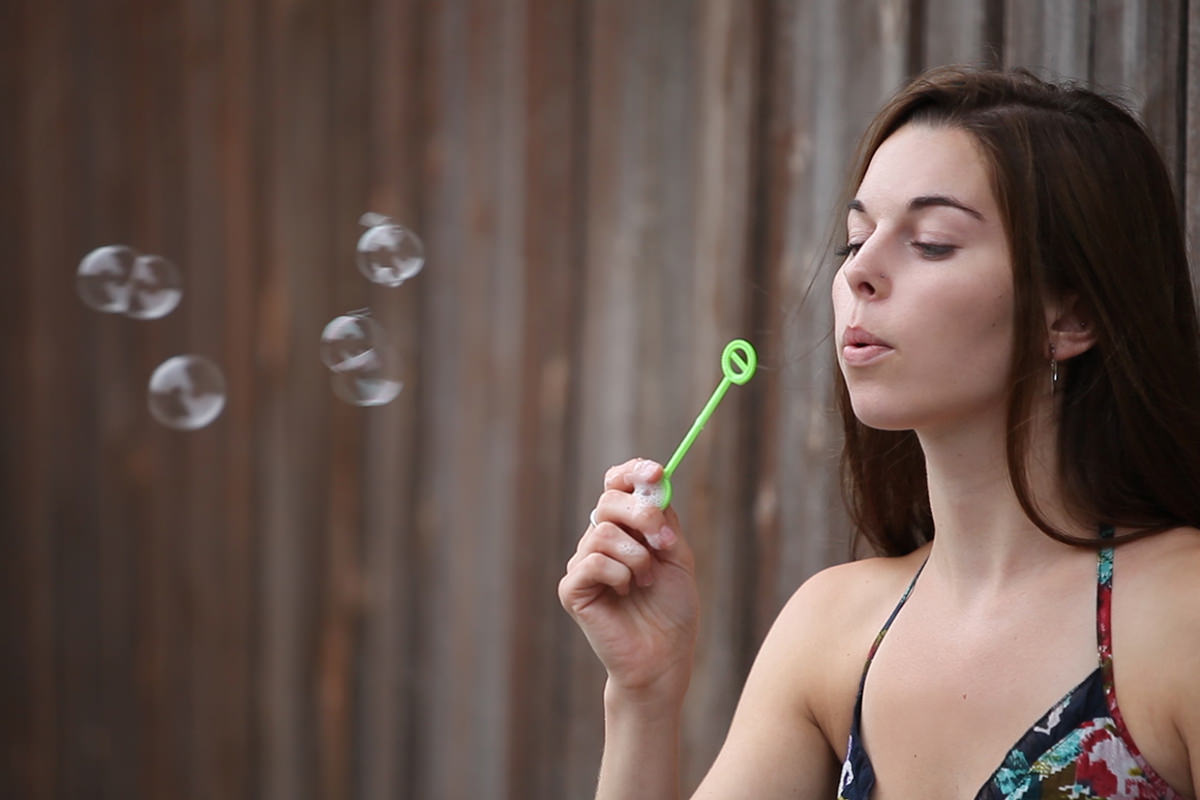
Creating a Cinemagraph in Photoshop: Part 2
With footage recorded in Part 1, it is time for the Photoshop half of the process: trimming the clip, isolating the part of the frame that should keep moving, and freezing everything else in place. It is a more involved workflow than a typical photo edit, but each step builds directly on the last.
Bringing Your Video Into Photoshop
Photoshop’s video editing features live in the Timeline panel, which is where every step of this process happens.
-
Open Your Video Clip in Photoshop
Bring your recorded clip into Photoshop. This opens the Timeline panel at the bottom of the screen, showing your footage as a scrubbable strip rather than a single static image.
Finding the Timeline Panel
If the Timeline panel is not visible when you open a clip, turn it on from Window > Timeline. The video uses Photoshop CS6 Extended; in that era only the Extended editions (CS5 and CS6 Extended) could edit video.
Trimming the Clip to Your Loop
Before doing anything else, narrow your clip down to just the portion you want to loop, in this case the exact stretch where bubbles are actively in frame.
-
Zoom In on the Timeline
Use the zoom slider on the Timeline panel to get a closer view of your clip so you can pinpoint exact frames.
-
Trim the Start and End Points
Drag the start handle in to the first frame where your subject appears, and drag the end handle in to the last frame before it leaves. This trims the clip to exactly the action you want to loop.
Painting Over the Moving Area
A trimmed clip alone would loop, but everything in the frame would move, not just your subject. To get the classic cinemagraph look, you need to isolate exactly where the motion is happening so only that area animates.
-
Add a New Layer
Create a new, empty layer above your video layer.
-
Paint Over the Path of the Motion
Using the Brush tool on that new layer, paint roughly over the area where your moving subject travels through the frame, in this case the path the bubbles take as they drift by. You do not need to trace every single frame perfectly. A reasonably accurate rough shape is enough, and the more accurate you are, the cleaner the final result.
Why a Rough Painted Area Is Good Enough
This painted shape is only used to generate a selection in the next step, not to mask the image directly. As long as it roughly covers the area where the motion happens, including any faint trailing motion, it will do its job of keeping the effect looking consistent.
Building the Still Background Layer
The next part of the trick is creating a version of the image that stays completely still for the entire clip, which will sit underneath your moving footage.
-
Create a Stamp Visible Layer
At the very last frame of your trimmed clip, press Shift + Option + Command + N to create a new layer, then Shift + Option + Command + E to stamp everything visible onto it. Because this new layer is not tied to the video’s animation, it displays as a single still frame for the entire duration of the clip.
Turning Your Painted Area Into a Mask
With your still background layer created, the painted shape from earlier can now be converted into a layer mask that reveals your moving footage only where it is needed.
-
Load Your Painted Layer as a Selection
Hold Command and click the thumbnail of the layer where you painted the motion area to load it as a selection.
-
Add a Layer Mask to the Still Layer
With the selection active, select your stamp-visible still layer and click the Layer Mask icon. This adds a mask matching your painted selection.
-
Invert the Mask if Needed
If the mask comes in backwards, hiding your motion area instead of revealing it, select the mask thumbnail and press Command + I to invert it. You want the still layer hidden over the area that should keep moving and visible everywhere that should stay frozen.
Why the Mask Direction Matters
A layer mask reveals white areas and hides black ones. Since the goal is a still layer that is transparent exactly where the motion should show through, getting the mask polarity right is what determines whether your subject keeps moving or your subject is the only thing that freezes.
Cleaning Up Any Stray Motion
Once the main mask is in place, check the rest of the frame for anything else that moved during the shot that you did not intend to animate.
-
Mask Out Any Unwanted Movement
If something else shifted slightly during your shot, such as the bubble wand in this shot, paint over that area on your mask as well so it stays locked to the still layer.
Color Toning the Finished Cinemagraph
One of the more satisfying parts of a cinemagraph is that, once built, it behaves just like a regular still image for finishing work. Adjustment layers apply across the entire animated clip.
-
Add Color-Toning Adjustment Layers
Grab a Levels or Curves adjustment layer and color-tone the image the same way you would a still photo, pulling up blues and adding yellows in the Levels Blue channel and adding greens to the shadows, then darkening with a Curves layer masked by an inverted, Gaussian-blurred selection around the subject for a vignette. These adjustments apply across every frame of the loop automatically.
Exporting as an Animated GIF
The final step is exporting your cinemagraph in a format that will actually animate once it leaves Photoshop.
-
Open Save for Web
Go to File > Save for Web (File > Export > Save for Web (Legacy) in later versions) and change the file format from JPEG to GIF. Only GIF will animate; JPEG will not, the same principle covered in this guide to building an animated GIF from images or video.
-
Choose Your Color and Dithering Settings
Set the color reduction algorithm to Perceptual or Adaptive (test both to see which looks better on your image) and the dithering to Noise. Set the color count to 256, the maximum the GIF format allows.
-
Set Looping to Forever
Find the looping option at the bottom of the dialog and set it to Forever instead of Once, so your cinemagraph continues to loop indefinitely rather than playing through a single time and stopping.
-
Save and Preview at 100%
Save your file, then open it in a web browser to preview it, since a GIF will not always animate when opened directly from the desktop. Always judge the result at 100% zoom, since a GIF can look noticeably different at other zoom levels.
Why GIF Export Can Take a While
A GIF is not saved as a single flattened image. Photoshop renders out every individual frame of your clip separately and stitches them back together. A clip with 35 frames means 35 separate renders happening behind the scenes, which is why exporting can take noticeably longer than saving a typical still image.
Why This Approach Works
The illusion at the heart of a cinemagraph comes down to one simple trick: a still layer with a mask carved exactly around the area that should keep moving, sitting on top of the full video. Everywhere the still layer shows, nothing appears to change; everywhere it is masked away, the video underneath shows through and continues to animate. Because the mask is painted rather than automatically generated, you have full control over exactly which pixels get to move, which is what separates a clean cinemagraph from one where stray motion in the background gives away the trick. And because the whole thing is still just layers and adjustment layers underneath, standard finishing techniques like vignettes and color toning apply exactly the way they would to any other image, just repeated automatically across every frame of the loop.
Final Thoughts
The core idea behind a cinemagraph is simpler than the number of steps might suggest: trim your clip, paint roughly over the area that should move, turn that into a mask on a still background layer, then export as a looping GIF. Once you have built one from start to finish, the process becomes much faster the second time around, and it opens the door to trying the technique on all kinds of subjects, from flowing water to drifting smoke to anything else that moves in a naturally repeatable way.
Quick Reference: Keys, Menus and Settings
- TrimTimeline zoom slider, drag the clip’s start and end in (Window > Timeline)
- Still layerLast frame: Shift + Alt/Option + Cmd/Ctrl + N, then Shift + Alt/Option + Cmd/Ctrl + E
- Make the maskCmd/Ctrl-click the painted layer, add a mask to the still layer, Cmd/Ctrl + I to invert
- Tone itLevels and Curves adjustment layers apply to every frame
- Save for WebFile > Save for Web, Shift + Alt/Option + Cmd/Ctrl + S; format GIF
- GIF settingsAdaptive or Perceptual, Noise dither, 256 colors, Looping Options: Forever; preview at 100%
No AI, no generative credits.
Cinemagraphs in Photoshop: Common Questions
How do you make a cinemagraph in Photoshop?
Open the video clip, trim it on the Timeline, paint over where the motion happens, and put a still stamp-visible layer on top with a mask that lets only that area move. Then save it as a looping GIF.
How do I trim the video to the part I want to loop?
Zoom in with the slider on the Timeline, then drag the start of the clip in to just before the bubbles appear and the end in to where they last leave the frame.
Do I have to paint over the motion in every frame?
No. On a new layer, roughly paint the path the moving subject takes, including faint trails. The more accurate you are, the better, but it doesn’t have to be perfect.
How do I freeze the rest of the frame?
Go to the last frame and press Shift + Alt/Option + Cmd/Ctrl + N for a new layer, then Shift + Alt/Option + Cmd/Ctrl + E to stamp everything visible onto it. That layer isn’t animated, so it stays still for the whole clip.
The bubbles disappeared instead of moving. What went wrong?
The mask is the wrong way round. Cmd/Ctrl-click the painted layer, add a mask to the still layer, then click the mask and press Cmd/Ctrl + I to invert it so the still layer is hidden only where the motion is.
Something else moves in my cinemagraph. How do I stop it?
Mask that area too so the still layer covers it. In the video, the bubble wand moved a couple of times, so it was masked to stay still.
Can I color tone a cinemagraph?
Yes, just like a still image. Levels and Curves adjustment layers apply to every frame; here Levels added blues, yellows and greens, and a darker Curves layer with a blurred, inverted mask made a vignette.
What GIF settings should I use?
In Save for Web, choose GIF, try Perceptual and Adaptive (Adaptive won here), set dithering to Noise and colors to 256, the most a GIF allows. Set Looping Options to Forever and judge the preview at 100%.
Why doesn’t my GIF animate when I open it?
Check it’s saved as GIF, not JPEG, and open it in a web browser such as Chrome or Safari. On a Mac it won’t animate natively.
From the Magazine View all
Stories, interviews and guides for photographers, new every week.
 EditingLightCraft vs Lightroom: I Edited the Same RAW Files in BothThe free clone on the same RAW files: what matches, what breaks and who should switch.
 InspirationRare Historical Photos: 13 of the Rarest Pictures Ever TakenFrom the earliest surviving picture of a person to the last passenger pigeon: who took each one and why it survives.
 EditingArtCraft: Photoshop Cloned by AI in Two Weeks. Is It Legal?ArtCraft cloned Photoshop and Lightroom with AI and gave them away. Any good? Legal? Safe?
Master Photoshop, Lightroom and Photography
Join PHLEARN PRO for $12.99 a month, or $99.99 a year (save 36%). Cancel anytime, with a 100% money-back guarantee.