
description
A standard selection tool struggles with anything jagged or detailed, like a lion’s fur, which is exactly the situation the Refine Edge tool is built to solve. This tutorial covers making an initial Magic Wand selection, working through Refine Edge’s feathering, contrast and edge-shifting controls, using Smart Radius and the Refine Radius tool to capture fine hair and fur, and finishing with a new background color and text layered behind the subject.
Enjoying This Free Tutorial?
We publish a new free tutorial every week, each one with sample images and PSDs you can download and follow along with. Sign up and they land straight in your inbox, along with early word on sales, events and subscriber-only offers.
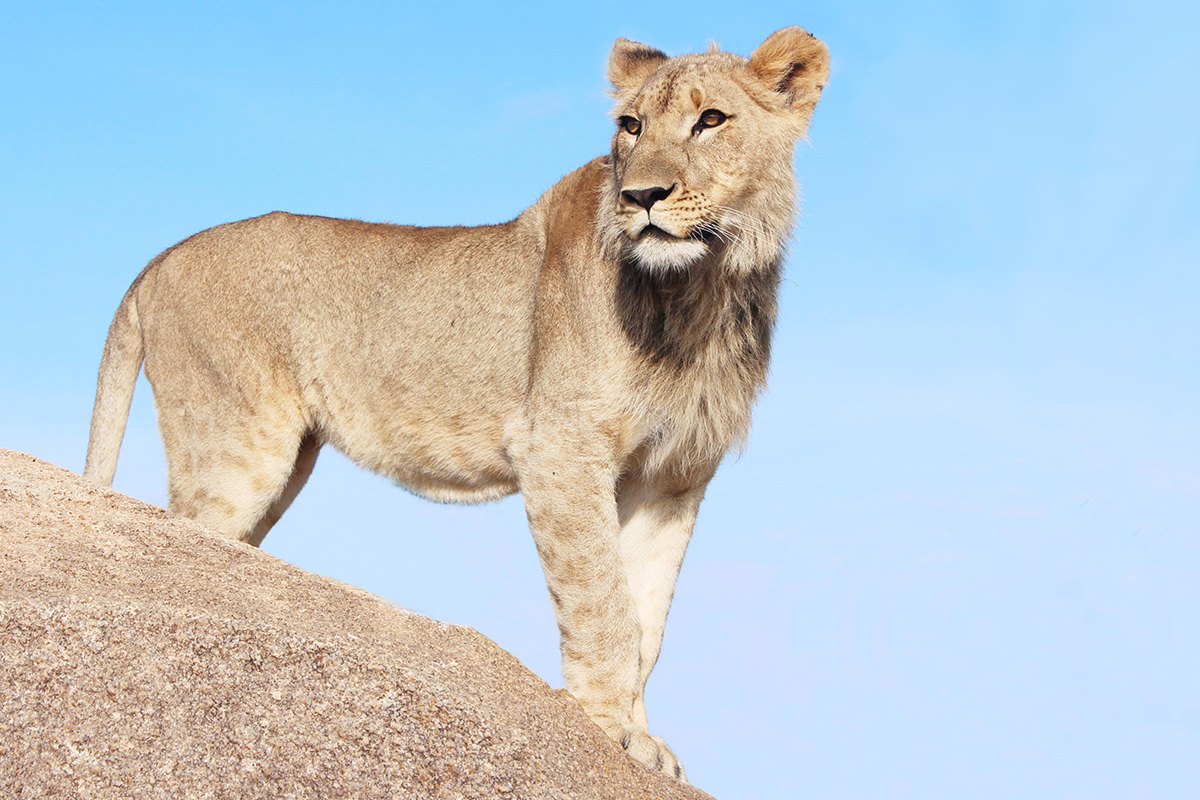

A standard selection tool struggles with anything jagged or detailed, like a lion’s fur, which is exactly the situation the Refine Edge tool is built to solve. This tutorial covers making an initial selection, working through Refine Edge’s smoothing, feathering, and edge-shifting controls, using its edge detection tool to capture fine hair and fur, and finishing with a new background and layered text.
Making an Initial Selection With the Magic Wand Tool
A quick Magic Wand selection around a simple background gets a rough starting selection in place before any refining begins.
-
Select the Magic Wand Tool
Press W for the Magic Wand tool.
-
Click and Shift-Click the Background
Click the background, then hold Shift and click additional areas until the whole background is selected.
Seeing Why a Standard Selection Isn’t Enough
Loading a Magic Wand selection directly as a layer mask reveals just how rough its edge looks around detailed areas like fur.
-
Invert the Selection
Load the background selection as a layer mask, then press Cmd/Ctrl+I to invert it so the subject remains visible.
-
Preview Against a Solid Background
Add a Solid Color fill layer, such as white, beneath the subject to clearly see how rough the untouched edge looks.
Opening the Refine Edge Dialog and Choosing a View
Refine Edge’s view options change how the selection is displayed, making it easier to judge without affecting the selection itself.
-
Reselect and Open Refine Edge
With the Magic Wand selection active again, click the Refine Edge button, or go to Select > Refine Edge.
-
Switch Between View Modes
Try the different view options, such as Overlay, On Black, and On White, to see the selection’s edge clearly against different backgrounds.
-
Convert a Background Layer if Needed
Hold Alt/Option and double-click a locked background layer to convert it to a regular layer if the mask-related output options appear grayed out.
Why the View Options Don’t Change the Selection Itself
Switching between Marching Ants, Overlay, or a solid black or white view only changes how the selection is displayed on screen, not the actual pixels included in it. Choosing whichever view makes the edge easiest to judge, without worrying about accidentally altering the selection, makes the rest of the refining process much more accurate.
Using Feathering and Contrast to Adjust the Edge
Feathering softens a selection’s edge, and contrast can firm that same edge back up, together producing a more natural, photo-realistic transition than the Smooth slider alone.
-
Add Feathering to Soften the Edge
Raise the Feather slider to soften a selection’s edge, which can look more photo-realistic than a perfectly crisp line.
-
Add Contrast to Firm the Edge Back Up
Raise the Contrast slider afterward to define the edge again, balancing out some of the softening from feathering.
Shifting the Edge In or Out
The Shift Edge slider pulls a selection’s boundary in toward or out away from the subject, which is especially useful for removing a lingering color halo.
-
Add Some Feathering First
Make sure some feathering is applied, since Shift Edge has little visible effect on a perfectly hard-edged selection.
-
Shift the Edge Inward
Move the Shift Edge slider toward negative values to pull the selection boundary in toward the subject, removing a stray-colored halo from the original background.
Why Shifting the Edge Inward Removes Color Fringing
A selection made around a subject photographed against a colored background often includes a thin sliver of that background color right along the edge. Pulling the selection boundary inward with Shift Edge trims away that thin sliver, so the cutout doesn’t carry a faint outline of the original background color once it’s placed somewhere new.
Refining Hair and Fur With Edge Detection
The Refine Radius tool, combined with Smart Radius, is what actually lets Refine Edge capture fine detail like individual hairs by painting directly over the fuzzy boundary.
-
Enable Smart Radius
Check Smart Radius in the Edge Detection section to let Photoshop automatically vary how much detail it captures around the edge.
-
Select the Refine Radius Tool
Choose the Refine Radius tool from the tool icon in the Edge Detection section of the Refine Edge dialog; click and hold it to switch to the Erase Refinements tool.
-
Paint Along the Fur or Hair
Paint directly over the fuzzy, detailed edge, such as fur along the subject’s back and mane, letting Photoshop separate hair from background automatically.
-
Adjust Brush Size for Larger Areas
Increase the brush size to cover larger detailed areas more quickly, continuing until the entire outline is refined.
Outputting the Selection to a Layer Mask
Sending the refined selection straight to a layer mask, then inverting it, finishes the cutout in a single step.
-
Set the Output To Layer Mask
Choose Layer Mask from the Output To dropdown at the bottom of the Refine Edge dialog.
-
Confirm the Refined Result
Click OK to generate the new layer mask from the refined selection.
-
Invert the Mask if Needed
Press Cmd/Ctrl+I on the mask if the background, rather than the subject, ended up selected.
Placing the Subject on a New Background Color
A Solid Color fill layer placed beneath the refined subject shows off the quality of the new edge and lets different background colors be tested quickly.
-
Add a Solid Color Fill Layer
Add a Solid Color adjustment layer beneath the cutout subject.
-
Test Different Colors
Double-click the fill layer’s thumbnail to try different background colors and see how each affects the visible edge.
Why the New Background’s Color Choice Matters
A subject originally photographed on a light background tends to carry a faint light fringe along its edge, which shows up clearly against a dark new background but disappears against another light one. Choosing a new background color similar in brightness to the original one is a simple way to hide that fringing without extra retouching.
Layering Text Behind the Subject
Placing a pre-made text graphic behind the cutout subject, rather than covering it, lets fur or hair detail overlap the text for a more finished, layered look.
-
Bring In the Text Graphic
Hold Shift and drag a prepared text graphic into the document.
-
Move the Text Below the Subject Layer
Hold Cmd/Ctrl and press the left bracket key to move the text layer below the subject layer in the stacking order.
-
Position the Text Behind the Subject
Position the text so the subject’s refined fur or hair overlaps naturally in front of it.
Why This Approach Works
Starting with a rough Magic Wand selection and refining it afterward is far faster than trying to trace fine hair and fur manually from the very beginning. The Refine Radius tool’s edge detection is what actually makes fur and hair possible to select accurately, since no simple color-based tool can separate that level of fine detail on its own. Matching the new background’s brightness to the original photo’s background is a small step that prevents the leftover color fringing that would otherwise give the composite away.
Final Thoughts
Refine Edge turns a rough Magic Wand selection into something genuinely usable for compositing, especially once the edge detection tool is used to capture fine hair and fur. The same selection, refine, and placement workflow shown here on a lion works for cutting out any subject with a detailed edge, whether it’s an animal, hair, or fabric.
Quick Reference: Keys, Menus and Settings
- Rough selectionW for the Magic Wand, Shift-click more of the background
- Open Refine EdgeRefine Edge in the options bar, or Select > Refine Edge
- View the edgeView: Overlay, On Black or On White
- Soften and firmFeather, then Contrast; Shift Edge inward to drop a halo
- Hair and furEdge Detection: Smart Radius checked, paint the edge with the Refine Radius tool
- OutputOutput To: Layer Mask; Alt/Option-double-click the Background layer if it is grayed out; Cmd/Ctrl + I to invert
- Text behindCmd/Ctrl + [ moves the layer below the subject
No AI, no generative credits.
The Refine Edge Tool: Common Questions
Why use Refine Edge instead of just the Magic Wand?
The Magic Wand gets a quick selection, but its edge looks rough around anything detailed like hair, fur or clouds. Refine Edge cleans that edge up. With a selection tool active, click Refine Edge in the options bar or go to Select > Refine Edge.
Do the View options change my selection?
No. Marching Ants, Overlay, On Black and On White only change how the selection is shown, so pick whichever makes the edge easiest to judge.
Should I use the Smooth slider?
Aaron rarely does; it tends not to make selections look better. To smooth an edge he adds some Feather and then raises Contrast to firm the line back up.
How do I get rid of a halo of the old background around my subject?
Add a little Feather, then move Shift Edge toward the negative side to pull the edge in toward the subject. Shift Edge does little on a hard edge with no feathering.
How do I select hair or fur?
In Edge Detection, leave Smart Radius checked, choose the Refine Radius tool and paint along the outside of the fur. Photoshop works out what is hair and what is background; a bigger brush covers large areas faster.
Why are the layer mask output options grayed out?
You’re working on a Background layer, which can’t take a layer mask. Cancel, hold Alt/Option and double-click the Background layer to make it a regular layer, then open Refine Edge again.
Why did my subject disappear instead of the background?
The selection was made on the sky, so the mask shows the sky. Click the layer mask and press Cmd/Ctrl + I to invert it.
Why do I see a light outline when I put my subject on a dark color?
The lion was shot on a light background, and a little of it stays in the edge. Pick a new background that is also light, like white, light pink or light blue, and the fringe disappears.
How do I put text behind my cutout?
Bring the text layer in with the Move tool, then press Cmd/Ctrl + [ to move it below the subject layer. The fur then overlaps the text.
Master Photoshop, Lightroom and Photography
Join PHLEARN PRO for $12.99 a month or $99.99 a year. Cancel anytime, with a 100% money-back guarantee.