How Steven Helmis Shot This Abandoned Hotel from Bond Film, “Goldfinger”
Before heading to Switzerland to photograph glaciers earlier this year, German photographer Steven Helmis made a list of several can’t-miss hotspots that he was especially excited to shoot.
Originally published October 3, 2018, by Jessi Gowan. Updated October 16, 2026, by PHLEARN Staff: Added a The Shot box with the camera settings and kit cards for the gear; the words are unchanged.
The James Bond hotel on Switzerland’s Furka Pass is the Belvédère, the location of a scene from 1964’s Goldfinger. This is how German photographer Steven Helmis photographed it at dusk, with a 45-second exposure that turns passing cars into light trails.
One of those destinations was the Rhône glacier, known for its spectacular icy scenery, so he made a point to explore the area.
Along the historic Alpine road over the Furka Pass, Steven came across a spot familiar to James Bond fans – the deserted Belvédère Hotel. Not only was the hotel the location for a scene from 1964’s Goldfinger, it was also a favorite destination of Sean Connery, who starred as 007 in the first five Bond films.
While the isolated hotel is no longer the charming jewel of the Alps that it once was, the uniquely positioned building appealed to Steven.
The James Bond Hotel on the Furka Pass
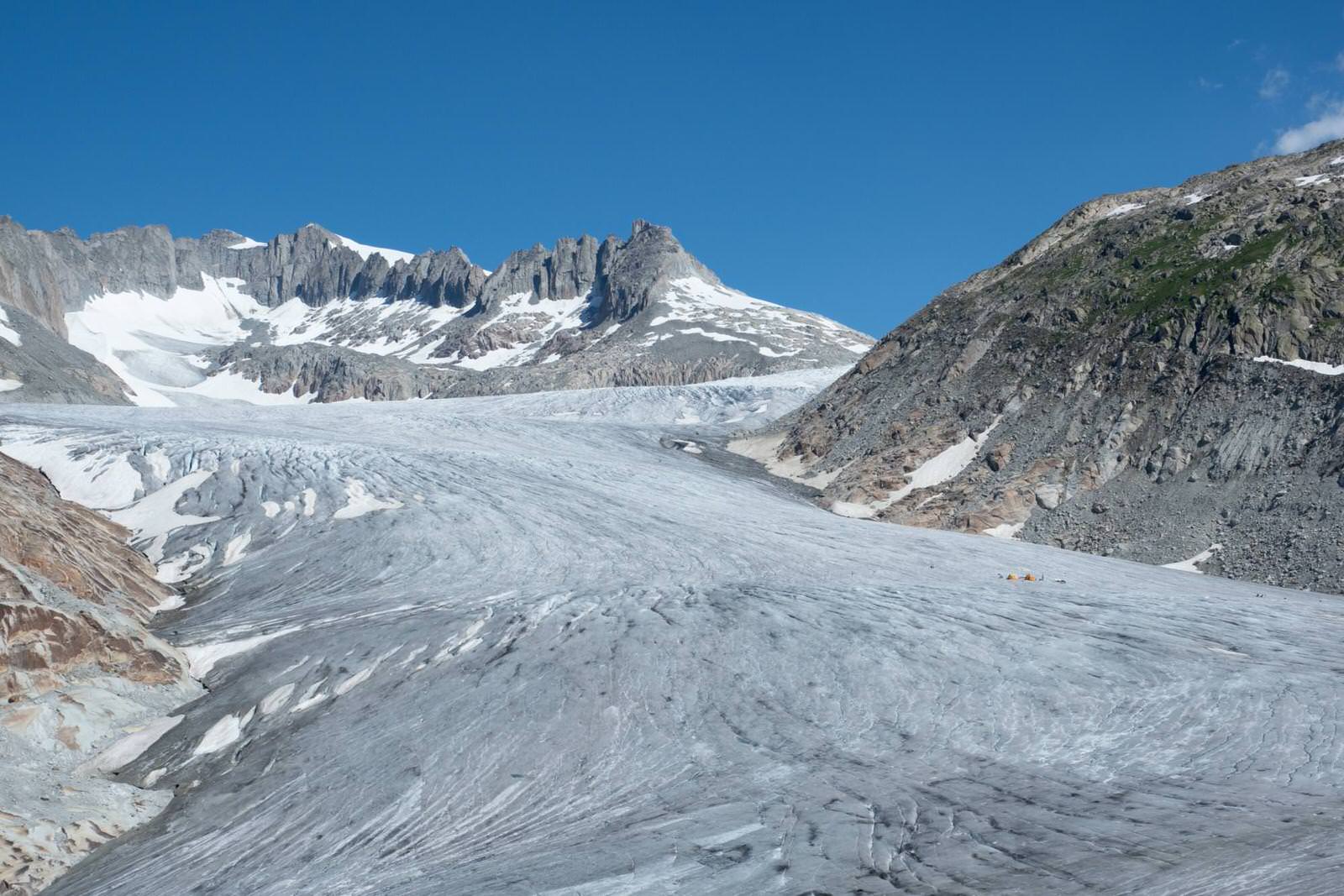
“One of my greatest passions is the photographing of abandoned and ailing objects,” he says in the About Me section of his website. “The idea of how it once looked in these neglected places is inspiring. I capture these witnesses of the past in pictures and, thus, capture a part of their history.”
The hotel itself was impressive, Steven said, but after viewing the location during the day and seeing how the road wraps tightly around the structure, he decided to come back later.
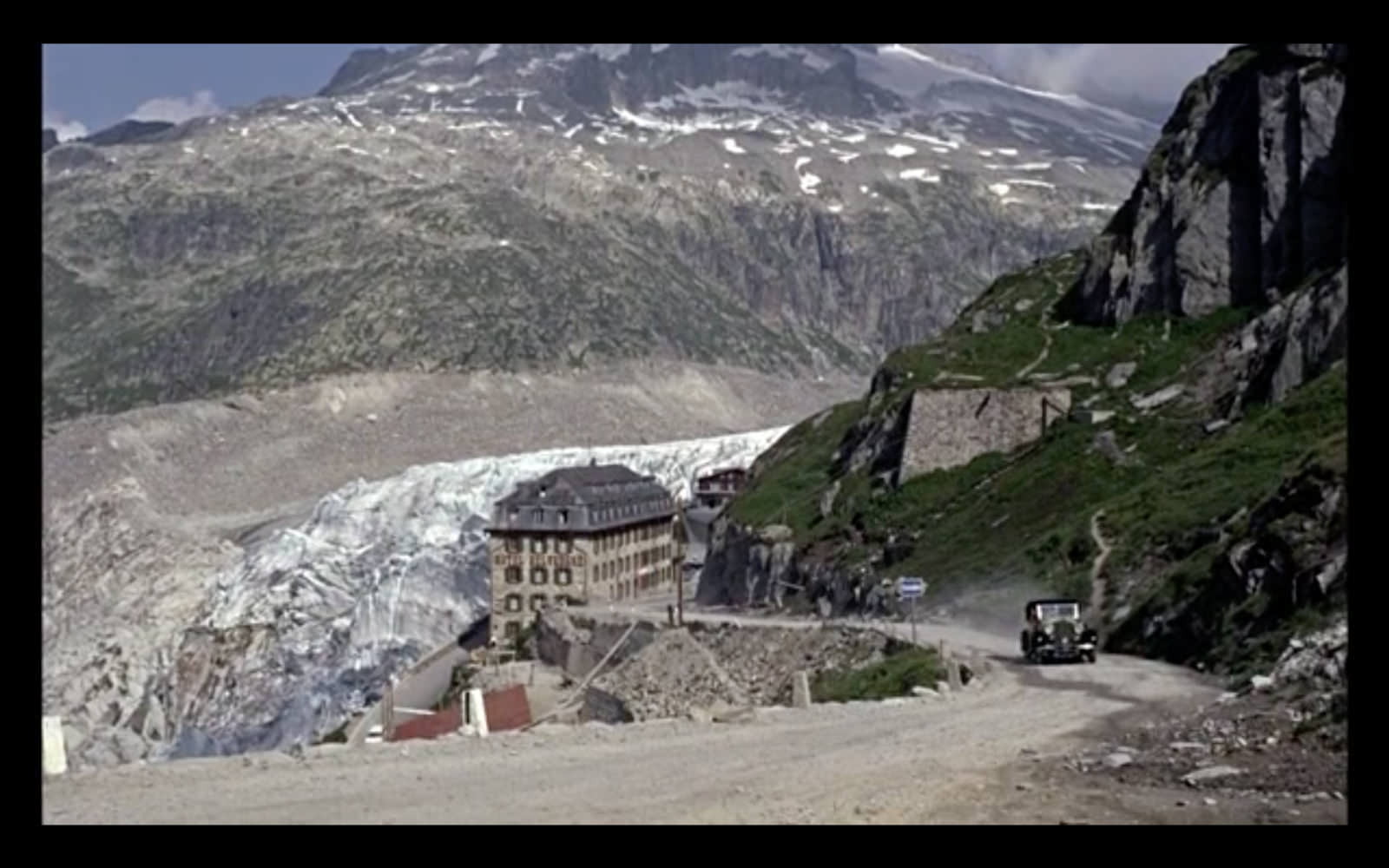
“Aware of the dusk, I went [back] to the hotel to make long exposures,” he said. “The road is perfect, 180 degrees around the hotel. You can see how the cars and motorcycles are driving around and can catch the whole ride.”
Equipment and Settings
- CameraOlympus E-M1 Mark II
- LensOlympus M.Zuiko ED 12-40mm F/2.8 PRO at 22mm
- SettingsISO 64, f/6.7, 45-second exposure
Equipment

20.4MP Live MOS Sensor, Micro Four Thirds System, 2.36m-Dot LCD Electronic Viewfinder

Aperture Range: f/2.8 to f/22, 24-80mm (35mm Equivalent)
Framing his shot, Steven said, he ensured the hotel was positioned directly in the middle to allow as much of the road as possible to appear in the final image. He shot the picture with an Olympus E-M1 Mark II and the Olympus M.Zuiko ED 12-40mm F/2.8 PRO lens, using an ISO of 64, aperture of f/6.7, focal length of 22mm, and a 45-second exposure.
180
degrees the road wraps around the hotel
45
seconds of exposure for the final shot
10 to 15
seconds needed for light trails
Light Trails and Post-Processing
By using a longer exposure, Steven was able to capture the light trails left by cars passing by on the popular stretch of road – adding another level of interest to an already spectacular location. An exposure of at least 10 to 15 seconds is necessary to create this effect, and Steven’s additional exposure time allowed even more light to pass through the camera’s shutter.
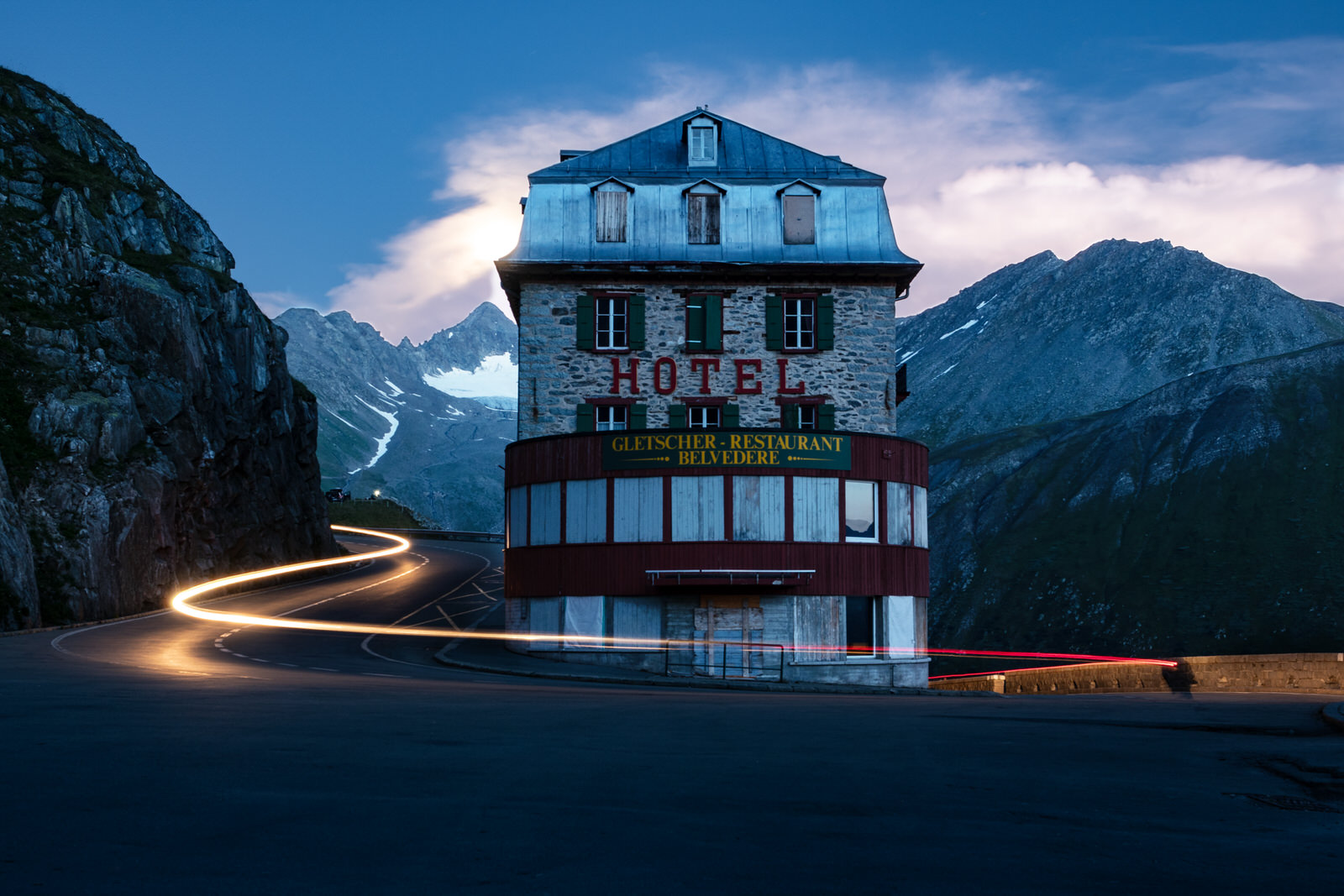
The end result, he said, produced a slightly underexposed sky and foreground. He brightened the image in post-processing to bring out the vibrant colors of the lights and the darker shades painted on the hotel’s façade.
For Steven, the fun of the image is that in real life, the dark street would have appeared to most motorists as nothing more than a plain, ordinary road – albeit in a stunningly picturesque location. However, through the lens of his camera, Steven said he was able to “see everything.”
“You do not know what to expect when you stop and take the camera out and take a picture – you can only admire the result on the display,” he said. “It’s fun to take pictures that you cannot see with your eyes, alone. As a photographer, you will always be surprised by the results.”
It’s fun to take pictures that you cannot see with your eyes, alone.
Steven Helmis
More of Steven’s abandoned places photography can be found on his website, Instagram, or Facebook.
Common Questions About the James Bond Hotel
Where is the James Bond hotel in Switzerland? It’s the Belvédère Hotel, on the historic Alpine road over the Furka Pass, right beside the Rhône glacier. The road bends 180 degrees around the building, which is what drew Steven back to shoot it.
Which Bond film was shot at the Hotel Belvédère? The hotel was the location for a scene in Goldfinger (1964). It was also a favorite destination of Sean Connery, who played 007 in the first five Bond films.
Is the Belvédère Hotel abandoned? When Steven photographed it in 2018, the hotel was deserted, and the article describes it as no longer the jewel of the Alps it once was. It doesn’t say what has happened to the building since.
How did Steven Helmis photograph the James Bond hotel? He looked at the location during the day, then came back at dusk for long exposures, with the hotel in the middle of the frame so the whole curve of road would show. He used an Olympus E-M1 Mark II and the M.Zuiko ED 12-40mm F/2.8 PRO lens at 22mm, ISO 64, f/6.7 and a 45-second exposure. Light trails need at least 10 to 15 seconds. The result came out slightly dark, so he brightened it in post-processing.