
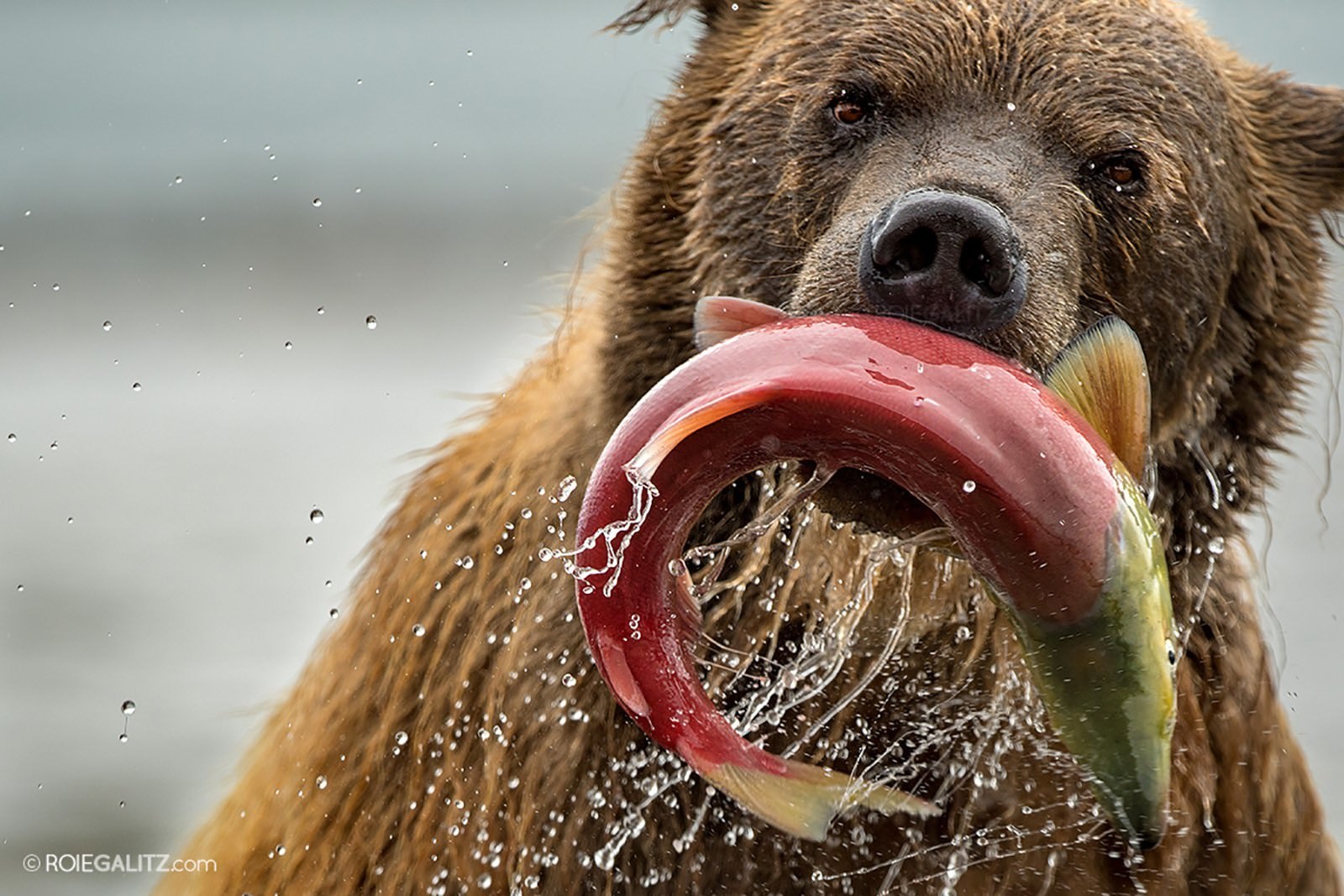
Roie Galitz’s High-Zooming Gear for Capturing Intense Wildlife Shots
Nature and wildlife photographer Roie Galitz has spent the past decade traveling to some of the world’s most remote locations, from the Arctic to the Antarctic, capturing rarely-seen animals in their native habitats.
Originally published October 17, 2018, by Jessi Gowan. Updated October 16, 2026, by PHLEARN Staff: We turned the product boxes into kit cards and added a gear summary and a few common questions about Roie Galitz; his words are unchanged, and the gear is what he carried in 2018.
As a Greenpeace ambassador and public speaker, Roie has been able to raise awareness about pressing environmental issues, including global climate change, through the power of dynamic photography.
To achieve what he describes as “pictures that were never taken before,” Roie carefully decides which items from his collection of gear will be the right pieces to bring with him before he embarks on a shoot. Take a look at some of the key pieces in Roie’s bag to see how his equipment helps him get the perfect shot.
- CameraNikon D850 with battery grip
- Long lenses600mm f/4E, 800mm f/5.6E
- LightNatural light

How Roie Galitz Chooses His Gear
Can you tell us how you go about deciding which gear is essential to your work?
In preparation for every one of my photography expeditions, I analyze the field requirements and shots I want to get.
In preparation for every one of my photography expeditions, I analyze the field requirements and shots I want to get.
Roie Galitz
Based on that, I build a list of the most reliable gear that suits my needs.
Camera
Store links in this article are affiliate links, so PHLEARN may earn a commission. As an Amazon Associate, PHLEARN earns from qualifying purchases.
Camera

45.7MP FX-Format BSI CMOS Sensor, 3.2″ 2.36m-Dot Tilting Touchscreen LCD
Nikon D850 – I’m using the camera with the additional battery grip to shoot at 9 fps. It’s an amazing camera, with amazing dynamic range and 45 megapixels of sharpness. (More on this camera in a year with the Nikon D850.)
9 fps
from the D850 with its battery grip
45 MP
of sharpness
800mm
his longest lens, for polar bears in Svalbard

Lenses
Lenses

Aperture Range: f/4 to f/22, Silent Wave Motor AF System, Vibration Reduction

Aperture Range: f/5.6 to f/32, Silent Wave Motor AF System, Vibration Reduction

Aperture Range: f/4 to f/32, Built-In 1.4x Teleconverter, Silent Wave Motor

Aperture Range: f/2.8 to f/22, Silent Wave Motor AF System, Nano Crystal Coat

Aperture Range: f/2.8 to f/22, Three Aspherical and Three ED Elements
I often travel to Svalbard to photograph polar bears. Because I can’t get too close to them, I use the Nikon 600mm F/4E or the Nikon 800mm F/5.6, most of the time. The Nikon 600mm F/4E VR is super sharp for long distances.
The Nikon 180-400mm F/4E TC is great for wider shots and environmental portraits. It has an excellent zoom lens with a prime quality to it. The included TC is a wonderful bonus.
The Nikon 14-24mm F/2.8 is the perfect ultra-wide lens, and the Nikon 24-70mm F/2.8 is a great fit for landscape photographs.
I also use the:
- Nikon 500mm F/4E VR – Super sharp and lighter than the 600mm, good for photographing brown and black bears, as well as shooting in Tanzania. (Gerda van Schalkwyk shot her leopard on a 500mm f/4 too.)
- Nikon 500mm F/5.6E PF VR – This new lens is super lightweight and surprisingly sharp and fast. I love it.
- Nikon 85mm F/1.4G – The perfect lens for portraits.
More lenses

Aperture Range: f/4 to f/22, Vibration reduction, Two Fluorite and Three ED Elements

Aperture Range: f/5.6 to f/32, Vibration Reduction, Silent Wave Motor AF System

Aperture Range: f/1.4 to f/16, Silent Wave Motor AF System
Light and Bag
Lighting
The sun – it’s always with me.
The sun – it’s always with me.
Roie Galitz
Bag
Lowepro Vertex 300 AW – it’s large enough to fit two camera bodies, 500mm F/4, 180-400mm F/4, 14-24mm, 24-70mm, 85mm 1.4, 500mm F/5.6E PF, 15” MacBook Pro, and plenty of accessories.
Tripods, Drones and Backup
I’ve been using Gitzo gear for years and was recently honored to become a Gitzo ambassador. I often use a sturdy three-section carbon-fiber tripod without a center column to shoot extra low, and a Manfrotto fluid video head.
- Gitzo 3541LS Tripod – lightweight and super strong to carry my gear.
- Gitzo Systematic Series 4, 5 sections – more compact, stronger, and able to rise pretty high.
- Manfrotto 502HD Video Head – I use it to make my videos in pro-level motion.
- Gitzo Gimbal Fluid Head – good for heavy lenses with video capabilities.
- G-Technology R-Series 2TB – I’m using this SSD to back up all of my images as a second copy, just in case something happens to my laptop. It’s the fastest and most reliable hard drive out there.
- DJI Phantom 4 Pro+ – This drone has a one-inch sensor, which allows for high-quality stills and excellent 4K 50fps videos.
- DJI Mavic 2 Pro – This is a recent addition which I haven’t tested in the field, but it looks really promising.


Common Questions About Roie Galitz
Who is Roie Galitz? A nature and wildlife photographer who, by 2018, had spent a decade traveling to remote places from the Arctic to the Antarctic to photograph rarely seen animals. He is a Greenpeace ambassador and public speaker, and his work has been featured on the BBC, at TEDx and in National Geographic.
Which lens does Roie Galitz use for polar bears? In Svalbard he can’t get close to the bears, so most of the time he uses the Nikon 600mm f/4E or the Nikon 800mm f/5.6. For wider shots and environmental portraits he switches to the Nikon 180-400mm f/4E with its built-in teleconverter. The lighter 500mm f/4E is his choice for brown and black bears and for shooting in Tanzania.
What camera does he use? A Nikon D850 with the extra battery grip, which lets him shoot at 9 frames per second. He likes its dynamic range and its 45 megapixels.
What tripod and lighting does he use? A Gitzo three-section carbon-fiber tripod with no center column, so he can shoot extra low, with a Gitzo gimbal fluid head for heavy lenses. His only light is the sun.
Roie’s award-winning work has been featured on the BBC, TEDx, in National Geographic, and more, letting audiences around the world enjoy his captivating stills of nature at its best. To see more of Roie’s photography, visit his website or follow him on Instagram.



Join the conversation