

Tom Kahler’s Favorite Gear For Documenting Epic Outdoor Adventures
Freelance outdoor and automotive photographer Tom Kahler has been shooting full-time for the past four and a half years – since he was just 19 years old.
Originally published November 22, 2018, by Jessi Gowan. Updated October 16, 2026, by PHLEARN Staff: The gear list is now a set of kit cards with a summary table; Tom’s words are unchanged.
Tom Kahler shoots outdoor and automotive work on a Canon 5D Mark IV, with a Sigma 35mm f/1.4 on the camera most of the time. Here is what was in his bag in 2018, with his reasons for each piece.
After first picking up a camera at the age of 16, Tom fell in love with the way photography could help compensate for his poor memory by allowing him to capture moments to look back on in the future. But he feels like his early day-to-day, documentary style of shooting became a bit stale, so Tom began pushing himself to do more interesting things and capture them in a unique way – which has inspired his current style, and his love of the outdoors.


Each year, Tom says, he gets closer and closer to reaching his goal of traveling around the globe, documenting his adventures with his camera. Working with clients like Red Bull, Adidas TERREX, Airbnb, TomTom, and Peron Automotive, he’s making his dream a reality.
Take a look inside his camera bag to see what gear this young up-and-comer uses to share his exciting experiences with the world.
16
his age when he first picked up a camera
19
his age when he went full-time
75%
of the time the Sigma 35mm is on his camera
| What’s in the Bag | |
|---|---|
| Cameras | Canon 5D Mark IV (5D Mark III and 7D spares), DJI Mavic Pro, DJI Osmo |
| Lenses | Irix 15mm f/2.4, Canon 17-40mm f/4, Sigma 35mm f/1.4 Art, Canon 50mm f/1.2, Canon 100mm Macro, Canon 70-200mm f/2.8 |
| Lighting | Elinchrom D-lite 2 |
| Bags | Peli case, Langly, Montane |
| Extras | Gitzo tripod, MacBook Pro, LaCie drives |

Can you tell us how you go about deciding which gear is essential to your work?
It depends on what I’m shooting and where – how I’m traveling determines what gear I take. I would always choose to take more, given the choice to play it safe; however, some shoots require hiking and weight is an issue. In this case, I ditch some gear and just take what I know I will use the most, based on experience.
The Cameras Tom Kahler Uses
Store links in this article are affiliate links, so PHLEARN may earn a commission. As an Amazon Associate, PHLEARN earns from qualifying purchases.
Cameras

30.4 MP full-frame CMOS sensor, Up to 7.0 frames per second continuous shooting speed, 4K video recording
Tom: I love this camera. I’ve been a Canon user from the start, and I’ve never been let down to this day. It’s not the lightest of gear, with all the mirrorless cameras on the market these days, but it’s a solid workhorse, which I have bonded with over the years, allowing me to get the most out of the body and understand how it reacts in situations.

DSLR camera with 22-megapixel full-frame CMOS sensor and wide range ISO setting of 100 – 25600
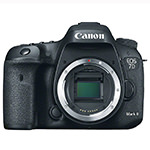
20.2MP APS-C CMOS sensor, dual DIGIC 6 image processors, high speed continuous shooting and HD video
I also have a Canon EOS 5D Mark III spare and a Canon 7D spare, along with a DJI Mavic Pro and DJI Osmo.


Wide and Prime Lenses
Lenses

Canon EF-Mount/Full-Frame Format, Aperture Range: f/2.4 to f/22, 2 Aspherical Elements, 2 ED and 3 HR Elements
Tom: This is a lens a lot of people don’t know about, by a Swiss company with amazing build quality. It’s a fast prime at f/2.4, ideal for low light. It’s sharp and has almost zero distortion, making it ideal for landscapes, astro, and interior photography. I use this lens a lot and 100 percent recommend it.

EF-Mount Lens/Full-Frame Format, Aperture Range: f/4 to f/22, One Super Ultra-Low Dispersion Element, Three Aspherical Elements
Tom: The danger lens – this was one of my main lenses for a few years, but due to wear and tear, it has seen better days. It’s also not very sharp or fast, and has a fair bit of distortion. I tend not to use this lens anymore, as I’ve replaced it with the 15mm and 35mm primes; however, it’s ideal for risky situations where you’re worried about damaging your gear.
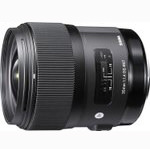
35mm art lens with f/1.4 maximum aperture for Canon SLR cameras, Lens Type: Fast Prime Lens
Tom: This lens has to be my favorite lens in my bag – for anyone out there thinking of buying one, get it ordered ASAP. I’d say 75 percent of the time, I have this mounted on my camera. It’s always my go-to option if I’m going for a hike or walk and want to save weight on gear – very, very sharp and fast, ideal focal length for portrait and landscape photography, and allows you to get some amazing depth and catch the last rays of light. One of my favorite times to shoot is blue hour, and this is the dream lens.

Aperture Range: f/1.2 to f/16, EF-Mount Lens/Full-Frame Format, Super Spectra Coating
Tom: I also have a f/1.4 which is slightly broken, so I upgraded to the bigger brother. The f/1.2 is a big chunk of glass and isn’t light, but it’s amazingly sharp. I find it a little tight for most landscapes and, due to the weight, don’t normally take this on hikes, but this is one of my go-to lenses for automotive or portrait photography.

Macro and Telephoto
Macro and Telephoto
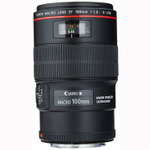
100mm f/2.8L IS USM macro lens for Canon digital SLR camera, EF-Mount, full-frame format
Tom: One of the cheapest lenses in my bag, however, one of the sharpest – this lens blew me away. I bought it for a product shoot as I didn’t have a macro lens and it’s not something I shoot a lot of. It’s a very ugly lens, but 100mm is a nice focal length for portrait or automotive shots. This lens spends most of its time sat in the office, and only gets used when I know I’m going to capture some details.
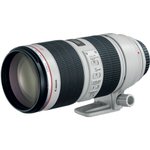
70-200 mm focal length, inner focusing system with USM and full-time manual focus option
Tom: Perfect for compressing the image to allow mountains to appear larger or shooting automotive shots from far away, giving a nice depth of field. I love shooting long, and it’s often overlooked. Morning layers in mountain ranges shot at 200mm are some of my favorites – although it’s a big chunk of glass, I always try and squeeze this in my bag when going for a hike, and 50 percent of the time it never comes out but, occasionally, it pays off, carrying it to the summit.
I love shooting long, and it’s often overlooked.
Tom Kahler

Lighting and Bags
Lighting
Elinchrom D-lite 2, with a few different-sized softboxes. To be honest, I hate using lighting and I avoid it at all costs – it’s not my style. However, it’s useful to have them, just in case.
To be honest, I hate using lighting and I avoid it at all costs – it’s not my style.
Tom Kahler
Bag
Peli case: I use my Peli case when possible for commercial shoots, as it keeps my gear safe and saves my back from carrying all the weight.
Langly Multi Camera Pack: This is a brilliant bag if you want to look cool, be protected from the weather and carry a lot of gear; however, it’s expensive – even more when you live in the UK, once you’ve paid for delivery and import tax. I had this bag fail on me when on a Euro trip and all my gear fell out, so I wouldn’t recommend it too highly. They did replace the bag, however, I was left with some broken equipment and without a bag for the rest of the trip. It’s also no good for hikes, as there is no support.
I tend to hike with my Montane Halogen 225L pack or Montane Yupik 50L using a newer insert. This works a lot better for me, as I can get my outdoor gear in there while keeping my camera protected.
Currently in need of a new camera bag to replace the Langly – looking at Lowepro Whistler, F-stop, or Evoc.


Miscellaneous Items
- Gitzo tripod: Expensive but solid – I love this thing.
- MacBook Pro 15″: For editing, with a bunch of LaCie hard drives for portable storage.
- Adobe Lightroom/Photoshop: For editing.
- Note pad: Always comes in useful.
- Head torch: Don’t get caught out in the dark.
- Memory Card cases: Perfect to organize and store your empty and shot cards.
- Grip: Both my 5Ds have grips, it makes the battery life last a lot longer and feels much better in the hand when shooting.

In addition to the work Tom does for his clients around the world, which can be viewed on his website, this UK-based photographer continues to document his daily adventures on Instagram. He also shares his journey, along with the occasional post-processing tutorial, on his YouTube channel.
Common Questions About Tom Kahler
Who is Tom Kahler? A UK-based freelance outdoor and automotive photographer. He first picked up a camera at 16 and, when this article ran in November 2018, had been shooting full-time for four and a half years, since he was 19. His clients include Red Bull, Adidas TERREX, Airbnb, TomTom and Peron Automotive, and he shares his adventures and the occasional post-processing tutorial on Instagram and YouTube.
What camera does Tom Kahler use? A Canon EOS 5D Mark IV. He has used Canon from the start and calls it a solid workhorse, though not the lightest option next to mirrorless cameras. He keeps a 5D Mark III and a 7D as spares, and also has a DJI Mavic Pro drone and a DJI Osmo.
Which lenses does he use most? The Sigma 35mm f/1.4 Art is on his camera about 75 percent of the time, and it is his choice for hikes when weight matters. For landscapes, astro and interiors he uses the IRIX 15mm f/2.4, which he says is sharp with almost zero distortion. The 70-200mm f/2.8 compresses mountain layers, and the heavy 50mm f/1.2 is one of his go-to lenses for cars and portraits.
How does he decide what gear to take? It depends on what he is shooting, where, and how he is traveling. He would rather take more to play it safe, but on shoots that need hiking he leaves some gear behind and takes only what he knows he will use most. For commercial shoots he packs a Peli case; for hikes, a Montane pack with a camera insert.



Join the conversation