

Download the Sample Image
Download Assets
This tutorial includes sample images and a PDF guide. Downloads are free with a PHLEARN account.
- Free sample files with every tutorial on PHLEARN
- New tutorials published every week
- Unlimited downloads with your free PHLEARN account
description
2020 Edition
This lesson is from the original 30 Days of Photoshop. Photoshop has changed a great deal since — there is an updated version of this lesson in the 2025 Edition: How to Retouch a Portrait in Photoshop, Day 23.
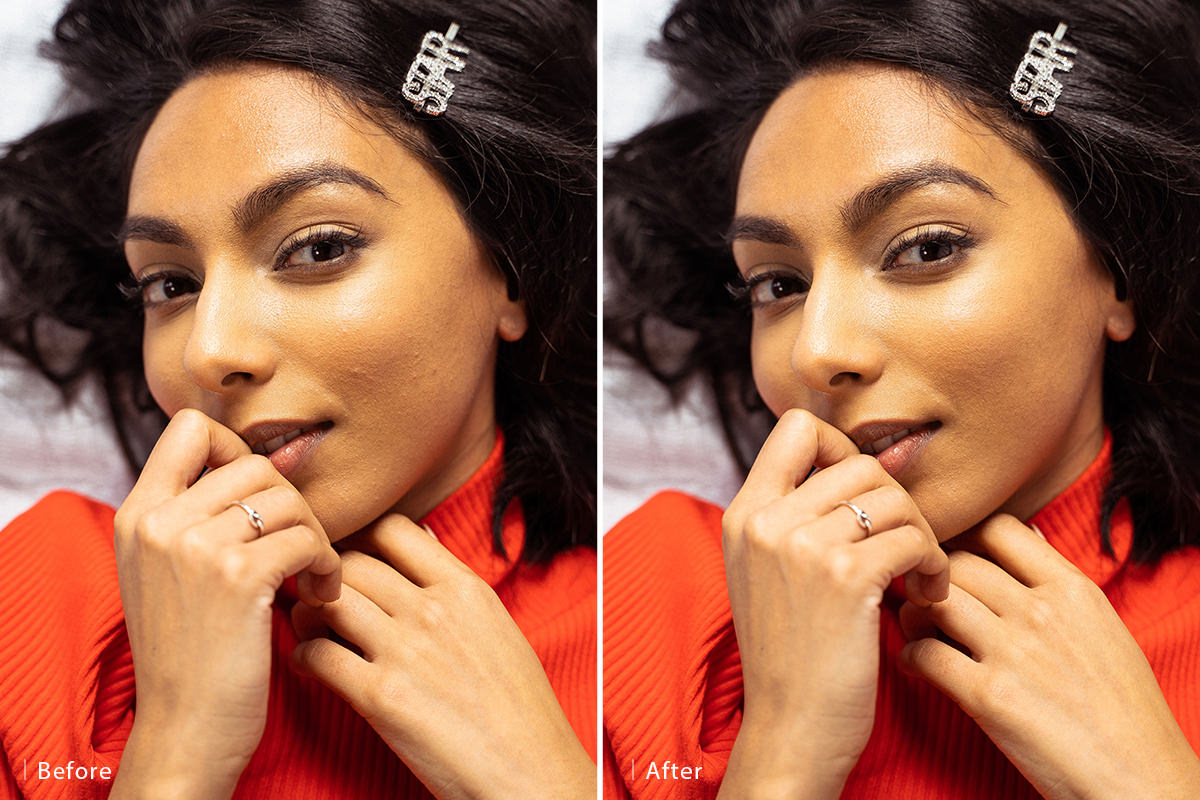
We all get them; small pimples and blemishes that are here today and gone tomorrow. And while temporary, they always seem to find their way into our photos. Learn how to quickly remove blemishes in Photoshop and help your subjects look their best.
This is Day 23 of our 30 Days of Photoshop series. Follow along with all 30 episodes as we explore the magic of Photoshop together!
Continue Watching 30 Days of Photoshop
Enjoying This Free Tutorial?
We publish a new free tutorial every week, each one with sample images and PSDs you can download and follow along with. Sign up and they land straight in your inbox, along with early word on sales, events and subscriber-only offers.
How to Remove Blemishes in Photoshop
Blemish removal is the first step in any portrait retouch, and it is faster than most people expect. Two tools do nearly all of the work: the Spot Healing Brush, which picks its own replacement texture, and the regular Healing Brush, which lets you choose the texture yourself when the automatic result doesn’t look right. Done on a separate layer, both are completely non-destructive.
This lesson is the first of three on skin retouching. The next two cover frequency separation for evening out color and light, and dodging and burning for sculpting the face.
Zoom Smart
-
Learn the Scrubby Zoom
Hold the Spacebar, then add Ctrl/Cmd. The cursor becomes a magnifying glass; drag right to zoom in and left to zoom out.
-
Work From a Moderate Zoom
It is tempting to zoom all the way in and chase every pore, but detail you can’t see at a normal viewing size isn’t worth your time. Zoom in to fix an area, then zoom back out to check that the result reads well and to find the next thing that actually stands out.
Start With the Spot Healing Brush
-
Create a New Layer
Click the New Layer button. All healing happens on this blank layer so the original photo is never touched.
-
Set Up the Tool
Press J for the Spot Healing Brush. In the Options bar set Type to Content-Aware and check Sample All Layers so the tool can read the photo beneath your empty layer.
-
Click on Blemishes
Size the brush slightly larger than the blemish and click, or paint a short stroke over it. Photoshop finds matching texture nearby and blends it in. Most blemishes disappear in a single click.
-
Watch for Texture Mismatches
Because the tool chooses its own source, it occasionally pulls texture from a smoother or softer area, leaving a patch that looks slightly out of place. When that happens, switch to the regular Healing Brush.
Take Control With the Healing Brush
-
Switch Tools
Press Shift + J to cycle to the Healing Brush (it sits just beneath the Spot Healing Brush in the toolbar). Keep Sample: All Layers on.
-
Sample Your Own Texture
Hold Alt/Option and click an area of clean skin to set the source point, then paint over the blemish. Photoshop copies the sampled texture and matches it to the surrounding color and brightness.
-
Match Focus and Lighting
Sample from an area with the same focus, the same lighting and the same general position. Shadow areas hold less detail than highlights, so never fill a shadow with texture from a highlight or vice versa; the result will look immediately wrong.
-
Keep Opacity at 100 Percent
Resist the urge to fade the healing layer. Half-removed blemishes look less natural than either the original or a clean fix.
-
Zoom Out and Sweep
Zoom out, find anything still visible on the forehead, cheeks and chin, zoom in, sample nearby and heal it. Repeat until the visible distractions are gone. Small dark spots can be handled the same way; broader color and light unevenness is a job for frequency separation.
Know When to Stop
Perfect skin looks fake. Keep some natural texture, and leave permanent features like moles and freckles alone; they are part of who the person is. When you are finished, select the healing layers and press Ctrl/Cmd + E to merge them, then toggle the merged layer off and on. Zoomed out, the changes should be almost invisible; zoomed in, the distractions should be gone.
Key Takeaways
- Always heal on a new layer with Sample All Layers turned on.
- The Spot Healing Brush is fastest; the Healing Brush gives you control when the automatic result looks off.
- Sample texture that matches in focus, lighting and position.
- Work at a moderate zoom so you fix what people will actually see.
- Leave defining features alone and keep the result natural.
Related Tutorials
New Free Tutorials View All »







Enjoying This Free Tutorial? Go Further with PRO.
Unlock Full Sample Files, PSDs, and Hundreds of Masterclasses!

Download full project assets, original PSDs, and RAW images for every lesson
Unlimited access to our complete library of PRO Photoshop & Lightroom courses
Instant 4K Ultra HD streaming on all devices, anytime, anywhere
Full access to our entire library of Photoshop Actions, Presets, and LUTs
Flexible monthly and annual membership plans
Cancel anytime with zero hassle or commitments