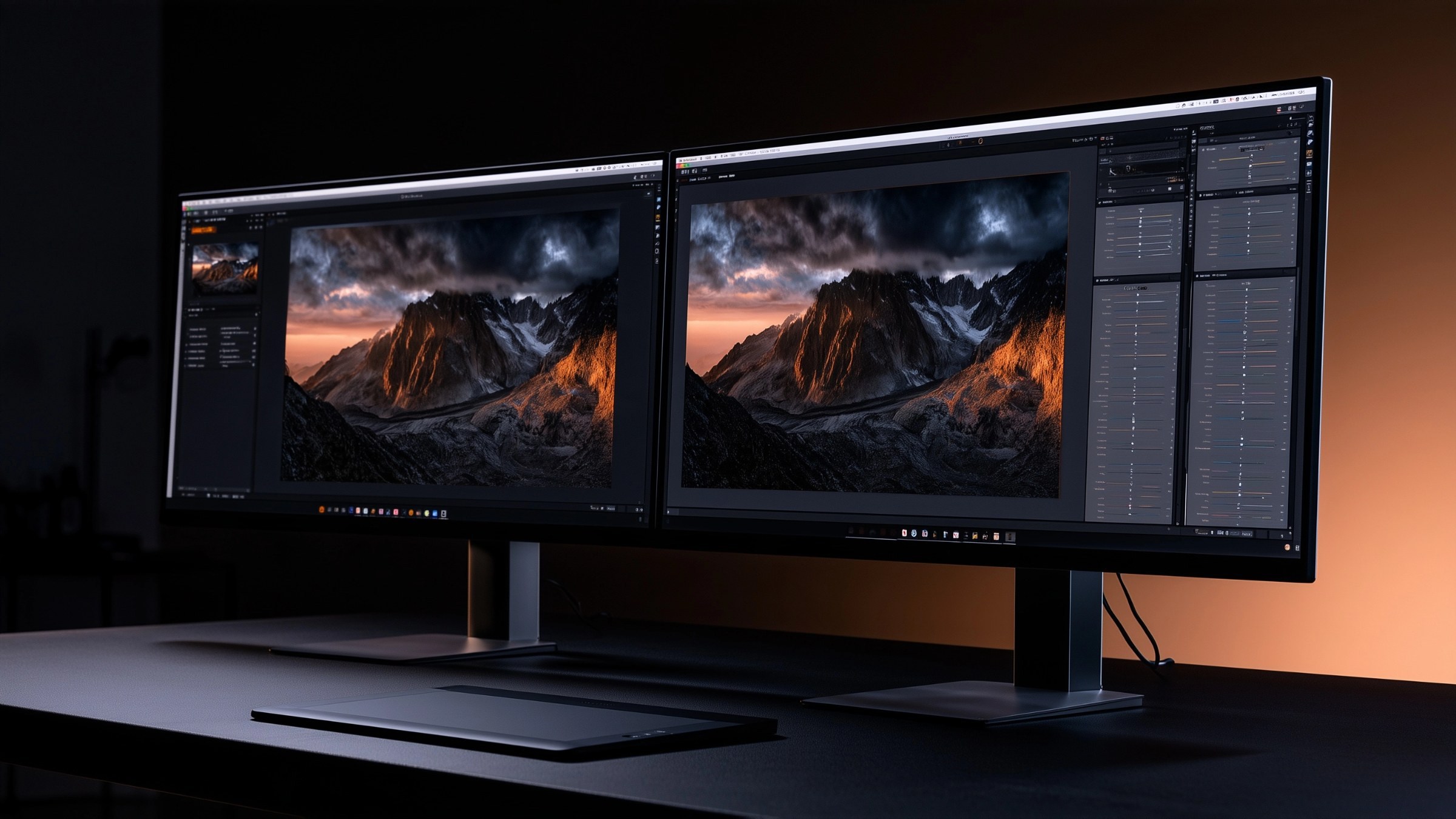
ArtCraft: Is the Free Photoshop Clone Legal, and Any Good?
A developer in Atlanta used Claude to clone Photoshop, Lightroom and the rest of Creative Cloud in about two weeks, and gave the apps away. ArtCraft is free, open source and looks exactly like the real thing. I installed the two that matter to photographers to answer the four questions everyone is asking: is it any good, is it legal, is it safe to put on your machine, and will it open your files?
- Any good?looks exactly like Photoshop; one tool shows the gap
- Legal?nobody knows yet, Adobe has said nothing
- Safe?signed builds, alpha bugs; try it on a spare machine
- Your files?PSDs open; RAW color is a guess for most cameras
All right, so these are my own thoughts on the Photoshop clones this guy just made with Claude. When I first opened PhotoCraft and LightCraft on my Mac I thought, wow, this just looks exactly like Photoshop, and this looks exactly like Lightroom, and I can’t believe that he did this. And then I thought to myself, is this legal? Like, can he? What’s been done here?
Then I thought, okay, what is actually in this versus what’s in the current version of Photoshop? Does it have Generative Fill, does it have Select Subject, like, do these things work?
So, short answer, it’s not a replacement, in my opinion, and is it legal? I don’t know.
I’m definitely really familiar with Photoshop, I’ve spent my career working in it and teaching it, so seeing a program like that cloned this easily is startling. And it makes me curious where all software goes from here.
Changes to the code signed by Claude
I think the reason it’s catching storm is because basically one guy made it, and he just cloned Photoshop, cloned almost the entire Creative Cloud suite, and he did it using AI, which is, I mean, a feat unto itself.
63,081
people who had starred PhotoCraft on GitHub by October 15, 2026, fifteen days after it appeared
2,385
changes made to PhotoCraft’s code in those fifteen days
7
Adobe apps copied in the first release
Is It Any Good?
Even just simple tools that I started using, like Select Subject, for instance, it was kind of immediately obvious that it wasn’t nearly as good as the full build of Photoshop. So I kind of realized, yeah, it’s a visual clone, and I’m sure a lot of the stuff does work decently well, but it’s definitely not an exact copy of Photoshop, and we have to say that off the bat.
feature breadth: how many of Photoshop’s menus, tools and panels exist in some form
ready for real work, weighted across features, feel, file formats, performance and stability
AI and generative features, by the project’s own estimate
So if we’re going to use it for modern-day workflows, it’s not a replacement, in my opinion. That being said, if someone still wants a relatively simple photo editor, basically it looks like this was Photoshop as of like the year 2020. So if someone wants a relatively basic photo editor for free, then this might be an option. But then again, there have been options. GIMP has been free for many years, and Affinity was just made completely free after it was bought by Canva, and now you pay for the AI features there. It’s not like this is the first free photo editing software that’s out there. This one just happens to be really pretty good, and it looks exactly like Photoshop.
Some of the foundational tools in Photoshop are just no longer that useful. Some of them we use just because we don’t want to spend credits, but the Clone Stamp tool, we just don’t really use that anymore, or the Pen tool, that’s not used nearly as much as it used to be. They’re still in these programs, but they’re in there more or less as legacy tools.
feature breadth: 532 Lightroom features checked, by the project’s own list
ready for real work, weighted by use
ready for a typical working photographer

Is ArtCraft Legal, and Is It Ethical?
I don’t know if it’s legal or not, and I’m not giving legal advice here.
Okay, another area I want to talk about with this. We’ve talked about whether it’s legal or not, but the other question is, is it ethical? I think we’re living in a time of ethical ambiguity right now, and what is the value of ethics, what is right and wrong, and at a time when the average individual has so much power, it’s more important than ever to ask what’s right and wrong. As the average individual has more power, it’s kind of up to them to exercise constraint.
The way that he basically just watched Photoshop work and cloned it, he made the AI watch it. And it makes me think, okay, this is just the first of many. If this was able to happen, obviously it’s going to continue to happen in software. No software is safe, and eventually, I’m thinking about video games and that sort of thing, it’s all up for grabs now. It’s going to be extremely difficult to protect your software, and it makes me curious as to what the future of software even is. Right now so many of us are using AI agents to do basically everything for us, and that’s one piece of software that’s running everything, and I just wonder if that’s where the whole world and the whole industry is going to go moving forward. So, yeah, I think it raises some other questions as well.
What It Means for Photographers
This all comes at a time when a lot of people are generally kind of frustrated with Adobe, because people feel like they’re already paying the subscription price for Photoshop itself and then they’re being charged for credits on top of that, and they’re not given enough credits, and the results aren’t professional-level results anyway. So general user sentiment is kind of at an all-time low for Adobe products, I feel. And I get that for sure.
There was another program called Affinity that used to charge a flat rate, and then they were bought by Canva, and then Canva made it free and charged for the extra AI features, which was October 2025. I felt like that put a lot of pressure on Adobe, personally, to think about that as their model, and obviously they did not respond by making Photoshop free. But now we have these clones that are, in some ways, doing the same thing. I mean, not exactly, but for a lot of consumers it’s going to more or less be seen that way. So I wonder how this is going to affect the business of Adobe, and what their decision is going to be about pricing their software versus their AI.
So for this clone to come out at this time, I think people are screaming about it, because they were already kind of upset with Adobe, and then now, boom, here’s one person who creates basically a free version of their software. Not that it’s complete or anything like that, but it’s a version of it, and I’m sure it’s going to get better too. That’s the other thing. This is early.

Yeah, so these are my thoughts. I think it’s really interesting what happened, and it makes sense that everyone’s kind of shaken up right now. I mean, AI is shaking up the whole world, but for the photo editing community, this one’s strong.
In this article
Free with PHLEARN