
Download Assets
This tutorial includes 1 sample image and 1 PDF guide. Downloads are free with a PHLEARN account.
- Download the sample images and PSDs from every free tutorial on PHLEARN
- New free tutorials published every week
- One free account — sign up once, then download anything
Free PDF Guide · 4 Pages
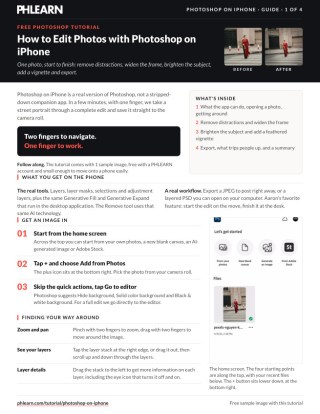
This Tutorial as a Step-by-Step PDF
Every step from the video in order: the plus button and Add from Photos, Retouch > Remove on a new layer with Sample All Layers, Size and Generative Expand with variations, Select Area with Sample All Layers, Adjust Area > Brightness/Contrast, the ellipse and inverse for a vignette, Modify Mask > Feather, and Export as JPEG or PSD. Keep it next to your phone.
description
Photoshop on iPhone is a real editor now, not a viewer. Learn to quickly enhance your photos on the go. This tutorial covers essential editing skills, including basic color enhancements, removing unwanted elements and expanding your image with AI tools!
Enjoying This Free Tutorial?
We publish a new free tutorial every week, each one with sample images and PSDs you can download and follow along with. Sign up and they land straight in your inbox, along with early word on sales, events and subscriber-only offers.
Image Source


How to Edit Photos with Photoshop on iPhone
Photoshop on iPhone is a real version of Photoshop, not a stripped-down companion app. It has layers, layer masks, selections, adjustment layers, and the same Generative Fill and Generative Expand that run in the desktop application. And it exports a layered PSD you can open on your computer.
This tutorial takes one photograph through a complete edit — removing distractions, widening the frame, brightening the subject, adding a vignette — and covers the two interface settings that cause most of the confusion for people arriving from desktop.
Getting an Image In
The opening screen offers your own photos, a blank canvas, an AI-generated image, or Adobe Stock.
Tap the + at the bottom right and choose Add from Photos. After picking an image you are offered quick actions — hide the background, solid color background, black and white. Skip those and go straight to the editor for a real edit.
Two Gestures to Learn First
Pinch with two fingers to zoom, and drag with two fingers to pan. One finger is always the tool; two fingers are always navigation. Once that is automatic, everything else is straightforward.
The Layers panel lives at the bottom — drag up to expand it, scroll to move through the stack, and swipe a layer left to reveal its options.
Remove Distractions
Go to Retouch at the bottom and choose the Remove Tool. It runs the same generative technology as the desktop version.
-
Create a new layer
Tap the new layer icon. Working on an empty layer keeps the original untouched and lets you toggle your removals off.
-
Turn on Sample All Layers — essential
There is an icon for this and it must be enabled. Without it the tool samples only your empty layer and does nothing. This is the single most common stumbling block in the app.
-
Set the brush size
Tap the Remove Tool again to reach the size control. Match it roughly to what you are removing.
-
Paint over the distraction with one finger
Release, and the calculation runs. Each lift of the finger is a separate operation.
If a result is wrong, tap undo at the top and paint again — often with a slightly different brush size. Generative results vary between attempts, so a second try frequently succeeds where the first did not. Poles, signs, litter and background clutter all go quickly this way.

Widen the Frame with Generative Expand
Tap Size at the bottom right. You get presets for common social formats, or you can drag the edges of the canvas outward manually.
Drag the left and right edges out, then tap the colored Generative Expand icon. You can type a prompt, but leaving it empty is usually right — Photoshop continues what is already in the frame.
This is genuinely useful on a phone. Reformatting a shot for a story, a post, or a banner no longer means cropping into the picture.
Check the Variations
Expansion sometimes reintroduces exactly what you just removed — a pole reappearing at the new edge, for instance.
Open your layers, find the Generative Expand layer, and tap Variations at the bottom. Several alternatives are stored and you can switch between them at any point, not just immediately after generating.

Brighten the Subject
Tap Select Area and use subject selection.
Enable Sample All Layers here too. If you are sitting on the Generative Expand layer with it switched off, Photoshop tries to find a subject in that layer alone and fails. Same setting, same trap, second place it appears.
With the subject selected, confirm with the checkmark and choose Adjust Area. You get hue, saturation, brightness, contrast, black and white, color balance, exposure, curves and vibrance.
Brightness and Contrast is usually enough — lifting the subject slightly separates them from the background without anything looking edited.
Add a Vignette
Tap Select Area again and switch to the Ellipse tool. Drag an ellipse around your subject, then tap Inverse so the selection covers the edges rather than the middle.
Confirm, choose Adjust Area, and bring the brightness down.
Feather the Edge — Do Not Skip This
Straight away you will see a hard outline where the ellipse sits. Unfeathered, it looks like a mistake rather than a vignette.
Open your layers, find the adjustment layer, and choose Modify Mask > Feather.
There is no live preview, so you are entering a number blind. On a full-resolution phone photograph, start around 300 to 400 pixels — far more than feels right, but vignettes need a very gradual falloff. The thumbnail preview shows the transition, and you can re-apply with a larger number if the edge is still visible.

Export — Including as a PSD
Tap the export icon. Quick Export gives a fast PNG; Export offers JPEG, PSD or TIFF with quality settings.
JPEG saves to your camera roll, ready to post.
PSD is the one that matters. It preserves every layer, mask and adjustment, so an edit started on your phone can be finished on your computer with all of it still live. That makes the app genuinely part of a workflow rather than a separate tool — edit on the move, refine at the desk.
Worth Remembering
Two fingers to navigate, one finger to work. Sample All Layers must be on for both Remove and Select Area — it accounts for most of the “why isn’t this working” moments. Undo and retry when a generative result disappoints. Check Variations on any expand. Feather vignettes far more than seems necessary. And export as PSD when the edit is going to continue elsewhere.
Quick Reference: Keys, Menus and Settings
- Open a photoPlus button > Add from Photos > Go to editor (or a quick action)
- Remove distractionsRetouch > Remove on a new layer with Sample All Layers on; set the brush size; paint; undo and repaint if needed
- NavigatePinch to zoom, two fingers to pan, drag the layer stack up or down, swipe a layer left for options
- Widen the frameSize > drag the edges out > Generative Expand > Generate; Variations on the expand layer
- Brighten the subjectSelect Area with Sample All Layers on > subject > check > Adjust Area > Brightness/Contrast
- VignetteSelect Area > Ellipse > Inverse > Adjust Area > Brightness down; then on that layer Modify Mask > Feather (300 to 400 px)
- ExportExport icon > JPEG, PSD or TIFF > Save Image
Remove and Generative Expand use Generative Fill and spend credits.
Free Downloads
Follow Along on the Same Photo
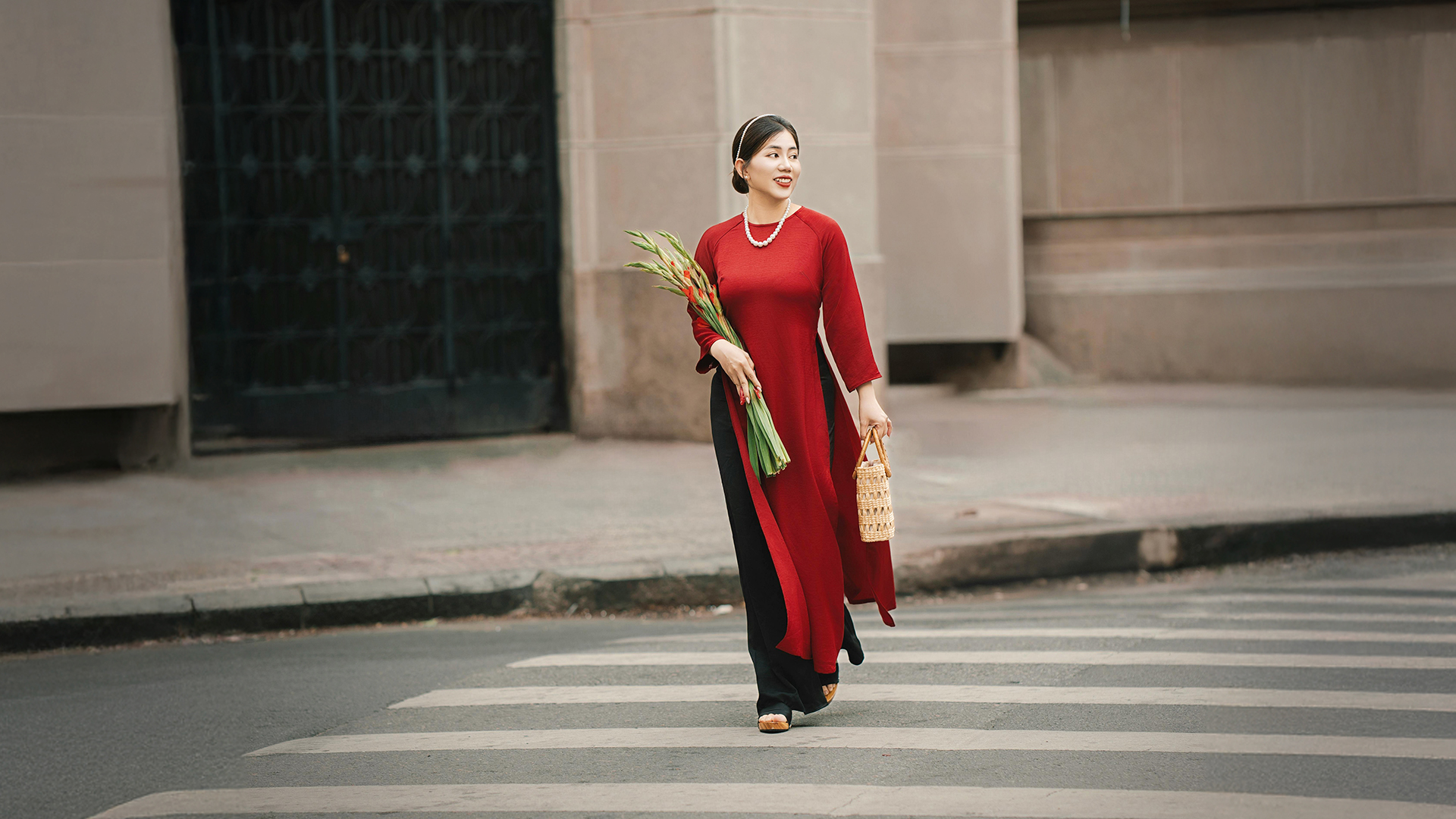
Get the sample photo from the video and the PDF guide, send the photo to your iPhone and run the same edit. Free with a PHLEARN account.
Photoshop on iPhone: Common Questions
What can Photoshop on iPhone do?
Layers, masks, selections, the Remove tool, Generative Expand and Fill, adjustments, and export to JPEG or a layered PSD. The video takes one photo from distractions to a finished vignette without touching a computer.
How do I remove something from a photo?
Retouch > Remove. Make a new layer, turn on Sample All Layers, size the brush to the object and paint over it with a finger. Each lift of the finger runs the removal; undo and try again if it isn’t right.
Can I make the photo wider for social media?
Yes. Size, drag the edges out, then Generative Expand. If the result adds something you don’t want, open the expand layer and pick another variation.
Why does Select Area only grab part of the image?
Sample All Layers is off, so it’s reading only the current layer. Turn the icon on and select the subject again.
How do I brighten just the subject?
Select Area > subject, tap the check, then Adjust Area > Brightness/Contrast. The adjustment arrives on its own layer with a mask.
How do I add a vignette?
Select Area with the ellipse, inverse the selection, Adjust Area > Brightness down. Then on that layer choose Modify Mask > Feather and type a few hundred pixels to soften the edge. There’s no live preview of the feather, so check and adjust.
Can I finish the edit on my computer?
Yes. Export as PSD and all the layers come across. JPEG goes straight to the camera roll for posting.
Does it use generative credits?
Remove and Generative Expand use the same Generative Fill as desktop Photoshop and spend credits. The adjustments and selections don’t.
Is the sample file free?
Yes, with a free PHLEARN account. You get the sample photo and the PDF guide; send the photo to your phone to follow along.
Master Photoshop, Lightroom and Photography
Join PHLEARN PRO for $12.99 a month or $99.99 a year. Cancel anytime, with a 100% money-back guarantee.