
description
Replacing a sky in Photoshop is less about the cutout than about making the two photos agree. This free tutorial selects and removes the original sky with the Magic Wand tool, drops a new one in underneath, and refines the mask edge. From there it’s all matching: clipped Curves for contrast, a colorized Hue/Saturation layer restricted with Blend If for color, and a final Color Balance and Levels pass across the whole image.
Enjoying This Free Tutorial?
We publish a new free tutorial every week, each one with sample images and PSDs you can download and follow along with. Sign up and they land straight in your inbox, along with early word on sales, events and subscriber-only offers.
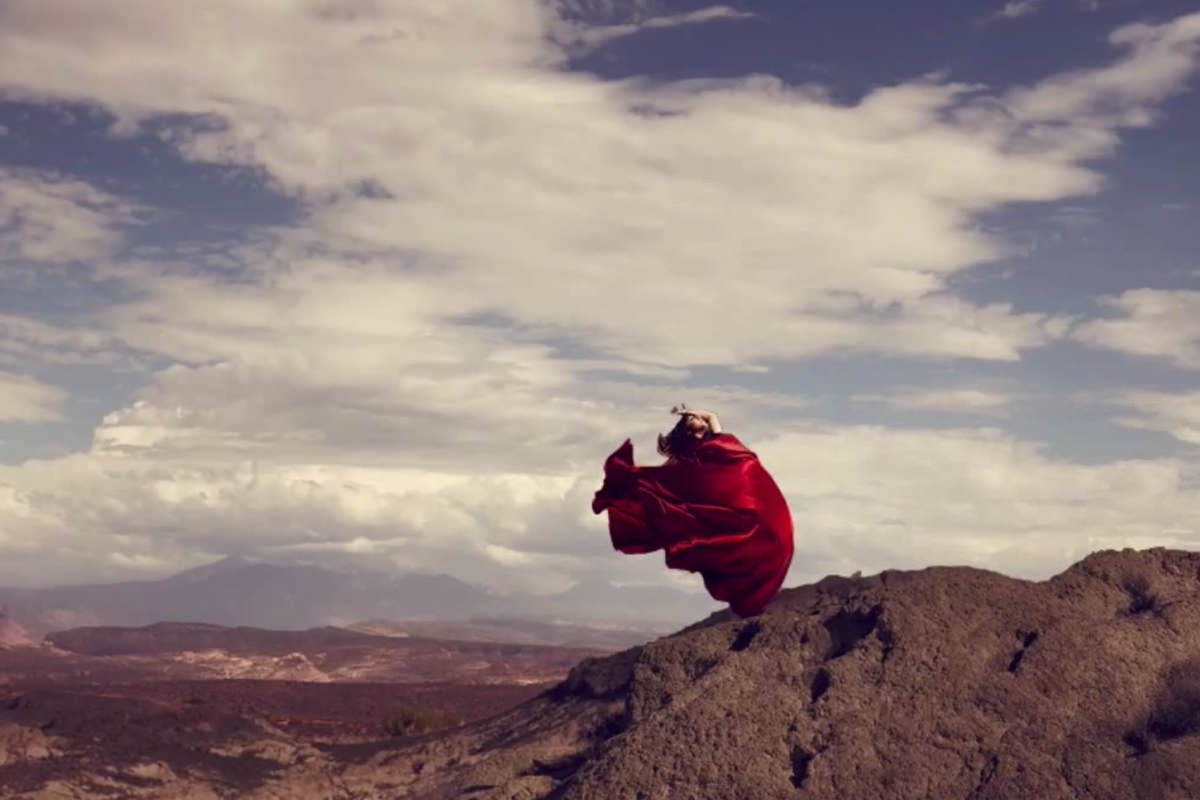
How to Replace a Sky in Photoshop
Dropping in a new sky is only the first step of a convincing replacement — the real work is matching color, contrast, and light between the new sky and the original ground. This tutorial cuts out a sky with the Magic Wand tool, drops in a replacement, then uses a stack of clipped Curves, Hue/Saturation, and Color Balance layers to make the two images look like they were shot together.
Selecting and Removing the Original Sky
A clean line between the ground and the sky makes the initial selection quick to pull off with the Magic Wand tool.
-
Bring the New Sky Image In
Hold Shift and drag the new sky image into the same document as the original photo.
-
Select the Sky With the Magic Wand Tool
Click the sky with the Magic Wand tool, raising the tolerance (to about 18 here) if it doesn’t select enough of the area at once.
-
Add to the Selection as Needed
Hold Shift and click any remaining unselected patches of sky, then switch to the Lasso tool, still holding Shift, to select any trickier remaining areas.
-
Convert the Background to a Regular Layer
Hold Alt/Option and double-click the background layer to convert it into a regular, movable layer.
-
Add and Invert a Layer Mask
Click the Add Layer Mask button, then press Cmd/Ctrl+I to invert it so the subject and ground remain visible with the sky removed.
Positioning and Refining the New Sky
With the old sky gone, the new sky image slots in underneath and gets resized to fit the scene.
-
Move the New Sky Layer Below
Press Cmd/Ctrl+[ to move the new sky layer below the layer with the cutout subject and ground.
-
Resize and Reposition the Sky
Press Cmd/Ctrl+T, use the chain-link icon to lock width and height together, and scale and move the sky until it fills the frame the way you want.
-
Refine the Selection Edge
Select the layer mask, go to Select > Refine Mask, and add a small amount of feathering along with a slight edge shift and contrast boost to smooth out any rough edges.
Matching Contrast With a Clipped Curves Layer
Getting the ground’s brightness and contrast to match the new sky starts with an adjustment clipped only to that layer.
-
Add a Curves Adjustment Layer
Add a Curves adjustment layer above the ground layer.
-
Clip It So It Only Affects the Ground
Press Option/Alt+Cmd/Ctrl+G, or right-click and choose Create Clipping Mask, so the adjustment only affects the layer beneath it.
-
Reduce Contrast to Match the Sky
Raise the black point and lower the white point on the curve to bring the ground’s contrast down closer to that of the new sky.
Why a Channel Mixer Layer Set to Monochrome Helps While Matching Contrast
Color can make it hard to judge whether brightness and contrast actually match between two images, since differences in hue distract from differences in light. Adding a temporary Channel Mixer layer set to Monochrome strips color out of the view entirely, making it much easier to focus purely on matching tonal values before worrying about color at all.
Matching Color With a Clipped, Colorized Hue/Saturation Layer
Once contrast is close, a colorized Hue/Saturation layer brings the ground’s overall color in line with the new sky.
-
Add a Hue/Saturation Layer and Clip It
Add a Hue/Saturation adjustment layer and clip it to the ground layer.
-
Colorize and Dial In the Hue and Saturation
Check the Colorize option, then adjust the Hue and Saturation sliders until the color roughly matches the tone coming from the new sky.
-
Restrict It With Blend If to Keep Some Original Detail
Double-click the layer, hold Alt/Option, and drag the underlying layer slider so the colorize effect only shows up where the ground is darker or lighter, letting some of the original color and detail remain visible.
-
Mask the Subject Out of This Effect
Paint black on this layer’s mask over the subject so her own original coloring stays untouched by the rock’s color match.
Why Blend If Keeps a Colorize Layer From Looking Flat
A colorize adjustment on its own pushes every pixel toward the exact same hue, which quickly looks artificial rather than like a real, evenly lit scene. Restricting that colorize effect with Blend If lets some of the ground’s original color and texture show back through, keeping the natural variation that a real photograph would have.
Adding Extra Warmth to the Subject
A separate clipped Curves layer pushes some of the new sky’s warm tones onto the subject herself so she doesn’t look disconnected from the color work happening around her.
-
Add Another Clipped Curves Layer
Add a Curves adjustment layer and clip it, this time targeting the subject.
-
Push the Red Channel Up and the Blue Channel Down
Raise the Red channel and lower the Blue channel to introduce a warm orange tone.
-
Invert the Mask and Paint the Warmth In
Press Cmd/Ctrl+I to invert the mask, then paint white over the subject’s body to bring the warm tone in selectively.
Checking the Work in Black and White
Switching a monochrome check layer back on periodically makes it easier to judge tonal values independently of color as more adjustments stack up.
-
Toggle the Monochrome Layer to Check Contrast
Turn the Channel Mixer monochrome layer back on to review how the brightness values are matching up as you continue adjusting.
-
Fine-Tune Curves Based on What You See
Adjust the clipped Curves layer’s brightness further based on what the black-and-white view reveals.
-
Soften a Harsh Shadow Edge if Needed
If a shadow edge looks too dark or too clean, use the Lasso tool with a slightly shaky hand to select an irregular area, then fill it with black on the layer mask to imitate a natural rock edge.
Darkening the New Sky and Reducing Green
A couple of smaller adjustments on the new sky and the foreground rocks help everything sit together more naturally.
-
Darken the Top of the New Sky With a Gradient Mask
Add a Curves adjustment layer, darken it, invert the mask, and use the Gradient tool from top to bottom to darken the top of the new sky, since the original sky was a little darker.
-
Reduce Saturation on the Foreground Rocks
Add a Hue/Saturation layer, lower the saturation, invert the mask, and paint white over the foreground rocks to make them less green and less distracting from the subject.
Unifying the Whole Image With Color Balance and Levels
A final pair of unclipped adjustment layers ties the sky and the ground together with the same overall color treatment.
-
Group the Ground and Sky Layers Separately
Group all the layers affecting the ground together, and group all the layers affecting the sky together.
-
Add a Color Balance Layer Across Everything
Add a Color Balance adjustment layer above both groups, push some blue into the shadows, and push some red and yellow into the midtones.
-
Add a Levels Layer to Color Tone the Whole Image
Add a Levels adjustment layer, go to the Blue channel, and drag the black Output Levels slider in a little and pull the white Output Levels slider in from the right, introducing blue into the darks and yellow into the highlights across the entire image.
Why Color Adjustments Applied to the Whole Image Matter for Compositing
Adjustments made only to individual pieces, like just the ground or just the sky, can leave a composite feeling like several separate images stacked together. Applying a final color pass across everything at once, rather than only to individual layers, is what makes a composite read as one single, consistently lit photograph.
Adding a Shared Highlight Layer With Blend If
One last layer restricted to highlights reflects the same light across both the rocks and the sky, tying the whole composite together.
-
Create a New Layer Filled With White
Create a new layer and fill it entirely with white.
-
Restrict It to Highlights With Blend If
Double-click the layer, hold Alt/Option, and drag the underlying layer slider from left to right so the white only shows through in the brightest areas.
-
Brighten Slightly and Group Everything
Increase the layer’s brightness a touch so the highlight effect reads clearly, then group all the layers together to compare the final before and after.
Why This Approach Works
Cutting out the sky is the easy part of this technique — it’s the layered stack of clipped Curves and Hue/Saturation adjustments that actually sells the composite by matching contrast, color, and light between two completely different photographs. Checking the work in black and white along the way makes tonal mismatches far easier to spot than trying to judge brightness and color at the same time. Finishing with adjustments applied across the entire image, rather than just to individual pieces, is what turns two separate photos into something that reads as one consistent scene.
Final Thoughts
Replacing a sky is rarely just a cut-and-paste job — the real difference between a convincing composite and an obvious one comes down to matching contrast, color, and light between the two images. A handful of clipped Curves and Hue/Saturation layers, checked periodically in black and white, is usually all it takes to make a completely different sky look like it was there from the start.
Quick Reference: Keys, Menus and Settings
- Select the skyMagic Wand, tolerance about 18, Shift-click to add; Lasso with Shift
- Cut it outAlt/Option double-click the background, add a mask, Cmd/Ctrl + I
- Place the skyCmd/Ctrl + [ to move it below, Cmd/Ctrl + T with the chain link
- Smooth the edgeSelect > Refine Mask: small Feather, Shift Edge in, Contrast up
- Clip adjustmentsAlt/Option + Cmd/Ctrl + G; Curves, colorized Hue/Saturation, Blend If
- Check the tonesChannel Mixer layer with Monochrome on
- Unify everythingColor Balance (blue shadows, red and yellow midtones), Levels > Blue, white layer with Blend If
No AI, no generative credits.
Replacing a Sky: Common Questions
How do I select the sky to replace it?
With a clean line between ground and sky, click the sky with the Magic Wand. Raise the tolerance (about 18 here) if it misses fuzzy areas, Shift-click to add more and use the Lasso with Shift for the rest.
How do I get the new sky behind the subject?
Alt/Option double-click the background to make it a regular layer, add a layer mask and press Cmd/Ctrl + I to invert it. Then select the sky layer and press Cmd/Ctrl + [ to move it below.
How do I clean up a fuzzy edge around the cutout?
Select the layer mask and go to Select > Refine Mask. Add a small Feather, shift the edge inward and raise the Contrast a little.
How do I adjust only the ground and not the new sky?
Clip each adjustment layer to the ground layer with Alt/Option + Cmd/Ctrl + G, or right-click and choose Create Clipping Mask. A small arrow shows it’s clipped.
How do I match the contrast of the new sky?
In a clipped Curves layer, raise the black point and lower the white point to lower the ground’s contrast until it matches the background.
Why add a Channel Mixer layer while matching?
With Monochrome checked it turns the view black and white, so you can judge light and dark without color getting in the way. Switch it off before working on color.
Why does my colorized ground look flat?
Colorize makes everything one hue. Double-click the Hue/Saturation layer and Alt/Option-drag the Underlying Layer slider so some of the original color and detail comes back.
How do I keep the subject from changing color?
Paint black over her on the masks of the ground adjustments. Then warm her separately with a clipped Curves layer, Red up and Blue down, painted in on an inverted mask.
How do I make the sky and ground look like one photo?
Group the ground and sky layers, then add unclipped layers over both: Color Balance with blue in the shadows and red and yellow in the midtones, Levels on the Blue channel, and a white layer limited to the highlights with Blend If.
From the Magazine View all
Stories, interviews and guides for photographers, new every week.
 EditingLightCraft vs Lightroom: I Edited the Same RAW Files in BothThe free clone on the same RAW files: what matches, what breaks and who should switch.
 InspirationRare Historical Photos: 13 of the Rarest Pictures Ever TakenFrom the earliest surviving picture of a person to the last passenger pigeon: who took each one and why it survives.
 EditingArtCraft: Photoshop Cloned by AI in Two Weeks. Is It Legal?ArtCraft cloned Photoshop and Lightroom with AI and gave them away. Any good? Legal? Safe?
Master Photoshop, Lightroom and Photography
Join PHLEARN PRO for $12.99 a month, or $99.99 a year (save 36%). Cancel anytime, with a 100% money-back guarantee.