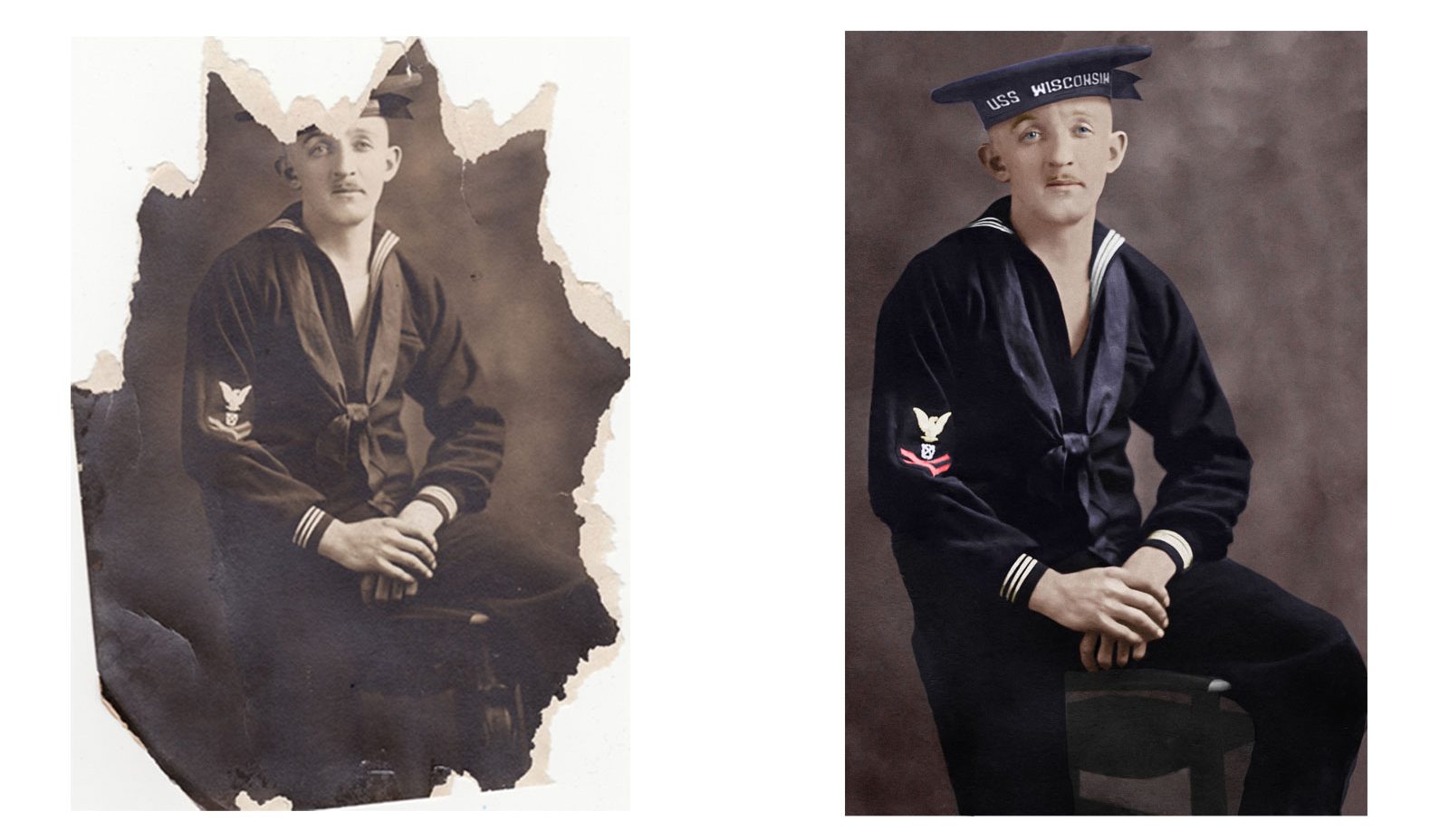
The Future of Photo Editing: The State of the Industry in 2026
The future of photo editing is arriving faster than most people would like. I asked two fellow online Photoshop educators, Jesús Ramirez of the Photoshop Training Channel and Colin Smith of PhotoshopCAFE, where we are now and where it’s going. We came at it from different perspectives, and we all came away thinking that nothing is going to stay the same.
4.5M+
YouTube subscribers between PHLEARN, the Photoshop Training Channel and PhotoshopCAFE
50+
years of teaching Photoshop between the three of us
3
online educators who each run their own Photoshop training company
Read the comments under almost any video about a new AI feature in Photoshop and you’ll find the same mix of excitement and exhaustion. People are tired of paying more, tired of results that aren’t quite good enough, and unsure what any of it means for their work.
I feel that too. I’ve taught photo editing for most of my career, and I use these tools every day. Some of them are remarkable. Some of them aren’t ready. And the bigger questions about the future of photo editing, like whether Photoshop as we know it survives and which editing jobs change first, are ones I can’t answer alone.
So I reached out to two people I trust to be honest about it. Jesús, Colin and I are all online educators, and friends, and all three of us specialize in teaching Photoshop. Jesús Ramirez founded the Photoshop Training Channel and designs film and TV posters for a living. Colin Smith founded PhotoshopCAFE and has taught Photoshop online since the early 2000s.
That’s the perspective of this article: three people who teach editing for a living, looking at where editing, and the teaching of it, is going. It’s built around the interviews I did with both of them.
Will Photo Editing Become Agentic?
“Agentic” means you describe the result you want and the AI does the steps: it opens the file, makes the selection, runs the adjustment and checks the result. A normal AI button does one thing when you click it. An agent decides what to click.
Things we thought were far out on the horizon are a reality now.
Aaron Nace
My first question to Jesús was about the future of photo editing itself: does Photoshop’s interface eventually give way to prompts? “I believe so,” he said. “I don’t know when, but it’s inevitable.” He sees it as the same path computers have always followed, from the mouse to the stylus to touch and voice.
He doesn’t picture one AI doing everything, though. “It’s gonna be multiple agents doing different things,” he said. “[In photography,] you may have your color grading agent, you may have your agent that picks the photos or sorts them.” And he thinks photographers will train their own agents, because “you’re the one who’s getting hired to do the job.” He’s already doing a version of this: “I train Claude to do things exactly how I want them to be done.”
Colin sees it differently. He expects a hybrid: a prompt for something like “Hey, remove the cat,” but a slider for brightness and color, because moving a slider is faster than describing “a little bit more” in words. Both of them agree on one thing. The person who knows what a good edit looks like still decides whether the result is right, and that part doesn’t get automated just because the clicking does.
The Tools We Stopped Reaching For
Here’s something that would have sounded strange five years ago: because of AI, some of the most important tools in Photoshop are quietly going out of use. The Clone Stamp used to be the first thing anyone learned for cleanup. The Pen tool was how you made a clean selection around a product. Now the Remove tool and Select Subject do most of that work. Those are just two examples.
Honestly, we just don’t use the Clone Stamp tool anymore.
Aaron Nace

I asked Jesús how he balances the old tools against the new ones. His answer was that professionals have never been loyal to a tool. “In a professional production environment, commercial work, you use the tools that get you the job done the quickest,” he said. “If that’s an AI tool, then that’s an AI tool.” It was always that way. If you had the time and budget, you could use a more advanced tool, and if you needed it done quickly, chances are you reached for the fastest option. AI is one more tool in that balance.
Colin pointed out that he still uses some of the legacy tools when he needs precise results, but someone starting out today “will probably never learn the [Pen tool],” for instance.
That’s the view from three people who have been in this industry for a long time. For a sense of what individual photographers are doing, VSCO, the photo-editing app known for its filters, polled 401 photographers, professionals and hobbyists and published the results in April 2026. Two things to keep in mind: VSCO sells AI tools, and “using AI” in the survey covers routine jobs like culling and cleanup, not just generating images. Nearly half of the people polled said that’s mostly what they use it for.
How photographers are using AI
Who uses AI at least once a week
68 in 100
Professional photographers
34 in 100
Hobbyist photographers
38%
of photographers used AI more in 2025 than the year before
29%
started using AI for the first time in 2025
2%
pulled back on AI
What Counts as Professional Now?
I asked Jesús where he draws the line between professional-grade AI results and the “good enough” results from a phone app. He pushed back on the question. “What does professional mean?” If someone runs social media for clients, posts AI images that are good enough and nobody complains, that’s professional for that job. His own work is different: movie posters that are 8K or 10K files and can end up on a billboard.
For work like that, he said, nothing has really changed. “The entire time that Photoshop has been out, our job as creators has been to create the illusion of detail and sharpness.” A generated dog that looks soft next to a sharp location photo gets the same treatment a soft photo always did. “Same thing we’ve done in the past.”
Colin put the same idea in one line: “In the past we’ve retouched photography, in the future we’re gonna be retouching AI.”
The entire time that Photoshop has been out, our job as creators has been to create the illusion of detail and sharpness.
Jesús Ramirez
So in the future of photo editing, the old rule still holds: check AI results at 100%, judge them against where they’ll end up, and expect to finish the last part by hand.
Why So Many Photographers Are Pushing Back on AI
of photographers use AI somewhere in their work
of UK photographers in the AOP’s member survey say they’ve lost work to generative AI
of them want labeling of AI-generated images required by law
The first number is from the VSCO survey. The other two come from the UK’s Association of Photographers, which published its member survey in January 2026. People are using AI and worrying about it at the same time.
Most of the pushback I see comes down to the bill. A Photoshop subscription comes with a monthly allocation of generative credits, and the newest features spend them. Each generation uses credits whether you like the result or not, and when it still needs fixing by hand, paying twice feels wrong.

Jesús takes a more holistic view of the pricing: these companies pay for every generation, and that cost gets passed on to the customer. “I am not saying that I think the pricing is fair,” he told me. “What I’m saying is that there is a cost to these things, and I don’t think people realize that.” Unlike the Clone Stamp, each generation costs money to run, “even if you don’t like the result, even if you delete the layer.” Colin thinks the anger comes from the shape of the deal. A subscription that doesn’t cover everything, he said, is like Disney: “you get an annual pass for Disney, and you go there and they’re like, oh no, you don’t get FastPass, you gotta pay extra for that.” He would rather see two versions of the plan, one with AI and one without, because “a lot of photographers are like, I don’t want AI, I don’t want AI anywhere near my photos.” Short of that, his ask is simpler: “Adobe [should] just be more transparent about it.”
These companies need to listen to their users. Your users will tell you what they want, what they need. You just have to listen.
Aaron Nace
Which Photography Jobs AI Changes First
At a baby shower recently, I met a woman who makes beautiful hand-stitched purses and sells them on Etsy. Her product photos were great, so I asked who shot them. She said she did, and I was surprised, because they were incredibly good. Then she said she took them on her iPhone and asked ChatGPT to make them look like professional product photos. I realized at that moment that she, and everyone else running a small business like hers, is probably going to go this route instead of hiring a product photographer.

When I told Jesús the story, he turned the question around: if AI didn’t exist, would she have hired someone? I don’t think she would have; she’d have shot them herself, just not as well. Jesús’s view is that this hurts entry-level photographers most: the one who might have charged her a couple hundred dollars won’t get that job. But that doesn’t mean photography as a whole disappears.
He thinks some work is protected by liability. “Nike, for example, can’t AI-generate a shoe, and if it does, it needs to look absolutely flawless, and at that point it might just be easier to take a picture.” The same goes for fashion, textiles and bespoke hardware, anything where false-advertising liability matters. And events like weddings have “a lot of emotional value and also [serve] as historical proof.”

Colin sees the same split from the business side. “A lot of the mom and pops, the kind of clients I started my business with, are gone,” he said, while “the ad agencies, the corporations, they’re all gonna want real photography still.” What worries him is the training ground: those small jobs “were the jobs that you needed to learn your craft.”
65%
fewer commissioned images licensed by members than in the 2025 survey
46%
fewer of members’ photos shown publicly on their websites, which the AOP puts down to fear of AI scraping
What AOP members told the Association of Photographers
A Time of Choice
We’re entering into a time of choice.
Aaron Nace
Anyone can still hire a photographer, a retoucher or a video editor. Anyone can also do it themselves with AI. Neither choice is wrong, which makes the real question about value: what does a client get from a person that they can’t get from an AI?
Jesús‘s answer was the artist. “If I wanted to hire somebody to design an album cover for me, I wouldn’t want anybody using much AI, because I’m hiring the human at this point,” he said. “I’m hiring somebody that’s got a specific style, somebody that has a proven track record in that style.” When I said clients will end up paying for the artist’s name, he called it the flex: anyone can get a portrait taken with an iPhone now, “but if you want to throw the flex, you hire the artist.”
Colin‘s answer to the value question was craft. “These things that are made by humans, like handcrafted goods, are gonna be so valuable in the future,” he said; a handmade table already costs many times what the store version does. His advice, if you enjoy craft the way he does, is to pick up a pencil and paper and start drawing again. That is the sad part about AI for me, because I love craft too. We used to need a lot of different tools at a very high level and know how to combine them, and now it is one tool you can talk to.
You communicating with the interface is not your value. Your value is what’s in your head to make that image come to life.
Jesús Ramirez
The other half of the choice is how photographers use AI themselves. A wedding photographer who delivers a sneak peek the next morning because AI culling sorted the shoot overnight is giving the client something better. Using AI to cut corners is the fastest way to lose the value that made someone hire you in the first place.
These things that are made by humans, like handcrafted goods, are gonna be so valuable in the future.
Colin Smith
What Happens to Photo Education
For most of history, you learned photo editing, or photography, or just about anything else, from another person. Now you can ask an AI how to remove something from a photo and get a decent answer in seconds. Simple “how do I…” questions are going straight to AI, and that hits people like Jesús and me directly.
Historically we’ve had to rely on other humans for education, but now we can turn to AI for simple questions.
Aaron Nace
Jesús was honest that his answer cuts against how he works. “This sucks for me, by the way, ’cause this is totally not the way I create videos, but I think we have to be more human,” he said. “What the YouTuber can do is offer their humanity, their story, their experience, and connect with you on a human level. That is probably where educators can still win.”
He told me how he’d keep AI from making a lesson feel cold: write the tutorial himself, give the script to Claude or ChatGPT to check, and re-record anything it catches. “I don’t lose the personal touch because I’m still involved.” He compared creative work in general to portrait painters when the camera arrived. Many stopped painting portraits, but some still do, and it “almost became a luxury product.”
Colin thinks the people who want to learn are still coming, but what they need from a teacher is changing. “AI is not a replacement for you, it’s a replacement for your assistant, and you are the art director, and you’re giving instructions.” Garbage in, garbage out, as he put it.
That’s why we keep making long courses. Our PRO course Master Photoshop and Lightroom 2026 is nearly two hours, across 13 lessons, of us testing the new AI tools, from Harmonize to Nano Banana, and showing where each one is worth using.
Temporary Shake-Up or Permanent Change?
For my generation, Photoshop was the best tool there was, and that’s why we used it. Most people end up using the best tool for the job. You can still ride a horse to a friend’s house, but most people drive.
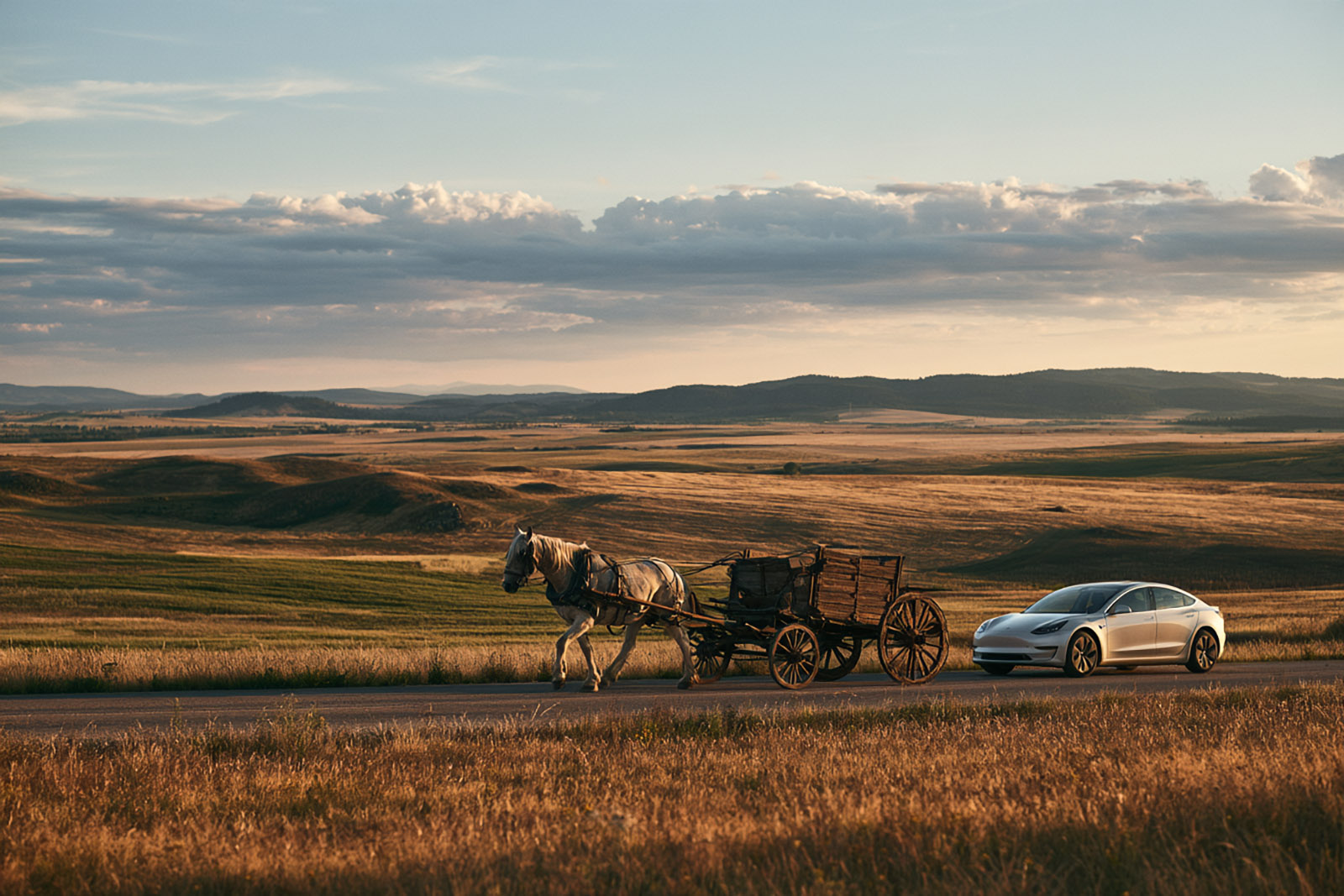
So I asked Jesús whether what we’re living through is a temporary adjustment or a permanent uprooting. “It’s both,” he said. “It is a temporary period of adjustment. We’re gonna adjust to whatever is next, and whatever is next is a permanent uprooting of the professional creative business model.” “When the dust settles, the world’s gonna be very different in our industry.” He’s seen this before, he said: it happened with computers, and again with digital cameras.
Colin wouldn’t call it either way. “We can only speculate, because we don’t know what’s coming next week,” he said. The week before we talked, nobody expected one developer to clone Photoshop and Lightroom with AI, and then it happened.
How photographers feel about AI
What Will New Photographers Start With?
The people who’ve used Photoshop for twenty years will split; some will move to new tools quickly and some won’t want to. The bigger question is the people who haven’t started yet, and whether they’ll pay for desktop software or stick to a phone app that’s free and does most of what they need.

I asked Jesús which skills matter most for them in the future of photo editing. “Same as always: traditional art,” he said. When computers arrived in the 1980s, “the people that really stood out and took computer graphics to the next level are the people who really studied the traditional art foundations, meaning color theory, composition, all this stuff that’s been around since the Renaissance.”
He thinks that’s the industry’s biggest blind spot right now. “You’re gonna be great at prompting, you’re gonna know all the tools and all about the agents, but… what is the opposite of red?” If he were starting today, he’d study the same thing he did, multimedia, but with more traditional art and some computer science, to understand the technology he’s using.
Colin‘s advice lands in the same place: draw “a line in the sand of what can be done with AI and what cannot,” skip what no longer needs learning, and put the time into fundamentals.
Five Mistakes Photographers Make With AI Right Now
Most of the problems we see with AI photo editing right now come from one of these.
Judging a tool on one try. Generation is a little like shooting: the first frame is rarely the keeper. “Don’t hit generate one time,” Jesús said. “Just like when taking a real picture, you might need to do it five or six, seven times. It’s expensive, I know.” Change one thing in the prompt each time, like the color or the composition.
Spending credits on jobs a free tool does. Small distractions, dust and stray hairs are Remove tool jobs. Save generations for the things only generation can do.
Trusting a generated product shot without checking it. Read every label, logo and line of text on the product at 100%. AI tools still change small lettering and details.
Judging the result at phone size. Generated detail often looks fine small and soft at full size. Check at 100% before you deliver anything.
Skipping the fundamentals. Light, color and composition decide whether a photo is good. AI makes the steps faster. It doesn’t tell you what a good photo looks like.
Common Questions About the Future of Photo Editing
Will AI replace photo editors and retouchers? Not the ones clients hire for their eye. Routine cleanup, culling and simple product edits are moving to AI first. Work where the client is paying for a style, a name or a flawless result at full size, like posters, high-end retouching and commercial work, is the safest. As Jesús put it, your value is what’s in your head, not your clicks.
Is Photoshop going away? Not soon. Jesús thinks prompts will eventually replace much of the interface; Colin expects a mix of prompts and sliders. Either way, the future of photo editing still depends on knowing what a good edit looks like.
Do AI features in Photoshop cost extra? Some do. Generative features spend generative credits from your plan’s monthly allocation, and the number per generation depends on the feature and model. The Remove tool and Select Subject don’t spend credits in Photoshop 2026.
Is it still worth learning photo editing? Yes. AI makes the steps faster, and someone still has to know what the finished photo should look like. That judgment is what clients pay for.
The Future of Photo Editing: Where We Land
AI in photo editing is early, expensive and getting better fast. The photographers who do well with it will be the ones who know what a good photo looks like, and who use AI to give their clients something better rather than something cheaper.
Everything is changing incredibly quickly, and it’s impossible to know where things will land. If anything, the pace is going to pick up; I don’t see anything slowing down. But what all three of us agreed on is that the fundamentals are incredibly important, and the human element is always going to be necessary. At the end of the day, AI is just a tool. It’s the humans using that tool, with their ideas, their creativity and their experience, who drive creation.
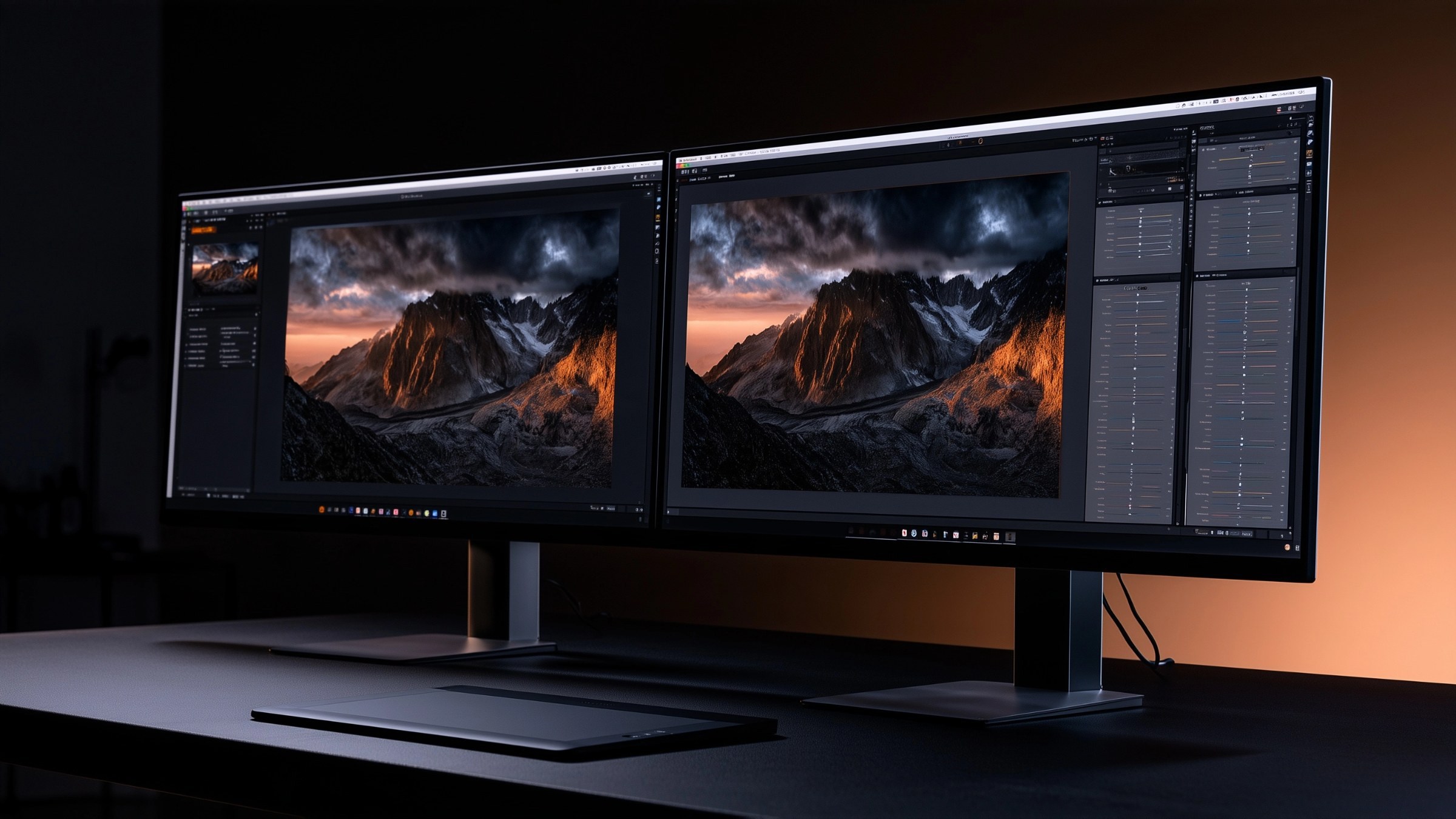
Quotes from Jesús Ramirez and Colin Smith come from my conversations with them on October 15 and 14, 2026, lightly edited for clarity. The image at the top of this article and every image inside it except the wedding photo were made with Midjourney from prompts we wrote. We tried the same idea in Adobe Firefly and Google Gemini too, and liked Midjourney’s best. The wedding photo is a real photograph, on purpose. The image at the top shows the idea this article is about: half of the portrait on that screen is a photograph, and the other half is still being built.
In this article
- Will Photo Editing Become Agentic?
- The Tools We Stopped Reaching For
- What Counts as Professional Now?
- Why So Many Photographers Are Pushing Back on AI
- Which Photography Jobs AI Changes First
- A Time of Choice
- What Happens to Photo Education
- Temporary Shake-Up or Permanent Change?
- What Will New Photographers Start With?
- Five Mistakes Photographers Make With AI Right Now
- Common Questions About the Future of Photo Editing
- The Future of Photo Editing: Where We Land
Free with PHLEARN