
Download Assets
This tutorial includes 1 sample image, 1 sample PSD, 1 Photoshop action and 1 PDF guide. Downloads are free with a PHLEARN account.
- Download the sample images and PSDs from every free tutorial on PHLEARN
- New free tutorials published every week
- One free account — sign up once, then download anything
Free PDF Guide · 4 Pages
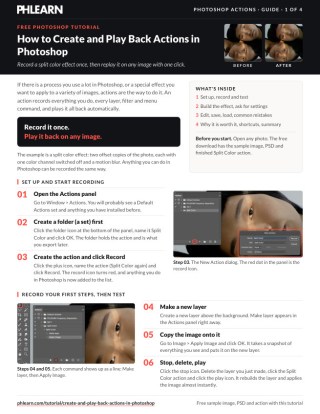
This Tutorial as a Step-by-Step PDF
Walks through recording the Split Color action: Window > Actions, a set and a new action, Image > Apply Image, Shift and arrow-key nudges, R and G unchecked under Advanced Blending, Filter > Blur > Motion Blur with its dialog toggle, Insert Stop with Allow Continue, then Save Actions and Load Actions. Keep it next to your keyboard.
description
Actions in Photoshop record everything you do — every layer, filter and menu command — and play it all back on any image in a single click. They are built in the Actions panel, and you can stop, test and resume a recording as many times as you need while you put one together.
This tutorial builds a split color action from scratch, then makes it genuinely reusable: switching on the dialog toggle so a filter asks for its own settings on every run, adding an Insert Stop that leaves instructions for whoever plays it, and saving the set so you can move it between machines or share it.
Enjoying This Free Tutorial?
We publish a new free tutorial every week, each one with sample images and PSDs you can download and follow along with. Sign up and they land straight in your inbox, along with early word on sales, events and subscriber-only offers.
Image Source
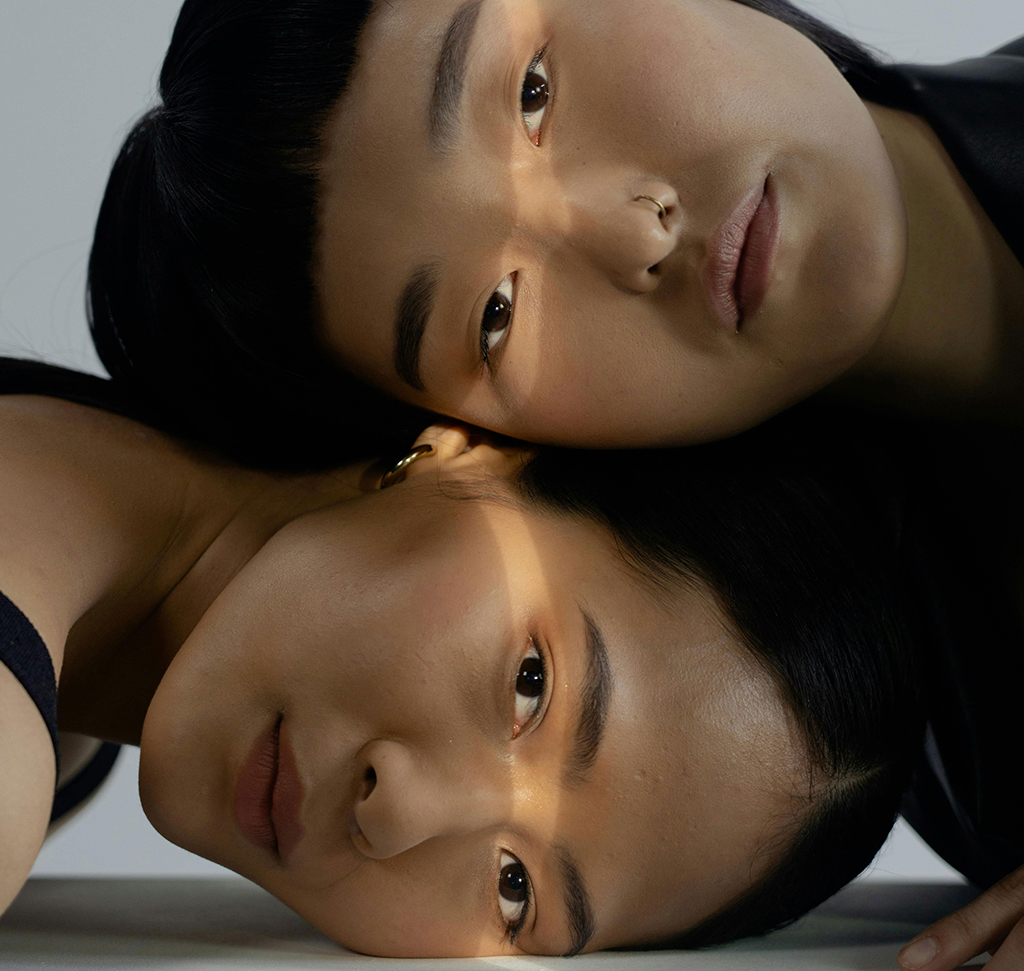
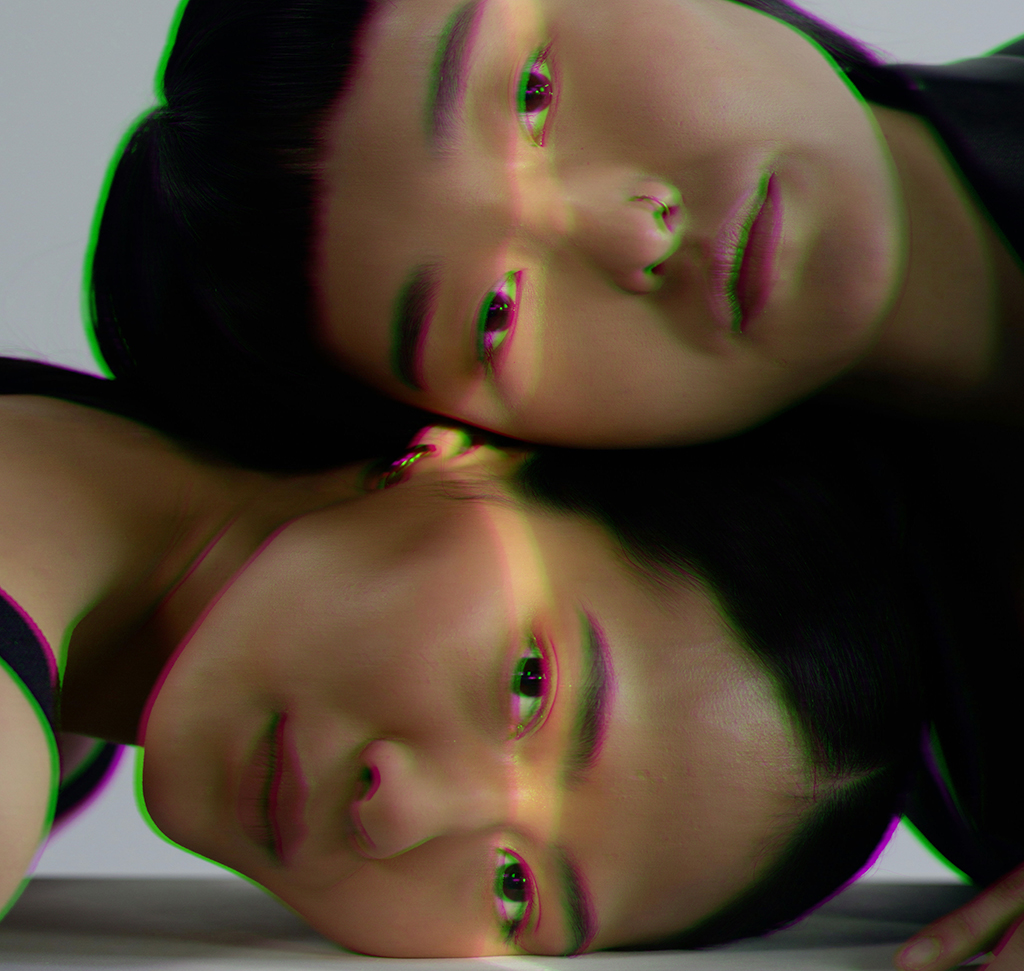
How to Create and Play Back Actions in Photoshop
If you run the same sequence of steps in Photoshop often enough, you eventually notice how much of your editing time goes into repeating yourself. Actions fix that. Photoshop records everything you do — every layer, every filter, every menu command — and plays it back on any image you like, in the time it takes to click once.
The example here is a split color effect: a copy of the image offset to one side with its red channel switched off, a second copy offset the other way with green switched off, and a motion blur over each. It is deliberately simple, because the point is not the effect. The point is that once it is recorded you can apply it to a hundred photos, hand it to someone else, or sell it — and that you can build in a pause that asks whoever runs it to choose their own blur along the way.
Getting Started
Actions live in their own panel, and they are organized in sets — folders that hold related actions. Creating the set first keeps things tidy and makes the whole group easy to export later.
-
Open the Actions Panel
Go to Window > Actions. You will probably already see a Default Actions set in there, along with anything you have installed previously.
-
Create a New Set
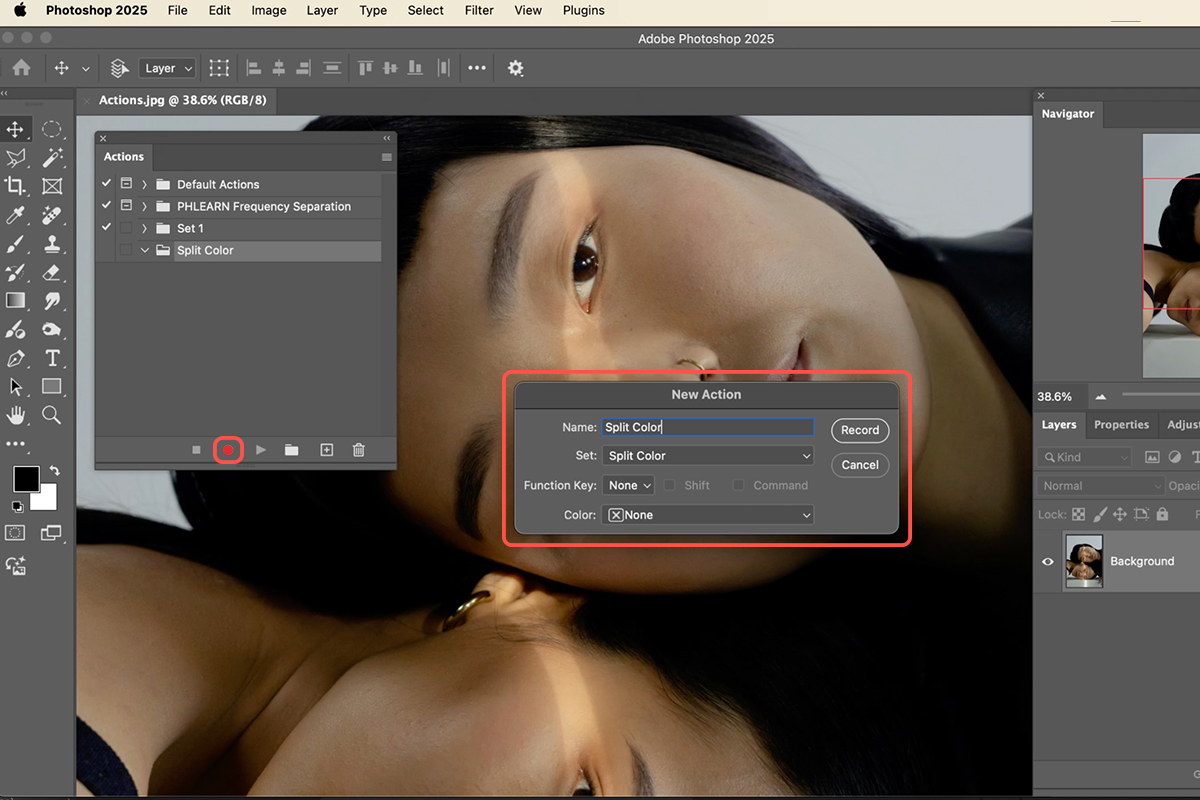
Click the folder icon at the bottom of the panel and give it a name — Split Color, for this one. Everything you record next will live inside it.
-
Create the Action and Start Recording
Click the plus icon, name the action, and click Record. You can also assign a Function Key here if you want to trigger it from the keyboard. The record icon turns red, and from this moment Photoshop is writing down everything you do.
Recording Your First Steps
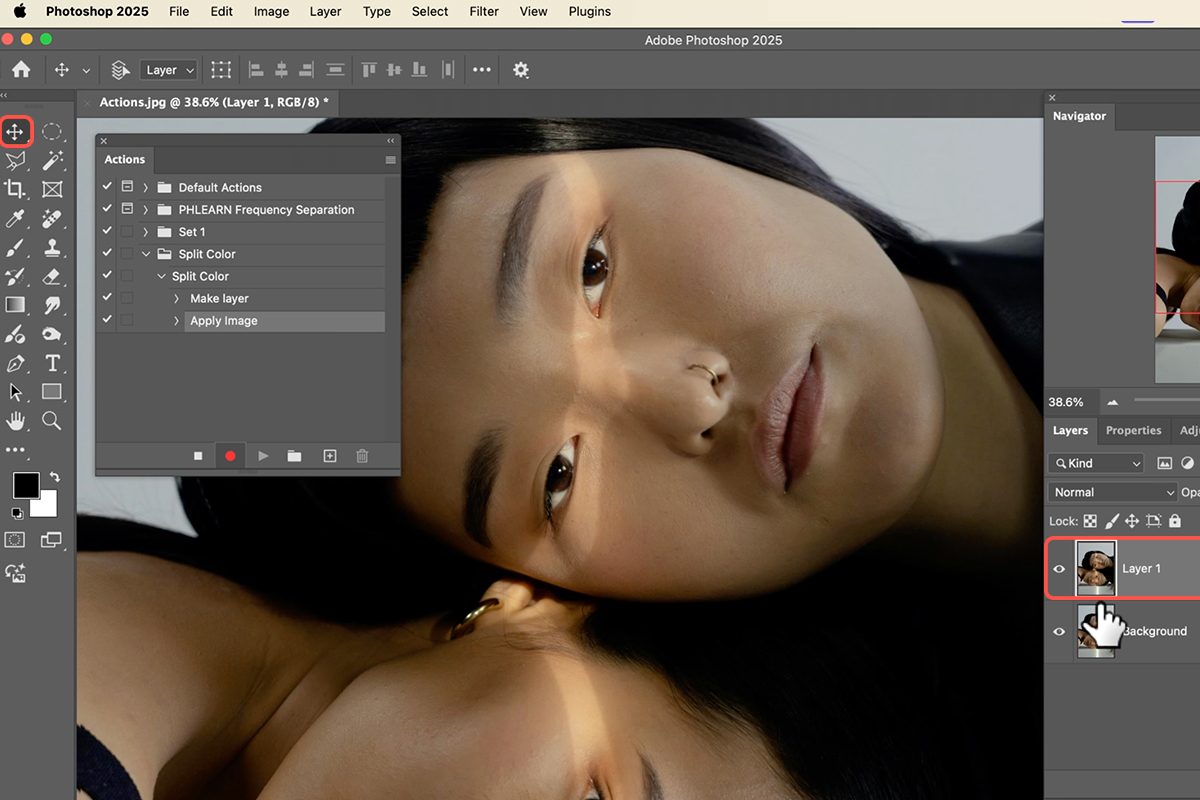
Watch the panel as you work — each command you run appears as a line in the list. That running list is the action, and it is what makes actions easy to trust: you can see exactly what has been captured.
-
Add a New Layer
Create a new layer above your background. A step reading Make Layer appears in the panel immediately.
-
Copy the Image Onto It
Go to Image > Apply Image and click OK. This takes a snapshot of everything visible and places it on your new layer, which gives you a working copy without touching the original. Apply Image is worth knowing in its own right — it is the backbone of a lot of color work.
-
Stop and Test It
Click the stop icon, delete the layer you just made, then select the action and press play. It should rebuild the layer and reapply the image in a fraction of a second. Two steps is not much of an action yet, but confirming it now costs you nothing.
Why You Should Test Before You Finish
Recording is not a one-shot performance. You can stop, play back, and resume as many times as you want, and an action is far easier to debug in pieces than as a finished block of twenty steps. Build a few commands, run them, confirm they do what you expect, then carry on. Finding a mistake at step three when there are only three steps is trivial; finding it after you have recorded the whole thing means unpicking everything built on top of it.
To pick up where you stopped, click the last step in the list to select it, then press record again. New steps are added after whatever is currently selected — which is also how you insert a command into the middle of a finished action later.
Building the Split Color Effect
The effect itself comes from two things: offsetting a copy of the image, and switching off one of its color channels so the layers underneath show through in a single hue.
-
Offset the Layer
Select the Move Tool (Keyboard Shortcut “V”), then hold Shift and press the right arrow key twice to nudge the copy sideways.
-
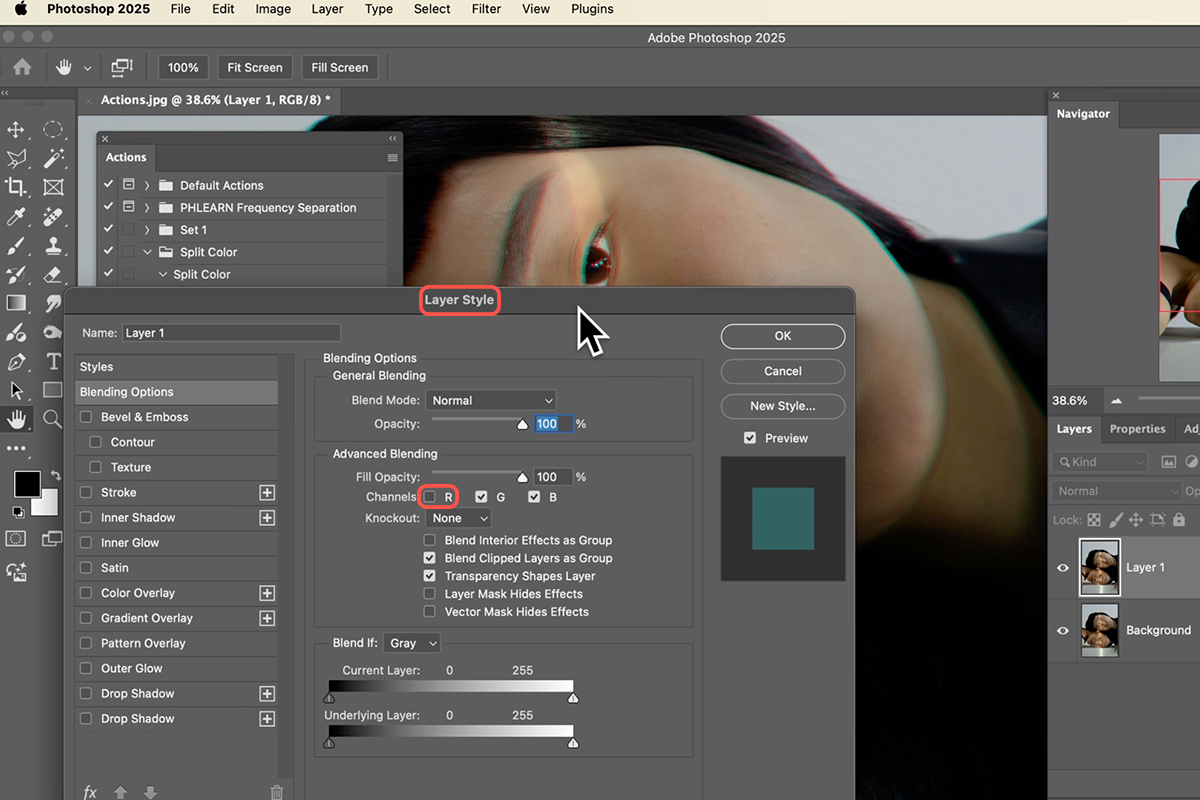
Open Blending Options
Double-click the layer to bring up the Layer Style dialog and find the Advanced Blending section.
-
Switch Off the Red Channel
Under Channels, uncheck R and click OK. With red removed from the offset copy, the underlying image shows through it in cyan, and the shifted edge reads as a colored fringe. If channels are unfamiliar territory, understanding color channels in Photoshop explains what you are actually turning off here.
Use the Arrow Keys, Not the Mouse
This is the single most useful habit to build when recording actions. Dragging a layer with the mouse records a position, not a distance — and it records the position you happened to land on, on the image you happened to be using. Nudging with Shift and an arrow key records an exact, repeatable movement instead, so the action behaves identically on a portrait, a landscape, or a file twice the size. Any time you are recording something positional, reach for the keyboard.
Adding the Second Color Shift
One offset layer gives you a shift in a single direction. Duplicating it and pushing it the other way, with a different channel disabled, is what produces the balanced split you are after.
-
Duplicate the Layer
Press Cmd + J on Mac (Ctrl + J on PC) to copy the layer you just built.
-
Offset It the Other Way
With the Move Tool active, hold Shift and press the left arrow key twice as far as you went right, so the new copy sits an equal distance on the opposite side.
-
Switch Off the Green Channel
Double-click this layer, and this time uncheck G instead of R. You now have the original in the middle, a magenta-leaning shift one way and a green-leaning shift the other — the classic split color look.

Adding a Filter to the Action
Filters record just as readily as layers do, and a directional blur on each offset copy turns a sharp double-image into something that reads as movement.
-
Select the Step to Build From
Click the step you want the new command to follow, then press record. Remember that new steps land after whatever is selected.
-
Apply Motion Blur
Go to Filter > Blur > Motion Blur and set a distance. Push it further than feels sensible — a strong blur reads better here than a timid one — then click OK and stop recording. For more on shaping it, see adding motion blur to backgrounds and how to master the Motion Blur filter.
Letting the Action Ask You for Settings
As recorded, that blur is frozen at whatever number you typed. That is fine when the value should never change and a problem the moment it should — and blur distance is exactly the kind of setting that wants to differ from one photo to the next. Photoshop has a control for this that almost nobody uses.
-
Turn On the Dialog Toggle
In the Actions panel, click the small dialog box icon in the second column next to the Motion Blur step. Now, when the action reaches that point, it opens the Motion Blur dialog and waits for you to choose a value instead of applying the recorded one.
-
Insert a Stop With a Message
Select the step immediately before the blur, open the panel menu and choose Insert Stop. Type the instruction you want shown — something as plain as “choose the motion blur” works — and tick Allow Continue before clicking OK. Without Allow Continue the action halts outright; with it, the reader gets your message and a button to carry on.
Insert Stop: Leaving Instructions for Other People
This is what separates an action you use from an action you can hand over. Anyone running it sees your note at the moment it matters, rather than having to guess what the action expects of them. If you intend to share or sell your actions, a short instruction before every modal step is the difference between something people can actually use and something they abandon after one confusing playback.
Changing a Step You Already Recorded
Double-clicking a recorded command reopens its dialog, and confirming it writes a new value into that step — useful when the number you first chose turns out to be wrong. You can add modal toggles to any other step the same way, so the same action can prompt for the blur on the first offset layer and again on the second.
Saving, Loading and Sharing Actions
An action lives inside Photoshop until you export it, and exporting is what turns a personal shortcut into something you can move between machines, send to a colleague, or put up for sale.
-
Save the Set
Select your set in the panel, open the panel menu and choose Save Actions. Pick a location, give it a name and save. That single file contains every action in the set.
-
Load an Action File
To bring one in, open the same panel menu and choose Load Actions, then select the file. It appears in the panel ready to play, which is exactly how installed sets like Advanced Skin Retouching in Photoshop arrive.
-
Run It on Anything
From here the effect is one click on any open image. Select the action, press play, answer whatever prompts you built in, and it rebuilds the whole stack from scratch.
Where Actions Usually Go Wrong
Most broken actions fail for reasons that have nothing to do with the effect. The commonest is recording the whole thing before testing any of it, then discovering something went wrong near the start. The second is positioning with the mouse instead of the arrow keys, which bakes in coordinates that only suit the image you recorded on. The third is subtler: new steps are inserted after whichever step is currently selected, so if you press record with the wrong line highlighted, your command lands in the middle of the sequence rather than at the end.
Why a Hard-Coded Setting Is Usually the Wrong Choice
It is tempting to record a filter at the value that looked right and move on. But a blur that suits a tight portrait will overwhelm a wide landscape, and an action that cannot adapt gets used once and forgotten. Before you export anything, look back through your steps and ask which values genuinely should be fixed.
Turn the dialog toggle on for the rest. The action gets slightly slower to run and dramatically more useful, and if you are handing it to anyone else, pair each prompt with an Insert Stop so they know what you are asking for. The same thinking applied end to end is worth seeing in How to Retouch a Portrait in Photoshop and How to Use Smart Objects in Photoshop.
What Makes Actions Worth the Setup
The obvious argument is speed, and on volume work it is a real one — batch resizing a folder of photos is minutes of clicking replaced by a single command. But the better argument is consistency. An action performs the same sequence at the same values every time, which means a set of images comes back looking like a set rather than like twenty separate editing sessions. That matters more than raw speed on anything a client will see side by side.
The third benefit only shows up later: an action is a written record of how you did something. Six months after inventing an effect you will not remember the channel you switched off or how far you offset the layer, but the step list will, and you can read it back one line at a time. Photoshop has since added an AI-assisted Actions panel as well, but the underlying idea has not changed since the feature was introduced — record once, replay forever.
Make Actions Part of Your Workflow
The best first action is not a clever effect. It is the boring sequence you already run without thinking — the resize and sharpen you do before every upload, the layer stack you build at the start of every retouch, the export settings you type out every single time. Record that once and you will notice the time it gives back within a week.
Then start building the more interesting ones. Keep them in named sets, test as you record, use the arrow keys, and turn on the dialog toggle anywhere a value should breathe. Do that and you end up with something better than a folder of shortcuts: a small, portable library of your own methods that runs on any machine you sit down at.
Quick Reference: Keys, Menus and Settings
- Start recordingWindow > Actions; folder icon for a set, plus icon for the action, then Record
- Copy the imageNew layer, then Image > Apply Image
- Test and resumeStop icon, delete the layers, play; click the last step, then record again
- Nudge the copyV, then Shift + Right Arrow twice; Cmd/Ctrl + J to duplicate, Shift + Left Arrow four times
- Split the colorDouble-click the layer > Advanced Blending > Channels: uncheck R, then G on the copy
- Ask for a valueFilter > Blur > Motion Blur, dialog box icon on; panel menu > Insert Stop with Allow Continue
- Save and loadPanel menu > Save Actions; panel menu > Load Actions
No AI, no generative credits.
Free Downloads
Follow Along on the Same Photo
Get the sample image, the sample PSD, the finished Split Color action and the 4-page PDF guide, so you can record it yourself and compare. Free with a PHLEARN account.
Photoshop Actions: Common Questions
What is an action in Photoshop?
An action records everything you do, every layer, filter and menu command, and plays it all back automatically on any image with one click.
How do I record an action?
Go to Window > Actions, click the folder icon to make a set, then the plus icon to make the action, and click Record. The record icon turns red and every step you take is added to the list.
Can I stop recording and pick up again later?
Yes. Click the stop icon, test it with play, then click the last step in the list and click record again. You can start and stop as many times as you want.
Why did my new step land in the middle of the action?
New steps are added after whichever step is selected. Click the last step before you press record, unless you mean to insert a command in the middle.
Why use the arrow keys instead of dragging with the mouse?
With the Move Tool (V), holding Shift and pressing an arrow key records an exact move that repeats the same way on every image. A mouse drag is not as dependable.
How does the split color effect work?
A copy of the photo is nudged right with R unchecked under Advanced Blending in Layer Style, and a second copy nudged left with G unchecked. You get a magenta shift on one side and a green shift on the other.
How do I make an action let me choose a setting?
Click the dialog box icon next to the step, here Motion Blur. When the action reaches it, the Motion Blur dialog opens and waits for you to pick the amount.
How do I add instructions for someone else running my action?
Select the step before, open the panel menu and choose Insert Stop. Type the message, such as “Choose the Motion Blur”, and check Allow Continue so they get a Continue button.
How do I save, share or load an action?
Select the set, open the panel menu and choose Save Actions to get one file you can share or sell. To bring one in, choose Load Actions from the same menu and open the file.
Are the sample files free?
Yes, with a free PHLEARN account. You get 1 sample image, 1 sample PSD, 1 Photoshop action and 1 PDF guide: the photo, the finished file, the Split Color action and the step-by-step guide.
From the Magazine View all
Stories, interviews and guides for photographers, new every week.
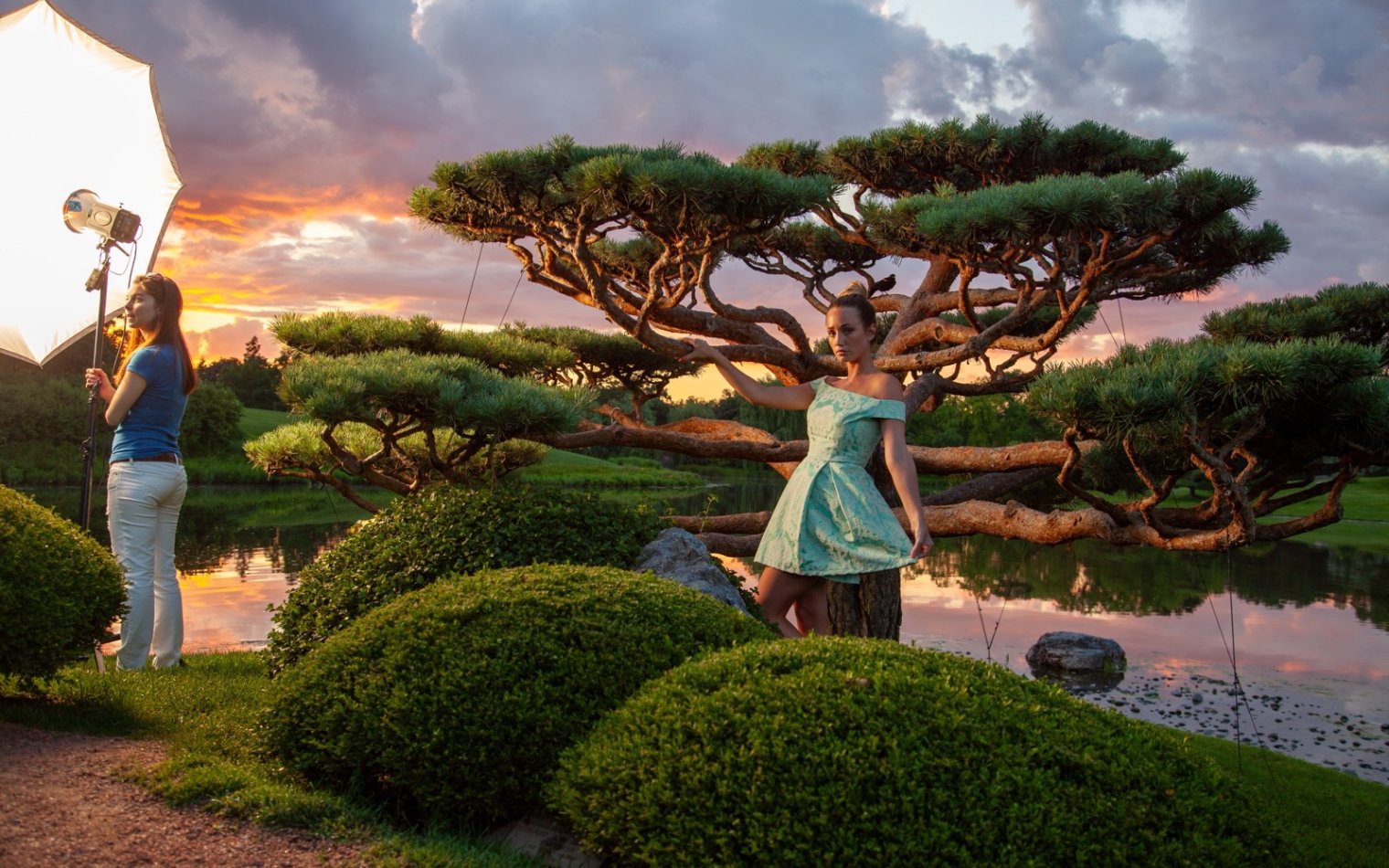 EditingLightCraft vs Lightroom: I Edited the Same RAW Files in BothThe free clone on the same RAW files: what matches, what breaks and who should switch.
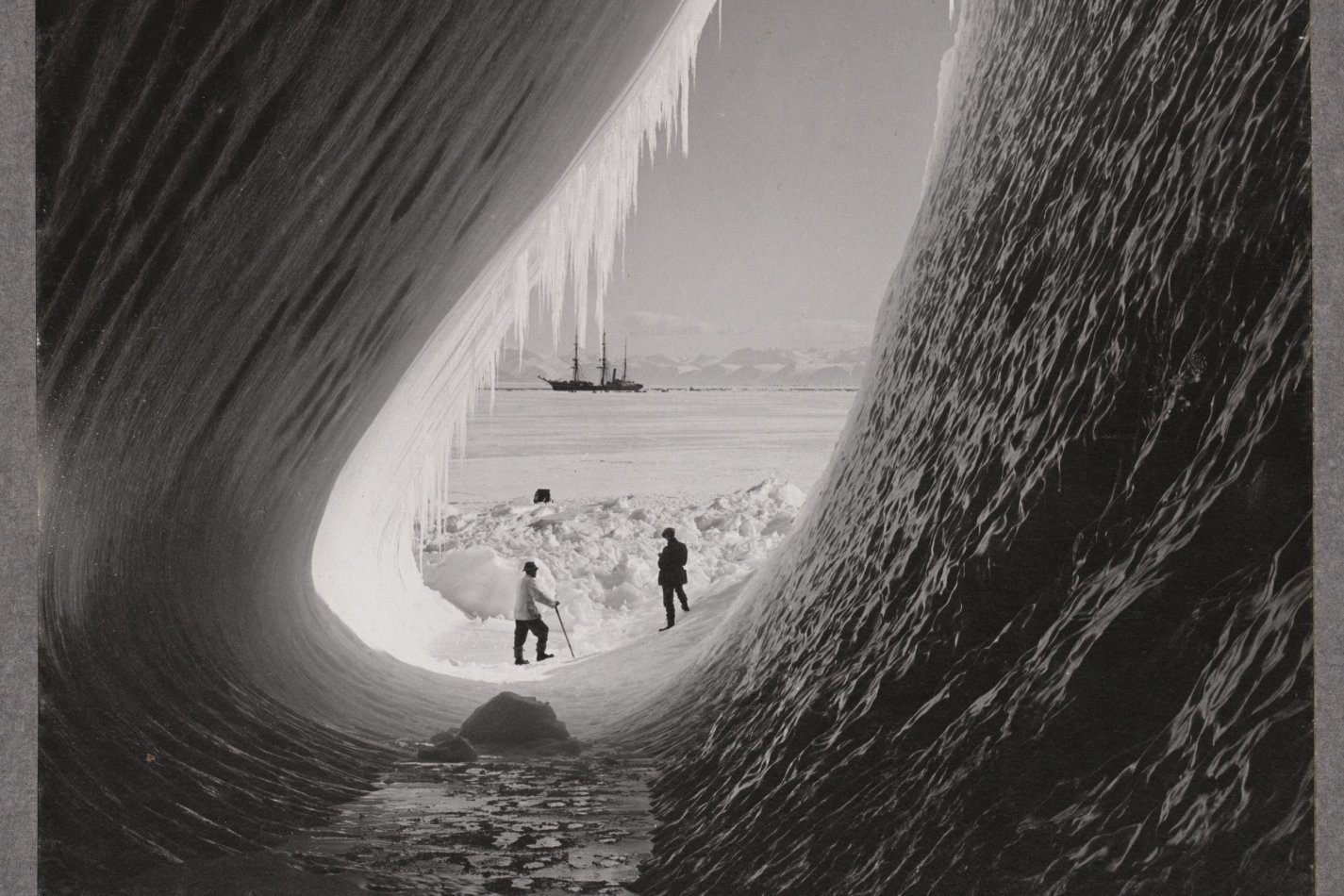 InspirationRare Historical Photos: 13 of the Rarest Pictures Ever TakenFrom the earliest surviving picture of a person to the last passenger pigeon: who took each one and why it survives.
 EditingArtCraft: Photoshop Cloned by AI in Two Weeks. Is It Legal?ArtCraft cloned Photoshop and Lightroom with AI and gave them away. Any good? Legal? Safe?
Master Photoshop, Lightroom and Photography
Join PHLEARN PRO for $12.99 a month, or $99.99 a year (save 36%). Cancel anytime, with a 100% money-back guarantee.