Phlearn Interviews Rosie Anne Prosser
Rosie Anne Prosser is a 26 year old fine art photographer.
Originally published November 15, 2013, by Taylor Harvey. Updated October 16, 2026, by PHLEARN Staff: Rosie’s answers are now grouped into sections, with pull quotes, a numbers strip, a few common questions answered from the interview and an About the Artist box; small typos are fixed.
In this 2013 interview, Welsh fine art photographer Rosie Anne Prosser talks about the lost characters in her photos, how cutting up old photographs led her from drawing to photography, and how much of each image happens in Photoshop.
Born in Wales, and currently residing in the Black Mountains of Mid-Wales, Rosie keeps herself occupied working with her camera and Photoshop. In 2010 Rosie graduated with a BA (with honours) in Drawing & Applied Arts from the University of West England.
Rosie was the Winner of the Sky Arts Creative Wish Competition 2012, has had two solo exhibitions in August and September of 2012, and she has been featured and interviewed by a few different websites.
In Rosie’s own words –
My fascination is with humans and their reactions to their surroundings.
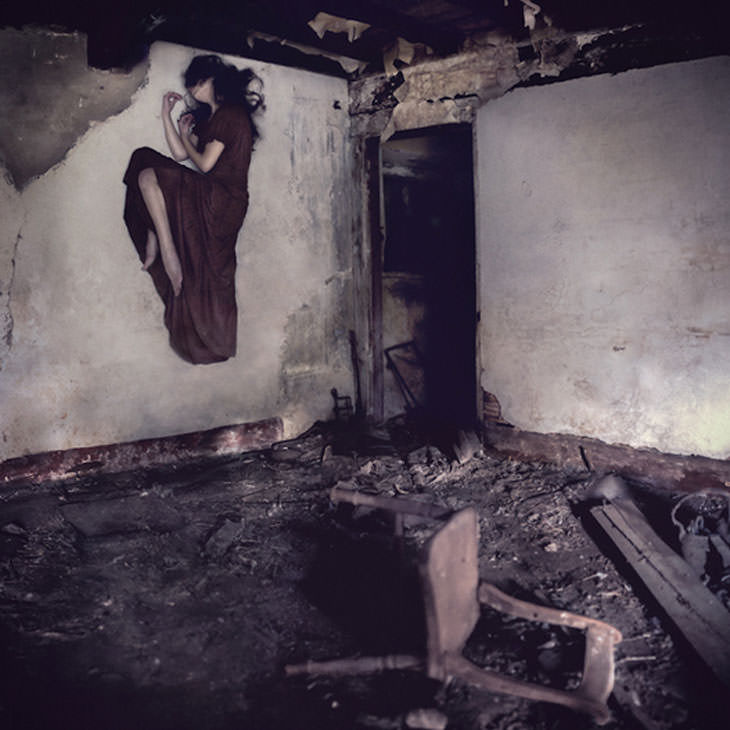
The characters, or ‘orphans’, are often filled with a deep sense of loss. Waif-like creatures yearning for a sense of belonging. I use nature, objects, abandoned places, or anything that has been ‘left behind’, as a means of telling a story. I am inspired by my own experiences, often finding my subconscious playing a big part in the images I create. I grew up in rural Wales, surrounded by the Black Mountains. I feel I am in a constant struggle with modern-day life and the pressure society puts on us as individuals to conform to their way of living. I draw inspiration from the mountains, woods, and rivers around me.
15
her age when photography first caught her eye
2
days for an image that comes easily
3
weeks for the slowest ones

How Rosie Anne Prosser Found Photography
Before becoming interested in photography you always thought you were going to be a drawer or a painter. However, once you began experimenting with collage-making you found yourself more drawn to photography. Can you tell us about this?
Well photography has always been something I’ve been interested in since the age of 15. I loved taking pictures of dilapidated buildings, estranged objects and people, but that was as far as it went. However, when I went to University it gave me the opportunity to experiment, which is how I became interested in collage-making. I began by taking all these old photographs and cutting them up and then crudely sticking them back together to create these new surreal juxtapositions.
It made me realize that photography doesn’t have to be this one clear-cut thing. Collage-making allowed me to break the boundaries of what I thought photography should be, it allowed me to see things differently. Once I knew I could do this it opened up a whole new realm of photography, which was really exciting.
It made me realize that photography doesn’t have to be this one clear-cut thing.
Rosie Anne Prosser
Do you find that your expertise on both painting and drawing is often translated into your work?
Haha, I wouldn’t call myself an expert! I do enjoy creating photos with similar aesthetics to painting, such as strong use of deep rich colours and tones to achieve that painterly look.
Do you still continue to draw and paint even though your main passion is now photography?
For the time being it seems painting is something I’ve left behind. I still continue to sketch every now and again, but seeing how out of practice I am actually scares me, and I think that’s why I’m so reluctant to pick it up again. Maybe someday I will.

Can you tell us about what it’s like creating a drawing or painting from start to finish compared to the process of creating a photograph from start to finish? I’m curious to see how similar or different these processes may be for you.
With painting I spent a lot of time in one place over a long period of time, so you really get to establish an intimate relationship between you and your medium. The level of intimacy I get from photography is different as it’s more about moving to different places and working in the here and now. I achieve intimacy by being alive in nature in that very moment, capturing that very breath.
Painting, for me, is more about working with a memory, whereas photography is approached by pulling at all angles for me. I find that post-processing is similar as far as technology permits as I use a lot of layering of colour in Photoshop, in the same way I would layer paint onto the canvas with a Brush.
Do you have any formal training within the arts? (photography, drawing, painting)
I’m self-taught in photography. At university I was studying Drawing & Applied Arts, I distinctly remember my tutor saying “we don’t teach you how to draw, we teach you how to think”, so no, no training. But I’m thinking well, supposedly.

Ideas and Inspiration
Before creating an image, do you ever sketch the work before hand? (if so, can we please see a sketch)
Sometimes, but most of the time I forget. I’m trying to make a note of jotting my ideas down more. (sorry, my sketches are REALLY bad)
What inspires you?
Nature, people, life experiences, music, things I’ve read, films… the apocalypse.
Have you ever created an image inspired by these surreal collages that you make?
No not directly. I think my photography shares a similar sort of atmosphere. But my collages definitely feel more estranged from reality; I think some of my photography still bears an element of surrealism only not quite so alien.

When not behind the camera or editing, what do you spend your free time doing?
I like to spend a lot of time outside walking in the woods, mountains, and searching for abandoned places; I love location-scouting for future photo ideas. I enjoy collecting things nature has to offer like bones, feathers, leaves, bits of tree, or whatever. I take these things home to decorate the place with. My house is full of oddments I’ve picked up from nature and remnants of other people’s lives taken from derelict houses; It makes me feel grounded… and maybe also a bit like a thief.
I also love going to gigs and seeing live music especially when my good friends Elspeth Anne, Tobion and Not Jim Smith are playing. I’ve also been trying to learn Arabic with Jed (my boyfriend), just for fun.
Gear and Photoshop
What’s on your gear list? (camera, lens, editing software)
I don’t really need anything else gear-wise although if I had the money I wouldn’t pass up on underwater housing for my camera…
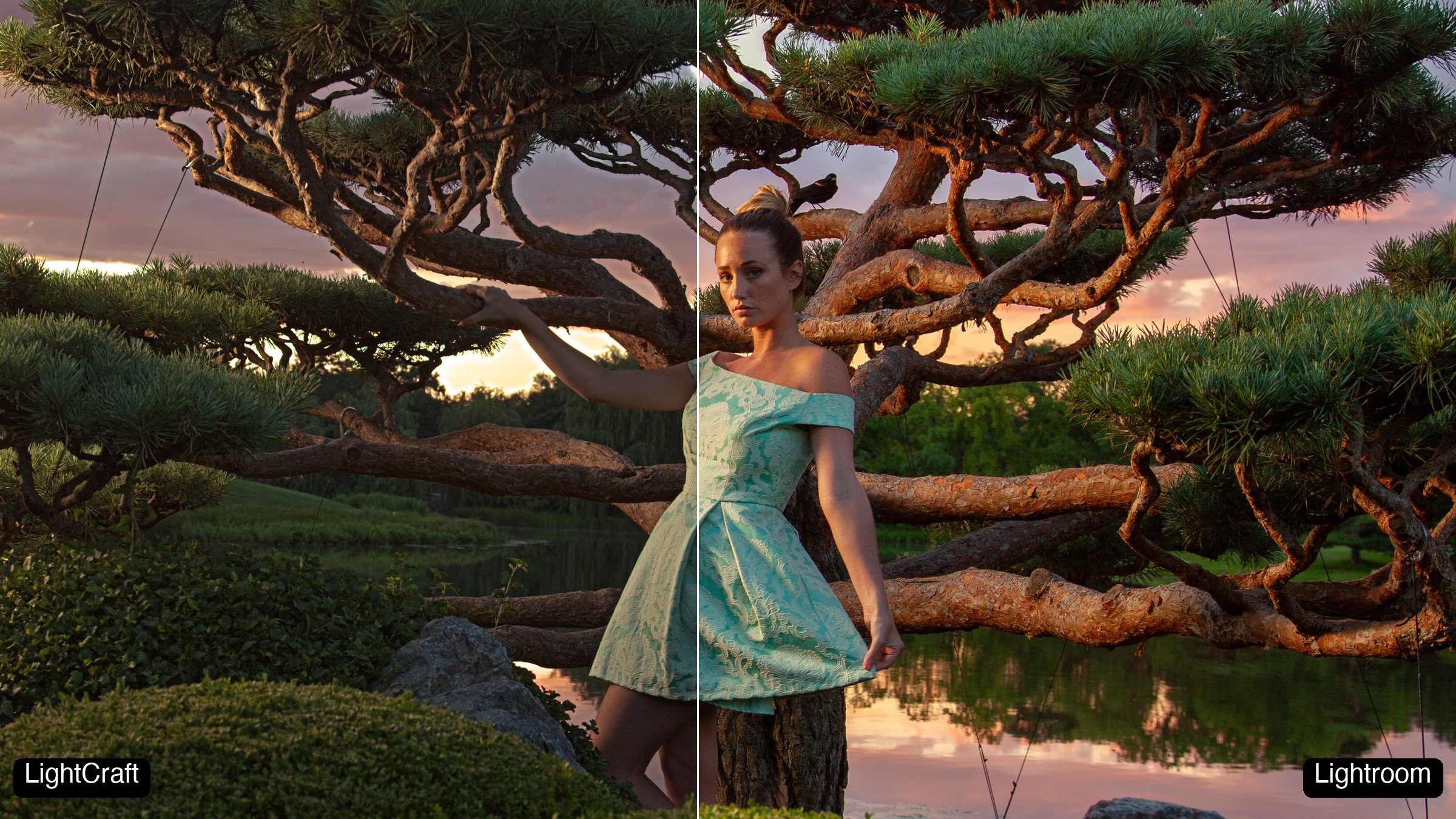
How important is Photoshop to your work? (and would it be possible to see a before/after of one of your most edited photos?)
Photoshop is imperative for my photos. I put a lot of myself into my post-processing and in my opinion it’s where the magic happens. Photoshop enables me to give depth to my images, such as enhancing colours, mood, lighting etc. It’s how these worlds inside my head come alive.

Who are some of your favourite artists and/or photographers?
Elspeth Annie Macrae, John Bauer, Edward Hopper, Caspar David Friedrich, Robert and Shana Parke Harrison… and loads more I can’t think of right now.
What’s your favourite photo that you’ve ever taken?
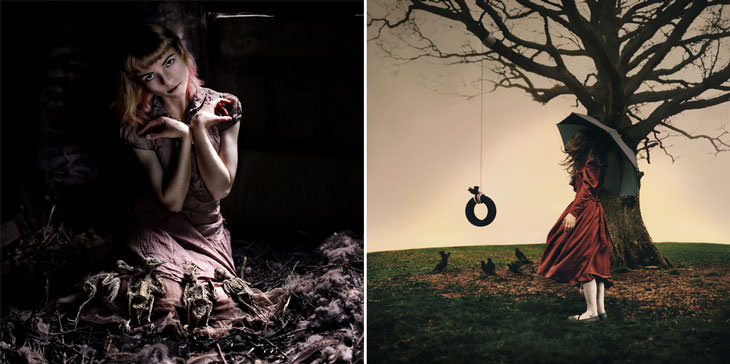
“she wore her best dress” – though, ask me again next week and it will probably be something else. See photo below, on right.
On average, how long does it take you to create an image from start to finish? (Conceptualizing, shooting, editing, etc)
Each image tends to have a life of its own. Sometimes the process is so effortless that it can all be done within about two days work. But I have taken about two to three weeks working on an image as well.
Social Media and Advice
While doing research I realized that you are connected to quite a number of different social media platforms like Facebook, Flickr, 500px, Google +, and Pinterest. How has social media helped you as a photographer? and how important do you think it is for photographers in this day & age to stay connected through these sites?
Am I really on all of those?! I have no idea how I end up on these things. I think that online media has definitely given socially inept people, like me, the chance to be seen. The internet is an amazing tool as it provides an online community where people from all over the world come to exist to share their lives and passions with one another.
So in that respect, yes I think it’s important. But I don’t like relying too much on the internet simply because it bears no real connection to my everyday life. The internet has helped me gain the confidence to actually go out into the real world with my photography and meet people.

What is your proudest moment as a photographer?
I have lots of little moments where I think it’s really cool how far I’ve come and developed as a photographer from say about two years ago. I feel proud of myself when an idea I’ve been milling over finally comes into existence, and is even better than I imagined – that’s one of the best feelings ever.
What is your dream job within the realms of photography?
I’m not entirely sure, although it would be awesome to make a living from selling my work, traveling and meeting/collaborating with other artists and photographers.
How has photography changed your life?
It’s made me more confident in myself, and generally just a happier person. I owe a lot to photography; it’s helped me get through a lot of emotional upheaval. I feel more at peace with myself than I did before.
Any advice to offer us fellow photographers?
Don’t worry so much about getting a good result every time you go out on a shoot, the more practice you put in the more you will get to know yourself and where your passion lies. Pay attention to what your mind/heart/soul is telling you, learn to question yourself; ask what makes you tick, what excites you. Do whatever is right for you, not for someone else.
Do whatever is right for you, not for someone else.
Rosie Anne Prosser

Common Questions About Rosie Anne Prosser
Who is Rosie Anne Prosser? A fine art photographer born in Wales who lived in the Black Mountains of Mid-Wales at the time of this 2013 interview. She graduated in 2010 with a BA in Drawing & Applied Arts from the University of West England, is self-taught in photography, and won the Sky Arts Creative Wish Competition in 2012.
What are her photos about? People and how they react to their surroundings. Her characters, which she calls “orphans”, are waif-like figures with a deep sense of loss, looking for somewhere to belong. She uses nature, objects and abandoned places, anything “left behind”, to tell their story, and she draws inspiration from the mountains, woods and rivers around her.
How did she move from drawing to photography? At university she started making collages: cutting up old photographs and sticking them back together into new, surreal combinations. That showed her photography didn’t have to be one clear-cut thing, and it opened up photography for her.
How long does one of her images take? Anywhere from about two days, when it comes easily, to two or three weeks. She calls Photoshop imperative and says post-processing is where the magic happens: she layers color the way she would layer paint on a canvas, to add depth, mood and light.
To keep up with Rosie and her work you can do so on her Website, Flickr, 500PX, and Facebook page. Interviewed By Angela Butler, thanks for reading!