
The Art of Storytelling Through Candid Street Photography with Dave Krugman
You might not immediately recognize photographer and social media consultant Dave Krugman, but you’ve almost certainly experienced his impact on Instagram.
Originally published July 12, 2019, by Jessi Gowan. Updated October 16, 2026, by PHLEARN Staff: A new layout with themed sections, pull quotes and photo pairs, and Dave’s street kit (his camera, lenses and lights) from a separate 2019 article; Dave’s answers on candid street photography are unchanged.
With almost 300K followers on his own account, Dave is well-versed in the art of building relationships online – and he’s leveraged that skill into opportunities to work with some of New York City’s most widely-recognized cultural institutions. Through collaborations with Dave, the New York Public Library, the Metropolitan Museum, and the Intrepid Sea, Air & Space Museum have managed to establish their own presence online and connect with a younger, smartphone-dependent demographic.
But Dave is more than just an Instagram guru. He’s attracted plenty of attention for his unique style of street photography, which showcases the vibrant colors and moody atmosphere of New York, as well as in locations around the world. We had the chance to catch up with him about inclement weather, shooting candidly in public, and the impacts of social media fame.

Becoming an Artist
How did you get your start in photography? When did you first begin to consider yourself an artist?
I think I always considered myself an artist, ever since I knew what that distinction meant.
To me, it means that you seek things for their aesthetic considerations, not for their monetary value. I never felt connected to the idea of a steady job, working for abstract goals, rewarded with a paycheck. I was always more interested in life’s questions, the vastness of the universe we occupy, and how we can speak to those feelings through visual art.
I think there is a difference between being artistically-minded and being a professional artist, though. The profession requires a lot of other work that lies outside of pure creativity.
What artists or photographers do you most admire? And how has their work influenced your own?
There are too many artists I admire to name them all, but some that come to mind – Henri Cartier-Bresson, Helmut Newton, Saul Leiter, and Vivian Maier – all have had profound influences on my craft.


Shooting Candid Street Photography
A lot of your images include rain, water, or fog – what draws you to this element? How do you think it impacts your work?
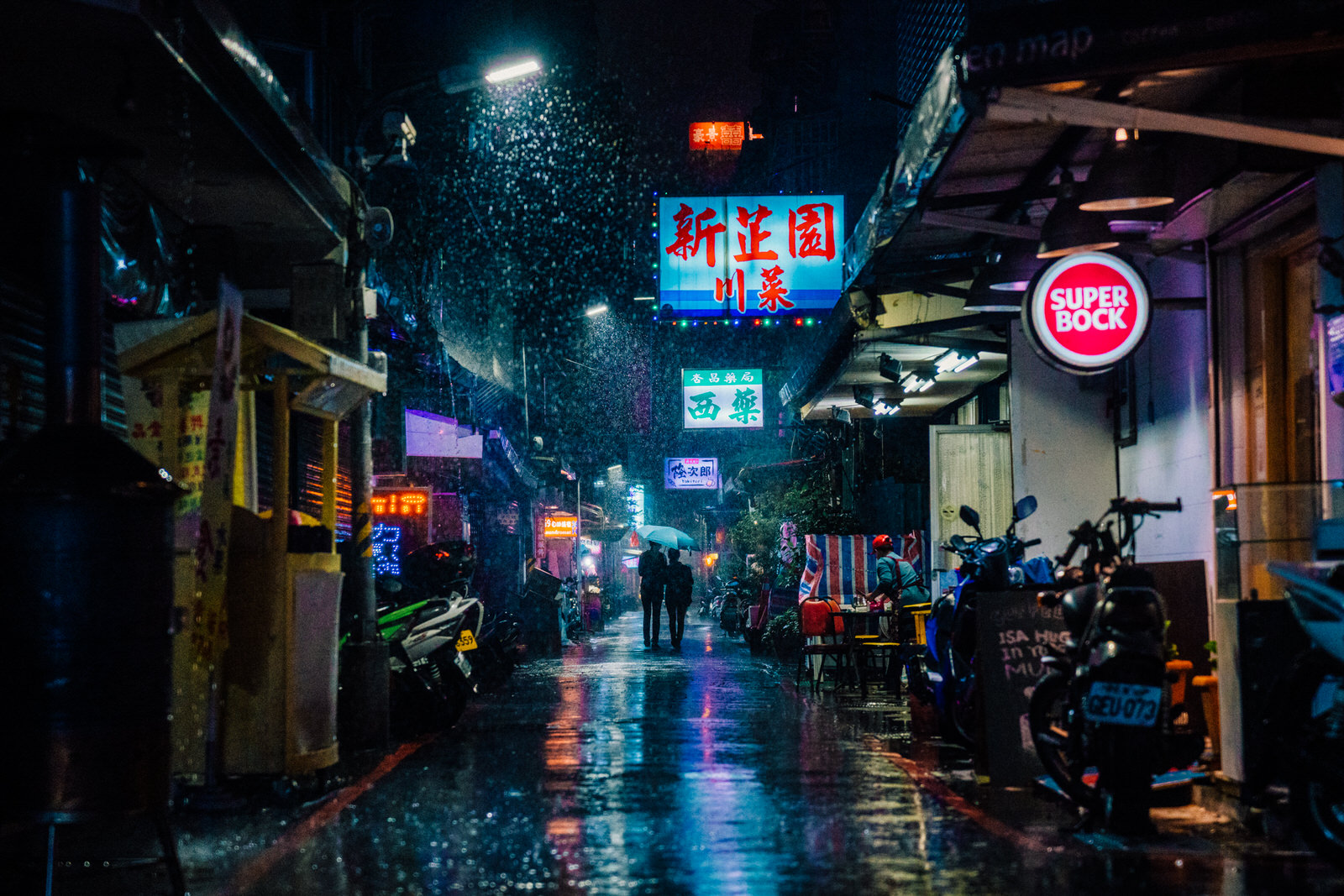
I do love shooting in inclement weather, because it adds multiple layers of variables that I can work with. A successful photograph lies at the confluence of these different variables – the more unique the ingredients, the more room you have to create new images and try new ideas. For example, fog is a medium that fills the air and catches beams of light, making the invisible visible. Rain holds the color and creates reflections on the ground, turning a normal city scene into a stunning watercolor painting. I often prefer to work at those rare times where the world just looks more cinematic to my eye.
Rain holds the color and creates reflections on the ground, turning a normal city scene into a stunning watercolor painting.
Dave Krugman
Shooting candid street photography seems like a lot of waiting around for the right moment. What is the most challenging part for you?
I think the most challenging part of candid street photography is being a passive observer and not interrupting the moment by documenting it. I seek to show the world as it is, from my unique perspective. Once you are noticed, you can no longer get that truth from a scene; it becomes posed – we all react when we know we are being recorded.
In a city like New York, people are on camera 24/7 due to city surveillance, but it’s so ubiquitous that no one ever thinks about it. Therefore, it’s a bit easier to make a good street photo in New York than, say, in some small town, but that is still the biggest challenge.

You do some great work with artificial and ambient light. How do you make light sources outside of your control work for you?
Ambient and artificial light are, again, just another set of variables I incorporate into my photographic equations. I love working with them because each scenario is a puzzle with various solutions. There is an infinite amount of combinations – nothing gives me more of a thrill than successfully navigating these scenarios.
Every Frame Is a Story
How important is storytelling in your photography? How do you ensure your shots communicate a strong narrative?
Photography, essentially, is storytelling. Even when we read words, we process them as small images. There is a lot of truth to the phrase, “A picture is worth a thousand words,” except, perhaps, it’s more. So, every frame is its own story, and you can link multiple frames for longer narratives. The key to photographing a story is to include contextual elements. A story isn’t just a subject, it’s the context that they are surrounded by, as well.
Photography, essentially, is storytelling.
Dave Krugman
Ruts and Bursts
Do you have any particular habits that are a part of how you begin your creative process?
I don’t have any particular habits for creativity, as I’m a pretty spontaneous person in general, but I do go through creative ruts and bursts of inspiration. Life is balance, and you need to experience the full spectrum of feeling to truly be alive.
What do you do when you hit a wall during your creative process?
When I hit a wall, I take a break. I switch tasks, I read, I take in others’ work, I relax, I see friends, watch movies, take care of busy work. It’s inevitable that you will hit walls. Rather than try to blast through, I think it’s better to take the rest that has been presented to you and wait for those walls to crumble.
Instagram and Opportunity
How has your popularity on Instagram impacted you? Other than taking eye-catching photos, how did you build your following and grow your own brand?
Popularity on Instagram is a double-edged sword. On the one hand, it has provided me with an incredible platform to reach my audience directly, in a way that we can communicate instantly across infinite distances. I’ve made amazing friends this way and been granted opportunities beyond my wildest imagination.
On the other hand, it’s a lot of stimulation, a lot to keep up with. I’m constantly maintaining my presence and I don’t often get a break. It can be extremely taxing on my mental health and it is a tricky balance to strike. The biggest factor in growing an account is connecting with others in real life – those bonds are stronger than anything that lives solely online.


What opportunities has your photography opened up for you?
My camera is a master key to the world. That might sound hyperbolic, but in an era where smartphones rule, everyone needs visual content. My ability to create that content makes me an asset to various brands and people around the world who will give me access, money, travel, and experiences in exchange for the services I am able to provide.
My camera is a master key to the world.
Dave Krugman
Advice and Inspiration
What advice would you give to photographers who are just starting out?
Shoot as much as possible. Network with the other people around you who express interest in creativity. In turn, cut out the people who bring you down, or who make fun of or demean your passion. Keep company with those who will uplift and guide you. One-on-one mentorship is more valuable than art school and is much cheaper. Learn the rules, and then break them in your own unique way.
Learn the rules, and then break them in your own unique way.
Dave Krugman
What’s the one quote that always fires you up?
“To me, photography is an art of observation. It’s about finding something interesting in an ordinary place… I’ve found it has little to do with the things you see and everything to do with the way you see them.”
Elliott Erwitt
What book would you recommend any creative person read?
The Biography of Leonardo da Vinci by Walter Isaacson.
Dave’s Street Kit
How do you go about deciding which gear is essential to your work?
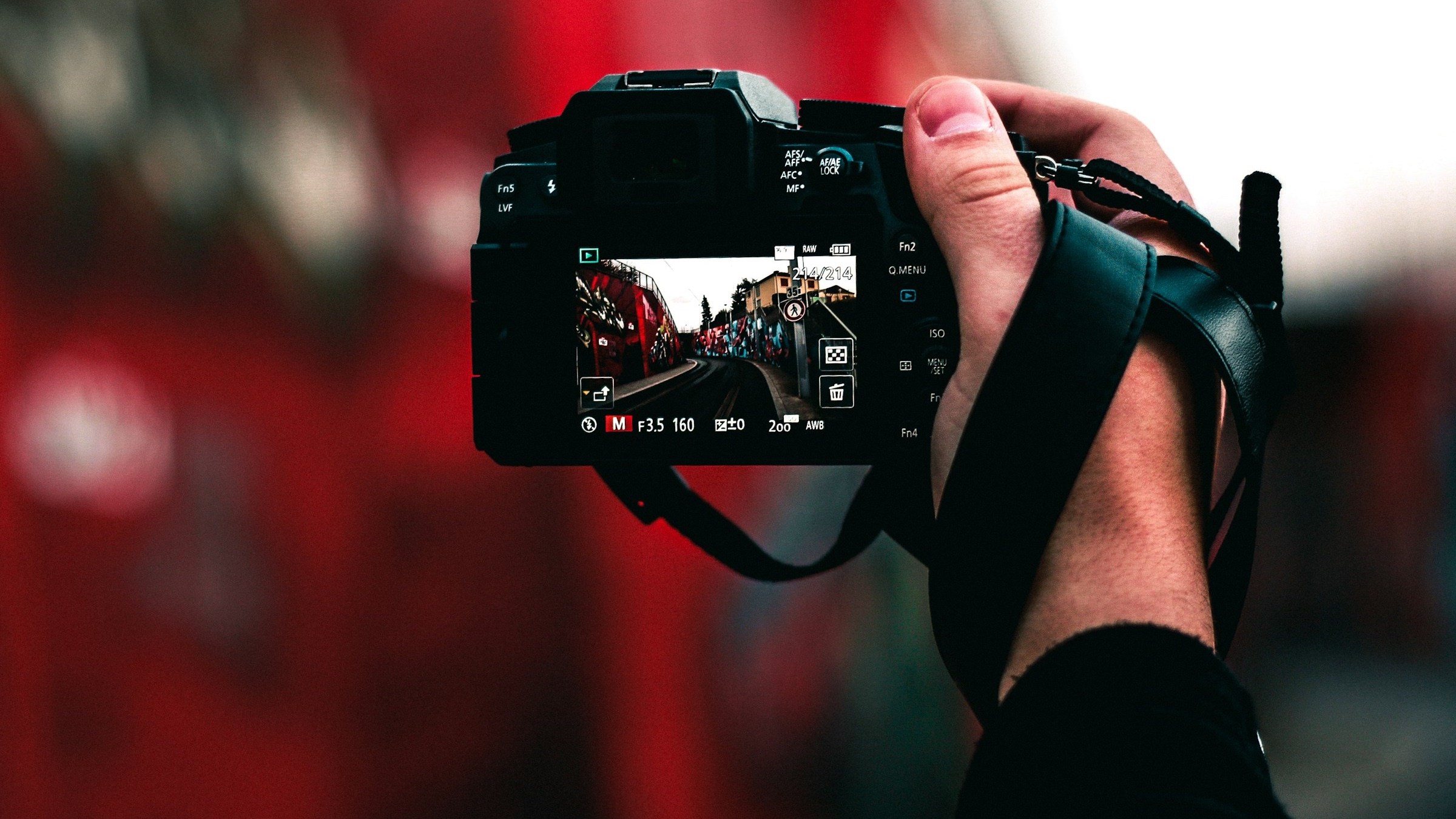
Street photography is the style that I would say is at the core of my creative drive. I’m always looking for gear that can just stay out of my way – I’m happiest when I forget the technology between me and my subject. Digital cameras today feel very fluid, and there are amazing options at every price point. I also love combining vintage lenses with powerful modern cameras.
As an Amazon Associate I earn from qualifying purchases.
Camera

42MP Full-Frame Exmor R BSI CMOS Sensor, 399-Point AF System, Built-In Wi-Fi/Bluetooth, Dual SD Slots
Dave: I shoot mainly with the Sony a7R III. It’s an incredibly fast, powerful mirrorless camera, packing incredible features into a lightweight, full-frame body. It’s amazing in low light, which is very helpful for my style, and the dynamic range is unrivaled. The ability to adapt older lenses and use the focus peaking feature is another key strength of this camera option.
I use both modern lenses and vintage glass. For my newer lenses, the Sony G Master series is my go-to choice. My 16-35mm f/2.8, 24-70mm f/2.8, and 70-200mm f/2.8 give me a range from 16mm to 200mm at a wonderfully bright aperture.
Lenses

Aperture Range: f/2.8 to f/22, Focus Hold Button; AF/MF Switch, Dust and Moisture-Resistant Construction

Aperture Range: f/2.8 to f/22, Direct Drive Super Sonic Wave AF Motor, Focus Hold Button; Internal Focus

Aperture Range: f/2.8 to f/22, Dual Linear & Super Sonic Wave AF Motors, Dust and Moisture-Resistant Construction
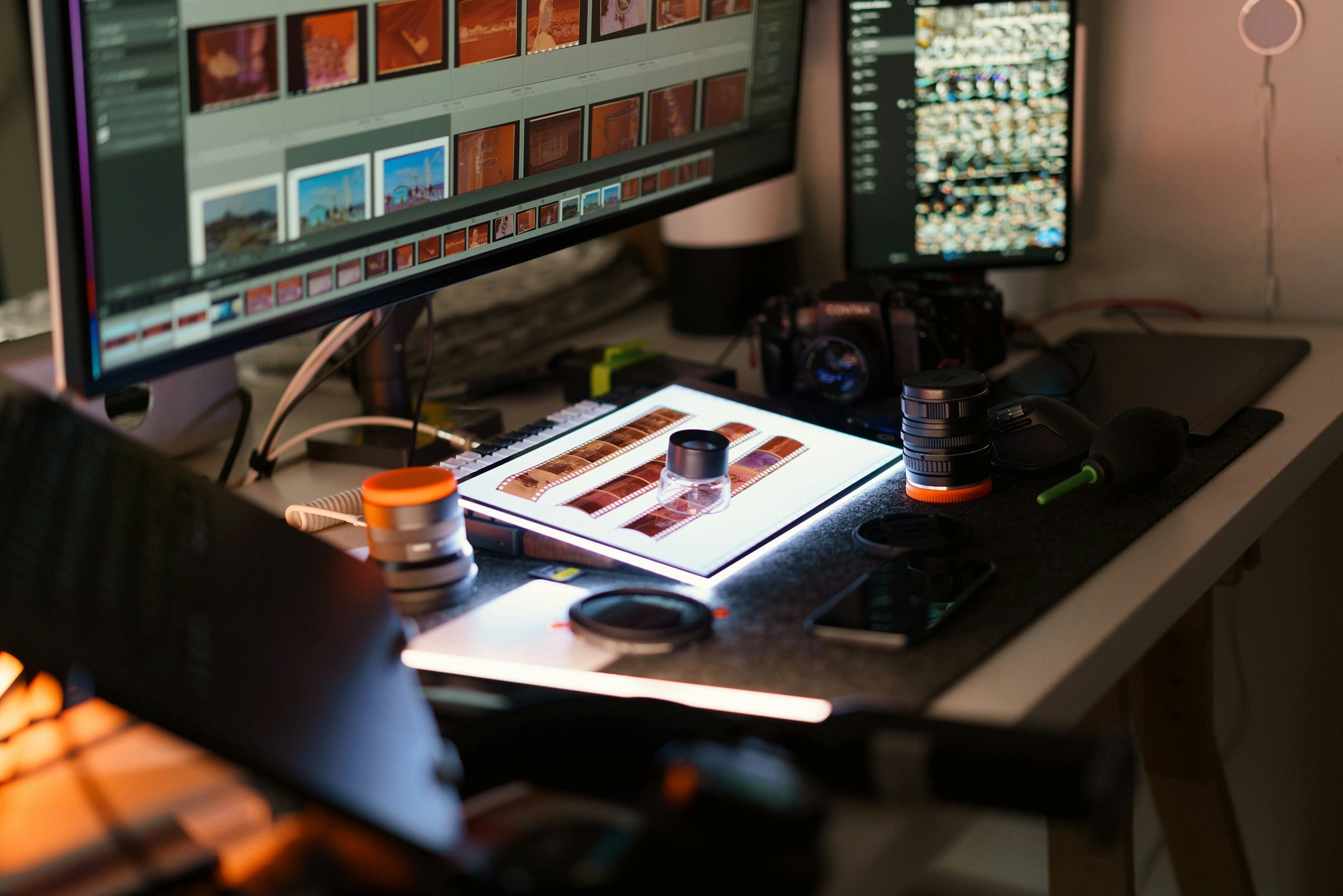
For vintage glass, I love adapting old Leica lenses to my Sony body. These lenses have a totally different look – their uniqueness adds to the atmosphere of the whole photo. I love trying different combinations and experimenting with the results.
Lighting

10″ 176 RGBAW LED Light, Adjustable Full Color Light, iOS/Android App Control via Bluetooth
Dave: I use mostly available and ambient light, but recently I got a Luxli light (the Cello) to play around with, and I’m totally blown away. This addition to my toolkit will certainly change my approach to photography. It has amazing brightness and every color in the spectrum – so fun to play around with.
I generally have my headphones, iPhone, and laptop with me – it’s all part of my creative flow. I live a pretty nomadic life, and having the technology to edit and share images on the go is key for me. With social media, we hold a world of inspiration in the palm of our hands; if you follow the right artists, every day is a lesson. I love being able to learn from and contribute to this incredible creative community.
What’s Next
What are you focusing on right now, in your work and photography?
Right now, I’m focusing on how I can make a bigger impact on the world. It’s one thing to have a platform, but it is something else entirely to use that leverage to shift the needle in the right direction.

How do you hope your work impacts viewers? What do you aim to express through your photography?
I hope to show that there is a path for young, creative people to make a living off of the art that they create. I didn’t see that path when I was younger, and I was lucky to stumble into it, with the support of my family and friends.
Dave’s photography takes viewers on a journey through a perspective of New York typically enjoyed only by those who live there – and beyond, to spectacular locations around the world. To see more of his work, visit his website or his Instagram. And, if you’re interested in knowing what gear he uses, check out what’s in Dave’s camera bag.
Common Questions About Candid Street Photography
Who is Dave Krugman? Dave is a photographer and social media consultant known for street photography of New York and places around the world, full of vibrant color and moody atmosphere. When this interview first ran in 2019 he had almost 300K followers on Instagram and had worked with the New York Public Library, the Metropolitan Museum and the Intrepid Sea, Air & Space Museum on their own presence online.
What is the hardest part of candid street photography? For Dave, it is staying a passive observer, so that taking the picture doesn’t interrupt the moment. Once people notice you, the scene becomes posed, because we all react when we know we are being recorded. He finds it a little easier in New York, where people are on camera all day from city surveillance and no longer think about it.
Why shoot street photos in rain and fog? Bad weather gives Dave more variables to work with, and the more unique the ingredients, the more room he has to try new ideas. Fog fills the air and catches beams of light, making the invisible visible. Rain holds the color and makes reflections on the ground. He likes the rare times when the world looks more cinematic to his eye.
How do you tell a story with a street photo? Dave treats every frame as its own story, and links several frames for a longer one. The key, he says, is to include the context around the subject: a story isn’t just a subject, it’s what surrounds them as well.
In this article
Free with PHLEARN




Join the conversation